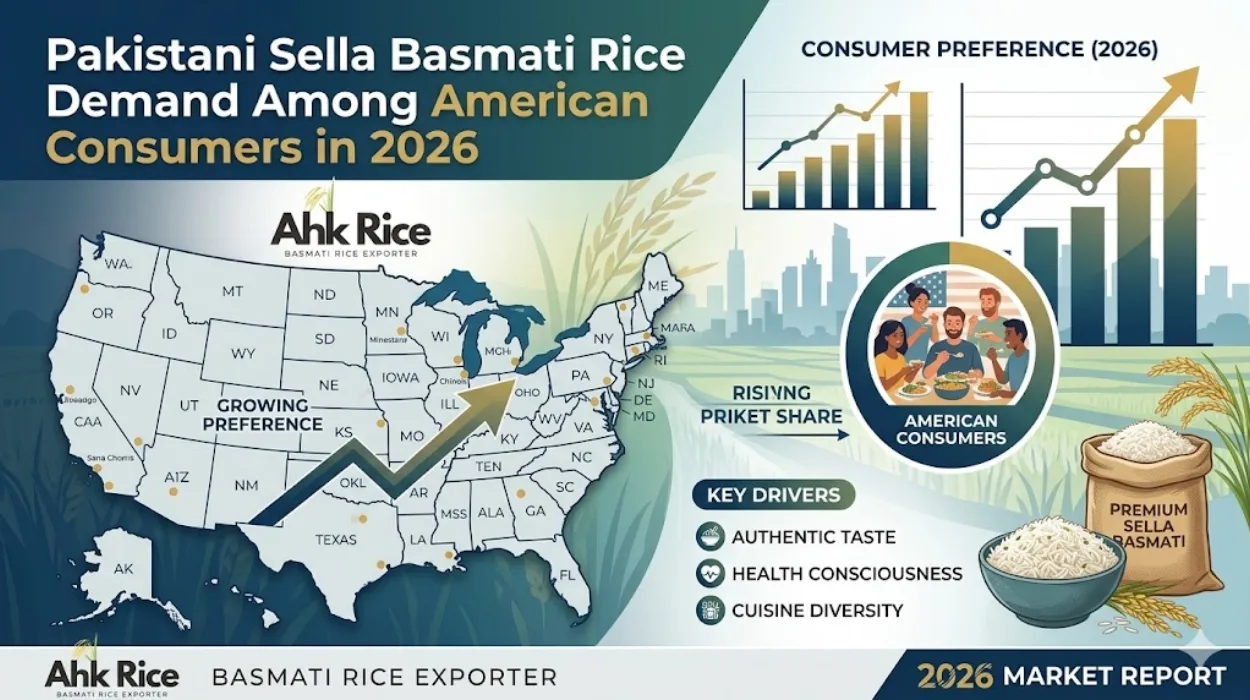
Pakistani Sella Basmati Rice Demand Among American Consumers in 2026
Pakistani Sella Basmati Rice demand among American consumers in 2026 continues to increase because consumers prefer long-grain aromatic rice with better cooking performance, extended shelf life, and suitability for South Asian, Middle Eastern, and fusion cuisines. Here is why: Pakistani Sella Basmati Rice offers grain elongation, aroma retention, and bulk foodservice efficiency that align with growing rice consumption trends in the United States.
American consumers in 2026 are purchasing more specialty rice products than standard commodity rice. Pakistani Sella Basmati Rice occupies a unique position because it combines traditional Basmati characteristics with the durability of parboiling. The product serves households, restaurants, catering companies, meal-kit providers, and ethnic grocery retailers.
Pakistan remains one of the world’s leading Basmati-producing countries. Punjab produces the majority of export-quality Basmati rice through controlled cultivation, irrigation management, harvesting, milling, and grading practices. According to Pakistan Bureau of Statistics export records, rice exports continue contributing significantly to Pakistan’s agricultural trade sector (source: Pakistan Bureau of Statistics, FY2024-25).
Understanding consumer demand begins with understanding the rice itself and the processing system behind it.
What Is Pakistani Sella Basmati Rice?
Pakistani Sella Basmati Rice is parboiled aromatic long-grain rice cultivated in Punjab, processed through controlled steaming and drying, and exported for premium retail and foodservice applications.
Pakistani Sella Basmati Rice originates from the Basmati-growing belt of Punjab. Farmers cultivate Basmati varieties using irrigation systems fed by river networks and groundwater resources. The crop develops its characteristic aroma during growth and maturation.
Sella rice differs from white rice because processors parboil the paddy before milling. Parboiling transfers nutrients from the outer layers into the grain. The process strengthens the grain structure and improves cooking performance.
American consumers often purchase Pakistani Sella Basmati Rice because the rice remains separate after cooking. Restaurants value this characteristic for biryani, pilaf, rice bowls, and buffet service.
The most common Pakistani Sella Basmati varieties include:
1121 Sella Basmati Rice
1121 Sella Basmati Rice delivers 8.30–8.50 mm average grain length before cooking. The variety produces exceptional elongation after cooking and dominates premium export markets.
Super Kernel Sella Basmati Rice
Super Kernel Sella Basmati Rice delivers 7.20–7.60 mm average grain length. The variety maintains traditional Basmati aroma and remains popular in established ethnic markets.
1509 Sella Basmati Rice
1509 Sella Basmati Rice delivers 8.00–8.30 mm average grain length and offers higher yield efficiency during cultivation.
With the product defined, the next question is how the Sella processing system creates these characteristics.
How Does Pakistani Sella Basmati Rice Processing Work?
Nine processing stages transform harvested paddy into export-grade Sella Basmati Rice with improved strength, cooking stability, and shelf life.
Sella processing begins immediately after paddy procurement. Each stage influences final grain quality.
Step-by-Step Sella Processing
- Clean the paddy.
- Soak the paddy.
- Steam the paddy.
- Dry the paddy.
- De-husk the grain.
- Mill the rice.
- Sort the rice.
- Grade the rice.
- Pack the rice.
Cleaning removes stones, dust, straw, and foreign matter. Clean raw material improves processing consistency.
Soaking increases grain moisture to the required processing level. Controlled hydration prepares the grain for uniform steaming.
Steaming gelatinizes starch within the grain. This stage creates the distinctive Sella texture and color.
Drying reduces moisture to safe milling levels. Proper drying prevents cracking and preserves grain integrity.
Milling removes the husk and prepares the grain for grading operations. Sorting equipment separates broken grains and foreign particles.
Grading establishes commercial specifications required by importers. Exporters classify rice according to grain length, purity, and broken percentage.
Packing protects rice during international transport. Export shipments commonly use 1 kg, 5 kg, 10 kg, 20 kg, 25 kg, and 40 kg packaging formats.
With processing established, the next question concerns the specific components that define product quality.
What Key Components Drive Pakistani Sella Basmati Rice Demand?
Grain length, aroma, elongation, purity, moisture control, shelf life, and cooking performance determine consumer preference and importer demand.
American consumers evaluate rice quality through visible and functional characteristics. Each component influences purchase decisions.
Grain Length
Long grains create a premium appearance. Pakistani Sella Basmati Rice typically measures between 7.20 mm and 8.50 mm depending on the variety.
Aroma
Natural Basmati aroma differentiates the product from ordinary long-grain rice. Aroma remains a primary purchasing factor for ethnic consumers.
Grain Elongation
Cooked grains elongate significantly without excessive width expansion. Premium 1121 Sella varieties frequently achieve elongation ratios above standard rice categories.
Purity Standards
Export specifications often require 95% to 100% purity grades. Higher purity reduces sorting requirements for foodservice operators.
Moisture Control
Export-grade rice commonly maintains 12% to 14% moisture content. Moisture management supports transport stability and storage performance.
Shelf Life
Sella rice maintains quality longer than conventional white rice because parboiling strengthens grain structure.
Golden Sella lasts longer than Steam rice. In a warehouse operating at 40°C in Gulf markets, Golden Sella commonly maintains quality for approximately 18 months. Steam rice generally requires consumption within 12 months. For importers managing long inventory cycles, Golden Sella provides stronger storage performance.
With quality drivers explained, the next question is why these characteristics attract American consumers.
What Benefits Encourage American Consumers to Choose Pakistani Sella Basmati Rice?
Better grain separation, longer storage stability, stronger cooking performance, and compatibility with diverse cuisines increase consumer demand.
American food preferences continue diversifying. Consumers increasingly prepare international dishes at home.
Better Grain Separation
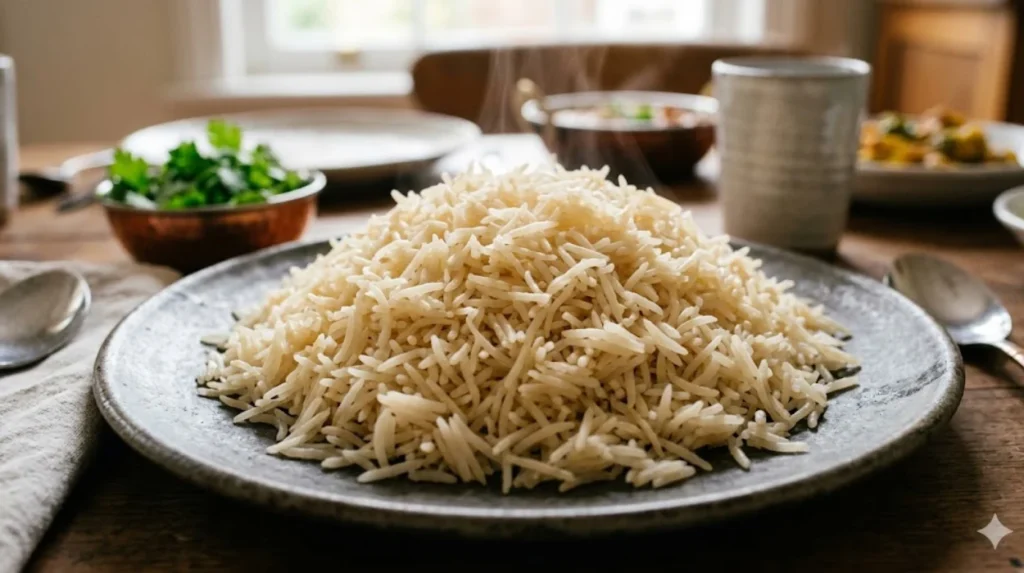
Pakistani Sella Basmati Rice produces separate grains after cooking. Consumers prefer this texture for biryani and pilaf dishes.
Longer Storage Stability
Parboiling strengthens grain structure. Retailers benefit from reduced breakage during storage and transportation.
Consistent Cooking Results
Sella rice tolerates variations in cooking conditions better than many conventional rice products. Consistency supports restaurant operations.
Improved Visual Appeal
Long grains create attractive presentation. Foodservice businesses value appearance because presentation influences customer perception.
Broad Culinary Compatibility
Pakistani Sella Basmati Rice works across multiple cuisine categories including:
- South Asian dishes
- Middle Eastern dishes
- Mediterranean dishes
- Fusion rice bowls
- Catering buffet menus
American consumers increasingly seek versatile ingredients. That trend leads directly to expanding use cases across retail and foodservice channels.
How Are American Consumers Using Pakistani Sella Basmati Rice in 2026?
Households, restaurants, caterers, meal-prep companies, and ethnic retailers use Pakistani Sella Basmati Rice for premium rice-based meals.
Demand growth reflects changing food consumption patterns throughout the United States.
Household Consumption
Consumers prepare biryani, pulao, curry rice, and meal-prep recipes. Long-grain rice performs well in batch cooking.
Restaurant Applications
Restaurants require consistent grain quality. Sella rice maintains appearance during extended service periods.
Catering Operations
Catering businesses prioritize yield and holding performance. Sella rice remains suitable for large-volume preparation.
Meal Kit Programs
Meal kit companies seek ingredients with reliable cooking characteristics. Consistency reduces customer preparation errors.
Ethnic Grocery Retail
Ethnic retailers remain significant distribution channels for Pakistani Basmati products. South Asian and Middle Eastern communities drive substantial demand.
Many buyers evaluate suppliers before procurement decisions. Readers interested in supplier assessment methods can explore how importers review quality systems, processing capabilities, and export compliance through a detailed guide on evaluating international Basmati sourcing partners: [Insert Link to MOFU Article].
Understanding market applications leads naturally to understanding which countries and regions import these products.
Which Markets Import Pakistani Sella Basmati Rice?
The United States, Canada, Saudi Arabia, United Arab Emirates, United Kingdom, Iraq, and European markets import significant volumes of Pakistani Sella Basmati Rice.
Global demand supports continued export growth for Pakistani Basmati products.
United States
The United States imports premium Basmati products for retail and foodservice sectors. Demand increases alongside population diversity and international cuisine consumption.
Canada
Canadian markets mirror many American consumption patterns. Ethnic grocery chains contribute substantial demand.
Gulf Countries
Saudi Arabia and the UAE remain major Basmati destinations. Consumers prioritize aroma, elongation, and traditional preparation characteristics.
United Kingdom
The UK maintains a mature Basmati market supported by established South Asian communities.
Iraq
Iraqi buyers frequently procure Sella grades for foodservice and distribution sectors. Storage performance remains an important purchasing factor.
According to REAP export records, rice exports continue expanding across multiple destination markets (source: REAP export data, December 2025).
With importing markets established, the next question concerns certifications and compliance requirements.
What Certifications Apply to Pakistani Sella Basmati Rice Exports?
Food safety certifications, phytosanitary compliance, quality inspections, and export documentation support international trade requirements.
Importers require documented compliance before purchasing rice shipments.
Food Safety Certifications
Common certification frameworks include:
- ISO certifications
- HACCP systems
- Food safety management systems
Export Inspection Documents
Required documents commonly include:
- Phytosanitary Certificate
- Certificate of Origin
- Commercial Invoice
- Packing List
- Bill of Lading
- Fumigation Certificate
- Quality Inspection Report
Laboratory Testing
Testing verifies:
- Moisture content
- Grain length
- Purity percentage
- Broken percentage
- Residue compliance
American importers increasingly prioritize traceability and documented quality verification.
Certification explains compliance requirements. The final question addresses common misconceptions surrounding Sella rice.
What Common Misconceptions Exist About Pakistani Sella Basmati Rice?
Sella rice is not artificial, not lower quality, and not less nutritious than standard rice. Processing creates functional advantages without eliminating Basmati characteristics.
Several misconceptions continue affecting consumer understanding.
Misconception: Sella Rice Is Artificial
Sella rice undergoes physical processing through soaking, steaming, and drying. No artificial grain creation occurs.
Misconception: White Rice Is Always Superior
Different applications require different specifications. Restaurants often select Sella grades because grain separation remains more consistent.
Misconception: All Basmati Rice Is Identical
1121, Super Kernel, and 1509 varieties differ in grain length, yield characteristics, and market preferences.
Misconception: Sella Rice Lacks Aroma
Properly processed Sella Basmati Rice retains characteristic Basmati fragrance while adding structural strength.
Pakistani Sella Basmati Rice demand among American consumers in 2026 reflects growing interest in premium ingredients, international cuisines, and reliable cooking performance. The combination of Punjab cultivation, controlled parboiling, export grading, and food safety compliance continues positioning Pakistani Sella Basmati Rice as a preferred choice across retail and foodservice markets.
Frequently Asked Questions
Why is Pakistani Sella Basmati Rice becoming more popular among American consumers in 2026?
Pakistani Sella Basmati Rice is becoming more popular because consumers prefer long-grain aromatic rice that delivers consistent cooking results. The rice works well in South Asian, Middle Eastern, and fusion recipes. Restaurants and households also value its grain separation and shelf stability.
What makes Sella Basmati Rice different from regular white rice?
Sella Basmati Rice undergoes a parboiling process before milling. Processors soak, steam, and dry the paddy before removing the husk. This process strengthens the grain, improves cooking performance, and extends shelf life compared to many standard white rice products.
Which Pakistani Basmati varieties are commonly available as Sella rice?
The most common Sella Basmati varieties are 1121 Sella Basmati Rice, Super Kernel Sella Basmati Rice, and 1509 Sella Basmati Rice. Each variety differs in grain length, elongation, and market preference. Importers select varieties based on consumer demand and application requirements.
How long does Pakistani Sella Basmati Rice remain suitable for storage?
Pakistani Sella Basmati Rice typically maintains quality for 18 to 24 months when stored in a cool and dry environment. Proper packaging, moisture control, and warehouse conditions help preserve aroma, grain quality, and cooking performance throughout the storage period.
What certifications do American importers look for when buying Pakistani Sella Basmati Rice?
American importers commonly require food safety certifications, phytosanitary certificates, quality inspection reports, fumigation certificates, and certificates of origin. These documents verify compliance with import regulations and help ensure product quality and traceability.