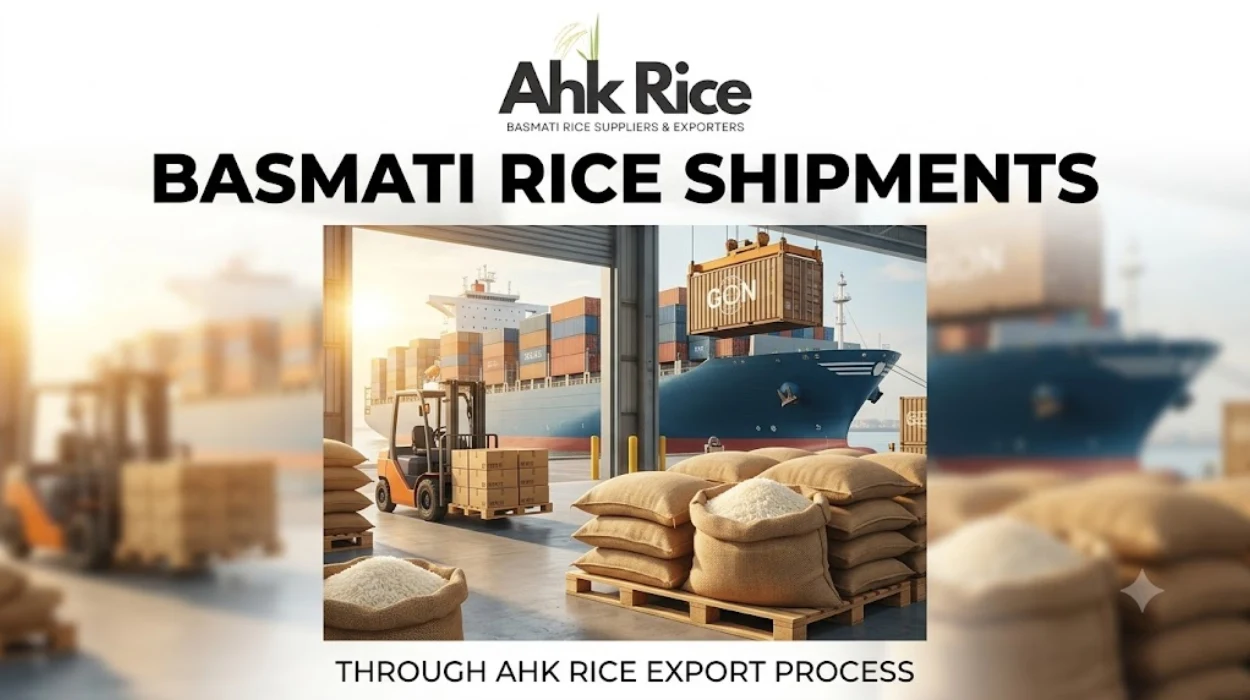
Receive Timely Basmati Rice Shipments Through AHK Rice Export Process
Importers who depend on predictable inventory need more than competitive pricing. They need an export partner with a structured production schedule, verified quality control, and dependable shipping coordination. If you are planning your next purchase, it helps to first understand the
Expected delivery timeline for Basmati rice imports from Pakistan before comparing exporters. It is also useful to learn:
Why professional rice processing and packaging normally require seven to ten days, because this production period directly affects shipment reliability rather than causing unnecessary delays.
For buyers looking for consistent deliveries to the Middle East, AHK Rice provides an organized export process designed to reduce uncertainty. Through its UAE export service, AHK Rice coordinates production scheduling, laboratory testing, documentation, container loading, customs clearance, and vessel booking under a single workflow instead of treating each stage separately.
What is the best solution for receiving timely Basmati rice shipments?
The most reliable solution is selecting an exporter that manages production scheduling, quality inspection, packaging, documentation, and shipping through one coordinated export process. This minimizes avoidable delays, improves shipment visibility, protects product quality, and helps importers maintain predictable inventory planning throughout the supply chain.
Late deliveries rarely occur because ocean freight alone takes longer. In most cases, delays begin much earlier inside the export process. Production planning, milling schedules, laboratory testing, packaging availability, documentation accuracy, customs procedures, and vessel booking all influence the final delivery date.
AHK Rice follows a production-first approach. Every confirmed order enters a scheduled manufacturing queue before packaging begins. This allows production capacity to be allocated according to shipment dates instead of reacting to last-minute requests.
The standard export workflow during 2026 generally follows this sequence:
- Order confirmation
- Advance payment
- Production scheduling
- Cleaning and grading
- Quality inspection
- Packaging
- Pallet preparation
- Container loading
- Export documentation
- Customs clearance
- Port handling
- Vessel departure
Instead of treating these activities as independent tasks, AHK Rice manages them as one continuous process. This reduces communication gaps and helps importers receive more accurate shipment updates.
Shipping days by destination market
| Destination Market | Average Sea Transit (2026) |
|---|---|
| UAE (Jebel Ali) | 8–12 days |
| Saudi Arabia | 10–15 days |
| Oman | 10–15 days |
| Qatar | 12–16 days |
| Bahrain | 12–17 days |
| Kuwait | 14–18 days |
Transit time begins after vessel departure. Production and export preparation normally require an additional 7–10 days, depending on order size and packaging requirements.
For example, an importer ordering one 20-foot container of 1121 Steam Basmati Rice with standard packaging can generally expect production completion within the normal manufacturing schedule before the container is dispatched to the port.
Why should importers choose the UAE export service from AHK Rice?
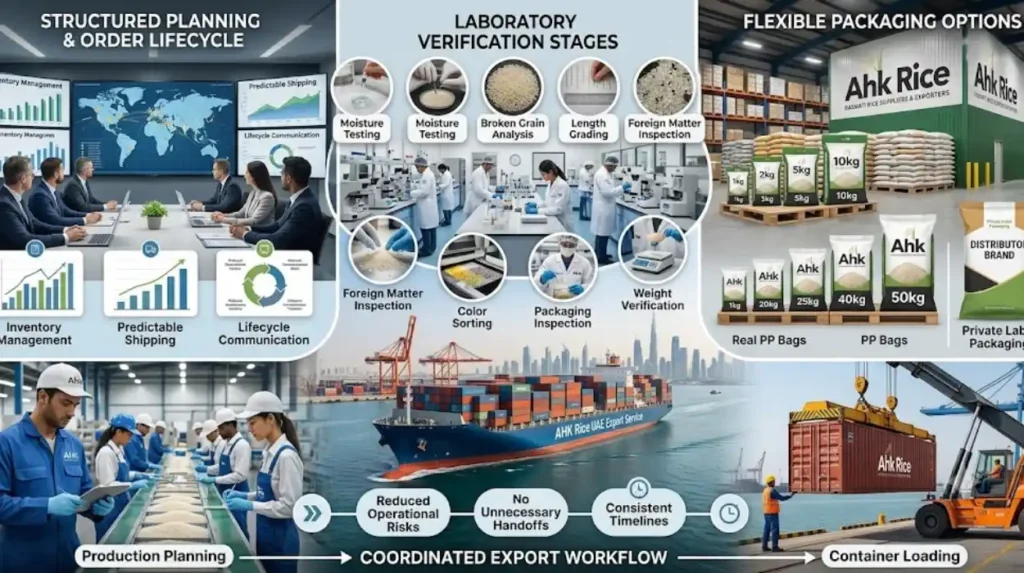
Importers should choose the UAE export service because it combines structured production planning, export documentation, laboratory verification, flexible packaging options, predictable shipping schedules, and continuous communication throughout the order lifecycle, helping reduce operational risks associated with international rice procurement and inventory management.
The exporter’s internal process often determines whether shipments remain on schedule.
AHK Rice offers a complete export workflow rather than supplying rice alone. Every shipment passes through multiple verification stages before container loading.
These include:
- Moisture testing
- Broken grain analysis
- Length grading
- Foreign matter inspection
- Color sorting
- Packaging inspection
- Weight verification
- Container cleanliness inspection
The UAE service also supports multiple commercial packaging formats, including:
- 1 kg
- 2 kg
- 5 kg
- 10 kg
- 20 kg
- 25 kg
- 40 kg
- 50 kg PP bags
Private label packaging is also available for distributors building their own retail brands.
Because production, packaging, and documentation are coordinated internally, AHK Rice reduces unnecessary handoffs that frequently delay export shipments.
What results can buyers expect after placing an order?
Importers can expect a structured production schedule, transparent order updates, verified product specifications, organized export documentation, reliable shipment planning, and improved inventory forecasting, allowing wholesale buyers to manage retail distribution, food service contracts, and warehouse replenishment more efficiently throughout the year.
Professional exporters create predictable outcomes rather than relying on estimates.
After confirming an order with AHK Rice, buyers receive production scheduling based on manufacturing capacity and shipment priority.
Typical workflow milestones include:
| Export Stage | Typical Duration |
|---|---|
| Order confirmation | 1 day |
| Production planning | 1 day |
| Rice processing | 3–5 days |
| Packaging | 2–3 days |
| Quality inspection | 1 day |
| Documentation | 1–2 days |
| Container loading | 1 day |
| Port dispatch | According to vessel schedule |
The actual shipping schedule depends on container availability, port operations, weather conditions, and vessel departure dates.
For example, a UAE importer preparing inventory for Ramadan retail demand can reserve production capacity several weeks before shipment. This approach helps reduce stock shortages during seasonal demand peaks.
How does the sample approval process work before bulk orders?
A professional sample approval process helps importers verify grain quality, cooking performance, packaging, and specifications before committing to commercial quantities, reducing purchasing risk and ensuring that both buyer and exporter agree on measurable quality standards before production begins.
Most experienced importers do not place large orders without approving representative samples.
The standard sampling process typically follows these steps:
- Buyer submits specification requirements.
- Exporter selects matching rice grade.
- Laboratory testing is completed.
- Samples are packed.
- Courier shipment is arranged.
- Buyer evaluates cooking performance.
- Commercial specifications are finalized.
- Production begins.
Typical sample costs (2026)
| Item | Estimated Cost (USD) |
|---|---|
| Rice sample | Usually complimentary |
| Courier charges | $40–90 |
| Laboratory report (if requested) | $25–60 |
| Customized packaging sample | Depends on artwork and quantity |
Many importers compare multiple exporters before selecting one supplier. Receiving laboratory-tested samples provides greater confidence than relying solely on product photographs or specifications.
AHK Rice supports sample evaluation so buyers can verify grain length, aroma, moisture, milling quality, and cooking characteristics before bulk production begins.
What factors affect pricing for Basmati rice exports?
Export pricing depends on rice variety, crop season, grain grade, processing method, packaging specifications, order quantity, certification requirements, shipping destination, freight rates, currency fluctuations, and additional customization requested by the importer before production begins.
There is no universal export price because every shipment differs.
The largest pricing factors include:
- Rice variety
- White, Steam, or Sella processing
- Grain length
- Broken percentage
- Moisture specification
- Packaging size
- Private labeling
- Quantity ordered
- Destination country
- Ocean freight rates
For example, a buyer ordering multiple containers of identical specifications often benefits from greater production efficiency compared with smaller mixed orders requiring different packaging formats.
Importers should also consider total procurement cost rather than product price alone.
A shipment arriving on schedule can reduce warehouse shortages, emergency purchases, and missed sales opportunities.
This is one reason many long-term buyers evaluate exporter reliability alongside pricing.
AHK Rice works with buyers to prepare quotations based on complete specifications instead of providing generalized estimates that may change during order processing.
How can importers get started with AHK Rice?
The easiest way to begin is by sharing required rice specifications, packaging preferences, destination country, estimated quantity, and delivery timeline. This information allows the exporter to prepare accurate quotations, production planning, sampling, documentation requirements, and shipment scheduling before manufacturing starts.
Starting the procurement process is straightforward when requirements are clearly defined.
Buyers should prepare the following information:
- Rice variety
- Grade
- Quantity
- Packaging size
- Destination port
- Preferred shipment month
- Private label requirements
- Certification requirements
After receiving these details, AHK Rice reviews production availability and prepares a commercial quotation based on current market conditions.
Once specifications are confirmed, production planning begins according to the agreed shipment schedule.
Throughout manufacturing, AHK Rice coordinates quality inspections, packaging, export documentation, customs preparation, and vessel booking to support predictable deliveries.
For distributors, wholesalers, supermarket chains, hospitality companies, and food-service importers, this structured process simplifies procurement while reducing uncertainty associated with international sourcing.
Choosing an exporter should involve more than comparing prices. The consistency of production planning, quality verification, documentation accuracy, and shipping coordination has a direct impact on inventory availability and customer satisfaction.
Frequently Asked Questions
How long does the complete Basmati rice export process take?
Most Basmati rice export orders require 7–10 days for processing, quality inspection, packaging, and documentation before shipment. Sea transit time then depends on the destination country.
Why does rice processing require seven to ten days?
The processing period includes cleaning, grading, polishing, sorting, laboratory testing, packaging, and export documentation. These steps ensure the rice meets international quality standards before shipment.
How many days does shipping to the UAE usually take?
Sea freight from Pakistan to the UAE typically takes 8–12 days after the vessel departs, depending on the shipping line, port schedule, and customs procedures.
Can I receive a rice sample before placing a bulk order?
Yes. Buyers can request a product sample for quality evaluation before confirming a commercial order. Samples help verify grain quality, aroma, cooking performance, and packaging specifications.
What does a rice sample usually cost?
Rice samples are often provided free of charge, while international courier fees generally range from USD 40–90. Laboratory reports, if requested, may cost USD 25–60.
Which factors influence the final export price?
Pricing depends on the rice variety, processing type, order quantity, packaging requirements, destination, freight charges, certification needs, and current market conditions.
What information is needed to request a quotation?
Importers should provide the rice variety, required grade, quantity, packaging size, destination port, preferred shipment schedule, and any private-label or certification requirements.
Why should importers choose AHK Rice?
AHK Rice offers scheduled production, quality inspections, export documentation, customized packaging, and coordinated shipping to help buyers receive consistent and timely Basmati rice deliveries.
Can AHK Rice supply customized packaging?
Yes. AHK Rice provides multiple bag sizes and private-label packaging options for wholesalers, distributors, supermarkets, and retail brands.
Which countries does AHK Rice regularly export to?
AHK Rice supplies Basmati rice to the UAE, Saudi Arabia, Oman, Qatar, Kuwait, Bahrain, and other international markets through structured export processes and scheduled shipments.