Which Basmati Rice Variety Performs Best in American Kitchens?
American kitchens achieve the best cooking results when the Basmati rice variety matches the intended dish instead of following a single universal choice. Grain length, aroma intensity, elongation ratio, broken percentage, aging period, and cooking behavior determine which Pakistani Basmati variety delivers the desired texture, appearance, and flavor in restaurants and homes across the United States.
The United States continues to expand its demand for premium imported Basmati rice in 2026. Indian, Pakistani, Middle Eastern, Mediterranean, and fusion restaurants all rely on different rice characteristics. Retail consumers also compare cooking quality before selecting a variety. Rather than asking which variety is “best,” buyers evaluate measurable quality specifications that directly influence cooking performance.
Pakistan remains one of the world’s leading producers of premium Basmati rice. Most export-quality Basmati grows in Punjab’s fertile rice belt, where fertile alluvial soils, canal irrigation, seasonal rainfall, and favorable temperatures create ideal grain development. After harvesting, paddy undergoes drying, milling, polishing, grading, sorting, quality inspection, packaging, and export documentation before reaching international markets.
Readers interested in how these measurable characteristics differ across premium Pakistani varieties can later explore a detailed comparison covering grain dimensions, aroma profiles, and quality specifications in the companion article on:
Comparing grain size, fragrance, and quality grades across leading Basmati varieties.
What is the best Basmati rice variety for American kitchens?
The best Basmati rice variety depends on cooking purpose. Pakistan 1121 Steam Basmati delivers maximum grain elongation. Super Kernel provides balanced aroma and texture. Pakistan 1509 offers shorter aging cycles with excellent cooking consistency. Each variety serves different recipes, restaurant formats, and consumer preferences throughout the American market.
Basmati rice belongs to a distinct group of aromatic long-grain rice originating from the Himalayan foothill region. Pakistan produces several commercially recognized export varieties, each possessing measurable physical and cooking characteristics.
The three primary Pakistani export varieties include:
Pakistan 1121 Basmati
1121 Basmati produces exceptionally long grains. Average raw grain length reaches approximately 8.30–8.50 mm. After cooking, grains elongate up to twice their original length while remaining separate.
Restaurants preparing biryani, pulao, banquet meals, and premium buffet service often prefer this variety because presentation remains attractive after cooking.
Super Kernel Basmati
Super Kernel Basmati combines strong natural aroma with medium-long grain structure. Raw grain length generally measures 7.20–7.60 mm.
Many American households select Super Kernel because it balances fragrance, softness, and cooking stability without requiring extended soaking.
Pakistan 1509 Basmati
1509 Basmati represents a newer premium variety developed for higher productivity while preserving traditional Basmati characteristics.
Average grain length ranges between 8.00–8.30 mm. Cooking time remains relatively short, and grain consistency stays uniform across large production batches.
How does each Basmati variety perform during cooking?
Cooking performance depends on starch composition, moisture level, grain maturity, aging period, and milling quality. These measurable characteristics determine grain separation, elongation, aroma release, texture, water absorption, and cooking consistency inside American home kitchens and commercial restaurant operations.
Cooking begins with water absorption.
Each grain gradually absorbs moisture before internal starch gelatinizes. Properly aged Basmati expands lengthwise instead of becoming sticky.
Several measurable factors influence cooking results.
Grain length
Longer grains create visually attractive rice dishes.
1121 consistently produces the greatest elongation after cooking.
Super Kernel creates slightly shorter cooked grains while maintaining excellent appearance.
1509 delivers long grains with highly consistent expansion.
Starch composition
Amylose content directly affects texture.
Higher amylose percentages produce fluffier rice with better grain separation.
Balanced starch composition prevents clumping after cooking.
Aging period
Natural aging improves cooking quality.
Export-grade Basmati commonly undergoes aging between 12 and 24 months depending on customer specifications.
Aged rice absorbs water more evenly and releases aroma more effectively.
Moisture content
Export standards generally maintain moisture below 14%.
Controlled moisture improves shelf life, milling efficiency, and cooking consistency.
What processing steps determine final cooking quality?
Every processing stage influences finished rice quality. Harvest timing, drying, cleaning, milling, polishing, grading, color sorting, metal detection, packaging, storage, and export inspection preserve grain integrity before rice reaches distributors, retailers, restaurants, and consumers throughout the United States.
Processing quality determines whether premium rice retains its original characteristics.
The process begins immediately after harvesting.
Harvesting
Rice reaches harvest once grain moisture declines to suitable field levels.
Harvesting too early reduces maturity.
Harvesting too late increases grain breakage.
Drying
Fresh paddy contains excess moisture.
Mechanical or controlled natural drying lowers moisture to safe storage levels.
Uniform drying prevents internal grain cracking.
Cleaning
Cleaning removes:
- Straw
- Stones
- Dust
- Husk fragments
- Foreign seeds
Modern equipment separates contaminants before milling begins.
Milling
The husk is removed first.
Outer bran layers are gradually removed through controlled milling.
Excessive milling reduces grain strength.
Balanced milling preserves grain integrity.
Polishing
Polishing creates a brighter grain surface.
Premium export grades receive uniform polishing while avoiding excessive surface damage.
Length grading
Broken grains are separated from whole grains.
Premium export contracts specify different broken percentages according to buyer requirements.
Optical color sorting
High-speed optical cameras remove:
- Chalky grains
- Discolored kernels
- Foreign material
- Damaged rice
This improves visual consistency.
Packaging
Export packaging protects rice against moisture, insects, and transportation damage.
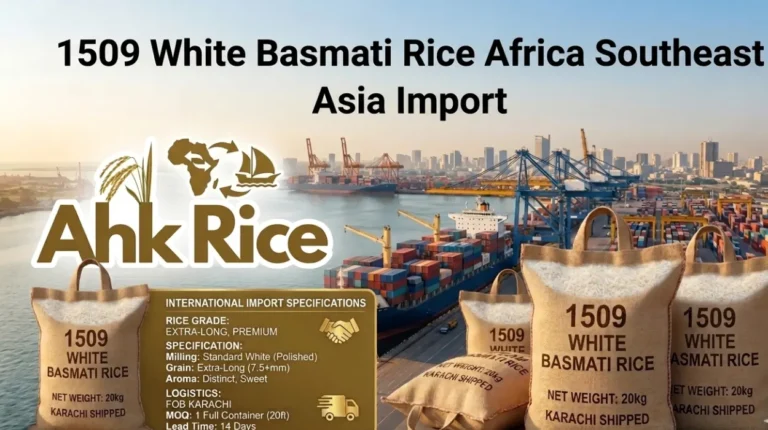
Common export sizes include 1 kg, 2 kg, 5 kg, 10 kg, 20 kg, 25 kg, and 50 kg bags.
Which quality components influence American buying decisions?
American buyers evaluate measurable quality specifications instead of marketing claims. Grain length, broken percentage, aroma intensity, purity, moisture content, chalkiness, foreign matter, milling degree, aging, and packaging standards directly influence purchasing decisions across retail and food service sectors.
Professional buyers compare technical specifications before placing orders.
Grain length
Long grains improve visual presentation.
Premium categories generally exceed 7.5 mm.
Broken percentage
Broken grains reduce visual appeal.
Common export grades include:
- 0%
- 1%
- 2%
- 5%
Lower broken percentages command higher market value.
Aroma
Natural aromatic compounds develop during cultivation and aging.
Authentic Basmati releases a distinctive fragrance during cooking without artificial additives.
Purity
Purity measures the percentage of a single rice variety within one shipment.
Higher varietal purity creates consistent cooking behavior.
Chalkiness
Chalky grains contain opaque white sections.
Lower chalkiness improves milling recovery and cooked appearance.
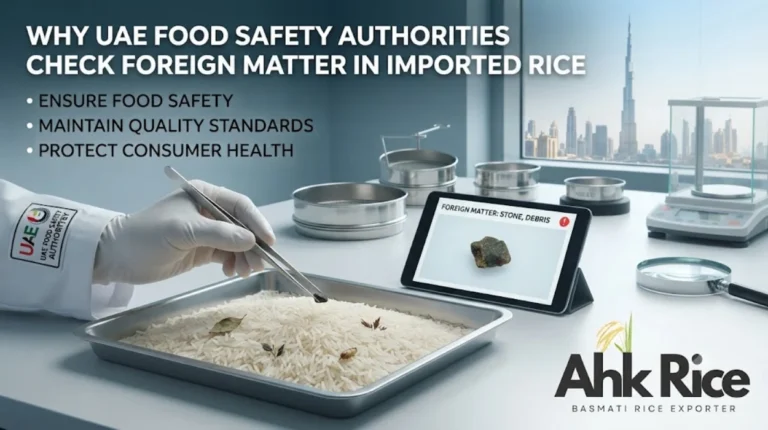
Foreign matter
Premium export rice contains extremely low foreign material after mechanical cleaning and optical sorting.
What benefits do different Basmati varieties provide?
Each Pakistani Basmati variety delivers measurable culinary advantages. Longer grains improve presentation, balanced starch improves texture, natural aroma enhances flavor, controlled moisture extends storage, and premium grading supports consistent cooking across restaurants, catering businesses, and household kitchens.
Different recipes demand different rice characteristics.
1121 excels in large celebration meals because elongated grains remain visually attractive.
Super Kernel performs well in everyday family meals because aroma remains rich while cooking stays simple.
1509 supports commercial food production because batch consistency remains high.
American consumers also appreciate:
- Better grain separation
- Attractive serving appearance
- Natural fragrance
- Uniform cooking
- Lower stickiness
- Excellent reheating performance
Where is each variety commonly used in the United States?
Different food sectors select different Basmati varieties according to recipe requirements. Restaurants prioritize presentation, retailers emphasize consistency, meal manufacturers require processing stability, while households often balance aroma, cooking time, and affordability when selecting premium imported Pakistani rice.
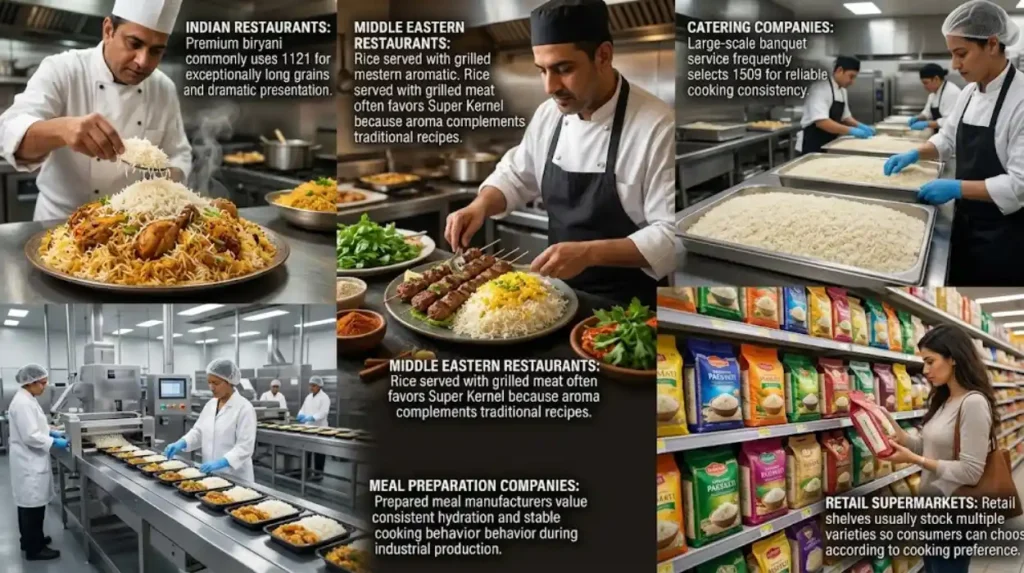
Food service purchasing varies significantly.
Indian restaurants
Premium biryani commonly uses 1121 because exceptionally long grains create dramatic presentation.
Middle Eastern restaurants
Rice served with grilled meat often favors Super Kernel because aroma complements traditional recipes.
Catering companies
Large-scale banquet service frequently selects 1509 for reliable cooking consistency.
Retail supermarkets
Retail shelves usually stock multiple varieties so consumers can choose according to cooking preference.
Meal preparation companies
Prepared meal manufacturers value consistent hydration and stable cooking behavior during industrial production.
What misconceptions exist about choosing the best Basmati variety?
Several popular beliefs incorrectly simplify Basmati quality. Longer grain alone does not determine superiority. Higher price alone does not guarantee better cooking. Every recipe requires different physical and cooking characteristics for optimal performance and consumer satisfaction.
Consumers often compare only grain length.
Cooking quality depends on several specifications working together.
One misconception states that every premium Basmati cooks identically.
Different varieties produce different aroma intensity, elongation ratios, and textures.
Another misconception assumes all broken rice indicates poor quality.
Commercial contracts intentionally specify broken percentages according to intended applications.
Some food manufacturers select slightly higher broken grades because processing requirements differ from premium restaurant presentation.
Another misunderstanding concerns aging.
Older rice does not automatically produce better cooking.
Proper storage conditions determine whether aging improves grain quality.
Temperature, humidity, ventilation, and packaging all influence storage performance.
Why do measurable specifications matter more than variety names?
Technical specifications provide objective quality measurements that remain consistent across suppliers. Buyers compare grain dimensions, moisture, broken percentage, purity, milling quality, and aging because numerical standards predict cooking performance more accurately than product names alone.
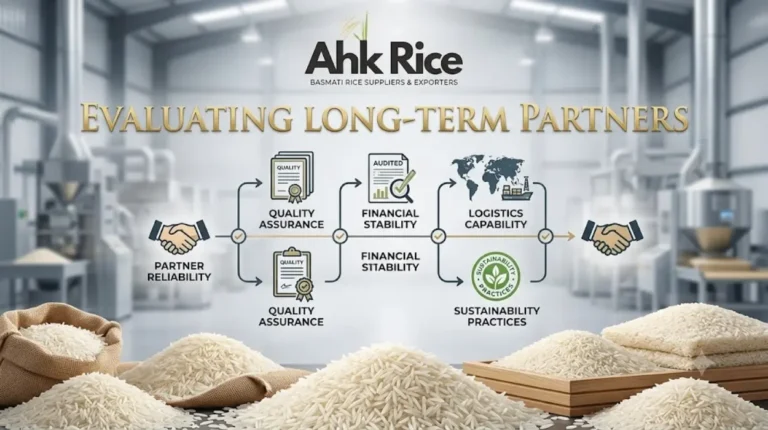
Professional food buyers rely on specification sheets.
Restaurants compare elongation ratios.
Retailers evaluate packaging.
Importers verify phytosanitary compliance.
Quality laboratories examine moisture, purity, and grain dimensions before shipment approval.
These measurable values create consistency throughout international trade.
Selecting Basmati based solely on variety names overlooks the factors that actually determine cooking performance.
American kitchens achieve the most reliable results when rice characteristics match the intended recipe, cooking method, and serving style. Pakistan 1121 excels in maximum grain elongation, Super Kernel delivers balanced aroma and texture, while Pakistan 1509 offers dependable consistency and efficient cooking performance. Understanding grain length, processing methods, broken percentages, aging, purity, and moisture standards allows buyers and consumers to select the most suitable Basmati rice for every culinary application.
Frequently Asked Questions
Which Basmati rice variety is most popular in American kitchens?
Pakistan 1121 Basmati is widely preferred for biryani and premium rice dishes because of its extra-long grain and excellent elongation after cooking. Super Kernel and 1509 also have strong demand for different cooking applications.
What makes 1121 Basmati different from Super Kernel Basmati?
1121 Basmati has longer grains and greater elongation after cooking, while Super Kernel offers a stronger traditional aroma and a softer texture. Both varieties are premium Pakistani Basmati rice.
Is 1509 Basmati suitable for restaurants in the United States?
Yes. Pakistan 1509 Basmati provides consistent grain size, reliable cooking performance, and uniform quality, making it suitable for restaurants, catering businesses, and food manufacturers.
Which Basmati rice has the longest cooked grain?
Pakistan 1121 Steam Basmati produces the longest cooked grain among major Pakistani Basmati varieties, often expanding to nearly twice its original length under proper cooking conditions.
Why does grain length matter when choosing Basmati rice?
Longer grains improve the appearance of rice dishes, enhance plate presentation, and maintain better grain separation after cooking, especially in biryani, pulao, and banquet meals.
Does broken percentage affect cooking quality?
Yes. Lower broken percentages improve the visual appearance and uniformity of cooked rice. Premium export grades commonly contain 0%, 1%, 2%, or 5% broken grains.
Which Pakistani region grows premium Basmati rice?
Most export-quality Pakistani Basmati rice is grown in Punjab, where fertile alluvial soil, canal irrigation, and suitable climate conditions support the production of premium aromatic rice.
How is Pakistani Basmati rice processed before export?
The process includes harvesting, drying, cleaning, milling, polishing, grading, optical color sorting, quality inspection, packaging, and export documentation before international shipment.
What certifications are commonly required for Pakistani Basmati rice exports?
Common certifications include ISO 22000, HACCP, FSSC 22000, Halal certification, Phytosanitary Certificate, and other export compliance documents required by importing countries.
How should Basmati rice be stored after purchase?
Store Basmati rice in a clean, dry, airtight container away from moisture, direct sunlight, and strong odors. Proper storage preserves aroma, texture, and overall grain quality for an extended period.