Rice Import Regulations and GSAS Certification Requirements in Qatar 2026
Rice import regulations Qatar GSAS 2026 define the legal, food safety, and sustainability framework governing rice entry into Qatar, including customs documentation, inspection protocols, and GSAS compliance requirements ensuring imported rice meets national quality, halal, and environmental standards framework system.
Rice import regulations in Qatar combine customs law, food safety policy, and sustainability assessment rules. The system applies to all rice shipments entering the country through ports and air cargo. It is enforced by national customs authorities and food control departments working under unified GCC trade structures.
The GSAS component introduces sustainability controls into food imports. GSAS stands for Global Sustainability Assessment System, a framework used in Qatar to evaluate environmental performance. For rice imports, it influences packaging standards, storage efficiency, and environmental compliance expectations.
These regulations apply to all exporting countries including major suppliers such as Pakistan and others within the Gulf Cooperation Council trade network.
How do rice import regulations work in Qatar?
Rice import regulations in Qatar operate through customs clearance, document verification, laboratory testing, and compliance checks under Qatar Customs Authority and food safety bodies ensuring imported rice meets GSAS standards, labeling laws, and halal certification requirements before market release approval.
The process begins before shipment departure. Exporters submit documents including invoices, certificates of origin, and phytosanitary approvals. These documents are reviewed digitally under Qatar’s customs system.
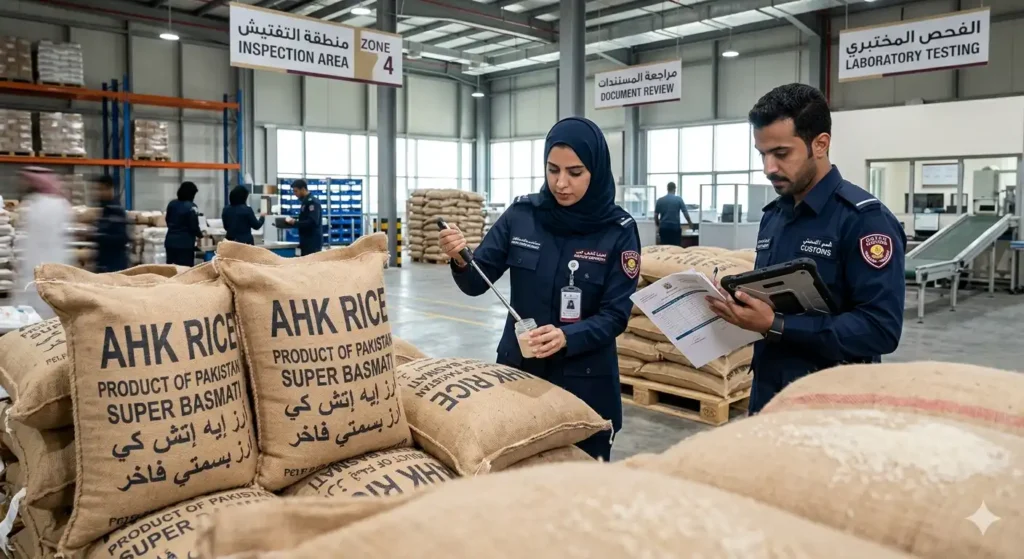
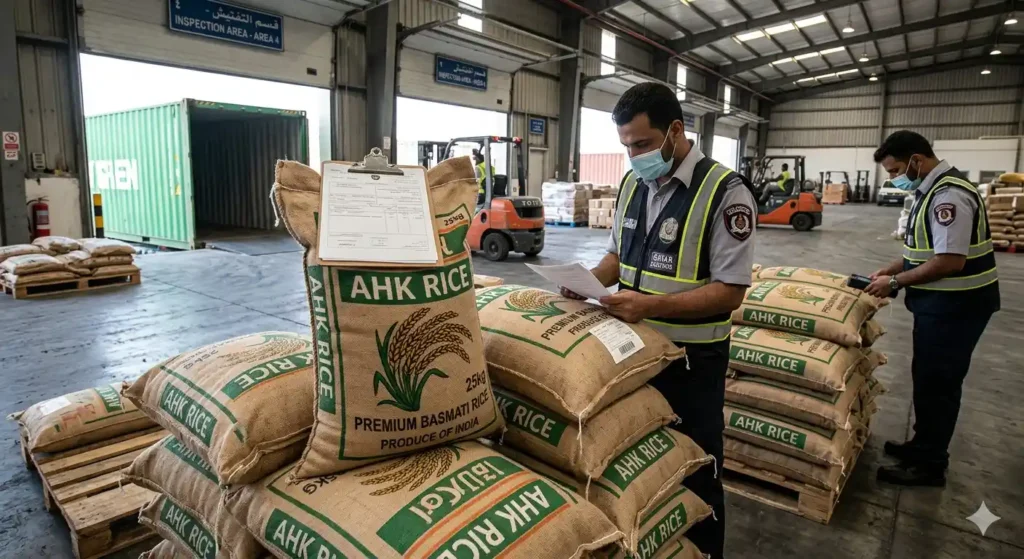
After arrival, rice shipments enter inspection stages. Customs officers verify packaging, labeling, and declared specifications. Samples are taken for laboratory testing to confirm food safety compliance. Any mismatch between documents and physical shipment results in delays or rejection.
The process is aligned with GCC-wide trade rules, ensuring standardized entry procedures across member states. This reduces variation in import controls across the region and strengthens cross-border food safety enforcement.
What are key components of Qatar rice customs system?
Qatar rice customs system includes tariff classification, import permits, inspection checkpoints, phytosanitary certification, packaging verification, and digital customs declarations ensuring rice shipments comply with GCC unified customs code, safety standards, and GSAS food compliance requirements for import clearance process flow.
The customs system is structured around classification codes that define rice type, origin, and quality category. Each shipment is assigned a tariff code that determines applicable duties and inspection intensity.
Import permits are mandatory for commercial rice shipments. These permits confirm that the importer is registered and authorized to handle food commodities. Inspection checkpoints operate at ports to verify cargo integrity and prevent contamination.
Digital declarations are now standard. Importers submit shipment data through electronic customs platforms. This reduces manual processing and improves traceability across supply chains.
The system aligns with unified GCC customs frameworks, ensuring standardized import procedures across member countries.
What GSAS food standard requirements apply to rice imports?
GSAS food standard requirements for rice imports establish sustainability, energy efficiency, and food safety benchmarks for imported rice in Qatar, focusing on packaging impact, carbon footprint reduction, storage conditions, and compliance with environmental performance criteria under Qatar GSAS framework system guidelines.
GSAS requirements introduce environmental accountability into food imports. Rice packaging must support reduced environmental impact, including recyclable materials and efficient weight-to-volume ratios. Storage facilities are evaluated for energy efficiency and temperature control systems.
Carbon footprint assessment applies to logistics chains. Importers are expected to optimize transport routes and reduce emissions during shipping. This affects bulk rice exporters supplying large volumes to Qatar.
These requirements do not replace food safety rules but operate alongside them. They add an additional compliance layer focused on sustainability outcomes in food trade systems.
What certifications are required for GCC rice import Qatar?
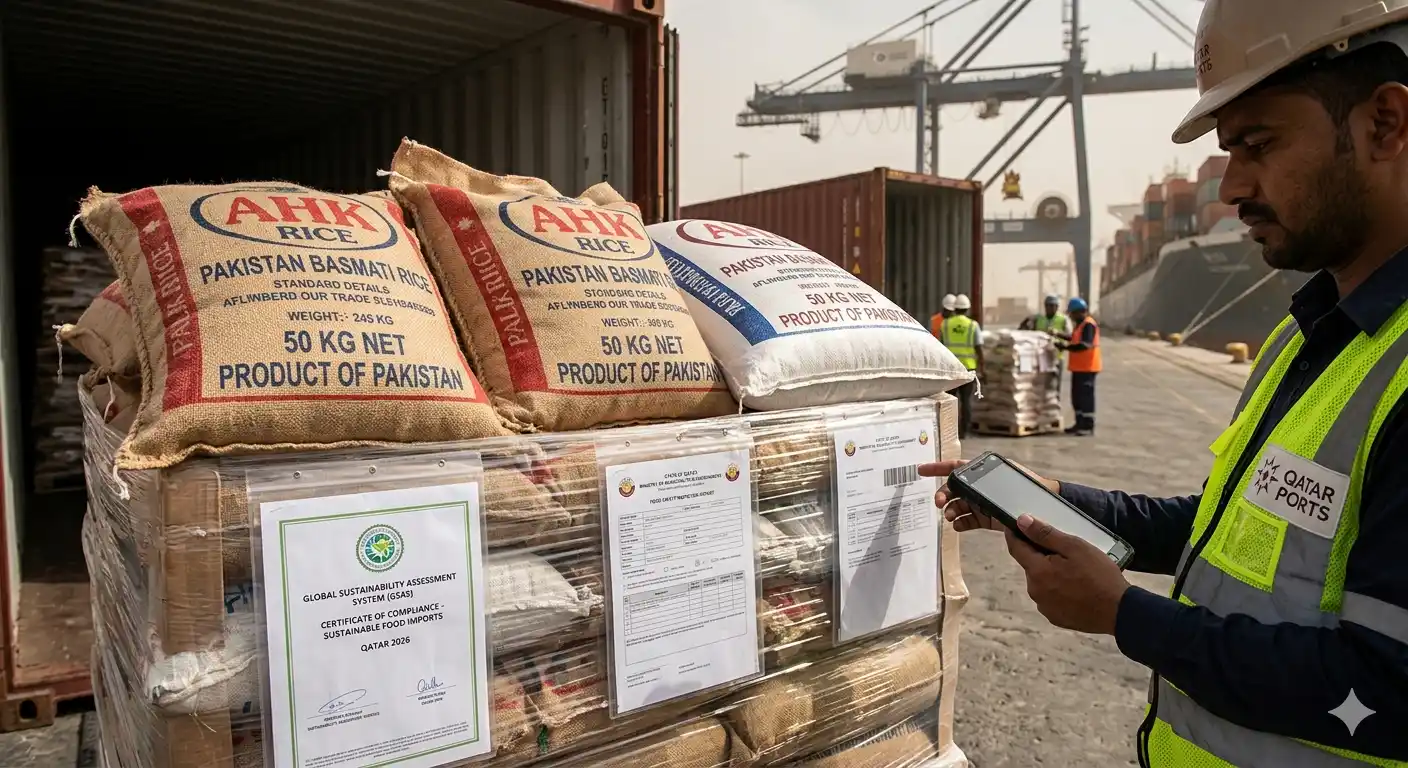
Rice imports into Qatar under GCC trade framework require phytosanitary certificates, halal certification, country of origin documents, and quality conformity certificates ensuring compliance with GCC unified food safety standards and Qatar Customs import regulations for legal market entry approval process.
Phytosanitary certificates confirm that rice is free from pests and agricultural contaminants. These certificates are issued by exporting country authorities after inspection.
Halal certification is mandatory for all food products in Qatar. It ensures compliance with Islamic dietary laws and verifies that processing, storage, and transport meet halal requirements. Certification must be issued by approved halal bodies recognized by GCC authorities.
Country of origin documentation confirms where rice was grown and processed. Quality conformity certificates validate grading standards such as broken rice percentage and moisture content.
These certifications work together to ensure consistency across GCC food import systems.
What are Halal rice certificate requirements in Qatar?
Halal rice certificate requirements in Qatar ensure rice products are processed, stored, and transported according to Islamic dietary laws, verified by approved halal authorities, and supported by traceability documentation confirming absence of prohibited substances and cross contamination standards certification system.
Halal certification focuses on process integrity rather than the rice itself, as rice is naturally permissible. The key requirement is preventing contamination during milling, packaging, and transport.
Approved halal authorities audit production facilities. They verify cleaning procedures, equipment separation, and handling protocols. Traceability documentation ensures every batch can be tracked from origin to shipment.
Cross-contamination prevention is critical in shared facilities that process multiple food types. Certification requires strict segregation systems and validated cleaning cycles.
These requirements are enforced at customs entry points in Qatar before market distribution approval.
What are common problems in Qatar rice import compliance?
Common problems in Qatar rice import compliance include missing phytosanitary documents, incorrect labeling, non-compliant packaging materials, delays in customs clearance, and failure to meet GSAS sustainability standards, leading to shipment rejection or extended inspection procedures at ports processing regulatory delay.
Documentation errors are the most frequent issue. Missing or mismatched certificates delay customs clearance and trigger secondary inspections.
Labeling violations occur when product information does not match GCC labeling requirements. This includes incorrect weight declarations, origin misstatements, or missing Arabic labeling.
Packaging non-compliance arises when materials do not meet food-grade or sustainability requirements. GSAS-related issues often involve inefficient packaging design or non-recyclable materials.
These problems increase inspection time and can lead to partial or full shipment rejection at ports.
What are use cases of GSAS compliant rice supply chains?
GSAS compliant rice supply chains are used in government procurement, retail distribution, hospitality supply, and international trade contracts ensuring sustainable sourcing, traceable logistics, and regulatory compliance with Qatar food safety and GCC import standards across regulated market systems framework operations.
Government procurement programs require GSAS-aligned sourcing to ensure sustainability compliance in public food distribution systems. Retail chains use GSAS-compliant rice to meet consumer demand for certified quality products.
Hospitality sectors, including hotels and catering services, rely on consistent import quality and traceable supply chains to maintain food safety standards.
International trade contracts increasingly specify GSAS compliance as a requirement for long-term supply agreements. This strengthens accountability across exporters and importers operating in GCC markets.
Exporters such as those supplying from Pakistan integrate these standards into processing and export workflows.