Rice Packaging Sizes and SFDA Labelling Rules for Saudi Arabia in 2026
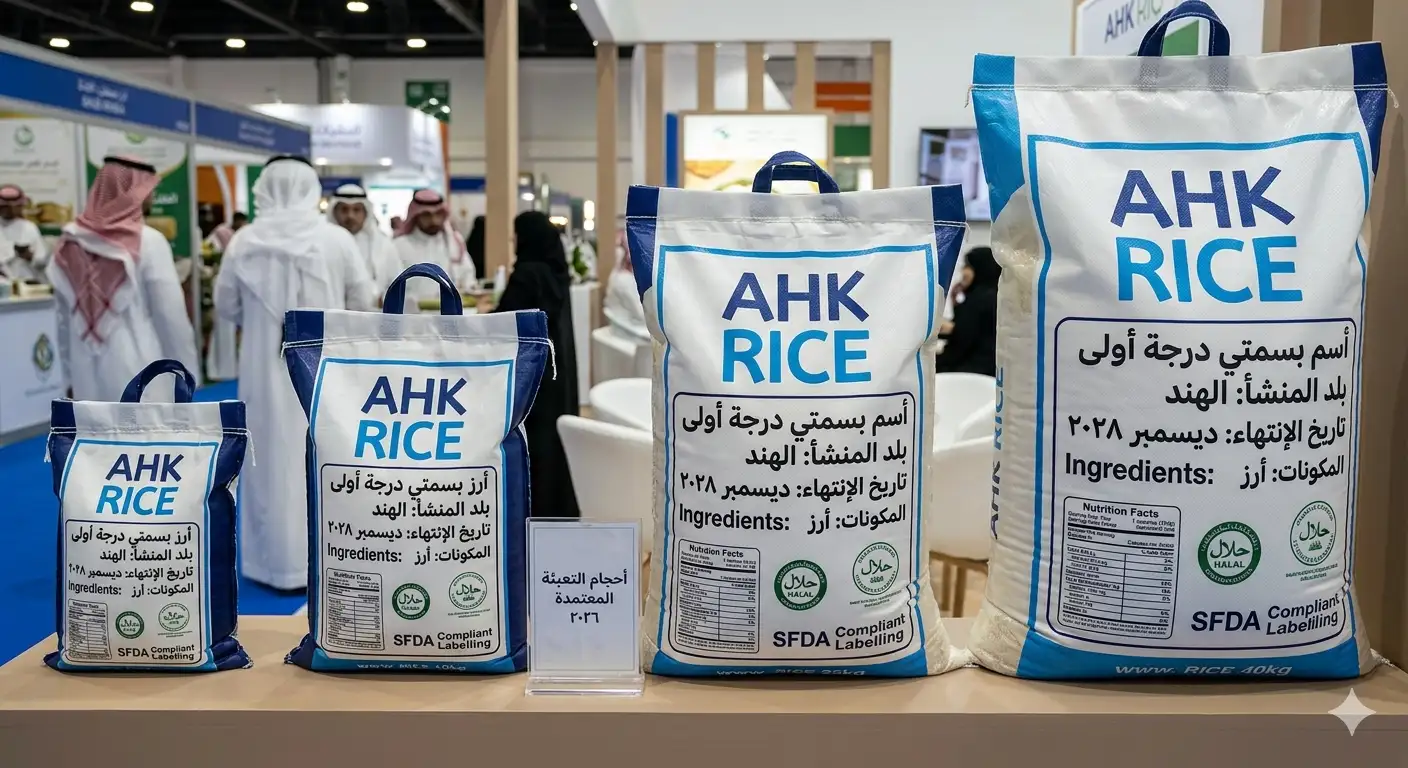
Rice packaging sizes define the standardized weight formats used for distribution and retail, while SFDA labeling rules specify mandatory product information in Arabic, including origin, expiry, ingredients, and Halal compliance for legal sale in Saudi Arabia in 2026.
Rice packaging sizes refer to the physical quantity of rice packed in a single unit. These sizes are standardized across supply chains to ensure logistics efficiency, retail compatibility, and regulatory compliance. In Saudi Arabia, packaging sizes follow both consumer demand patterns and import regulations.
The Saudi Food and Drug Authority (SFDA) governs labeling requirements. SFDA labeling rules ensure transparency, traceability, and consumer safety. Every rice bag entering Saudi Arabia must display accurate, verified, and Arabic-language information.
Packaging and labeling operate together. Packaging protects the product and determines distribution efficiency. Labeling communicates legal and nutritional information required for market entry.
How do rice packaging sizes and SFDA labeling work together in Saudi Arabia?
Rice packaging determines product segmentation and logistics, while SFDA labeling ensures compliance by attaching legally required information to each packaging unit, enabling customs clearance, retail distribution, and consumer trust across Saudi Arabia’s regulated food market.
Packaging size directly influences labeling format. A 1 kg retail pack requires different label formatting compared to a 50 kg bulk bag. Smaller packs emphasize branding and nutritional clarity. Larger packs prioritize traceability and batch-level data.
The process starts at origin. Rice is milled, graded, and sorted. After processing, it is packed into predefined sizes such as 1 kg, 5 kg, 10 kg, 20 kg, and 40 kg bags. Each unit receives a label before shipment.
At Saudi ports, authorities inspect both packaging and labeling. Incorrect label language, missing expiry dates, or unclear origin statements result in rejection.
Retailers rely on consistent packaging sizes. Supermarkets stock 5 kg and 10 kg packs for household consumers. Wholesale distributors handle 20 kg and 40 kg bags for restaurants and catering businesses.
What are the standard rice packaging sizes used in Saudi Arabia?
Saudi Arabia uses standardized rice packaging sizes including 1 kg, 2 kg, 5 kg, 10 kg, 20 kg, and 40 kg, each designed for specific market segments such as retail consumers, families, and bulk buyers in horeca and wholesale sectors.
Retail packaging sizes
Retail packaging focuses on convenience and shelf visibility. Common sizes include:
- 1 kg for single users or trial purchases
- 2 kg for small households
- 5 kg for average families
- 10 kg for large households
These sizes dominate supermarkets and grocery stores. Consumers prefer manageable weight and resealable packaging.
Bulk packaging sizes
Bulk packaging targets commercial buyers. Examples include:
- 20 kg bags for restaurants
- 40 kg bags for catering companies
- 50 kg bags for wholesale distribution
Bulk packaging reduces cost per kilogram. It improves storage efficiency and transport economics.
Export-oriented packaging
Exporters customize packaging based on Saudi importer requirements. For example, premium basmati rice is often packed in 5 kg and 10 kg branded bags, while non-premium varieties use 20 kg or 40 kg sacks.
What are the key components of SFDA rice labeling requirements in 2026?
SFDA rice labeling requires Arabic language labeling, product name, net weight, country of origin, production and expiry dates, storage instructions, batch number, importer details, and Halal certification to ensure regulatory compliance in Saudi Arabia.
Mandatory label elements
Each rice package must include:
- Product name in Arabic
- Net weight in metric units
- Country of origin (example: Pakistan, India)
- Production date and expiry date
- Shelf life duration
- Storage instructions
- Batch or lot number
- Importer name and address in Saudi Arabia
These elements ensure traceability and consumer awareness.
Arabic language requirement
Arabic is mandatory. English can appear as a secondary language. Labels without Arabic text are rejected during inspection.
Halal compliance labeling
Rice is inherently Halal. However, SFDA requires a Halal statement or certification reference for processed and packaged foods. This builds consumer confidence in the Saudi market.
How is rice processed and packaged before export to Saudi Arabia?
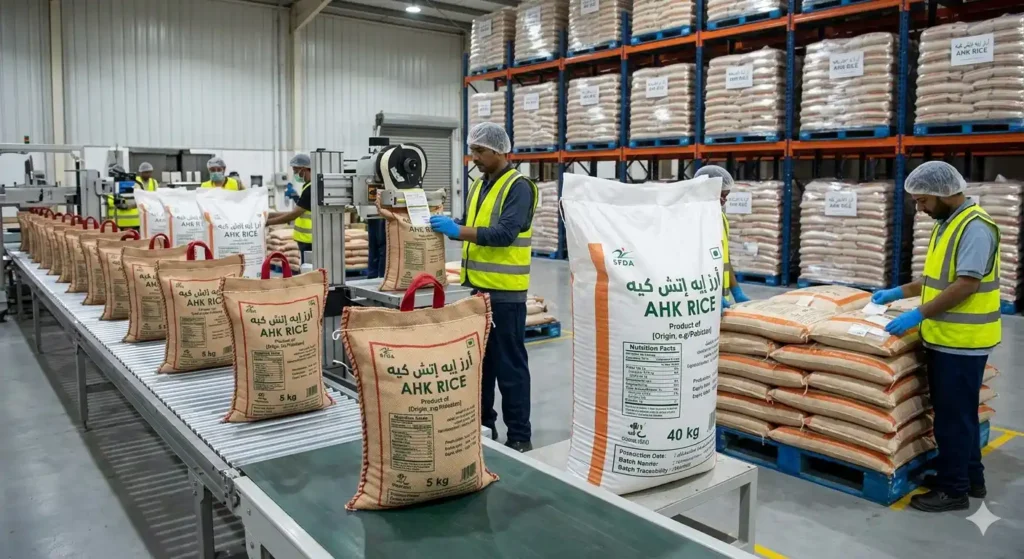
Rice processing involves cleaning, dehusking, polishing, grading, and sorting, followed by automated weighing and packaging into standardized sizes, after which SFDA-compliant labels are applied before shipment to Saudi Arabia.
Step-by-step processing
- Paddy rice arrives from farms
- Cleaning removes dust, stones, and impurities
- Husking separates husk from grain
- Polishing improves grain appearance
- Grading classifies rice by size and quality
- Sorting removes broken or defective grains
Each step ensures uniform quality.
Packaging process
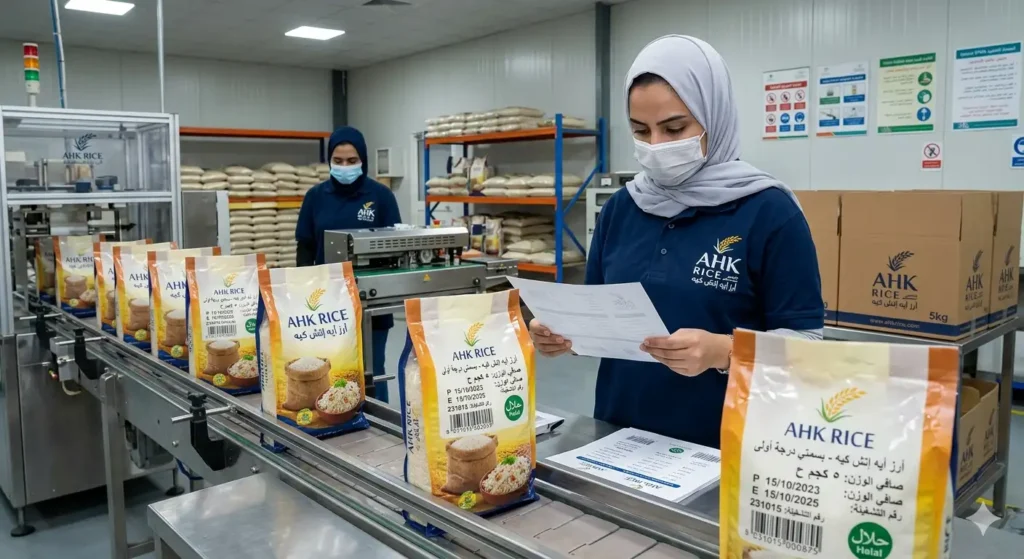
After processing, rice moves to packaging lines. Automated machines fill bags with precise weights such as 5 kg or 10 kg. Bags are sealed to prevent contamination.
Different materials are used:
- PP woven bags for bulk packaging
- BOPP laminated bags for retail
- Vacuum packs for premium rice
Labeling is applied after sealing. Each package receives a printed or sticker label with all SFDA-required information.
What are the benefits of standardized rice packaging sizes and SFDA labeling?
Standardized packaging sizes improve logistics efficiency, cost control, and inventory management, while SFDA labeling ensures legal compliance, consumer trust, product traceability, and smooth customs clearance in Saudi Arabia’s regulated food import system.
Standard sizes simplify transportation. Containers are loaded efficiently when packaging follows consistent dimensions.
Retailers benefit from predictable shelf space planning. A 5 kg bag occupies known space, enabling optimized store layouts.
Consumers gain clarity. Clear labeling helps buyers identify origin, quality, and expiry details quickly.
Importers avoid regulatory risks. Proper labeling prevents shipment delays and financial losses.
Traceability improves safety. Batch numbers allow quick identification of specific shipments in case of quality issues.
What are the main use cases for different rice packaging sizes in Saudi Arabia?
Different rice packaging sizes serve specific use cases such as household consumption, retail sales, horeca operations, and wholesale distribution, ensuring that each segment receives suitable quantities aligned with consumption patterns and storage capabilities.
Household consumption
Families prefer 5 kg and 10 kg packs. These sizes balance affordability and storage convenience.
Retail distribution
Supermarkets stock 1 kg, 2 kg, and 5 kg packs. These sizes attract different customer segments, including small households and premium buyers.
Horeca sector
Hotels, restaurants, and catering businesses use 20 kg and 40 kg bags. These operations require large quantities for daily cooking.
Wholesale trade
Distributors handle 40 kg and 50 kg bags. These sizes reduce handling costs and improve supply chain efficiency.
Each use case aligns packaging size with consumption frequency and storage capacity.
What are common problems and misconceptions in rice packaging and SFDA labeling?
Common problems include incorrect Arabic translations, missing expiry dates, improper weight declarations, and misunderstanding Halal labeling requirements, while misconceptions involve assuming all packaging sizes are accepted without considering Saudi-specific regulatory standards.
Label translation errors
Incorrect Arabic translations lead to rejection. Direct translation without cultural and regulatory accuracy creates compliance issues.
Missing mandatory information
Omitting batch numbers or importer details violates SFDA rules. Every required field must be present and accurate.
Incorrect weight labeling
Net weight must match actual content. Overstating or understating weight results in penalties and shipment rejection.
Misunderstanding Halal requirements
Some exporters assume rice does not require Halal labeling. SFDA requires clear Halal indication for packaged food products.
Packaging size assumptions
Exporters often assume global packaging sizes are accepted. Saudi Arabia has specific preferences and retail norms that must be followed.
How do certifications support rice packaging and labeling compliance in Saudi Arabia?
Certifications such as ISO, HACCP, and Halal verify product safety, quality management, and religious compliance, supporting SFDA labeling requirements and strengthening acceptance of rice products in Saudi Arabia’s import and retail systems.
ISO certification
ISO standards ensure consistent quality management systems. They validate processing and packaging reliability.
HACCP compliance
Hazard Analysis and Critical Control Points (HACCP) ensures food safety during processing and packaging stages.
Halal certification
Halal certification confirms compliance with Islamic dietary laws. It is essential for consumer trust in Saudi Arabia.
Phytosanitary certification
This certificate confirms that rice is free from pests and diseases. It is required for import clearance.
Certifications reinforce labeling claims. They provide documented proof that information on the label is accurate and verified.