Shipping Rice from Pakistan to Iraq via Umm Qasr Port in 2026
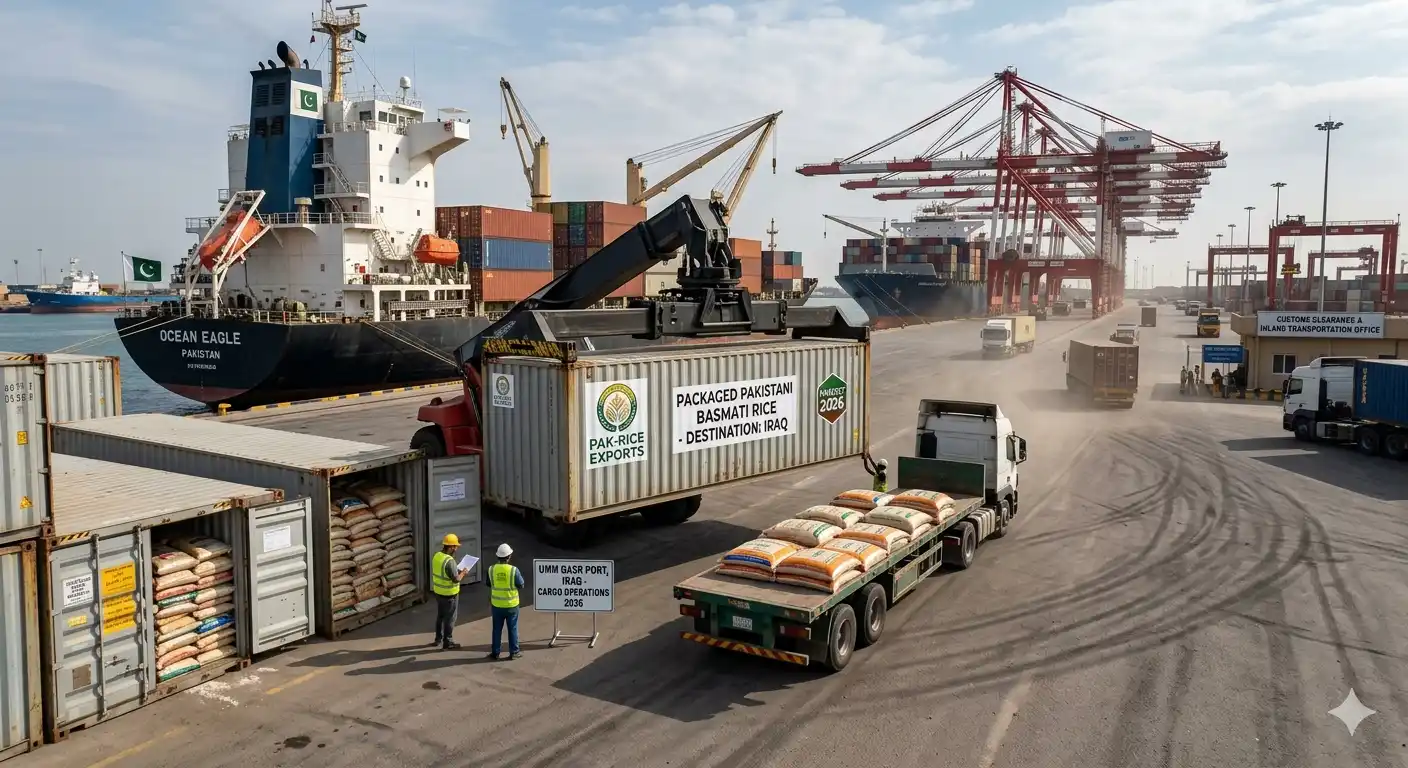
Rice shipping from Pakistan to Iraq in 2026 is the structured export process where processed rice moves from Pakistani mills to Iraqi import hubs through sea freight, primarily via Karachi Port to Umm Qasr Port, with defined transit times, documentation, and inland delivery systems.
Rice shipping defines a complete logistics chain. It starts at rice mills in Punjab. It ends at wholesale markets in Iraqi cities such as Baghdad and Basra.
The primary export route begins at Karachi Port. Containers are loaded with milled rice varieties such as 1121 Basmati, Super Kernel Basmati, and 1509 Basmati. These containers move through the Arabian Sea and enter the Persian Gulf.
Umm Qasr Port acts as Iraq’s main maritime gateway. It handles over 80% of the country’s imports. After arrival, cargo undergoes customs clearance and inland transportation.
The full shipping duration includes inland haulage in Pakistan, port handling, sea transit, customs processing in Iraq, and final delivery.
How does the rice shipping process from Pakistan to Iraq work step by step?
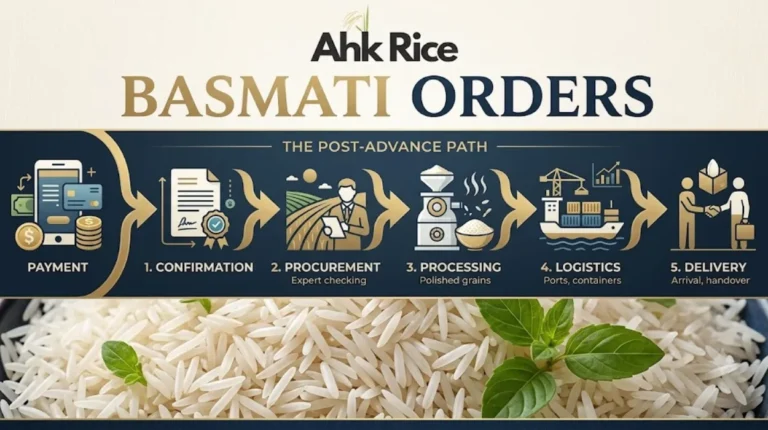
Rice shipping from Pakistan to Iraq works through sequential stages including milling, grading, packaging, containerization, port handling, sea freight transit, customs clearance at Umm Qasr, and inland transport to Iraqi cities, taking a total of 18 to 30 days depending on operational efficiency.
Step 1: Milling and Processing
Rice is harvested in Punjab. It undergoes drying, husking, polishing, grading, and sorting. Each step ensures uniform grain length and moisture control between 12% and 14%.
Step 2: Quality Grading and Sorting
Grading defines rice categories. Examples include:
- Extra long grain (8.2 mm+)
- Long grain (7.5–8.1 mm)
- Broken rice (5%–25%)
Sorting machines remove impurities such as stones and husk particles.
Step 3: Packaging and Labeling
Rice is packed in export-grade bags. Common packaging formats include:
- 5 kg, 10 kg retail bags
- 25 kg and 50 kg bulk bags
Each bag contains labeling details such as origin, crop year, and net weight.
Step 4: Inland Transport to Karachi
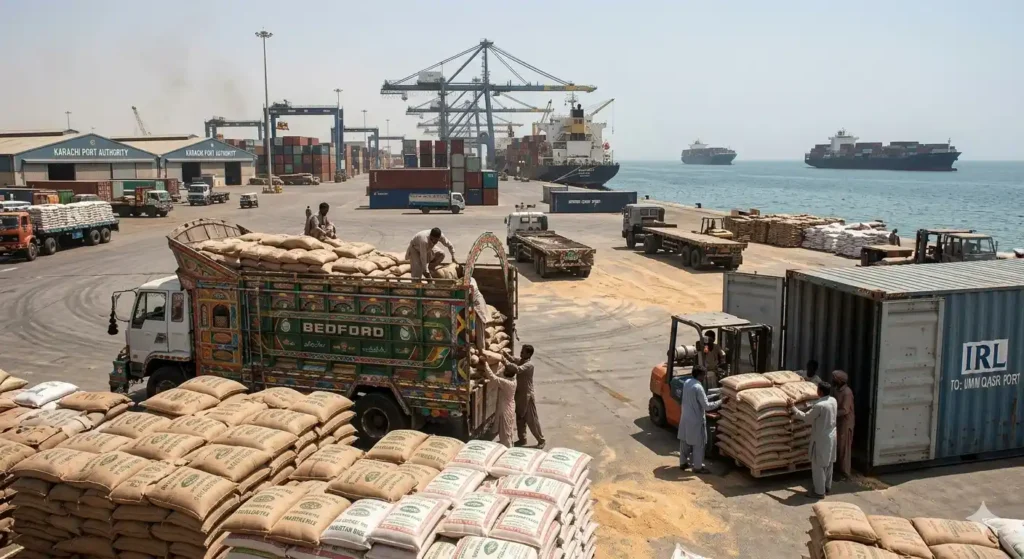
Packed rice moves via trucks from Punjab to Karachi. The average distance is 1,200 km. Transit time ranges from 2 to 3 days.
Step 5: Port Handling and Containerization
At Karachi Port, rice is loaded into 20-foot or 40-foot containers. Each 20-foot container carries approximately 24 metric tons.
Containers are sealed and documented.
Step 6: Sea Freight to Umm Qasr Port
The sea route covers approximately 2,000 to 2,500 nautical miles. Shipping duration ranges from 7 to 14 days depending on vessel schedules.
Step 7: Customs Clearance at Umm Qasr
Iraqi authorities inspect documentation and cargo. Clearance time ranges from 3 to 7 days.
Step 8: Inland Delivery to Iraqi Cities
Cargo moves via trucks to cities such as Baghdad, Najaf, and Erbil. Delivery takes 2 to 5 days depending on distance.
What are the key components affecting rice shipping duration?
Key components affecting rice shipping duration include inland transport time, port congestion, vessel schedules, customs clearance efficiency, and inland distribution networks in Iraq, each contributing specific time segments that define total transit duration.
Inland Logistics in Pakistan
Distance from Punjab to Karachi defines initial delay. Efficient trucking reduces delays to under 72 hours.
Port Operations
Karachi Port handling time ranges from 2 to 5 days. Delays occur due to container backlog or documentation issues.
Vessel Availability
Shipping lines operate weekly or biweekly schedules. Missing a vessel increases delay by 7 days.
Sea Freight Duration
Direct routes take 7 to 10 days. Indirect routes with transshipment take 12 to 18 days.
Customs Clearance in Iraq
Documentation accuracy directly impacts clearance speed. Errors add 3 to 5 extra days.
Inland Iraqi Transport
Distance examples:
- Umm Qasr to Baghdad: 550 km
- Umm Qasr to Erbil: 900 km
Transport time depends on road conditions and checkpoints.
What is the average shipping duration from Karachi to Umm Qasr Port in 2026?
The average shipping duration from Karachi to Umm Qasr Port in 2026 ranges between 18 and 30 days, including 3 days inland transport, 3–5 days port handling, 7–14 days sea transit, and 5–8 days for customs clearance and inland delivery in Iraq.
A breakdown provides clarity:
- Punjab to Karachi: 2–3 days
- Port processing: 3–5 days
- Sea freight: 7–14 days
- Iraq customs and delivery: 5–8 days
Total minimum duration: 17 days
Total maximum duration: 30 days
Delays occur due to port congestion, incomplete documentation, or geopolitical disruptions in the Gulf region.
What are the benefits of structured rice shipping routes between Pakistan and Iraq?
Structured rice shipping routes between Pakistan and Iraq provide predictable transit times, cost efficiency, consistent supply chain flow, and standardized quality control, enabling importers to manage inventory cycles and pricing strategies with precision.
Predictable Delivery Cycles
Fixed shipping schedules allow importers to plan inventory turnover. This reduces stockouts.
Cost Optimization
Bulk container shipping lowers cost per ton. Sea freight remains 60% cheaper than air cargo.
Quality Preservation
Controlled packaging and container sealing prevent contamination and moisture damage.
Trade Stability
Pakistan remains a top rice exporter. Iraq imports large volumes annually, exceeding 1 million metric tons.
Where is Pakistani rice used in Iraq after shipping?
Pakistani rice shipped to Iraq is used in retail markets, wholesale distribution, food service industries, and institutional supply chains such as hotels and catering services across cities including Baghdad, Basra, and Najaf.
Retail Markets
Rice is sold in supermarkets and local grocery stores. Examples include packaged 5 kg and 10 kg bags.
Wholesale Distribution
Importers distribute bulk rice to regional traders. These traders supply smaller retailers.
Food Service Sector
Restaurants use Basmati rice for dishes such as biryani and kabsa.
Institutional Buyers
Hotels and catering companies purchase rice in bulk quantities exceeding 1 ton per order.
What are the common problems in rice shipping from Pakistan to Iraq?
Common problems in rice shipping from Pakistan to Iraq include port congestion, documentation errors, inconsistent container availability, customs delays, and improper packaging, all of which increase total transit time and risk of cargo damage.
Port Congestion
High export volumes create delays at Karachi Port. Waiting time increases by 2 to 4 days.
Documentation Errors
Incorrect invoices or certificates delay customs clearance. Each error adds at least 48 hours.
Container Shortage
Limited container availability delays shipment scheduling. Peak seasons increase shortages.
Moisture Damage
Improper packaging leads to moisture absorption. This affects grain quality and weight.
Customs Inspections
Random inspections extend clearance time. High-risk shipments face longer scrutiny.
What misconceptions exist about rice shipping duration to Iraq?
Common misconceptions about rice shipping duration include the belief that sea freight always takes under 10 days, that customs clearance is instant, and that inland delivery in Iraq is uniform, while actual timelines vary based on multiple operational factors.
Misconception 1: Sea freight always takes 7 days
Direct routes take 7 days. Indirect routes extend to 14 days or more.
Misconception 2: Customs clearance is immediate
Clearance requires documentation verification. Average processing takes 3 to 7 days.
Misconception 3: All Iraqi cities receive cargo at the same speed
Distance and infrastructure vary. Delivery to Erbil takes longer than Basra.
Misconception 4: Packaging does not affect shipping
Improper packaging leads to damage and delays during inspection.
How do certifications and compliance affect rice shipping duration?
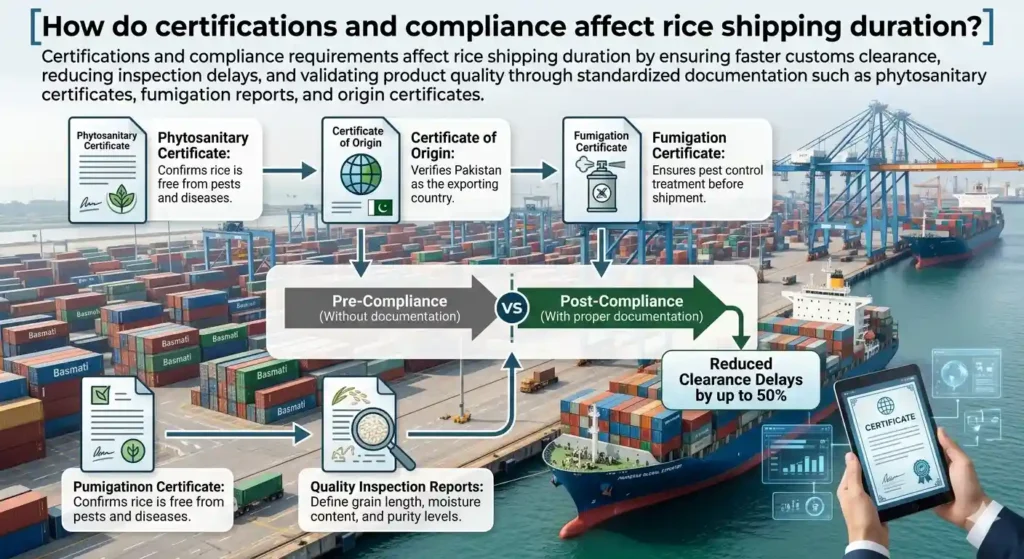
Certifications and compliance requirements affect rice shipping duration by ensuring faster customs clearance, reducing inspection delays, and validating product quality through standardized documentation such as phytosanitary certificates, fumigation reports, and origin certificates.
Phytosanitary Certificate
Confirms rice is free from pests and diseases.
Certificate of Origin
Verifies Pakistan as the exporting country.
Fumigation Certificate
Ensures pest control treatment before shipment.
Quality Inspection Reports
Define grain length, moisture content, and purity levels.
Accurate documentation reduces clearance delays by up to 50%.
How does Karachi to Iraq shipping compare with other routes?
Karachi to Iraq shipping offers shorter transit distance, direct sea routes, and lower freight costs compared to alternative origins such as India or Thailand, making it a preferred route for Iraqi rice importers seeking efficiency and consistent supply.
Distance Advantage
Karachi to Umm Qasr distance is shorter than Southeast Asian routes by approximately 1,500 nautical miles.
Cost Efficiency
Lower distance reduces fuel cost and freight charges.
Supply Chain Integration
Pakistan’s rice mills are directly connected to Karachi through road networks.
Delivery Speed
Average delivery time is 20% faster than shipments from Thailand.