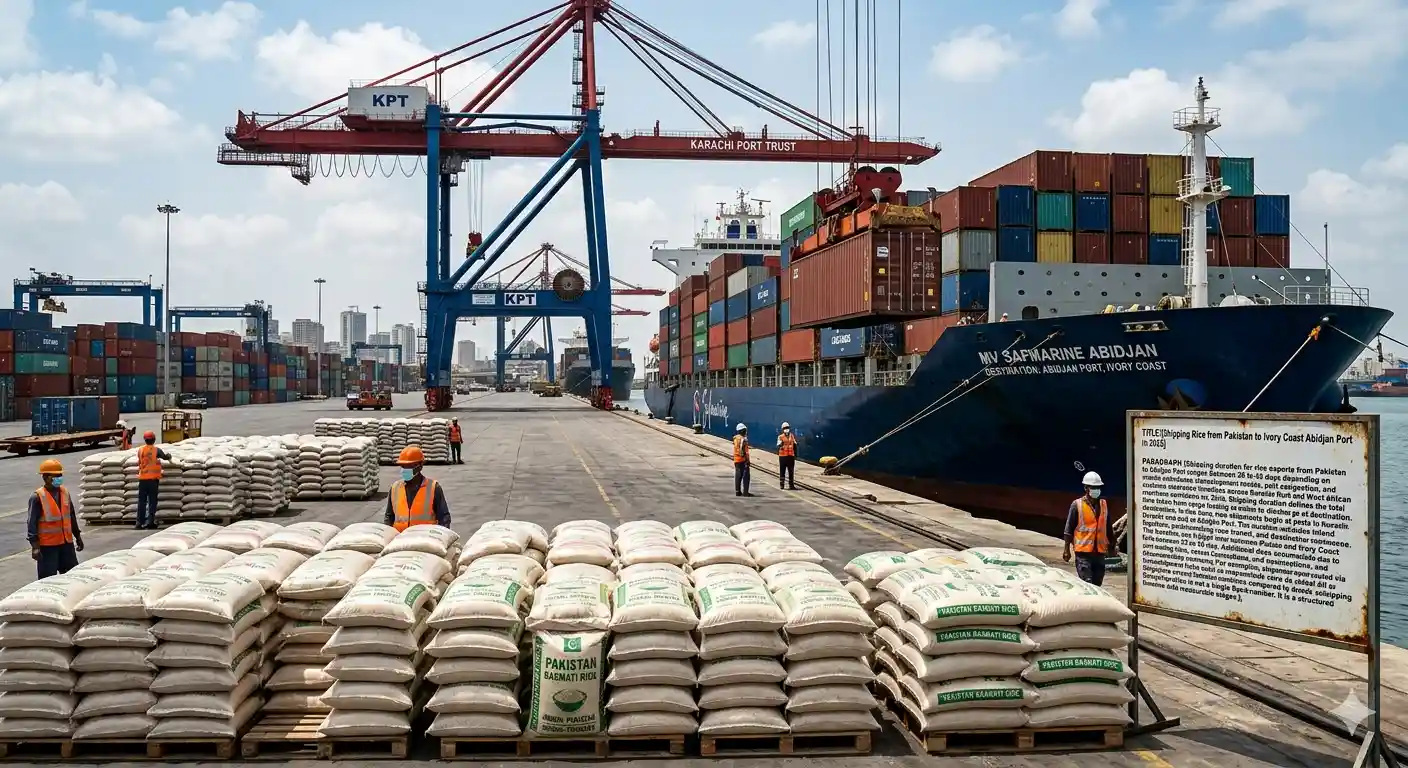
Shipping Rice from Pakistan to Ivory Coast Abidjan Port in 2026
Shipping duration for rice exports from Pakistan to Abidjan Port ranges between 28 to 42 days depending on vessel schedules, transshipment routes, port congestion, and customs clearance timelines across Karachi Port and West African maritime corridors in 2026.
Shipping duration defines the total time taken from cargo loading at origin to final discharge at destination. In this case, rice shipments begin at ports in Karachi and end at Abidjan Port. The duration includes inland logistics, port handling, sea transit, and destination clearance.
The baseline sea freight time between Pakistan and Ivory Coast falls between 22 to 30 days. Additional days accumulate due to port waiting time, vessel connections, and documentation processing. For example, shipments routed via transshipment hubs such as Jebel Ali or Singapore extend timelines compared to direct sailings.
Shipping duration is not a single fixed number. It is a structured timeline with measurable stages.
How does rice shipping from Pakistan to Ivory Coast work step by step?
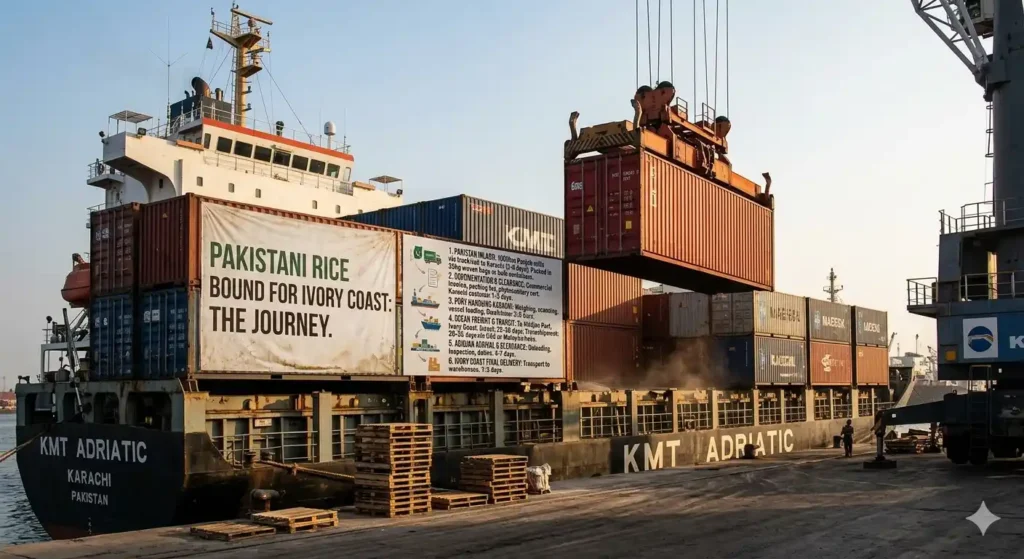
Rice shipping follows a structured process including inland transport, export documentation, port handling, ocean freight, transshipment if required, arrival handling at Abidjan Port, and customs clearance before final delivery within Ivory Coast distribution networks.
Inland Transportation and Cargo Preparation
Rice moves from mills in Punjab to Karachi through trucks or rail. The distance ranges between 1,000 to 1,200 kilometers. This stage takes 2 to 4 days depending on road conditions and loading efficiency.
Cargo is packed into export-ready bags or containers. Examples include 25 kg woven bags, 50 kg PP bags, and bulk container loading.
Export Documentation and Clearance
Exporters prepare documents such as:
- Commercial invoice
- Packing list
- Certificate of origin
- Phytosanitary certificate
Customs clearance at Karachi requires 1 to 3 days. Delays occur when documentation is incomplete.
Port Handling at Karachi
At Karachi Port, containers undergo weighing, scanning, and vessel loading. Port dwell time averages 3 to 5 days. During peak seasons, it extends to 7 days.
Ocean Freight and Transit
The shipment is loaded onto a vessel. Transit time depends on route:
- Direct shipping: 22 to 26 days
- Transshipment shipping: 28 to 35 days
Common transshipment hubs include UAE and Malaysia ports.
Arrival and Clearance at Abidjan Port
At Abidjan Port, containers are unloaded, inspected, and cleared. This stage takes 4 to 7 days. Customs procedures include duty verification and food safety checks.
Final Delivery
After clearance, rice is transported to warehouses or distributors within Ivory Coast. This takes 1 to 3 days depending on distance.
What are the key components that define rice shipping duration?
Key components include inland logistics time, export clearance duration, port handling efficiency, sea freight route selection, transshipment delays, and destination customs processing, all contributing measurable time segments in total shipping duration calculations.
Shipping duration is built from multiple time blocks. Each block has measurable impact.
Inland Logistics Time
This includes transport from mills to port. Poor road infrastructure increases time. Efficient logistics reduce delays.
Export Clearance Time
Customs processing depends on documentation accuracy. Digital filing reduces time compared to manual systems.
Port Congestion
Port congestion at Karachi or Abidjan increases waiting time. High export seasons create vessel backlogs.
Shipping Route Type
Direct routes reduce time. Transshipment adds 5 to 10 days. For example, cargo routed via Jebel Ali adds handling time at the intermediate port.
Weather Conditions
Storms and ocean conditions affect vessel speed. The Arabian Sea and Atlantic routes experience seasonal disruptions.
Destination Clearance
Inspection delays at Abidjan Port extend timelines. Strict food safety checks increase processing time.
What benefits does optimized rice shipping duration provide?
Optimized shipping duration ensures predictable delivery timelines, reduces storage costs, maintains rice quality, improves supply chain efficiency, and supports stable import distribution in Ivory Coast markets relying on consistent rice supply from Pakistan.
Shorter and predictable shipping cycles improve planning for importers. Rice is a staple commodity. Timely delivery supports continuous availability.
Reduced transit time preserves rice quality. Long exposure to humidity and temperature fluctuations reduces grain quality. Faster delivery maintains aroma and texture.
Lower storage costs result from reduced port dwell time. Importers avoid demurrage charges and warehouse fees.
Efficient shipping supports large-scale distribution networks. Importers in Ivory Coast rely on steady inflow to meet demand across urban and rural regions.
What are the main use cases of rice shipping between Pakistan and Ivory Coast?
Rice shipping between Pakistan and Ivory Coast supports bulk commodity trade, government procurement programs, private import distribution, and food security supply chains within West African markets dependent on imported staple grains.
Bulk Commercial Imports
Private importers purchase large volumes of rice. These shipments supply wholesalers and retailers. Examples include 10,000-ton consignments and containerized shipments.
Government Procurement
Governments import rice for food security programs. These shipments require strict delivery schedules.
Retail Distribution
Rice imported into Abidjan is distributed to supermarkets and local markets. Packaged rice in 5 kg and 10 kg bags targets urban consumers.
Food Industry Supply
Restaurants and food processors depend on imported rice. Consistent supply supports business operations.
What are common problems and misconceptions about rice shipping duration?
Common problems include misunderstanding total transit time, ignoring port delays, assuming direct routes always exist, and underestimating documentation impact, while misconceptions often treat shipping duration as fixed instead of variable across logistics stages.
Misconception: Shipping Always Takes 30 Days
Shipping duration is not fixed. It ranges between 28 to 42 days. Variability comes from logistics conditions.
Problem: Ignoring Port Delays
Many assume sea transit is the only factor. Port congestion adds significant delays.
Misconception: Direct Shipping is Always Available
Direct vessel routes are limited. Most shipments use transshipment hubs.
Problem: Incomplete Documentation
Missing documents delay customs clearance. This adds 3 to 7 days to total shipping time.
Misconception: Faster Shipping Equals Higher Cost Only
Faster shipping also reduces storage costs and product loss. It improves overall efficiency.
How does sea freight Pakistan Abidjan route impact transit time?
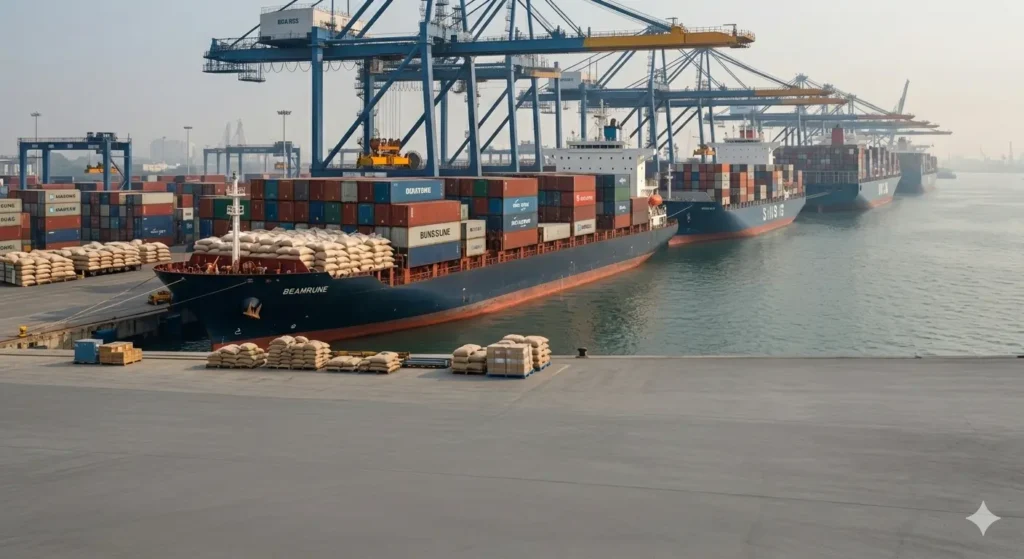
Sea freight routes between Pakistan and Abidjan determine transit time based on direct sailings, transshipment hubs, vessel frequency, and maritime corridor efficiency across the Arabian Sea and Atlantic Ocean shipping networks.
The route defines the path a vessel takes. Direct routes reduce handling steps. Transshipment routes include additional ports.
For example:
- Direct route: Karachi → Abidjan
- Transshipment route: Karachi → Jebel Ali → Abidjan
Each additional port increases handling time.
Shipping lines operate on fixed schedules. Weekly or bi-weekly sailings affect waiting time before departure.
How does rice transit time affect West African supply chains?
Rice transit time directly affects inventory planning, price stability, distribution continuity, and food availability across West African markets that rely on imported rice to meet high consumption demand levels.
Long transit times increase inventory holding requirements. Importers must maintain larger stock levels.
Delays create supply shortages. This leads to price increases in local markets.
Consistent transit time supports stable pricing. Predictability allows better planning.
Rice is a staple food in Ivory Coast. Supply disruptions impact millions of consumers.