Why Does Pakistani Basmati Rice Have a Distinct Natural Aroma?
Pakistani Basmati rice has a distinct natural aroma because of its genetic characteristics, the fertile plains of Punjab, specific climatic conditions, mineral-rich soil, controlled cultivation practices, and careful post-harvest handling. In 2026, scientists and global rice buyers continue to recognize aromatic quality as one of the defining characteristics that separates authentic Basmati rice from ordinary long-grain rice. The fragrance develops naturally during grain formation and becomes more noticeable after proper aging and cooking.
Consumers often describe the aroma as nutty, floral, buttery, or similar to roasted pandan leaves. This fragrance originates from naturally occurring aromatic compounds inside the grain rather than artificial flavoring. The combination of variety selection, agricultural environment, harvesting methods, drying, milling, and storage determines how much aroma remains until the rice reaches international markets.
Importers from the Middle East, Europe, North America, Australia, and Asia evaluate aroma alongside grain length, purity, moisture content, broken percentage, and cooking performance before purchasing premium Pakistani Basmati rice. Understanding how this fragrance develops helps buyers recognize authentic Basmati and distinguish it from non-aromatic rice varieties.
Readers interested in how exporters protect this fragrance after harvest should continue with our guide explaining how aroma is preserved throughout milling, storage, and packaging during export processing.
What Is the Natural Aroma of Pakistani Basmati Rice?
Pakistani Basmati rice possesses a naturally occurring fragrance produced by aromatic compounds inside the grain. This aroma develops during cultivation, strengthens through proper post-harvest aging, and becomes more noticeable during cooking. It distinguishes authentic Basmati from ordinary non-aromatic long-grain rice across global food markets.
Natural aroma refers to the characteristic fragrance that exists within authentic Basmati rice without adding flavors or fragrances. The scent originates inside the grain itself.
The primary aromatic compound responsible for this fragrance is 2-Acetyl-1-Pyrroline (2AP). Scientists have identified this compound as the key contributor to the distinctive smell associated with premium Basmati rice.
The concentration of 2AP depends on several measurable factors.
These include:
- Rice genetics
- Soil composition
- Temperature during grain development
- Irrigation management
- Harvest maturity
- Post-harvest drying
- Aging duration
Authentic Pakistani Basmati develops aroma naturally because these factors work together during production instead of relying on artificial enhancement.
Which Pakistani Basmati varieties are naturally aromatic?
Several Pakistani Basmati varieties are internationally recognized for their fragrance.
Examples include:
- 1121 Basmati Rice
- Super Kernel Basmati Rice
- PK-385 Basmati
- Basmati 515
- Basmati 198
Among these varieties, 1121 Basmati is known for combining strong aroma with exceptional cooked grain length, while Super Kernel maintains balanced fragrance and traditional cooking characteristics.
Why Does Pakistani Punjab Produce Highly Aromatic Basmati Rice?
Punjab provides fertile alluvial soil, seasonal temperature variation, glacier-fed irrigation, moderate humidity, and centuries of Basmati cultivation. Together these conditions create an ideal agricultural environment where aromatic compounds develop consistently during grain formation before harvest every growing season.
Punjab serves as the primary Basmati-producing region of Pakistan.
The region stretches across fertile plains supplied by the Indus River irrigation system.
The soil contains balanced mineral content and excellent water retention capacity. These characteristics support healthy root development and steady grain filling.
Temperature also plays a significant role.
During the growing season, warm daytime temperatures promote photosynthesis while relatively cooler nights support gradual grain development. This combination contributes to stronger aromatic compound formation.
Farmers also follow established cultivation practices that protect grain quality.
Examples include:
- Certified seed selection
- Controlled irrigation schedules
- Timely fertilizer application
- Weed management
- Pest monitoring
- Harvesting at physiological maturity
These agricultural practices preserve the natural characteristics of premium Basmati.
How Does Pakistani Basmati Rice Develop Its Aroma?
The natural fragrance develops inside the grain during growth through genetic expression, nutrient absorption, protein synthesis, and aromatic compound formation. Proper harvesting, drying, and aging preserve these compounds until cooking releases the recognizable Basmati fragrance consumers expect worldwide.
Aroma formation begins long before harvest.
The rice plant absorbs nutrients from soil while converting sunlight into stored carbohydrates and proteins.
During grain filling, aromatic compounds accumulate naturally inside each kernel.
Once the crop reaches maturity, harvesting at the correct moisture level becomes essential.
Harvesting too early reduces grain quality.
Harvesting too late increases field losses and affects overall quality consistency.
After harvesting, the grain passes through several processing stages that help preserve aroma.
Step 1: Harvesting
Farmers harvest mature rice when grain moisture reaches appropriate levels for post-harvest drying.
Step 2: Cleaning
Foreign materials are removed.
Examples include:
- Stones
- Straw
- Dust
- Weed seeds
- Metal particles
Step 3: Drying
Controlled drying reduces moisture gradually to safe storage levels without damaging grain quality.
Step 4: Aging
Premium Basmati is commonly aged for several months.
Aging improves cooking performance and enhances fragrance perception.
Step 5: Milling
The husk and bran layers are removed according to the required product grade while preserving kernel integrity.
Step 6: Grading
Rice is sorted according to:
- Grain length
- Broken percentage
- Purity
- Color
- Defects
Step 7: Packaging
Finished rice is packed under hygienic conditions before export distribution.
Each processing stage influences aroma preservation.
If you want to understand these preservation methods in greater detail, the next guide explains:
How exporters protect the natural fragrance throughout processing and packaging.
What Components Influence Basmati Rice Aroma?
Five major components determine aromatic quality: genetics, soil minerals, climate, moisture management, and post-harvest handling. Each component directly affects aromatic compound stability, resulting in measurable differences between premium Pakistani Basmati and ordinary long-grain rice varieties available globally.
Aromatic quality depends on several connected factors rather than one characteristic.
Genetics
Only authentic Basmati varieties possess the genetic capability to produce strong natural fragrance.
Soil
Balanced minerals support healthy grain development.
Healthy plants produce higher-quality kernels with better aromatic characteristics.
Climate
Seasonal temperature variation encourages gradual grain filling.
This improves overall quality.
Moisture Management
Controlled irrigation prevents plant stress while supporting stable grain development.
Post-Harvest Practices
Proper drying, storage, milling, and packaging protect naturally occurring aromatic compounds from unnecessary loss.
Each component contributes to final aroma intensity observed by consumers.
What Grades of Pakistani Basmati Rice Are Available?
Pakistani exporters classify Basmati rice into multiple commercial grades based on processing, kernel quality, and intended applications. White, Steam, Sella, Brown, and Organic grades retain natural fragrance while serving different cooking requirements across international food markets.

International buyers select grades according to customer preferences.
White Basmati Rice
The bran layer is removed completely.
This grade cooks quickly and delivers bright appearance with excellent aroma.
Steam Basmati Rice
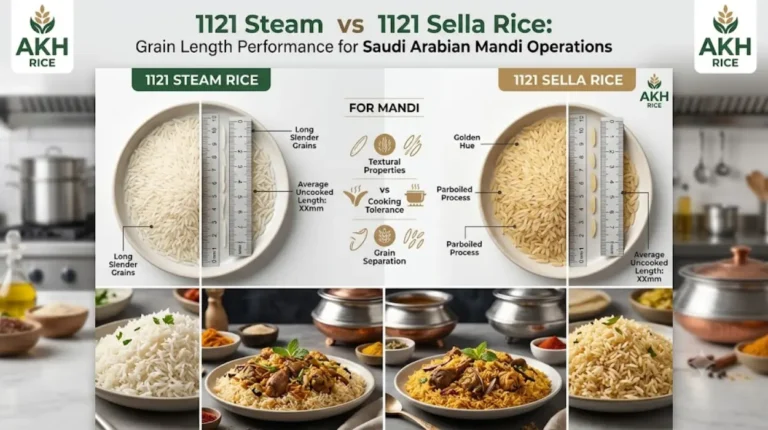
Steam treatment improves grain strength while maintaining natural fragrance and cooking quality.
Sella (Parboiled) Basmati Rice
Parboiling strengthens kernels before milling.
The rice becomes firmer after cooking and performs well in foodservice applications.
Brown Basmati Rice
Only the outer husk is removed.
The bran remains intact, increasing fiber while preserving aromatic characteristics.
Organic Basmati Rice
Organic cultivation follows certified agricultural standards without prohibited synthetic agricultural inputs under approved certification systems.
Each grade maintains authentic Basmati identity while offering different cooking properties.
Which Countries Import Pakistani Aromatic Basmati Rice?
Pakistani Basmati rice reaches more than 100 international destinations. Import demand remains strongest across the Middle East, Europe, North America, Africa, Australia, and Asia because consumers value authentic aroma, extra-long grains, and consistent cooking performance.
Global demand continues increasing as premium rice consumption expands.
Major importing regions include:
- Saudi Arabia
- United Arab Emirates
- Qatar
- Kuwait
- Oman
- United States
- Canada
- United Kingdom
- Germany
- France
- Netherlands
- Australia
- Malaysia
- Singapore
- South Africa
Each market evaluates quality specifications differently.
Retail buyers often prioritize aroma and appearance.
Foodservice buyers emphasize cooking consistency and grain elongation.
Private-label brands evaluate complete export specifications before sourcing products.
Which Certifications Apply to Pakistani Basmati Rice?
International certifications verify food safety, quality management, traceability, hygiene, and regulatory compliance throughout production and export. These certifications increase confidence among importers while supporting international trade requirements across premium food markets in 2026.
Certification demonstrates that production follows recognized international standards.
Common certifications include:
ISO 22000
Food safety management systems.
HACCP
Hazard Analysis and Critical Control Points for food safety risk management.
FSSC 22000
Advanced food safety certification accepted by many international retailers.
BRCGS Food Safety
Certification widely recognized by supermarkets and food distributors.
Halal Certification
Required for many Muslim-majority importing countries.
Phytosanitary Certificate
Confirms exported rice satisfies plant health inspection requirements.
Certificate of Origin
Identifies the exporting country for customs and trade documentation.
These certifications complement laboratory testing for moisture, purity, broken percentage, and contaminant control before shipment.
What Benefits Does Natural Aroma Provide?
Natural aroma improves consumer satisfaction, increases perceived product quality, strengthens premium market positioning, enhances dining experiences, and supports long-term brand recognition. These measurable advantages explain why authentic Pakistani Basmati commands higher international demand than ordinary aromatic substitutes.
Consumers often associate fragrance with authenticity.
Restaurants value aromatic rice because it enhances presentation and complements traditional recipes.
Retail brands benefit from repeat purchases when customers recognize consistent fragrance after cooking.
Premium aroma also supports product differentiation.
Consumers identify authentic Basmati through smell before tasting.
This sensory recognition contributes to long-term market value.
What Are Common Misconceptions About Basmati Rice Aroma?
Many consumers incorrectly believe fragrance comes from additives, perfumes, or packaging. Authentic Pakistani Basmati develops aroma naturally through genetics, cultivation, and controlled processing without artificial enhancement or chemical flavoring throughout production and export.
One misconception states that exporters add fragrance during packaging.
Authentic Basmati receives no artificial aroma treatment.
Another misconception assumes every long-grain rice variety smells the same.
Ordinary long-grain rice lacks the genetic characteristics responsible for authentic Basmati fragrance.
Some buyers also believe stronger smell always indicates better quality.
Professional quality evaluation considers several measurable specifications together.
Examples include:
- Grain length
- Purity
- Moisture content
- Broken percentage
- Color consistency
- Cooking elongation
- Aroma intensity
Evaluating all specifications provides a more accurate assessment of premium Basmati quality than aroma alone.
Frequently Asked Questions
What makes Pakistani Basmati rice naturally aromatic?
Pakistani Basmati rice contains the naturally occurring aromatic compound 2-Acetyl-1-Pyrroline (2AP). Combined with its genetic traits, Punjab’s fertile soil, climate, and proper aging, this compound creates the signature fragrance that distinguishes authentic Basmati rice.
Is the aroma of Pakistani Basmati rice natural or artificially added?
The aroma is completely natural. Authentic Pakistani Basmati rice develops its fragrance during cultivation and grain maturation without artificial flavors, fragrances, or chemical additives.
Which Pakistani Basmati rice varieties have the strongest aroma?
The most aromatic Pakistani Basmati varieties include 1121 Basmati Rice, Super Kernel Basmati Rice, PK-385, Basmati 515, and Basmati 198. Each variety offers a unique balance of aroma, grain length, and cooking performance.
Why is Punjab considered the best region for aromatic Basmati rice?
Punjab provides fertile alluvial soil, glacier-fed irrigation, favorable temperatures, and ideal growing conditions. These environmental factors help the rice plant naturally produce higher concentrations of aromatic compounds.
Does aging improve the aroma of Pakistani Basmati rice?
Yes. Proper aging allows moisture to stabilize within the grain while enhancing both fragrance and cooking quality. Premium Basmati rice is commonly aged for several months before export.
Does processing remove the natural aroma from Basmati rice?
No. Modern processing methods are designed to preserve the natural fragrance. Careful drying, milling, grading, and storage help maintain aroma until the rice is cooked.
Which countries import aromatic Pakistani Basmati rice?
Pakistani Basmati rice is widely imported by Saudi Arabia, the United Arab Emirates, Qatar, Kuwait, Oman, the United States, Canada, the United Kingdom, Germany, France, Australia, Malaysia, Singapore, and many other international markets.
What certifications are commonly available for Pakistani Basmati rice exports?
Leading exporters provide certifications such as ISO 22000, HACCP, FSSC 22000, BRCGS Food Safety, Halal Certification, Phytosanitary Certificates, and Certificates of Origin to meet international import requirements.
Can consumers identify authentic Basmati rice by its aroma alone?
No. Aroma is an important quality indicator, but authentic Basmati should also be evaluated based on grain length, purity, moisture content, broken percentage, cooking elongation, and overall quality specifications.
Does every long-grain rice variety have the same aroma as Basmati?
No. Ordinary long-grain rice does not possess the same genetic characteristics responsible for Basmati’s distinctive natural fragrance. Authentic Pakistani Basmati has a unique aroma that sets it apart from non-Basmati varieties.