Supply Premium Pakistani Basmati Rice to USA Restaurant Chains
Restaurant chains sourcing premium Basmati rice from Pakistan need more than a low commodity price. They need repeatable grain specifications, reliable cooking performance, compliant documentation, predictable shipment timing, and a supplier capable of scaling from evaluation samples to container-level supply. For buyers evaluating why Pakistani Basmati performs well in professional kitchens, our guide on:
Why fine dining restaurants prefer Pakistani Basmati rice provides the product foundation before commercial sourcing decisions are made.
The strongest solution for USA restaurant chains is a specification-controlled supply program covering rice selection, processing, inspection, packaging, documentation, and container logistics. AHK Rice can structure Pakistani Basmati supply to meet the chain’s requirements for recipe, portion, packaging, quality, and delivery.
What is the best solution for supplying Pakistani Basmati rice to USA restaurant chains?
The best solution is to approve one defined rice specification and reproduce it across every shipment, rather than buying from changing suppliers based only on price. This protects cooking consistency, purchasing forecasts, menu quality, and restaurant-level customer expectations.
Restaurant chains typically require tighter control than independent restaurants because one ingredient specification must work across multiple kitchens. A small difference in grain length, broken percentage, moisture, milling quality, or cooking behavior can affect batch yield and finished presentation.
For premium Pakistani Basmati, the purchasing specification should identify the variety, processing type, grain length, broken percentage, moisture target, purity, packaging format, quantity, inspection requirements, and destination port. AHK Rice can use those parameters as the production reference rather than treating every order as a generic rice purchase.
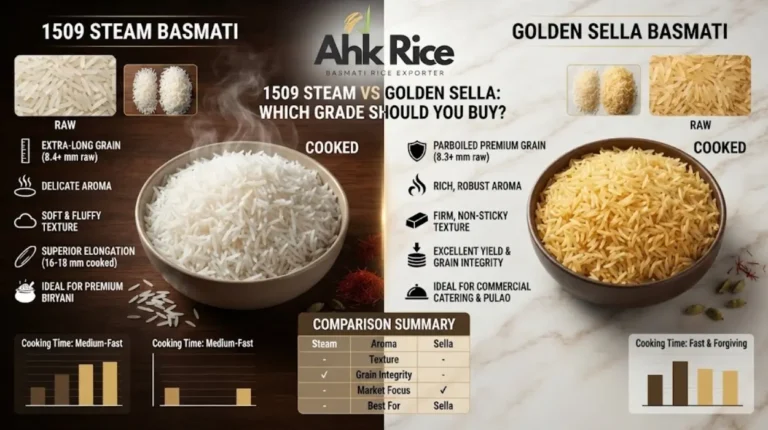
For example, a chain selling biryani, pilaf, pulao, or rice-based bowls may prioritize extra-long grain appearance and elongation. A high-volume catering operation may instead give greater weight to cooking yield, low breakage, and cost per prepared serving. The correct specification therefore depends on the menu and operating model.
A buyer should also evaluate grain consistency before signing a recurring supply agreement. Our comparison guide:
How grain consistency affects restaurant purchasing decisions, explains why uniformity influences purchasing beyond visual appearance.
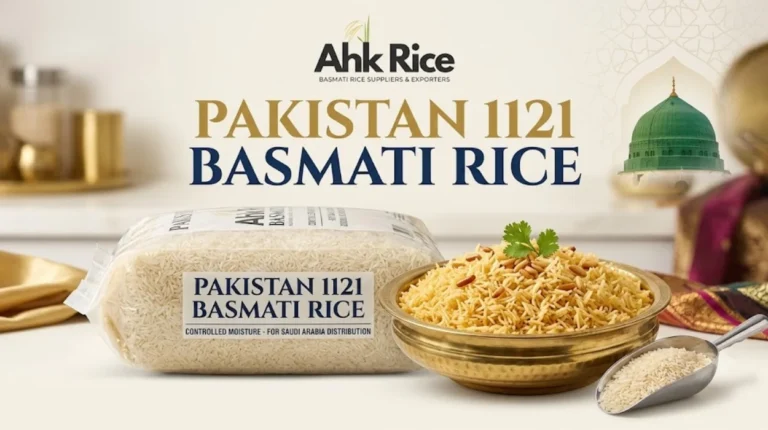
AHK Rice supplies core Pakistani varieties including 1121, Super Kernel, and 1509 Basmati. Its export operation covers sourcing, processing, grading, color sorting, customized packaging, inspection, documentation, and container loading.
Why choose USA-focused export service from AHK Rice?
A USA-focused export service reduces procurement complexity by coordinating product specifications, processing, quality control, packaging, export documents, and shipping through one supplier instead of forcing restaurant chains to manage multiple intermediaries.
AHK Rice is based in Punjab and supplies international buyers from an integrated processing and export operation. Its USA service is designed for importers purchasing Pakistani Basmati in commercial quantities, including 1121 Sella, Super Kernel, and white Basmati options.
The USA Basmati rice export service is particularly relevant when a restaurant chain needs repeatable specifications rather than an isolated spot purchase. AHK Rice states that USA buyers can start from one 20-foot container, with a stated minimum of approximately 20 metric tons, while larger repeat programs can be structured around purchasing requirements.
Quality control should begin before the rice reaches the container. A commercial workflow can include raw-material inspection, cleaning, grading, color sorting, moisture testing, metal detection, packaging inspection, and final loading verification. This gives the buyer multiple control points instead of relying only on arrival inspection.
For US imports, documentation is equally important. FDA states that imported food must meet US requirements and that applicable facilities must be registered, while imported food shipments generally require FDA Prior Notice before arrival.
AHK Rice can therefore be evaluated not only as a rice supplier but as an export partner responsible for coordinating the commercial specification with the shipment process. For a restaurant chain, that distinction matters because procurement failures often occur between production, documentation, freight, and final delivery rather than inside the rice specification itself.
What sample process should USA restaurant chains follow before placing a container order?
The sample process should move from specification approval to representative samples, cooking evaluation, commercial testing, quotation confirmation, production, inspection, and shipment. This sequence lets restaurant buyers validate kitchen performance before committing to container-level purchasing.
The first stage is the technical brief. The buyer should provide the intended variety, processing type, target grain characteristics, packaging requirement, estimated monthly or quarterly volume, destination port, and any laboratory or compliance specifications.
The second stage is sample preparation. AHK Rice states that samples of up to 20 kg can be provided, with the buyer covering sample shipping costs. The buyer can use its own courier account or coordinate the sample shipment commercially.
A practical restaurant-chain sample should be tested in the actual kitchen environment. Chefs should cook the rice using the intended equipment, water ratio, cooking method, holding time, and serving procedure. The evaluation should record uncooked appearance, aroma, grain elongation, separation, texture, breakage, absorption, yield, and holding performance.
A larger commercial evaluation can then follow. A 5–20 kg quantity is useful when the buyer wants laboratory testing or multiple kitchen trials before approving the specification.
Sample costs should be separated into three categories:
| Sample cost | Typical treatment |
|---|---|
| Rice sample | May be supplied without rice charge under supplier terms |
| Courier/freight | Normally paid by buyer |
| Phytosanitary documentation | Buyer responsibility where required for sample export |
AHK Rice reports that sample charges can be waived against a confirmed commercial purchase, subject to its quotation terms.
The final sample approval should be written into the purchase specification. That approved sample becomes the reference point for production and helps prevent disputes over subjective descriptions such as “premium” or “extra long.”
What results can USA restaurant chains expect from a controlled supply program?
A controlled Pakistani Basmati supply program can improve cooking consistency, procurement predictability, inventory planning, supplier accountability, and menu quality while reducing the operational risk associated with changing rice specifications between purchasing cycles.
The primary result is specification continuity. When the same variety and grade are repeatedly produced against an approved reference, kitchen teams can maintain more stable cooking procedures.
The second result is purchasing visibility. Restaurant chains can align container arrivals with expected consumption rather than buying emergency stock at higher spot-market prices. This is particularly important when rice is a core menu ingredient.
The third result is better quality accountability. A defined specification gives the buyer measurable acceptance criteria. Grain length, broken percentage, moisture, purity, packaging, and inspection documentation can be checked against the agreed order rather than assessed informally after arrival.
AHK Rice also provides third-party inspection options. Its export information identifies inspections by organizations such as SGS and Bureau Veritas, giving buyers an additional verification mechanism when required by their procurement policy.
Shipping should also be built into the inventory plan. Current 2026 freight data shows meaningful differences between US destinations. Karachi-to-New York FCL services are currently showing roughly 25–27 days of ocean transit on published schedules, while Karachi-to-Houston services can be around 36 days or longer depending on routing.
For practical planning, AHK Rice currently indicates approximately 25–35 days door-to-door to major US ports such as New York and Los Angeles, although actual delivery depends on vessel schedules, port handling, customs clearance, and inland transportation.
Restaurant chains should therefore avoid using one universal “USA shipping time.” East Coast and West Coast logistics can differ, and Houston or inland destinations may require additional transportation after port arrival.
How much does premium Pakistani Basmati rice supply to the USA cost?
The final landed cost depends on rice variety, grade, quantity, packaging, processing requirements, inspection, Incoterm, freight route, insurance, destination handling, customs charges, and current market conditions, so a fixed universal price per metric ton is unreliable.
The rice itself is only one part of the procurement calculation. A buyer comparing two quotations should first confirm that both suppliers are quoting the same variety, grade, broken percentage, packaging, and Incoterm.
For example, a lower FOB rice price can become less attractive if it excludes required processing, custom packaging, inspection, or other services. Conversely, a higher product quotation may provide better value if it delivers tighter specifications and fewer quality deviations.
Freight is another variable. Published 2026 lane data currently shows indicative 40-foot FCL pricing of about US$5,252–$5,691 from Karachi to New York and about US$6,344–$6,873 from Karachi to Houston on the referenced routes. These are freight benchmarks, not complete landed costs, and they can change with sailing date and cargo conditions.
AHK Rice states that USA export quotations are based on variety, quantity, and current market conditions and can be provided according to the buyer’s requirements.
A restaurant chain should request the quotation using a complete commercial specification. The request should identify the product, metric-ton quantity, destination port, packaging, Incoterm, inspection requirement, and preferred payment structure. This creates an apples-to-apples comparison between suppliers.
Payment terms also influence working capital. AHK Rice’s USA service currently states a structure of 30% advance payment and 70% against scanned shipping documents, subject to the agreed commercial terms.
How does AHK Rice manage the export process from Pakistan to the USA?
AHK Rice follows a structured sequence from buyer specification and sample approval through production, quality inspection, packaging, documentation, vessel booking, container loading, ocean freight, and US-side delivery coordination.
The process begins with the buyer’s specification. AHK Rice reviews the required variety, grade, quantity, packaging, destination, and commercial terms.
The next stage is sample approval. Once the buyer confirms cooking and physical quality, the approved specification becomes the production reference.
Production then moves through cleaning, milling, grading, color sorting, moisture control, inspection, and packaging. Final loading checks confirm that the container corresponds with the approved commercial order.
Documentation is prepared for export and US import requirements. FDA states that imported foods must satisfy applicable food safety and labeling requirements, while Prior Notice must be submitted before covered food shipments arrive in the United States.
The container is then booked against the selected route. AHK Rice works with major shipping carriers and provides shipment tracking according to its USA service information.
After arrival, the importer or its customs broker handles the US entry process and applicable clearance obligations. The restaurant chain can then move the cleared inventory into its distribution network.
This process matters because AHK Rice is not simply selling a bag of rice. It is coordinating a repeatable specification across production and international logistics.
How should a restaurant chain decide whether AHK Rice is the right supplier?
Choose the supplier that can demonstrate specification control, sample approval, documented quality checks, realistic shipping schedules, compliant export documentation, transparent pricing, and sufficient production capacity for repeat restaurant-chain demand.
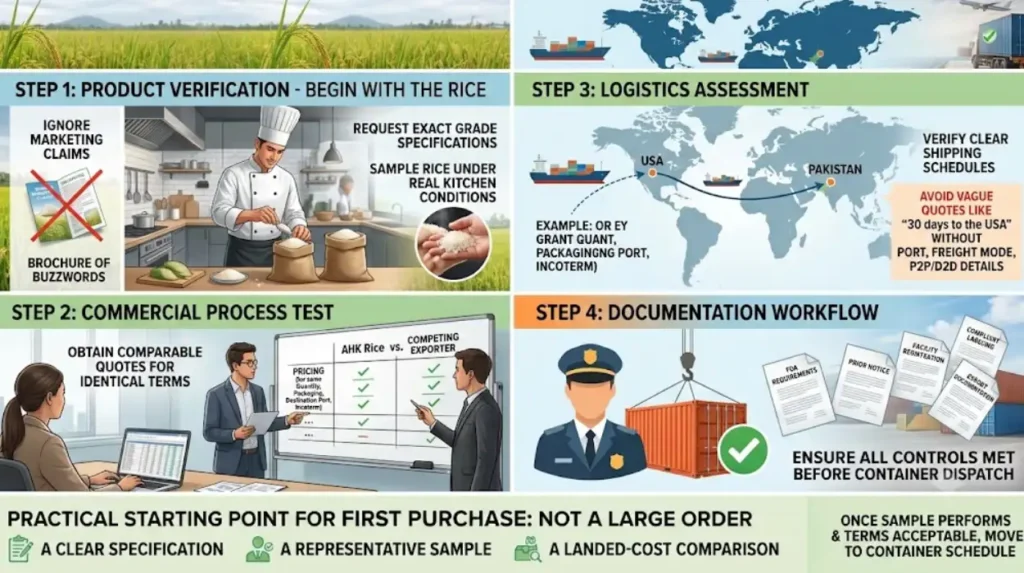
The decision should begin with the product rather than the supplier’s marketing claims. Request the exact grade specification and sample it under real kitchen conditions.
Next, test the commercial process. Ask for pricing based on the same quantity, packaging, destination port, and Incoterm that competing exporters will use.
Then assess logistics. A supplier quoting “30 days to the USA” without identifying the port, freight mode, or whether the figure is port-to-port or door-to-door is not providing enough information for serious inventory planning.
Finally, verify the documentation workflow. FDA requirements, Prior Notice, facility registration, labeling, and other applicable import controls should be addressed before the container is dispatched.
AHK Rice is positioned for buyers that want an integrated Pakistan-to-USA sourcing process, from Basmati selection through export documentation and container loading. AHK Rice also supports customized packaging and specification-based commercial orders, which can be valuable for restaurant groups building a standardized supply program.
For a chain preparing its first purchase, the practical starting point is not a large order. It is a clear specification, a representative sample, and a landed-cost comparison. Once the sample performs in the kitchen and the commercial terms are acceptable, the buyer can move to a container schedule with defined quality and delivery expectations.
To begin the commercial process, submit your product grade, quantity, packaging, destination port, and required delivery schedule through the USA rice supply quotation process.
Frequently Asked Questions
What Pakistani Basmati rice is best for USA restaurant chains?
1121 Basmati is a strong choice for restaurant chains seeking extra-long grains, attractive presentation, aroma, and consistent cooking performance. Super Kernel and 1509 can also suit specific menu and cost requirements.
What is the minimum order quantity for USA restaurant buyers?
Commercial quantities can start from approximately one 20-foot container, depending on the agreed product specification and supplier terms. Buyers should confirm the exact minimum quantity when requesting a quotation.
How long does Pakistani Basmati rice take to ship to the USA?
Typical transit and delivery timelines depend on the destination and shipping route. Planning can generally require around 25–35 days to major US destinations, with port congestion, customs clearance, and inland transportation affecting the final delivery date.
Can AHK Rice provide rice samples before a bulk order?
Yes. AHK Rice can arrange product samples so buyers can evaluate grain appearance, aroma, cooking performance, texture, and consistency before approving a commercial specification.
What factors determine Pakistani Basmati rice pricing for USA buyers?
Pricing depends on variety, grade, grain length, broken percentage, quantity, processing, packaging, inspection, Incoterm, freight route, insurance, and prevailing market conditions.
Can USA restaurant chains request custom packaging?
Yes. Restaurant chains and distributors can discuss customized packaging according to their required weight, labeling, branding, and commercial specifications.
What quality specifications should restaurant chains check before importing?
Buyers should evaluate variety, grain length, broken percentage, moisture, purity, milling quality, foreign matter, chalkiness, aroma, packaging condition, and cooking performance.
Does AHK Rice support third-party inspection?
Yes. Buyers can request third-party inspection arrangements, subject to the agreed commercial terms. Organizations such as SGS and Bureau Veritas may be used for independent verification.
What documents are required to import Pakistani Basmati rice into the USA?
Import requirements can include commercial invoices, packing lists, shipping documents, applicable certificates, and FDA-related requirements. The US importer and customs broker should confirm requirements for the specific shipment.
How can a restaurant chain start sourcing Pakistani Basmati rice from AHK Rice?
The buyer should provide the required variety, quantity, packaging, destination port, quality specifications, and delivery schedule. AHK Rice can then provide a commercial quotation and arrange the next sampling or ordering stage.