Top Markets Importing 1509 Basmati Rice from Pakistan in 2026
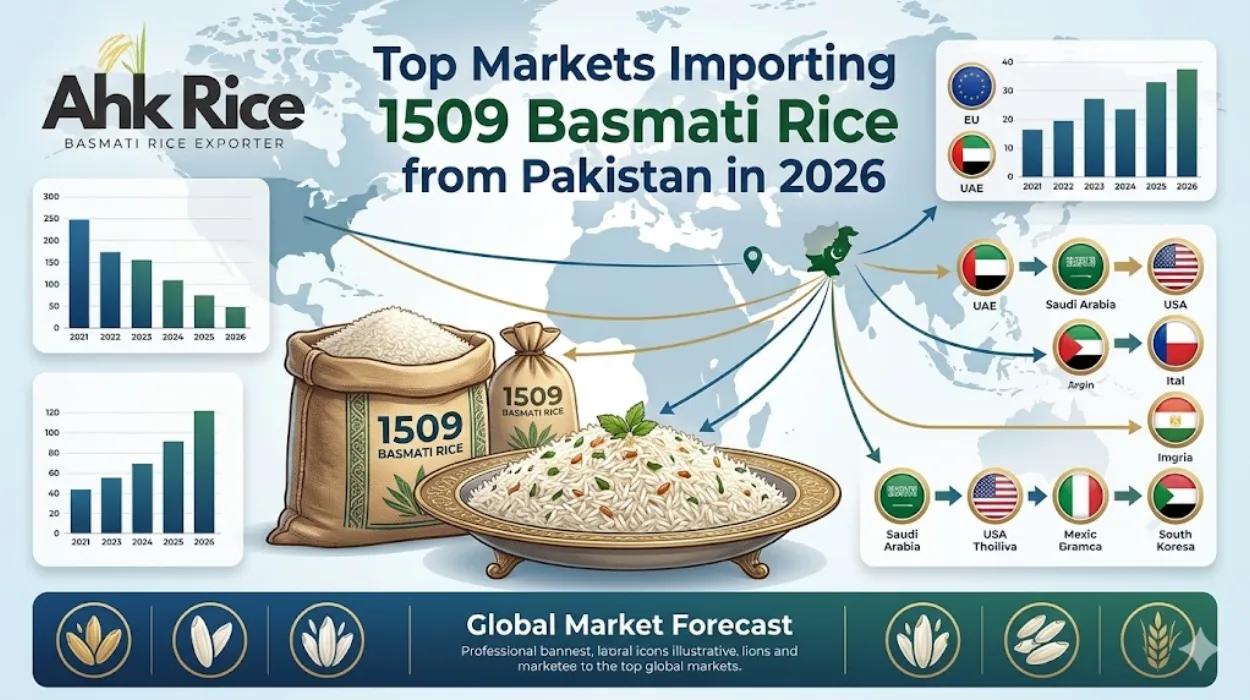
What are the top markets importing 1509 basmati rice from Pakistan in 2026?
West Africa, East Africa, the Gulf region, and Southeast Asia dominate imports, with Nigeria, Senegal, Kenya, UAE, Saudi Arabia, and Malaysia leading volumes above 50,000 MT annually (source: REAP export data, December 2025).
1509 Basmati rice exports from Pakistan concentrate in price-sensitive and high-volume markets. These markets prioritize long grain length and cost efficiency over aroma intensity. Nigeria imports bulk broken and low-polish grades for mass consumption. Senegal imports 5% and 10% broken for retail distribution. Kenya and Tanzania import steam and parboiled variants for hotels and urban consumers.
Gulf countries import higher-quality steam and golden sella grades. UAE and Saudi Arabia demand consistent grain length above 7.2 mm after milling. Malaysia and Indonesia import mid-range polished grades for blending with local rice varieties.
1509 rice export destinations follow clear patterns. Africa demands volume and price stability. The Middle East demands uniformity and shelf life. Southeast Asia demands blending compatibility and moisture control below 14%.
With the markets defined, the next step is understanding what 1509 basmati rice is and why it fits these regions.
What is 1509 basmati rice and how is it different from other basmati types?
1509 basmati rice is a hybrid long-grain variety with 7.0–7.4 mm length, lower aroma than 1121, and faster cultivation cycles under 120 days.
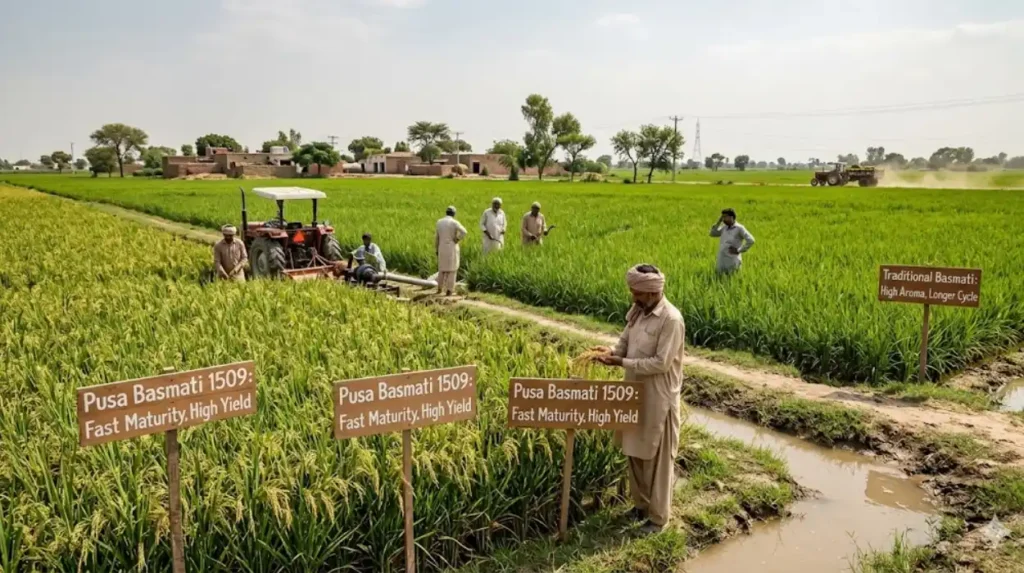
1509 basmati rice is a semi-dwarf hybrid developed for yield efficiency. Farmers cultivate it in Punjab using controlled irrigation cycles. The crop matures faster than traditional basmati varieties. This reduces water consumption by 15–20% compared to 1121.
1509 rice grains are long but less slender than premium basmati. The cooked grain expands by 2.5x in length. The aroma is mild. This makes it suitable for markets that prioritize price over fragrance.
How does 1509 compare with other basmati types?
1509 differs from 1121 and Super Kernel in three measurable ways:
- Grain length: 7.0–7.4 mm vs 8.2–8.4 mm in 1121
- Aroma intensity: Low to medium vs high in traditional basmati
- Yield per acre: 4.5–5 tons vs 3–3.5 tons
Markets such as Africa prefer 1509 because it offers longer grains than IRRI rice at a competitive price. Buyers in Asia use it for blending to reduce costs.
A detailed comparison of aroma and regional preferences appears in this related analysis on how different basmati types perform across Asian markets.
With the product defined, the next question is how 1509 basmati rice is processed before export.
How is 1509 basmati rice processed step by step for export?
Export-quality 1509 rice undergoes 9 controlled steps: cleaning, dehusking, polishing, grading, sorting, parboiling (optional), drying, inspection, and packaging.
Processing determines grain quality and export acceptance. Each step follows strict controls to maintain uniformity.
What are the exact processing steps?
- Clean the paddy to remove dust, stones, and foreign matter
- Dehusk the grain to remove outer husk layers
- Polish the rice to achieve required whiteness levels
- Grade the grains by length and thickness
- Sort the rice using color sorters for defect removal
- Parboil the rice for golden sella or steam variants
- Dry the grains to reduce moisture below 14%
- Inspect the batch for broken percentage and impurities
- Pack the rice in export-grade bags
Each step directly impacts export grade classification. For example, color sorting ensures black grain removal below 0.5%, which is required in Gulf markets. Drying ensures shelf stability in hot climates such as Saudi Arabia.
With processing explained, the next step is identifying the key components that define 1509 rice quality.
What are the key components that define 1509 basmati rice quality?
Grain length, broken percentage, moisture level, chalkiness, and color uniformity define export-grade 1509 rice quality.
Quality parameters vary by destination market. Each importer specifies thresholds that suppliers must meet.
Which specifications matter most?
- Grain length: 7.0–7.4 mm before cooking
- Broken grains: 5%, 10%, 15%, 25% grades
- Moisture content: 12–14% maximum
- Chalky grains: below 3%
- Foreign matter: below 0.5%
African buyers accept higher broken percentages such as 15% or 25% to reduce cost per metric ton. Gulf buyers demand 5% broken or less for retail packaging.
What grades are available in 1509 basmati rice?
1509 rice is available in 7 processing grades:
- 1509 Steam Basmati Rice
- 1509 Golden Sella Basmati Rice
- 1509 White Raw Rice
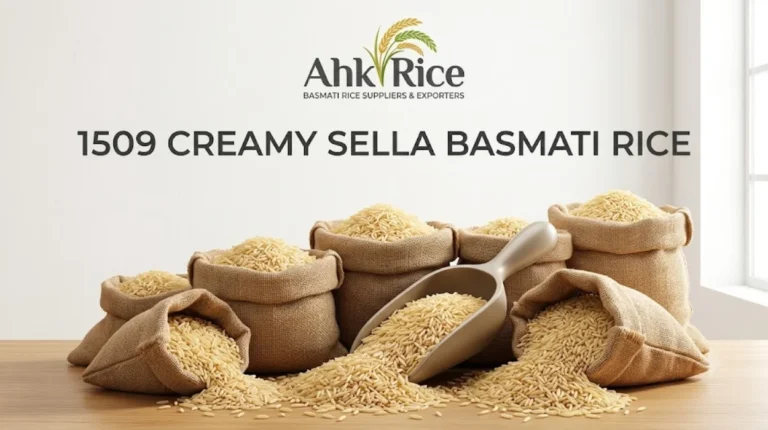
- 1509 Creamy Sella Rice
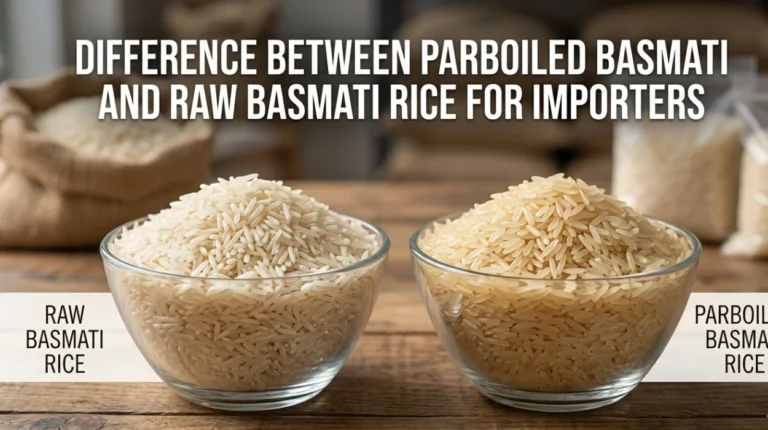
- 1509 Parboiled Rice
- 1509 Broken Rice
- 1509 Sortex Clean Rice
Each grade serves a specific market use case. Golden Sella offers longer shelf life. Steam rice offers softer cooking texture.
With specifications clarified, the next question is why importers choose 1509 basmati rice over alternatives.
What benefits does 1509 basmati rice offer to importing markets?
1509 basmati rice offers lower cost per ton, high yield cooking expansion, and flexible grading options, making it suitable for bulk consumption markets.
Cost efficiency drives demand. 1509 rice prices remain $50–$150 per MT lower than 1121 basmati (source: REAP export data, December 2025). This price difference supports large-scale imports in Africa.
Cooking performance is consistent. The grain elongates without breaking. This suits dishes such as jollof rice in Nigeria and biryani in the Gulf.
Shelf stability is another benefit. Golden sella variants remain stable for 18–24 months in hot climates. Steam rice maintains quality for 10–12 months under controlled storage.
Flexibility in grading allows buyers to match budget constraints. Importers select 5% broken for retail or 25% broken for institutional use.
With benefits established, the next step is identifying real-world use cases across different regions.
What are the main use cases of 1509 basmati rice across global markets?
1509 rice is used in bulk retail, food service, government supply programs, and rice blending industries across Africa, the Middle East, and Asia.
Usage varies by market demand structure. Each region uses 1509 differently based on consumption habits.
How is 1509 used in Africa?
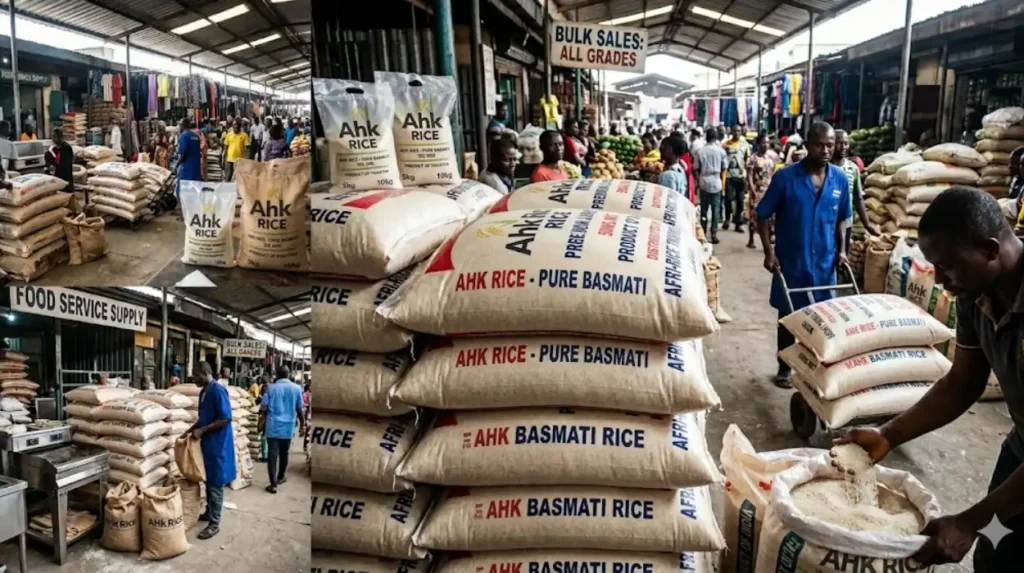
African markets use 1509 rice for mass consumption. Nigeria distributes it through wholesale markets. Senegal uses it for daily cooking. Government agencies procure bulk shipments for food security programs.
How is 1509 used in the Middle East?
Gulf countries use 1509 for catering and mid-range retail. Restaurants prepare biryani using steam or sella grades. Retail brands package 5% broken rice for household consumption.
How is 1509 used in Asia?
Southeast Asian markets use 1509 for blending. Importers mix it with local rice varieties to reduce costs. Malaysia blends it with jasmine rice. Indonesia uses it in food processing industries.
With use cases explained, the next question is addressing common misconceptions and problems in the 1509 rice trade.
What are common problems or misconceptions in 1509 basmati rice trade?
The most common issues include misunderstanding aroma levels, incorrect grade selection, and poor moisture control leading to spoilage during shipping.
Buyers often assume all basmati rice has strong aroma. 1509 has mild fragrance. This mismatch leads to dissatisfaction in premium markets.
Incorrect grade selection increases costs or reduces acceptance. Importers choosing 5% broken for low-budget markets face pricing pressure. Buyers selecting 25% broken for retail face quality complaints.
Moisture mismanagement causes shipment rejection. Rice shipped above 14% moisture develops fungus during transit. This leads to losses in humid regions such as West Africa.
What operational issues occur during export?
- Delayed shipments due to documentation errors
- Rejection due to pesticide residue exceeding limits
- Quality variation due to inconsistent milling
Exporters resolve these issues by testing and certifying each batch before dispatch.
With problems clarified, the final step is connecting market demand with product selection logic.
How do import markets choose the right 1509 basmati rice grade?
Markets choose grades based on price targets, storage conditions, and end-use requirements, with Africa prioritizing broken grades and the Gulf prioritizing low-broken polished rice.
Market selection follows a clear logic. Price-sensitive regions select higher broken percentages. Premium markets select low broken and higher polish levels.
Storage conditions influence grade choice. Hot climates require parboiled or golden sella rice. Controlled environments allow steam rice imports.
End use determines polishing level. Retail markets require higher polish for appearance. Institutional buyers accept lower polish to reduce costs.
Understanding these selection criteria explains why specific regions dominate 1509 rice imports and how trade flows are structured globally.
Frequently Asked Questions
Which countries import the highest volume of 1509 basmati rice from Pakistan?
Nigeria, Senegal, Kenya, UAE, and Saudi Arabia import over 50,000 MT annually, making them the highest-volume markets (source: REAP export data, December 2025).
Nigeria and Senegal dominate West African demand due to large population consumption. UAE and Saudi Arabia import consistent volumes for retail and catering sectors. Kenya serves as a distribution hub for East Africa.
What is the average export price of 1509 basmati rice in 2026?
1509 basmati rice trades between $850–$1,050 per metric ton depending on grade, broken percentage, and processing type (source: Pakistan Bureau of Statistics, FY2024-25).
Steam rice falls in the lower price range due to shorter shelf life. Golden Sella commands higher prices due to extended storage stability and stronger grain structure.
Which grade of 1509 rice is most in demand globally?
1509 Steam 5% Broken and 1509 Golden Sella 5% Broken are the most demanded grades due to balance between price and quality.
Retail markets prefer 5% broken for better visual quality. Bulk buyers in Africa also import 15% and 25% broken grades to reduce procurement costs.
How long does 1509 basmati rice last during storage?
Golden Sella lasts 18–24 months, while Steam rice lasts 10–12 months under proper storage conditions below 25°C.
Parboiling strengthens the grain structure. This reduces breakage and extends shelf life in hot climates such as the Middle East and Africa.
Why do African markets prefer 1509 basmati rice over other rice types?
African markets prefer 1509 because it offers long grain length, competitive pricing, and high cooking yield, making it suitable for mass consumption.
1509 rice provides better visual appeal than non-basmati varieties such as IRRI. Its lower price compared to 1121 makes it accessible for large-scale imports.