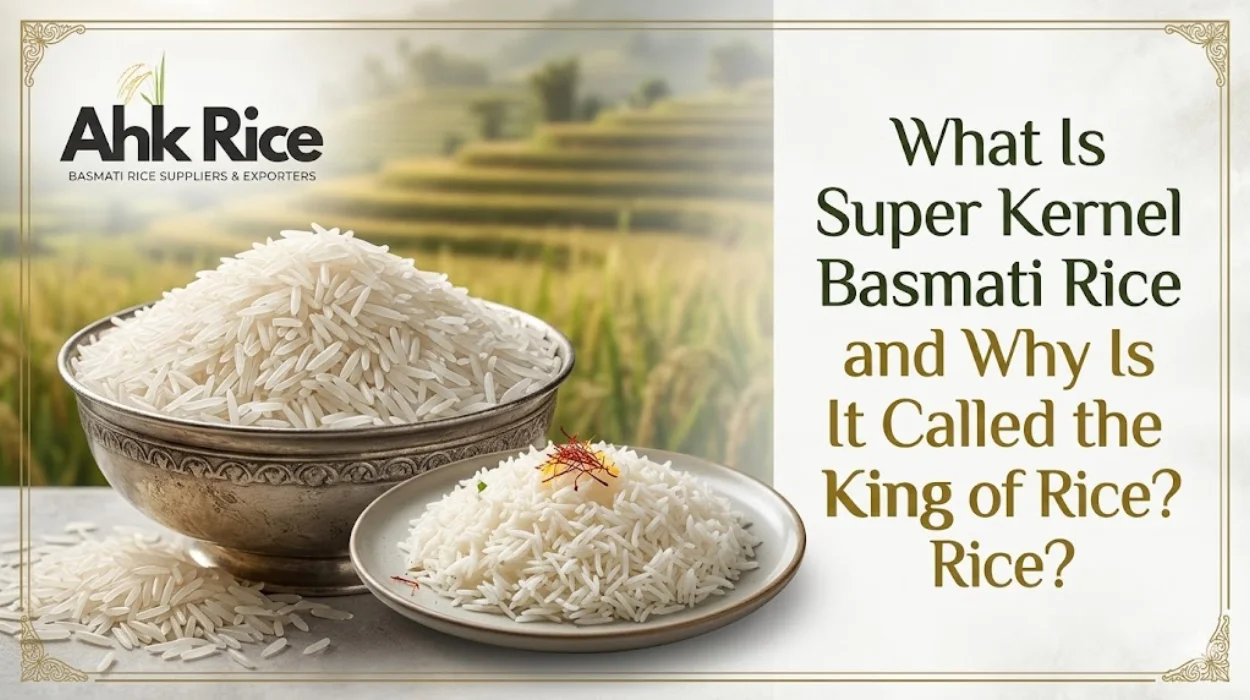
What Is Super Kernel Basmati Rice and Why Is It Called the King of Rice?
Super Kernel Basmati Rice is a premium long-grain aromatic rice variety cultivated in Pakistan and India. It is called the King of Rice because of its natural fragrance, extra-long grain length, elegant appearance, and strong demand across international markets. Here is why: Super Kernel Basmati develops a distinctive aroma during cultivation, elongates significantly after cooking, and serves as a benchmark for premium rice trade in Asia, the Middle East, Europe, and North America.
Super Kernel Basmati Rice holds a unique position within the global rice industry. Buyers recognize it for quality, consistency, and sensory characteristics. Importers source it for retail brands, food service businesses, hospitality sectors, and ethnic food markets. The variety remains one of the most recognized Basmati categories exported from Pakistan.
Understanding Super Kernel Basmati Rice requires examining its origin, cultivation methods, processing stages, quality specifications, export markets, certifications, and practical applications.
What Is Super Kernel Basmati Rice?
A premium aromatic rice variety with grain lengths of approximately 7.0–7.4 mm before cooking and significant elongation after cooking.
Super Kernel Basmati Rice belongs to the Basmati family of long-grain rice. The variety grows primarily in the fertile plains of Punjab. Farmers cultivate it in regions where river irrigation, fertile soil, and favorable climate conditions support aromatic rice production.
Super Kernel Basmati develops a naturally pleasant fragrance because of its genetic characteristics and growing environment. The grain remains slender, uniform, and visually appealing. Cooking increases the grain length significantly while maintaining separation between grains.
The term “Basmati” originates from words associated with fragrance. Super Kernel Basmati represents one of the most established traditional Basmati varieties in international trade.
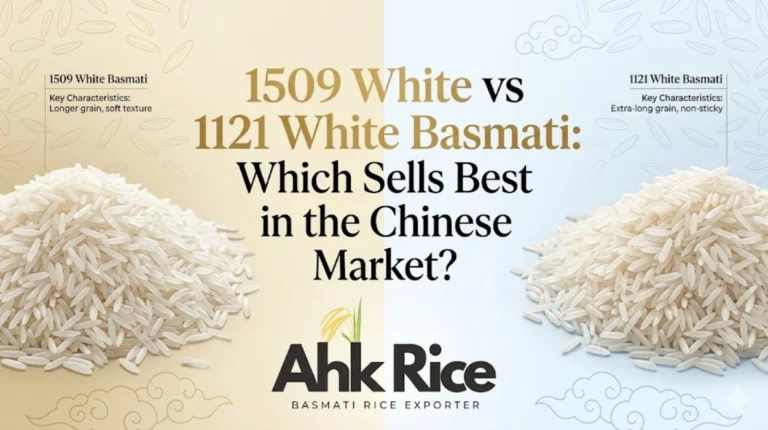
Consumers often compare Super Kernel Basmati with newer varieties such as 1121 Basmati. Buyers seeking a detailed understanding of grain characteristics, pricing, and market preferences can read our analysis of how different premium Basmati varieties perform across global markets.
Where Is Super Kernel Basmati Rice Grown?
Super Kernel Basmati grows mainly in Punjab, Pakistan. The region contains fertile alluvial soil deposited by river systems over centuries.
Punjab provides essential cultivation conditions:
- Fertile soil
- Controlled irrigation
- Warm growing season
- Moderate humidity
- Suitable harvesting conditions
Farmers cultivate the crop during the Kharif season and harvest mature paddy after grain development reaches commercial standards.
With the definition of Super Kernel Basmati established, the next question is how the rice moves from paddy fields to export-ready packaging.
How Does Super Kernel Basmati Rice Reach International Markets?
The rice passes through harvesting, drying, milling, grading, testing, packaging, and export preparation before shipment.
Rice quality depends on controlled processing. Every stage influences grain appearance, cooking performance, and shelf life.
How Is Super Kernel Basmati Harvested and Processed?
Rice processors follow a structured workflow to maintain quality.
- Harvest the mature paddy.
- Dry the harvested paddy.
- Clean the raw material.
- De-husk the grain.
- Separate broken kernels.
- Polish the rice.
- Sort by length and quality.
- Inspect for defects.
- Package for export.
Each stage removes impurities and improves consistency.
Cleaning removes stones, dust, straw, and foreign materials. De-husking removes the outer husk while preserving grain integrity. Polishing enhances appearance according to buyer requirements. Sorting systems classify rice based on grain length, color, and quality.
How Is Quality Verified?
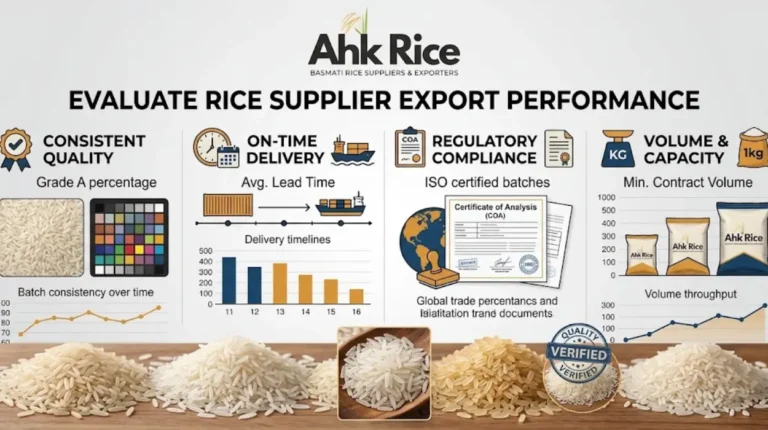
Processors verify quality through laboratory and physical inspections.
Quality inspections typically include:
- Moisture testing
- Grain length measurement
- Purity verification
- Broken grain analysis
- Foreign matter inspection
- Aroma assessment
- Packaging verification
Testing ensures that shipments meet buyer specifications and destination market requirements.
With processing explained, the next question concerns the characteristics that make Super Kernel Basmati distinctive.
What Are the Key Characteristics of Super Kernel Basmati Rice?
Natural aroma, long grains, excellent elongation, non-sticky texture, and premium visual appearance define Super Kernel Basmati Rice.
Rice buyers evaluate products according to measurable specifications. Super Kernel Basmati performs strongly across several categories.
What Makes the Aroma Special?
Super Kernel Basmati contains naturally occurring aromatic compounds developed during cultivation and maturation.
The fragrance becomes more noticeable during cooking. The aroma differentiates Basmati varieties from standard long-grain rice types.
Restaurants, hotels, and households often select Super Kernel Basmati because aroma contributes directly to the dining experience.
What Makes the Grain Appearance Premium?
Super Kernel Basmati exhibits long, slender grains with a uniform shape.
Visual quality matters because consumers frequently judge rice before purchase. Uniform grains improve shelf presentation and strengthen brand perception in retail markets.
Why Does Grain Elongation Matter?
Super Kernel Basmati expands in length during cooking rather than increasing substantially in width.
Lengthwise expansion creates an elegant appearance on serving plates. Premium food service operations often specify rice varieties that maintain visual appeal after cooking.
With the defining characteristics established, the next question is why these characteristics create practical benefits.
What Benefits Does Super Kernel Basmati Rice Provide?
Superior presentation, enhanced dining experience, strong consumer acceptance, and versatility across cuisines make Super Kernel Basmati highly valued.
Rice selection affects both culinary performance and customer satisfaction.
How Does It Improve Food Presentation?
Long grains create a refined appearance.
Restaurants serving biryani, pulao, kabsa, mandi, and rice platters prefer rice that remains separate after cooking. Grain separation improves texture and visual quality.
Food service operators frequently select premium Basmati because presentation influences customer perception.
How Does It Enhance Flavor Experience?
Aromatic rice contributes sensory value beyond basic nutrition.
Fragrance complements spices, meat dishes, seafood preparations, and vegetable recipes. The aroma remains noticeable without overpowering accompanying ingredients.
How Does It Support Commercial Food Businesses?
Commercial buyers require consistency.
Consistent grain size simplifies cooking procedures. Consistent quality improves customer satisfaction. Consistent appearance supports brand reputation.
Food distributors and restaurant chains often prioritize products with predictable performance characteristics.
With the benefits established, the next question concerns where Super Kernel Basmati Rice is commonly used.
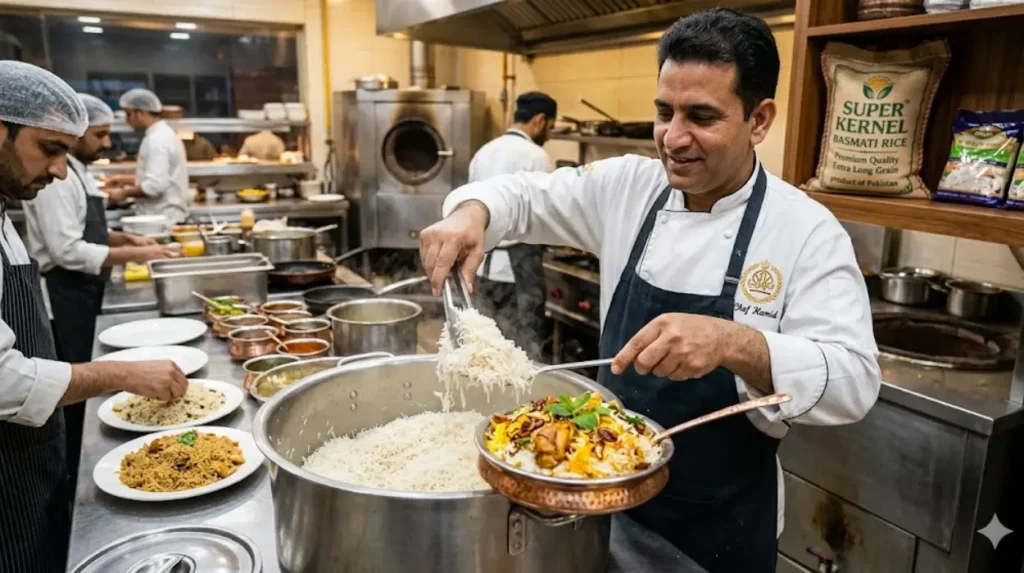
Where Is Super Kernel Basmati Rice Used?
Households, restaurants, hotels, catering businesses, food manufacturers, and retail brands use Super Kernel Basmati Rice across multiple cuisines.
The variety serves diverse culinary applications because of its aroma and grain structure.
Which Traditional Dishes Use Super Kernel Basmati?
Super Kernel Basmati appears frequently in:
- Biryani
- Pulao
- Kabsa
- Mandi
- Pilaf
- Rice platters
Each dish benefits from grain separation and aromatic qualities.
Which Commercial Sectors Use Super Kernel Basmati?
Commercial users include:
- Hospitality businesses
- Restaurant chains
- Catering companies
- Food distributors
- Private label retailers
Premium rice categories often command greater consumer attention within retail environments.
Which Consumer Markets Prefer It?
Consumer demand remains strong among populations familiar with Basmati rice traditions.
Demand exists across:
- South Asia
- Gulf countries
- Europe
- North America
- Africa
Market preferences vary according to purchasing power, cooking traditions, and import regulations.
With practical applications explained, the next question is which countries import significant quantities of Super Kernel Basmati Rice.
Which Countries Import Super Kernel Basmati Rice?
Saudi Arabia, United Arab Emirates, Iraq, Iran, Oman, Qatar, the United Kingdom, Canada, and the United States represent major import destinations.
Pakistan remains one of the world’s leading Basmati rice exporters (source: Pakistan Bureau of Statistics, FY2024-25).
Why Is the Middle East a Major Market?
Middle Eastern cuisines frequently incorporate premium long-grain rice.
Kabsa, mandi, and rice-based banquet meals require varieties that maintain grain separation and visual appeal after cooking.
Saudi Arabia, the United Arab Emirates, Oman, Qatar, Kuwait, and Bahrain consistently import Basmati rice products (source: REAP export data, December 2025).
Why Do Western Markets Import Super Kernel Basmati?
Western markets contain growing populations seeking ethnic food products.
Retail chains stock premium Basmati because consumers associate the category with quality, aroma, and culinary versatility.
Importers also distribute Basmati rice through specialty food channels and mainstream supermarkets.
With export markets covered, the next question concerns the certifications that support international trade.
What Certifications Apply to Super Kernel Basmati Rice Exports?
Food safety, quality management, phytosanitary compliance, and destination-specific certifications support international exports.
Certification verifies that rice meets regulatory and commercial requirements.
Which Food Safety Certifications Are Common?
Exporters frequently maintain certifications such as:
- ISO 22000
- HACCP
- FSSC 22000
- BRCGS Food Safety
These systems establish documented procedures for food safety management.
Which Export Documents Are Required?
International shipments commonly require:
- Phytosanitary Certificate
- Certificate of Origin
- Commercial Invoice
- Packing List
- Bill of Lading
- Health Certificate
- Fumigation Certificate
Import authorities use these documents to verify shipment compliance.
Why Do Certifications Matter?
Certifications support trust throughout the supply chain.
Importers evaluate certification status because compliance reduces regulatory risks and facilitates customs clearance.
With certifications explained, the final question addresses common misconceptions surrounding Super Kernel Basmati Rice.
What Are the Most Common Misconceptions About Super Kernel Basmati Rice?
Many buyers assume all Basmati rice is identical, all long-grain rice is Basmati, and newer varieties completely replace traditional varieties.
Several misconceptions influence purchasing decisions.
Is All Long-Grain Rice Basmati?
No. Long grain describes shape. Basmati describes a specific rice category with distinct genetic, aromatic, and cooking characteristics.
Many long-grain varieties lack the fragrance and elongation associated with Basmati rice.
Has Super Kernel Been Replaced by Newer Varieties?
No. Newer varieties such as 1121 Basmati gained market share because of longer grain length. Super Kernel Basmati continues to maintain strong demand due to its traditional aroma profile and established market recognition.
Different markets prioritize different specifications.
Does Premium Rice Mean Better for Every Application?
No. Rice selection depends on intended use.
Retail consumers often prioritize aroma. Food service operators often prioritize grain appearance. Importers often prioritize market demand. Each application requires evaluation according to specific requirements.
Understanding these distinctions helps buyers select the correct Basmati specification for their target market.
Frequently Asked Questions
Why is Super Kernel Basmati Rice called the King of Rice?
Super Kernel Basmati Rice is called the King of Rice because of its natural aroma, long grain structure, premium appearance, and strong global demand. The variety delivers excellent grain elongation after cooking and remains one of the most recognized traditional Basmati rice types in international markets.
What is the difference between Super Kernel Basmati Rice and ordinary long-grain rice?
Super Kernel Basmati Rice contains a natural fragrance and produces significant grain elongation during cooking. Ordinary long-grain rice lacks the distinctive aroma and cooking characteristics associated with Basmati varieties. Super Kernel Basmati also offers a more refined appearance and texture.
Which countries import Super Kernel Basmati Rice?
Major importers include Saudi Arabia, the United Arab Emirates, Qatar, Oman, Kuwait, Iraq, the United Kingdom, Canada, and the United States. These markets value Super Kernel Basmati Rice for its aroma, grain quality, and suitability for traditional rice-based dishes.
How long does Super Kernel Basmati Rice remain fresh?
Properly stored Super Kernel Basmati Rice maintains quality for 18–24 months. Storage conditions should include a cool, dry environment with protection from moisture, direct sunlight, and pests. Sealed packaging helps preserve aroma and grain quality.
What dishes are best prepared with Super Kernel Basmati Rice?
Super Kernel Basmati Rice is widely used for biryani, pulao, kabsa, mandi, pilaf, and other premium rice dishes. Its long grains remain separate after cooking, making it suitable for recipes that require excellent presentation and texture.