Why Is Supply Chain Visibility Important for Rice Import Operations?
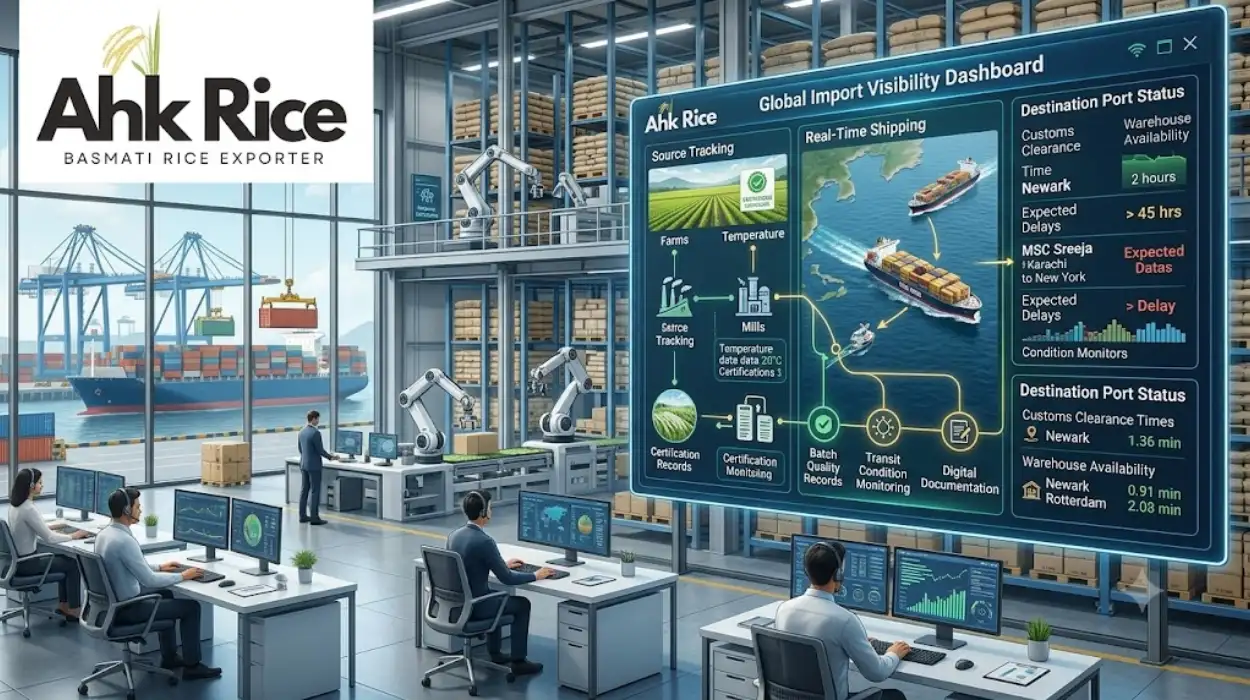
Supply chain visibility gives rice importers real-time control over product status, quality records, documents, and shipment movement. Here is why: rice passes through cultivation, milling, testing, packing, loading, shipping, customs, and delivery. Visibility connects these stages through traceable information, reducing uncertainty across the import operation.
Rice supply chain visibility means knowing what happened to a shipment, where it is, which batch it belongs to, and which documents support it. Traceability links the physical rice to its production and quality records. Research on rice supply chains identifies traceability as important for controlling quality, safety, shelf life, and recall activities.
For importers, visibility starts before a container leaves the exporting country. It continues through milling, inspection, packaging, dispatch, ocean transport, customs clearance, and warehouse receipt. Each stage creates information that supports the next commercial decision.
What Is Supply Chain Visibility in Rice Import Operations?
Supply chain visibility is the continuous access to accurate information about rice products, batches, documents, quality checks, inventory, transport status, and delivery milestones from origin to destination.
Rice supply chain visibility connects physical movement with operational information. An importer can identify the product grade, processing stage, batch reference, packing format, inspection record, container number, vessel status, and expected arrival.
Traceability is one component of visibility. Traceability answers where rice originated and which processing or handling stages it passed through. Visibility covers traceability plus current operational status.
A Pakistani Basmati shipment illustrates this structure. Paddy is harvested in Punjab, milled into export rice, graded, sorted, tested, packed, loaded into containers, shipped, cleared, and delivered. Each stage produces records that identify what happened.
The rice supply chain therefore becomes a connected information chain rather than a series of disconnected transactions. Research on rice traceability identifies non-transparency and uncertainty around quantity and quality as major supply-chain problems.
With the definition established, the next question is how information follows rice through each operational stage.
How Does Supply Chain Visibility Work for Imported Rice?
Visibility works by assigning identifiable records to rice batches and connecting quality, processing, documentation, inventory, and transport information throughout the international supply chain.
Rice visibility begins with product identification. A shipment receives information describing its variety, grade, crop details, packaging, quantity, and batch reference.
The milling stage adds processing information. Export rice passes through cleaning, dehusking, polishing, grading, sorting, and packaging. Parboiled grades also include controlled soaking, steaming, drying, and milling stages.
Quality control adds measurable information. Laboratories and quality teams test parameters such as moisture, broken grains, foreign matter, grain appearance, and other agreed specifications.
Documentation connects the physical shipment with commercial and regulatory requirements. Common export records include commercial invoices, packing lists, certificates of origin, inspection documents, phytosanitary documents where required, and transport documents.
Logistics records then connect the shipment to its container and movement. Container numbers, booking references, vessel information, loading dates, and arrival milestones allow importers to monitor progress.
Digital traceability systems can collect information through sensors, RFID devices, computers, and other data-collection tools. Research on rice traceability systems describes data collection, data management, and application layers as core components.
This process creates the information foundation needed to identify the key visibility components.
What Are the Key Components of Rice Supply Chain Visibility?
The key components are batch identification, quality records, processing data, documentation, inventory information, container tracking, shipment milestones, and communication between supply-chain participants.
Which Product Information Should Importers Track?
Product identification should include variety, grade, crop information, packing format, quantity, and batch reference. Examples include 1121 Basmati, Super Kernel Basmati, and 1509 Basmati.
Product information prevents different specifications from becoming mixed during procurement. A buyer can connect the approved specification with the rice physically loaded for export.
Which Processing Information Should Be Visible?
Processing information should show the major steps applied to the rice. These steps include:
- Clean the paddy
- De-husk the grain
- Polish the rice
- Grade the grains
- Sort foreign material
- Sort by grain characteristics
- Test the finished rice
- Pack the approved product
Processing records support consistency because the importer can connect the finished product with its production history.
Which Quality Records Support Visibility?
Quality records include laboratory results, inspection reports, moisture results, broken-grain measurements, foreign-matter results, and agreed product specifications.
Food safety management systems also support controlled food-chain processes. ISO 22000:2018 establishes requirements for organizations involved in the food chain and incorporates HACCP principles, communication, system management, and prerequisite programs.
Which Logistics Records Should Importers Monitor?
Logistics records include container numbers, booking references, loading dates, vessel details, transshipment information, estimated arrival dates, customs milestones, and delivery confirmation.
These records help an importer distinguish production delays from transport delays. That distinction supports inventory planning and customer communication.
With these components connected, visibility produces measurable operational benefits.
What Benefits Does Supply Chain Visibility Provide to Rice Importers?
Supply chain visibility improves quality control, shipment planning, documentation accuracy, inventory management, traceability, exception handling, and communication across international rice import operations.
Quality control improves because importers can connect test results with specific batches. A quality issue can therefore be investigated against identifiable production and shipment records.
Inventory planning improves through clearer shipment milestones. Importers can compare expected arrivals with warehouse stock and customer demand.
Documentation control improves because commercial and logistics records remain connected to the shipment. Missing documents become easier to identify before customs processing.
Risk management improves through earlier identification of delays. A shipment showing a delayed loading milestone requires different action from a shipment already sailing toward the destination.
Recall management also depends on traceability. Rice supply-chain research identifies traceability as a mechanism for controlling hazards and supporting product recall.
Operational visibility therefore converts shipment information into decisions. Importers can monitor exceptions rather than waiting for problems to become delivery failures.
The value becomes clearer when visibility is applied to specific import situations.
Where Is Supply Chain Visibility Used in Rice Import Operations?
Visibility applies to procurement, quality assurance, shipment monitoring, customs preparation, warehouse planning, inventory control, customer fulfilment, and investigation of quality or delivery problems.
How Does Visibility Support Procurement?
Procurement teams use visibility to confirm that the ordered specification matches the produced shipment. Examples include variety, grade, broken percentage, moisture requirement, packing format, and quantity.
This connection reduces confusion between the purchase order and the physical shipment.
How Does Visibility Support Quality Assurance?
Quality teams use batch records and inspection results to verify product conformity. A laboratory report becomes more useful when its result connects directly to the batch loaded for shipment.
How Does Visibility Support Shipment Monitoring?
Logistics teams monitor loading, dispatch, vessel movement, transshipment, arrival, and delivery. Importers can then update warehouse and sales teams using identifiable shipment information.
How Does Visibility Support Warehouse Planning?
Warehouse teams use estimated arrival information to plan receiving capacity and stock levels. Importers handling multiple containers can prioritize incoming shipments according to inventory requirements.
For a deeper explanation of shipment monitoring practices, importers can continue with [how importers monitor international rice orders more effectively](Insert Link to MOFU Article).
The use cases show why visibility extends beyond tracking a container.
What Problems Reduce Visibility in International Rice Supply Chains?
Disconnected records, delayed communication, inconsistent batch identification, incomplete documentation, manual updates, unclear shipment milestones, and mismatched quality information reduce supply chain visibility.
Disconnected records create information gaps. A quality report stored separately from the shipment record makes batch verification slower.
Manual communication creates another problem. An importer relying on separate emails, spreadsheets, messages, and shipping updates can lose the relationship between records.
Inconsistent batch references also create confusion. The batch number on a laboratory report should connect with the product and shipment records used by the importer.
Documentation gaps create customs and compliance risks. Importers need the documents required by their destination market and product category.
Visibility also does not mean simply knowing a container’s location. A tracking system that shows vessel movement but lacks batch, quality, and document information provides logistics visibility without complete supply-chain visibility.
Research on rice supply chains describes the challenge as complex because product information must move across multiple stakeholders and stages.
The final issue is understanding common misconceptions about what visibility actually means.
What Are Common Misconceptions About Rice Supply Chain Visibility?
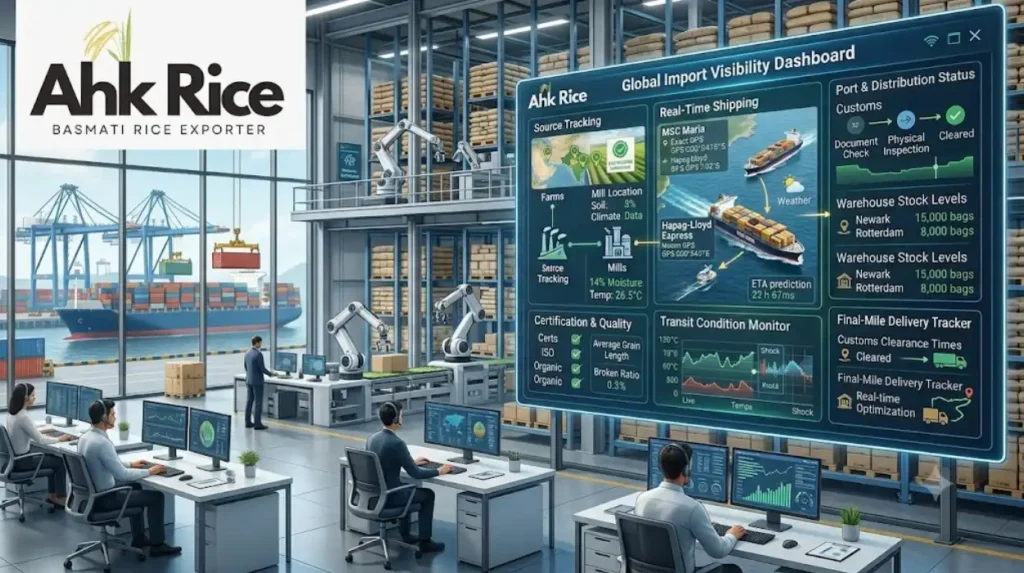
Supply chain visibility is not limited to container tracking, digital dashboards, or supplier communication; it requires connected information covering product identity, quality, processing, documentation, and logistics.
Does Container Tracking Alone Provide Visibility?
Container tracking provides location information. It does not automatically show rice quality, processing history, laboratory results, packaging details, or compliance documents.
Does Traceability Mean the Same as Visibility?
Traceability identifies product history and movement through the chain. Visibility includes traceability while also providing current operational information.
Does Digital Technology Create Visibility Automatically?
Technology supports visibility only when accurate data enters the system. RFID, IoT, blockchain, and digital dashboards cannot replace correct batch identification and disciplined record management.
Research on rice supply-chain technology combines data collection, management networks, and application services to create traceability.
Does Every Rice Market Require the Same Documentation?
Import documentation depends on the destination country’s rules, product category, and shipment conditions. Importers should verify current requirements with the relevant authorities before shipment.
Supply chain visibility therefore depends on both information quality and process discipline.
Why Does Visibility Matter Across the Full Rice Supply Chain?
Visibility matters because rice import operations connect agriculture, milling, quality control, documentation, shipping, customs, warehousing, and distribution into one commercial chain.
Pakistani Basmati rice demonstrates this connection clearly. Rice is cultivated and harvested in Punjab before milling converts paddy into export-grade rice. Processing then establishes the product specification.
Quality testing verifies the finished product against agreed requirements. Packaging identifies the commercial unit. Loading connects the approved batch with the export shipment.
Shipping moves the physical product between countries. Customs processes the required documentation. Warehousing receives the shipment and connects it with downstream inventory.
AHK Rice supplies Pakistani Basmati varieties including 1121, Super Kernel, and 1509, with end-to-end processing, custom packaging, and export operations. These product and process stages illustrate why visibility must connect production records with shipment records.
A visible supply chain gives each participant a clearer operational picture. An importer can identify what was ordered, what was produced, what was tested, what was shipped, and what is arriving.
That connection is the foundation of controlled international rice procurement.
Frequently Asked Questions
What is supply chain visibility in rice imports?
Supply chain visibility is the ability to access connected information about rice batches, processing, quality, documents, inventory, shipment movement, and delivery.
Why is traceability important for rice importers?
Traceability connects a rice shipment with its origin, processing history, quality records, and distribution path. It supports quality investigation and recall management.
What information should rice importers track?
Importers should track product specifications, batch references, processing records, laboratory results, packing details, container numbers, shipping milestones, and required documents.
Is container tracking the same as supply chain visibility?
No. Container tracking shows transport movement. Complete visibility also connects product identity, quality, processing, documentation, inventory, and logistics information.
Which certifications apply to rice supply chains?
Applicable certifications depend on the supplier, destination market, buyer requirements, and product category. ISO 22000:2018 is a food safety management standard applicable across the food chain.