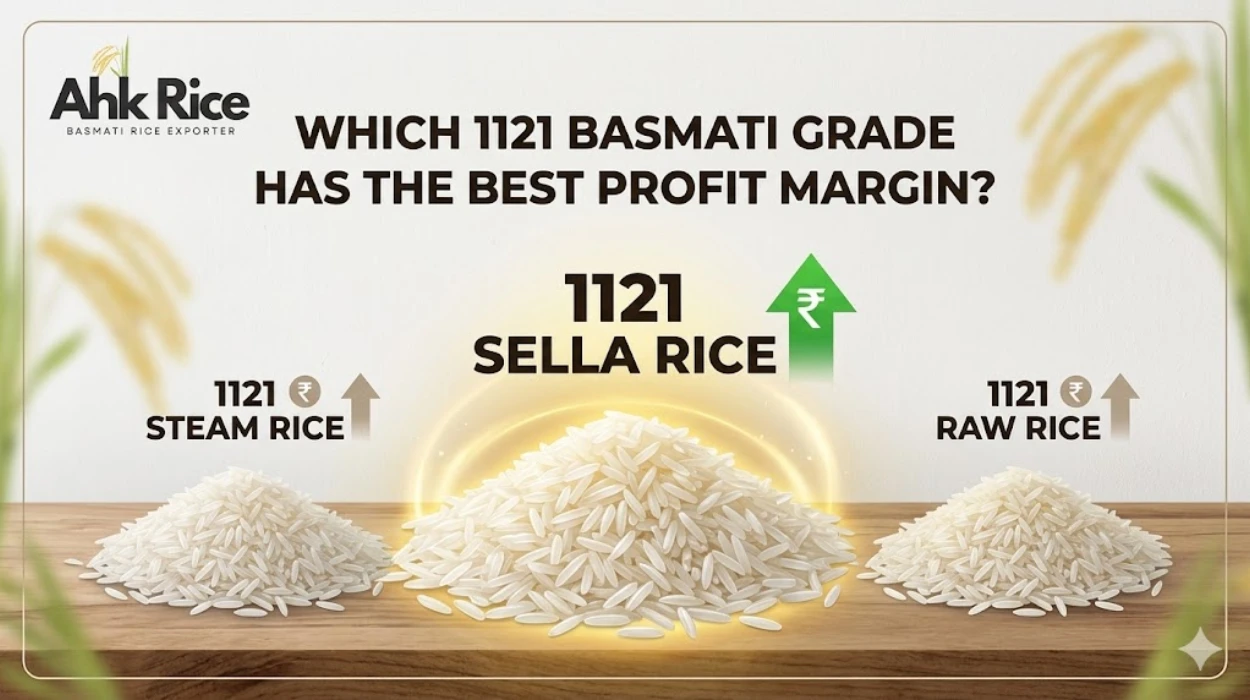
Which 1121 Basmati Grade Has the Best Profit Margin?
1121 Golden Sella Basmati delivers the highest profit margin for most importers because it combines strong market demand, lower breakage risk, longer shelf life, premium pricing, and broad acceptance across wholesale, retail, and food service channels. Here is why: Golden Sella maintains grain integrity during storage and transport, commands higher selling prices, and performs consistently in high-volume markets.
Profit margin depends on more than purchase price. Importers evaluate processing grade, consumer demand, storage requirements, breakage percentage, packaging costs, and market positioning. Buyers who understand these variables select grades that maximize net returns rather than simply minimizing procurement costs.
Rice importers researching margins should first understand how different processing methods affect value creation. Our guide on how Pakistani Basmati rice grades are processed and classified explains the complete production chain from paddy selection to export grading.
AHK Rice is a trusted Pakistani Basmati rice exporter based in Punjab, supplying 1121, Super Kernel, and 1509 varieties to more than 15 countries. Through its rice export and processing operations, AHK Rice supplies multiple 1121 grades designed for different importer objectives.
What are the available 1121 Basmati grade solutions?
1121 White Rice, Golden Sella, Creamy Sella, Steam Rice, and multiple grain-size specifications serve different profit strategies. Each grade targets specific consumer preferences, pricing structures, storage requirements, and distribution channels. The best choice depends on market demand and operational costs.
1121 White Basmati Rice
1121 White Rice is fully milled and polished rice. The grain appears bright white and cooks quickly. Retail buyers often prefer this specification because of its premium appearance.
White Rice generates strong margins in premium retail channels. However, storage conditions must remain controlled because polished rice has lower resistance to environmental stress than parboiled grades.
1121 Steam Basmati Rice
1121 Steam Rice undergoes steaming before milling. The process improves grain strength while preserving a natural appearance.
Steam Rice performs well in modern retail markets. Importers targeting supermarkets often prefer Steam Rice because consumers recognize its natural color and cooking characteristics.
1121 Golden Sella Basmati Rice
Golden Sella Rice undergoes parboiling before milling. The process creates a golden appearance and significantly strengthens grain structure.
Golden Sella Rice achieves premium positioning in many export markets. The grade tolerates handling, shipping, and long-term storage exceptionally well.
1121 Creamy Sella Basmati Rice
Creamy Sella Rice follows a parboiling process but retains a lighter cream color.
Creamy Sella Rice serves buyers seeking a balance between Steam Rice aesthetics and Golden Sella durability.
Grain Size Specifications
Processing grades also include grain-length categories:
- 8.00 mm+
- 8.20 mm+
- 8.30 mm+
- 8.35 mm+
- Extra-long grain export grades
Longer grains command higher prices because consumers associate grain length with premium quality.
With the available solutions defined, the next question is how these grades compare across operational and financial metrics.
How do different 1121 Basmati grades compare?
Golden Sella leads profitability, Steam delivers balanced performance, Creamy Sella targets niche demand, and White Rice supports premium retail positioning. The correct comparison requires examining pricing, storage, breakage, demand, cooking performance, and distribution flexibility.
Specification Comparison Table
| Attribute | 1121 Golden Sella | 1121 Steam | 1121 Creamy Sella | 1121 White Rice |
|---|---|---|---|---|
| Processing Method | Parboiled | Steamed | Parboiled | Fully Milled |
| Average Export Price | Higher | Moderate | Moderate-High | High |
| Grain Strength | Excellent | Good | Very Good | Moderate |
| Breakage Risk | Lowest | Moderate | Low | Higher |
| Shelf Life | 18-24 Months | 12-18 Months | 18-24 Months | 12 Months |
| Food Service Demand | Very High | Moderate | High | Moderate |
| Retail Premium Potential | High | High | Moderate | Very High |
Price Per Metric Ton Comparison
Market prices fluctuate according to crop conditions and demand. The following ranges reflect common export relationships.
| Grade | Typical Export Range (USD/MT) |
|---|---|
| 1121 Steam | $950–$1,100 |
| 1121 Creamy Sella | $1,000–$1,150 |
| 1121 White Rice | $1,050–$1,250 |
| 1121 Golden Sella | $1,100–$1,300 |
Golden Sella commands higher selling prices because buyers value durability and consistency.
Steam Rice attracts volume-focused buyers because it offers competitive pricing and broad consumer acceptance.
White Rice commands premiums in specialized retail segments because consumers associate bright white grains with luxury presentation.
With grade comparisons established, the next question is how regional demand affects profitability.
Which 1121 grade works best in different export markets?
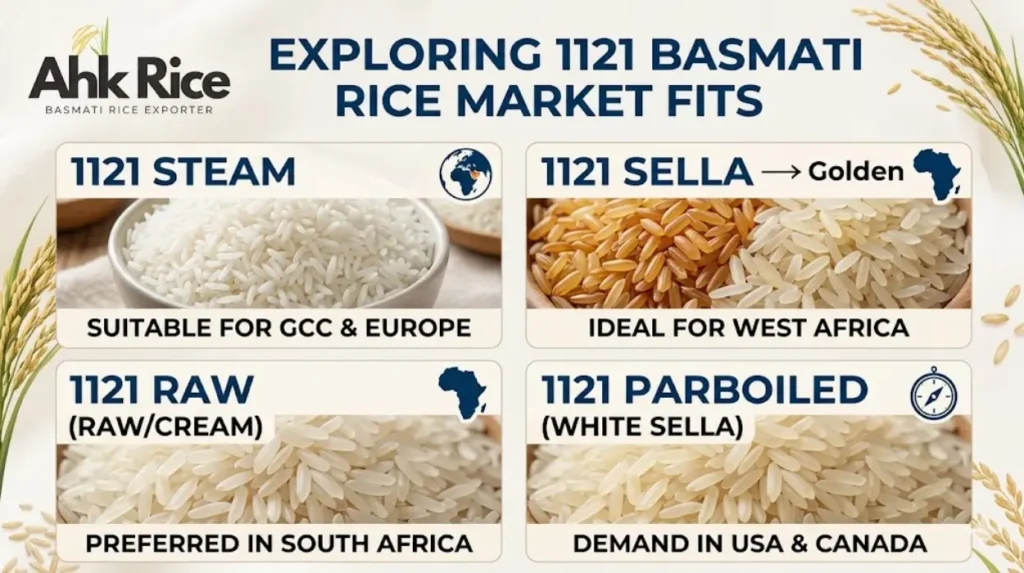
Middle Eastern markets generally favor Golden Sella and Creamy Sella grades, while European markets often prefer Steam and White Rice specifications. Regional demand directly influences resale prices, inventory turnover, and profit margins.
Gulf Cooperation Council (GCC) Markets
Countries across the Gulf region maintain strong demand for parboiled rice.
Preferred grades include:
- Golden Sella
- Creamy Sella
- Extra-long grain specifications
Food service operators favor Golden Sella because grain separation remains excellent after large-scale cooking.
Catering companies value Golden Sella because it maintains presentation quality during buffet service. In high-temperature storage environments, Golden Sella retains quality longer than many alternative specifications.
European Markets
European importers frequently prefer:
- Steam Rice
- White Rice
- Premium retail packaging
Retail consumers prioritize appearance and cooking consistency. Steam Rice satisfies these requirements while maintaining competitive pricing.
White Rice performs strongly in ethnic retail channels because premium consumers often associate whiteness with superior quality.
Africa and Emerging Markets
Many African importers prioritize affordability and yield.
Steam Rice often performs best because buyers balance procurement costs against consumer affordability.
Golden Sella remains attractive for institutional buyers because reduced breakage improves usable inventory.
Market Preference Comparison
| Region | Preferred Grade | Main Reason |
|---|---|---|
| GCC | Golden Sella | Durability and catering demand |
| Europe | Steam Rice | Retail acceptance |
| Africa | Steam Rice | Cost efficiency |
| Central Asia | Golden Sella | Long storage capability |
| Wholesale Food Service | Golden Sella | Consistent cooking results |
Regional demand drives profitability. The next consideration is understanding the advantages and disadvantages of each approach.
What are the pros and cons of each profit-margin strategy?
Golden Sella offers maximum stability, Steam provides balanced returns, White Rice supports premium branding, and Creamy Sella serves specialty demand. Each strategy creates different opportunities and operational risks.
Golden Sella Strategy
Pros:
- Higher selling prices
- Lower breakage losses
- Longer shelf life
- Strong food service demand
- Better inventory protection
Cons:
- Higher procurement costs
- Requires larger capital investment
Example:
A UAE distributor purchasing 500 MT often prioritizes Golden Sella because lower breakage offsets higher acquisition costs.
Steam Rice Strategy
Pros:
- Competitive purchase pricing
- Broad consumer acceptance
- Fast inventory turnover
- Strong retail demand
Cons:
- Lower premium potential
- Moderate breakage exposure
Example:
A supermarket supplier in Europe may generate higher annual turnover through Steam Rice despite slightly lower margins per shipment.
White Rice Strategy
Pros:
- Premium retail positioning
- Attractive appearance
- Strong consumer perception
Cons:
- Shorter storage flexibility
- Greater handling sensitivity
Example:
Specialty retail chains often achieve premium shelf pricing through White Rice packaging programs.
Creamy Sella Strategy
Pros:
- Balanced positioning
- Strong shelf life
- Distinct market identity
Cons:
- Smaller buyer base
- Less universal demand
Example:
Importers serving niche ethnic communities frequently select Creamy Sella for differentiated product offerings.
With advantages and disadvantages evaluated, the next question is identifying the most important decision criteria.
What decision factors determine the highest profit margin?
Target market demand, inventory turnover, storage conditions, customer segment, procurement cost, packaging strategy, and breakage tolerance determine actual profitability. Margin percentage alone does not reveal total business performance.
Decision Framework Table
| Decision Factor | Golden Sella | Steam Rice | White Rice | Creamy Sella |
|---|---|---|---|---|
| Long Storage | ✓ Best | Moderate | Limited | Excellent |
| Retail Branding | Good | Very Good | Best | Moderate |
| Catering Sales | Best | Good | Moderate | Very Good |
| Fast Turnover | Good | Best | Good | Moderate |
| Margin Stability | Best | Good | Moderate | Good |
Inventory Management
Golden Sella supports longer inventory cycles. Importers holding stock for several months reduce quality risks through parboiled grades.
Packaging Strategy
Premium retail packaging often increases White Rice profitability. Value-added branding creates higher per-unit returns.
Customer Type
Food service buyers prioritize consistency. Retail buyers prioritize appearance. Wholesale distributors prioritize logistics efficiency.
Working Capital
Steam Rice often requires lower investment. Faster turnover can increase annual profit despite lower margins per shipment.
Supply Reliability
Reliable sourcing protects profitability. Consistent specifications reduce customer complaints and preserve repeat orders.
Decision factors determine profitability outcomes. The final question is identifying which grade produces the strongest results overall.
Which 1121 Basmati grade has the best profit margin overall?
1121 Golden Sella generates the strongest overall profit margin for most international importers because it combines premium pricing, lower breakage rates, stronger food service demand, longer shelf life, and superior logistics performance. Steam Rice ranks second because of faster turnover and broader retail acceptance.
Golden Sella creates value throughout the supply chain. The grade withstands handling, maintains quality during storage, and performs consistently in large-scale cooking operations.
Steam Rice remains an excellent alternative for markets prioritizing retail distribution and volume sales.
White Rice serves premium consumer segments where presentation drives purchasing decisions.
Creamy Sella fills specialized demand niches that reward differentiation.
Importers seeking maximum profitability should evaluate customer base, inventory cycle, market preferences, and distribution model before selecting a grade. The highest margin grade is the one that aligns with market demand while minimizing operational losses.
For buyers comparing specifications and requesting shipment samples before procurement decisions, detailed grade evaluations are available in the article AHK Rice 1121 Basmati: Request a Free Sample Today.
Frequently Asked Questions
Which 1121 rice grade is most profitable?
1121 Golden Sella is typically the most profitable grade because it commands premium pricing while reducing breakage and storage losses.
Is Steam Rice better than Golden Sella?
Steam Rice is better for fast retail turnover, while Golden Sella is better for long-term margin stability and food service distribution.
Which grade has the longest shelf life?
Golden Sella and Creamy Sella generally provide 18–24 months of shelf life under proper storage conditions.
Why does Golden Sella cost more?
Golden Sella undergoes a parboiling process that strengthens grain structure, improves durability, and increases market demand.
Which grade do Gulf importers prefer?
Most Gulf importers prefer Golden Sella because it performs exceptionally well in catering, hospitality, and wholesale food service sectors.