Which Pakistan Basmati Rice Grade Fits Indonesia’s Retail Market Best?
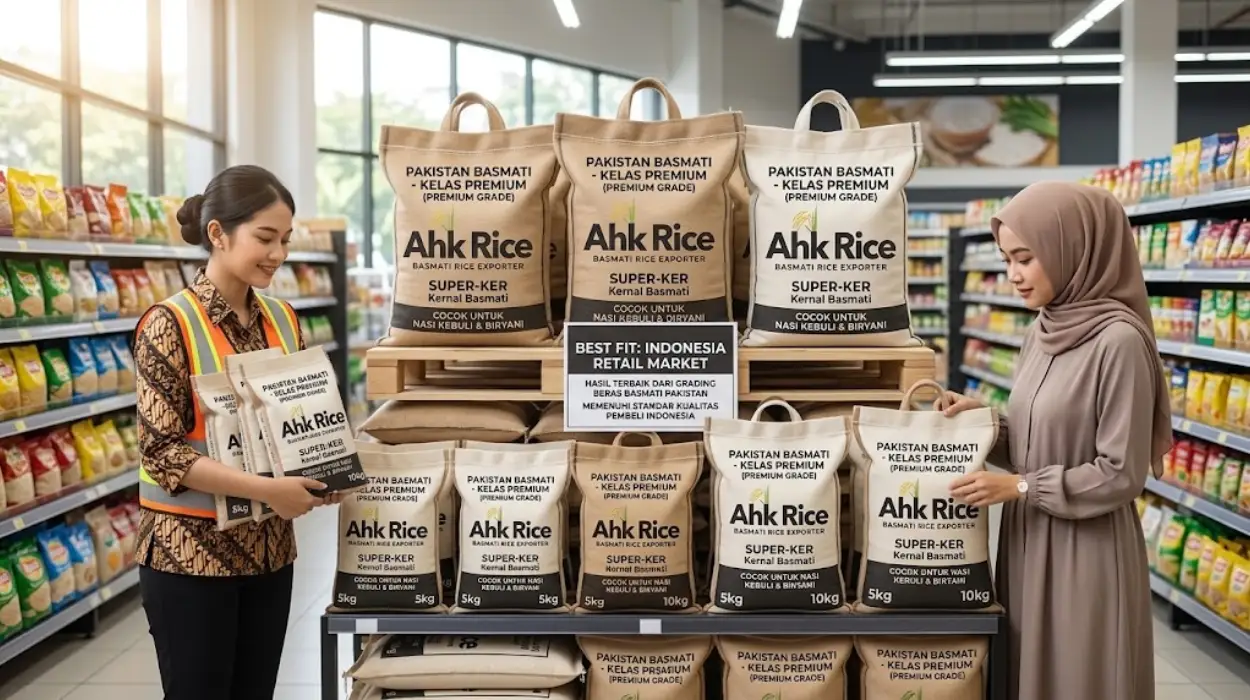
The best fit for Indonesia’s premium retail market is 1121 White Basmati because its extra-long grain, aroma, visual appearance, and cooked elongation create a strong premium retail proposition. Super Kernel fits classic-aroma positioning, while 1509 provides another long-grain option for value-conscious premium shelves.
What is a Pakistan Basmati rice grade for Indonesia’s retail market?
A Pakistan Basmati rice grade identifies a rice variety and processing form, such as 1121 White, 1121 Steam, 1121 Sella, 1509 White, or Super Kernel, with each grade producing different grain, texture, aroma, and retail characteristics.
Pakistan Basmati rice is aromatic long-grain rice cultivated mainly in Punjab and processed for domestic and export consumption. The principal varieties relevant to this comparison are 1121, 1509, and Super Kernel.
A grade is not simply a name on a retail bag. It describes a combination of variety, processing method, grain appearance, broken percentage, moisture, cleanliness, and cooking performance. Examples include 1121 White, 1121 Steam, 1121 Golden Sella, 1121 Creamy Sella, 1509 White, 1509 Steam, and Super Kernel White.
For Indonesia, the distinction matters because retail buyers evaluate rice through the package, grain appearance, cooking result, aroma, price position, and regulatory compliance. A premium supermarket product requires a consistent specification rather than only a recognizable variety name.
Pakistan’s Basmati production is concentrated in Punjab. Super Kernel is a traditional aromatic Pakistani Basmati, while 1121 and 1509 are recognized for their extra-long grain characteristics. Industry specifications commonly place 1121 around 8.3 mm in raw grain length and Super Kernel around 7.2 mm.
How is Pakistan Basmati rice processed for retail sale?
Pakistan Basmati rice moves through harvesting, drying, cleaning, husking, milling, grading, sorting, quality inspection, packaging, and export preparation before reaching Indonesian retail shelves as a finished consumer product.
How does harvesting and drying work?
Rice begins as paddy, which is rice grain with its outer husk intact. Farmers harvest mature paddy and reduce moisture to a controlled level before milling.
Controlled drying protects the kernel from excessive cracking. Poor drying increases breakage and reduces the percentage of whole grains available for premium retail grades.
How does milling create white rice?
White Basmati follows the conventional milling route. Paddy passes through cleaning and husking equipment to remove the outer husk. The brown rice kernel then passes through milling and polishing stages.
Color sorting removes discolored grains and foreign material. Length grading separates whole kernels from broken grains.
This process produces the bright appearance expected from white retail rice. The final specification includes attributes such as grain length, broken percentage, moisture, damaged grains, foreign matter, and color.
How does steam processing differ?
Steam Basmati receives controlled steaming before the final milling process. The treatment increases grain firmness while retaining a relatively light appearance.
1121 Steam is therefore different from 1121 White. The variety remains 1121, but the processing method changes cooking texture and grain resilience.
How does Sella processing differ?
Sella means parboiled rice. Paddy is soaked, steamed, dried, and then milled. The heat treatment hardens the grain and improves resistance to breakage.
1121 Sella is available in forms such as Creamy Sella and Golden Sella. The steaming intensity affects the final color, creating a lighter creamy appearance or deeper golden appearance.
For Indonesian retail, the processing choice should match the desired consumer experience. White rice supports a clean premium appearance. Steam supports firmer cooking. Sella supports firm, separate grains and stronger resistance during cooking and reheating.
What are the key Pakistan Basmati rice grades for Indonesian retail?
The main grades are 1121 White, 1121 Steam, 1121 Sella, 1509 White, 1509 Steam, 1509 Sella, and Super Kernel, with each grade occupying a different position based on grain length, aroma, texture, appearance, and processing.
| Grade | Typical grain profile | Processing | Retail positioning |
|---|---|---|---|
| 1121 White | Extra-long | White milled | Premium |
| 1121 Steam | Extra-long | Steam | Premium, firm texture |
| 1121 Sella | Extra-long | Parboiled | Premium, firm and separate |
| 1509 White | Extra-long | White milled | Premium-value |
| 1509 Steam | Extra-long | Steam | Premium-value |
| 1509 Sella | Extra-long | Parboiled | Value-oriented premium |
| Super Kernel | Long, aromatic | White or processed forms | Classic premium |
1121 has the strongest visual advantage because its raw grain is typically around 8.3 mm and its cooked grain extends substantially. Super Kernel has a traditional Pakistani Basmati aroma and a shorter grain profile around 7.2 mm. 1509 is also an extra-long variety and is often positioned below 1121 on cultivation and cost considerations.
The retail decision therefore starts with consumer positioning rather than selecting the longest grain automatically.
Why does 1121 fit premium Indonesian retail?
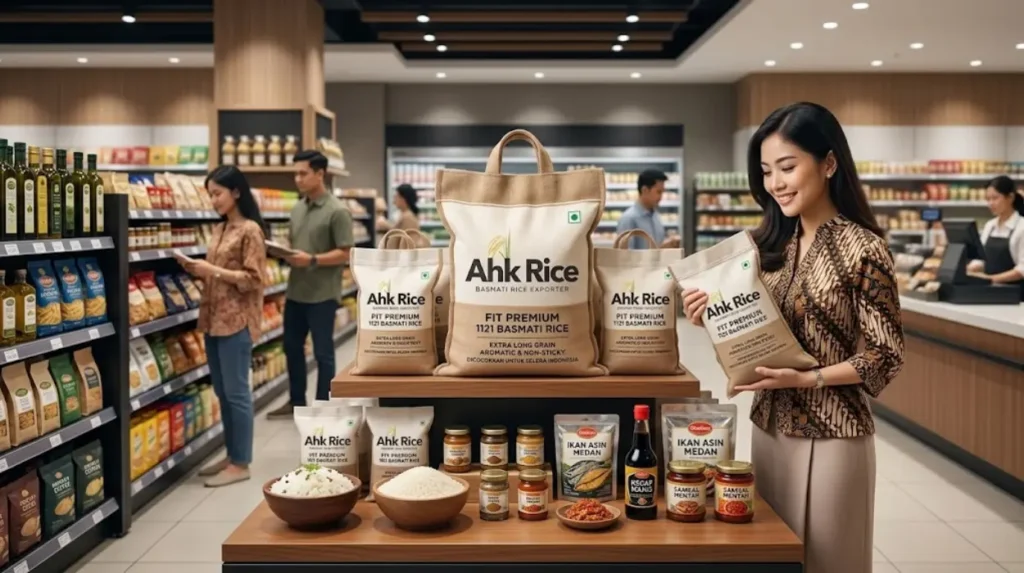
1121 fits premium Indonesian retail because its extra-long grain creates strong shelf appeal, its cooked elongation creates visible differentiation, and its aroma and separate-grain texture support premium Basmati positioning in consumer packs.
The first advantage is visual recognition. Long grains are easy for consumers to identify through transparent packaging or product photography.
The second advantage is cooking expansion. A long, slender grain produces a distinctive cooked appearance. This supports premium positioning for biryani, pulao, festive meals, and restaurant-style dishes.
The third advantage is grade flexibility. 1121 is available in White, Steam, and Sella processing forms. Buyers can therefore select the same core variety for different cooking characteristics.
For a premium Indonesian retail pack, 1121 White provides the clearest starting point. 1121 Steam is relevant when a firmer grain is required. 1121 Sella is appropriate when strong grain separation and resilience are the primary requirements.
Where is each Pakistan Basmati grade used?
1121 targets premium retail and foodservice applications, 1509 targets premium-value retail programs, and Super Kernel targets consumers seeking traditional Pakistani Basmati aroma, creating three distinct use cases for Indonesian importers and retailers.
What is 1121 used for?
1121 is suitable for premium consumer packs, biryani products, festive meal positioning, restaurants, catering, and specialty foodservice. Its long grain creates strong visual differentiation.
What is 1509 used for?
1509 serves retailers seeking an extra-long Basmati profile with a stronger value proposition. Its shorter cultivation period and higher production yield are commonly cited as factors supporting its competitive positioning compared with 1121.
What is Super Kernel used for?
Super Kernel is suitable for consumers who prioritize traditional Pakistani Basmati aroma and a classic long-grain appearance. It is also relevant for premium ethnic retail and foodservice.
These use cases demonstrate why variety selection should follow the intended shelf position. A premium flagship product requires different specifications from a high-volume value product.
What benefits do these grades provide to Indonesian retailers?
The main benefits are clear product differentiation, multiple price-position options, consistent cooking characteristics, attractive grain appearance, and the ability to build separate retail products around premium, premium-value, and traditional Basmati identities.
A retailer can use 1121 to build a flagship premium SKU. The same retailer can use 1509 for a more accessible premium SKU. Super Kernel can serve a traditional-aroma segment.
Processing creates another layer of differentiation. White, Steam, and Sella rice can be marketed around different cooking results without changing the underlying variety.
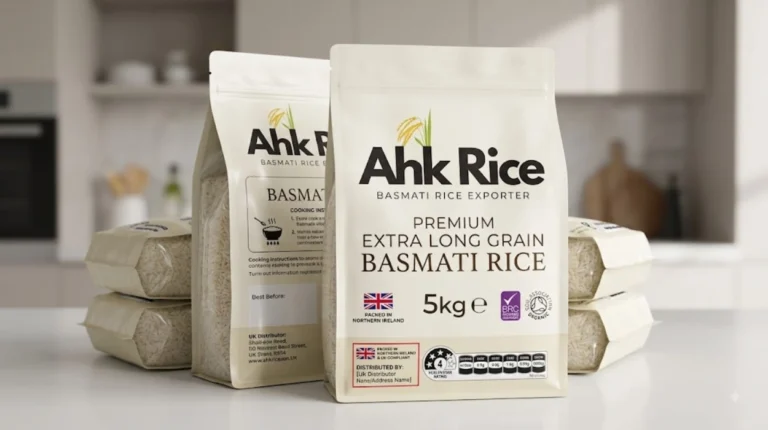
Packaging also affects retail performance. Consumer packs can use 1 kg, 2 kg, 5 kg, or other locally appropriate sizes. Private-label programs can use customized packaging, provided the Indonesian labeling and import requirements are satisfied.
The technical specification remains important. A retail buyer should review grain length, broken percentage, moisture, foreign matter, damaged grains, milling quality, crop year, packaging specification, and inspection documentation.
What certifications and standards apply to Pakistan Basmati rice entering Indonesia?
Indonesian retail rice requires attention to food import rules, labeling, product standards, halal requirements, and applicable documentation, with SNI 6128:2020 serving as the current Indonesian rice standard listed by BSN.
The Badan Standardisasi Nasional (BSN) lists SNI 6128:2020, titled Beras, as a valid Indonesian standard. Importers should therefore check the applicable SNI requirements for their specific rice product and distribution channel.
Halal compliance is especially important for Indonesian food retail. BPJPH states that mandatory halal certification applies to food and beverage products, including imported products, under Indonesia’s halal assurance framework. BPJPH has also stated that the next implementation stage begins on 18 October 2026, including imported products.
The halal requirement also extends beyond the rice grain itself. BPJPH emphasizes the importance of halal compliance across relevant production, packaging, storage, and distribution processes.
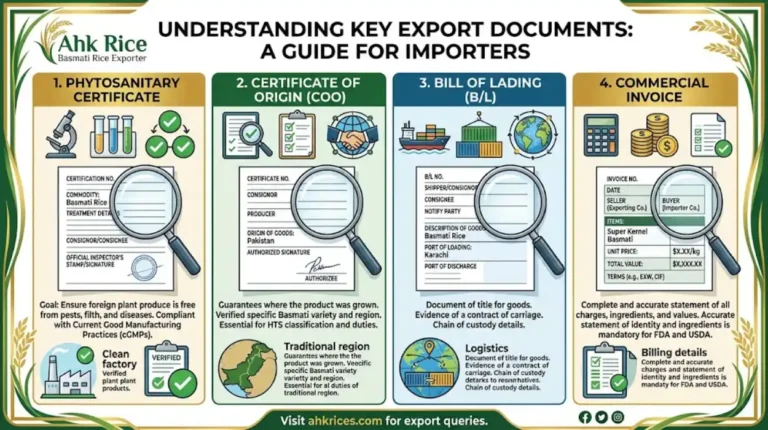
Other export documentation depends on the shipment and Indonesian import process. Typical commercial documentation includes the commercial invoice, packing list, certificate of origin, transport documents, product specifications, inspection records, and certificates required by the importer or authorities.
Certification should therefore be treated as part of product specification, not as an afterthought.
What are the common problems when selecting Pakistan Basmati rice for Indonesia?
Common mistakes include treating all Basmati as identical, selecting a variety only by grain length, ignoring processing differences, overlooking broken percentage, and assuming a foreign certificate automatically satisfies every Indonesian retail requirement.
The first misconception is that longer always means better. Grain length creates visual value, but aroma, cooking texture, cleanliness, broken percentage, and consumer price also determine product suitability.
The second misconception is that 1121 White, 1121 Steam, and 1121 Sella are interchangeable. They are the same core variety but different processing forms. Their color, firmness, cooking behavior, and handling characteristics differ.
The third problem is inconsistent specifications. A retailer needs a defined purchase specification instead of a generic description such as “premium Basmati.”
The fourth problem is regulatory assumption. A Pakistani certificate does not automatically replace Indonesian requirements. The importer must verify the applicable Indonesian standards, registration, labeling, and halal procedures before commercial distribution.
How should Indonesian retailers choose between 1121, 1509, and Super Kernel?
Indonesian retailers should choose 1121 for flagship premium positioning, 1509 for premium-value positioning, and Super Kernel for traditional aromatic positioning, then select White, Steam, or Sella according to the desired cooking experience.
The decision can be simplified into 3 questions.
First, does the product need maximum visual grain length? Select 1121.
Second, does the retailer need an extra-long Basmati profile with a stronger value position? Evaluate 1509.
Third, does the target consumer prioritize traditional Pakistani aroma over maximum grain length? Evaluate Super Kernel.
The final selection should then be validated through a product sample, cooking test, laboratory specification, packaging review, and Indonesian regulatory check.
For readers comparing the three varieties in greater commercial detail, the next-stage resource is how Indonesian retailers compare Pakistan 1121, 1509, and Super Kernel. This comparison should follow the educational explanation because it moves from understanding the varieties to evaluating them against retail requirements.
What is the overall conclusion for Indonesia’s retail market?
1121 White is the strongest starting grade for premium Indonesian retail because it combines extra-long grain, strong visual appeal, aromatic cooking, and premium positioning, while 1509 and Super Kernel serve distinct value and traditional-aroma segments.
The best grade depends on the intended retail position. 1121 is the clearest flagship option. 1509 supports a more value-conscious premium strategy. Super Kernel provides traditional Pakistani Basmati character.
Processing then determines the cooking profile. White supports a clean premium appearance. Steam increases firmness. Sella produces firm, separate grains.
Indonesian compliance must remain part of the selection process. SNI, halal requirements, labeling, import documentation, and product testing should be reviewed before retail launch. This creates a complete product specification rather than a variety-only purchasing decision.
Frequently Asked Questions
Which Pakistan Basmati grade is best for Indonesian premium retail?
1121 White is the strongest starting option because its extra-long grain, aroma, appearance, and cooking elongation support premium retail positioning.
Is 1509 Basmati suitable for Indonesia?
Yes. 1509 is suitable for a premium-value retail position where an extra-long Basmati profile is required with stronger cost positioning than flagship 1121.
What is the difference between 1121 White and 1121 Sella?
1121 White is conventionally milled rice with a bright appearance and softer cooking profile. 1121 Sella is parboiled and produces firmer, more separate grains.
Is Super Kernel Basmati different from 1121?
Yes. Super Kernel is a distinct Pakistani Basmati variety. It has a shorter typical raw grain length than 1121 and is recognized for traditional aromatic characteristics.
What is Sella rice?
Sella is parboiled rice. The paddy is soaked, steamed, dried, and milled. This processing creates a firmer grain with stronger resistance to breakage.
What certifications should Indonesian rice importers check?
Importers should verify applicable Indonesian food requirements, SNI requirements, labeling rules, import documentation, and halal certification requirements. SNI 6128:2020 is listed by BSN as a valid rice standard.
When does Indonesia’s next halal requirement stage begin?
BPJPH states that the next mandatory halal implementation stage begins on 18 October 2026, including imported food and beverage products covered by the applicable rules.