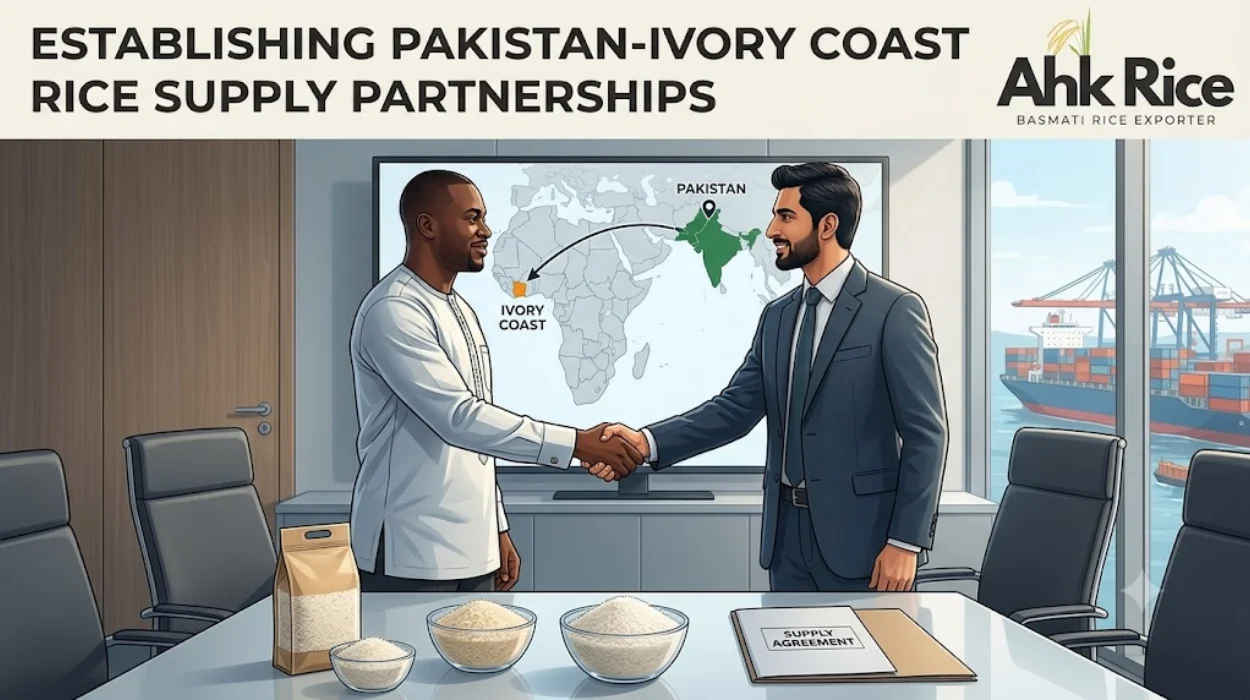
How Rice Importers in Ivory Coast Establish Supply Partnerships with Pakistan
Rice importers in Ivory Coast achieve the most reliable supply outcomes when they build direct partnerships with established Pakistani exporters that offer consistent quality control, export documentation, logistics management, and long-term pricing stability.
Ivory Coast is one of the largest rice-consuming markets in West Africa. Rising urban populations, changing consumer preferences, and increasing demand for both aromatic and long-grain rice have encouraged importers to diversify their sourcing networks. Pakistan has become a preferred sourcing destination because of its large production capacity, competitive pricing, and broad portfolio of Basmati and non-Basmati rice varieties.
Importers seeking sustainable procurement models increasingly study how international rice supply chains operate before selecting suppliers. Understanding the factors behind successful trade relationships is essential, especially as discussed in our guide on global rice trade dynamics and emerging African markets.
For rice distributors, wholesalers, supermarket chains, and institutional buyers in Ivory Coast, supply partnership development involves much more than purchasing containers. It requires supplier evaluation, risk management, quality assurance systems, logistics planning, and long-term commercial alignment.
What solutions are available for rice importers in Ivory Coast?
Rice importers can source through trading companies, direct exporters, procurement agents, exclusive partnerships, or integrated supply agreements. Each solution offers different levels of control, pricing transparency, operational efficiency, risk exposure, and long-term scalability depending on importer size and market objectives.
A supply partnership is a structured commercial relationship between a rice buyer and a rice supplier. The objective is not simply purchasing rice. The objective is ensuring reliable availability, consistent quality, and predictable costs.
The primary sourcing solutions available to Ivory Coast importers include:
1. Purchasing Through International Trading Companies
Trading companies act as intermediaries between exporters and buyers.
These firms consolidate products from multiple origins and offer importers a single purchasing point. Importers benefit from supplier diversification and simplified procurement management.
However, intermediary costs increase final pricing.
2. Working With Procurement Agents
Procurement agents represent buyers in exporting countries.
They conduct supplier screening, quality inspections, and shipment monitoring.
This model works well for importers lacking local market knowledge in Pakistan.
3. Buying Directly From Pakistani Exporters
Direct sourcing eliminates intermediary layers.
Importers negotiate directly with mills and exporters.
This approach improves pricing transparency and allows greater control over specifications.
Companies such as AHK Rice operate within this model by managing processing, packaging, quality control, documentation, and export logistics from origin to destination.
4. Exclusive Supply Partnerships
Exclusive agreements involve strategic commitments between importer and exporter.
The exporter reserves production capacity while the importer guarantees purchasing volumes.
This model improves supply security during volatile market periods.
5. Integrated Long-Term Supply Contracts
Large distributors often establish annual or multi-year agreements.
Contracts may include pricing formulas, shipment schedules, packaging customization, and inventory planning.
This creates stability for both parties.
How do different sourcing approaches compare?
The most important difference between sourcing models is the balance between cost control, operational flexibility, risk management, and supply consistency. Importers selecting the right approach align procurement methods with business scale, capital availability, and market demand forecasts.
The following comparison highlights key differences.
| Attribute | Trading Company | Procurement Agent | Direct Exporter | Exclusive Partnership |
|---|---|---|---|---|
| Pricing Transparency | Medium | High | Very High | Very High |
| Supplier Control | Low | Medium | High | Very High |
| Quality Consistency | Medium | High | High | Very High |
| Supply Security | Medium | Medium | High | Very High |
| Communication Speed | Medium | Medium | High | High |
| Custom Packaging | Limited | Medium | High | Very High |
| Long-Term Scalability | Medium | Medium | High | Very High |
Direct exporter relationships typically provide the strongest balance between cost efficiency and operational control.
Exclusive partnerships become increasingly valuable as import volumes grow.
Which rice grades are preferred in Ivory Coast and how does Pakistan meet demand?
Ivory Coast imports both premium aromatic rice and value-oriented long grain varieties. Pakistani exporters satisfy multiple market segments by offering Basmati grades, parboiled rice, white rice, and customized specifications suited to wholesale, retail, and institutional buyers.
Consumer demand in Ivory Coast varies across distribution channels.
Retail Market Preferences
Retail consumers increasingly prefer aromatic rice varieties.
Popular options include:
- 1121 Basmati Rice
- Super Kernel Basmati Rice
- Premium long-grain white rice
These grades appeal to middle-income households seeking aroma, elongation, and cooking performance.
Wholesale and Food Service Preferences
Institutional buyers often prioritize:
- 1509 Basmati Rice
- IRRI varieties
- Parboiled rice
- White long-grain rice
These grades offer strong volume economics and broad consumer acceptance.
Pakistan’s rice industry supports both premium and mass-market segments, enabling importers to target multiple customer categories through a single sourcing origin.
How do Pakistan and other sourcing origins compare?
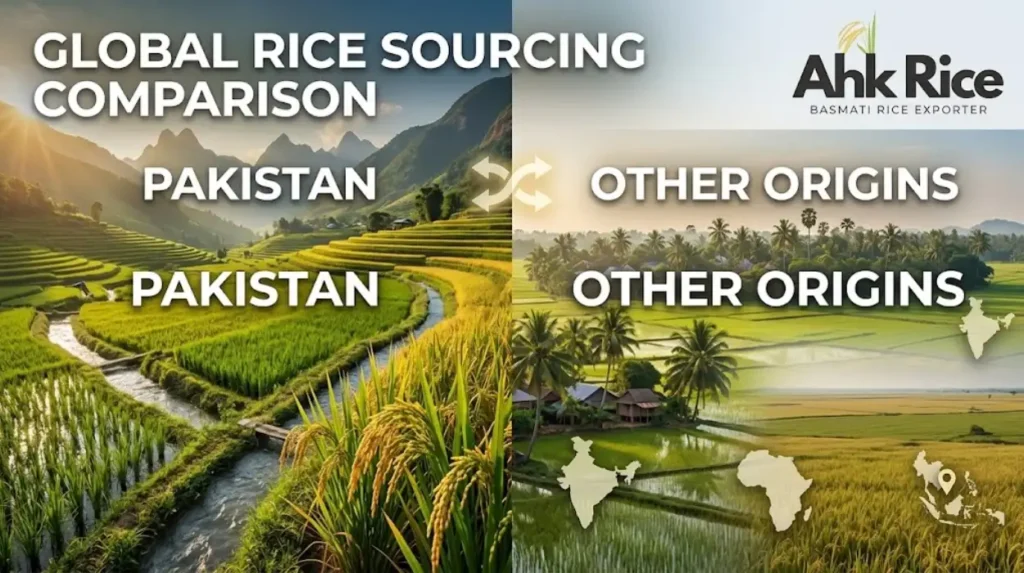
Pakistan remains competitive because it combines premium grain quality, strong export infrastructure, and attractive pricing. Importers compare Pakistan against India, Thailand, and Vietnam based on consumer preference, landed cost, and supply reliability.
Major sourcing countries serve different market positions.
| Factor | Pakistan | India | Thailand | Vietnam |
|---|---|---|---|---|
| Basmati Availability | Excellent | Excellent | Limited | Limited |
| Long Grain Options | Strong | Strong | Strong | Strong |
| Price Competitiveness | High | High | Medium | High |
| Premium Aroma | Excellent | Excellent | Medium | Low |
| Product Range | Broad | Broad | Medium | Broad |
| Custom Packaging | High | High | Medium | Medium |
| Export Experience in Africa | Extensive | Extensive | Moderate | Growing |
For importers targeting both premium and mainstream consumers, Pakistan offers a particularly balanced sourcing proposition.
What are the pros and cons of long-term supply partnerships?
Long-term partnerships improve supply stability, forecasting accuracy, and operational efficiency. However, they require careful supplier selection, contract management, and performance monitoring to maintain commercial advantages over time.
Advantages
Consistent Product Quality
Repeated production standards reduce customer complaints.
Importers build stronger brand reputations.
Better Pricing Stability
Volume commitments often improve negotiation leverage.
Price volatility becomes easier to manage.
Faster Logistics Coordination
Exporters understand shipment schedules.
Documentation processes become streamlined.
Packaging Customization
Partners can develop market-specific packaging designs.
Retail branding becomes easier.
Production Priority
Long-term buyers receive preferential allocation during peak demand periods.
Challenges
Supplier Dependence
Overreliance on a single supplier can increase risk.
Contract Complexity
Long-term agreements require careful negotiation.
Market Changes
Consumer preferences may evolve faster than contract structures.
Currency Fluctuations
Exchange rate movements can impact profitability.
Successful partnerships address these issues through diversification strategies and performance reviews.
Which partnership method works best for different importer types?
The ideal sourcing strategy depends on business size, purchasing volume, operational capability, and growth objectives. Small distributors require flexibility, while larger organizations benefit from deeper strategic partnerships and structured procurement frameworks.
Decision Framework
| Importer Type | Recommended Method | Main Objective | Risk Level | Growth Potential |
|---|---|---|---|---|
| New Importer | Trading Company | Market Entry | Low | Medium |
| Regional Distributor | Direct Exporter | Margin Growth | Medium | High |
| National Wholesaler | Exclusive Partnership | Supply Security | Medium | Very High |
| Retail Chain | Long-Term Contract | Consistency | Medium | Very High |
| Institutional Buyer | Integrated Agreement | Cost Stability | Low | High |
Importers should match procurement structure to organizational maturity rather than selecting the cheapest option available.
What factors should importers evaluate before selecting a Pakistani supplier?
Supplier evaluation should focus on production capability, quality systems, export experience, certifications, logistics performance, and communication standards. These factors determine whether a partnership can scale successfully over multiple years.
Several evaluation criteria matter.
Production Capacity
The supplier must demonstrate consistent manufacturing capability.
Capacity shortages create shipment delays.
Quality Assurance Systems
Importers should review inspection procedures.
Laboratory testing and grading standards are essential.
Export Documentation Expertise
International shipments require accurate paperwork.
Errors increase customs delays and costs.
Certifications
Common certifications include:
- ISO standards
- HACCP
- Food safety management systems
- Phytosanitary compliance requirements
Logistics Performance
Reliable shipping schedules reduce inventory disruptions.
Communication Efficiency
Fast responses improve procurement planning.
Market Experience
Exporters serving African markets understand local regulatory requirements and consumer preferences.
Companies with established export operations often provide stronger operational support across the supply chain.
How can importers reduce supply chain risks?
Risk reduction depends on supplier verification, diversified sourcing strategies, contract clarity, inventory planning, and continuous performance monitoring. Importers implementing structured procurement systems experience fewer disruptions and better financial predictability.
Practical risk management includes:
- Conducting supplier audits
- Reviewing export records
- Requesting product samples
- Verifying certifications
- Using detailed contracts
- Monitoring shipment performance
- Maintaining safety stock levels
- Evaluating supplier responsiveness
These practices improve resilience against market fluctuations and operational disruptions.
Rice importers in Ivory Coast establish successful supply partnerships with Pakistan by selecting sourcing models that align with their commercial objectives, market positioning, and growth plans. Direct exporter relationships, exclusive partnerships, and integrated supply agreements provide increasing levels of control and supply security as businesses scale.
Pakistan’s rice sector offers importers access to premium Basmati varieties, competitive long-grain options, established export infrastructure, and extensive experience serving African markets. Importers that combine supplier evaluation, quality management, logistics planning, and long-term partnership development achieve stronger procurement outcomes and greater market competitiveness.
For buyers moving from market research into supplier selection and purchasing decisions, understanding why Ivory Coast is becoming a strategic destination for Pakistani rice exporters provides the next stage of evaluation .
Frequently Asked Questions
How do rice importers in Ivory Coast find Pakistani suppliers?
Importers identify suppliers through trade exhibitions, export directories, government trade agencies, industry associations, referrals, and direct outreach to established rice exporters operating in international markets.
Why is Pakistan an important rice sourcing country for Ivory Coast?
Pakistan offers premium Basmati rice, competitive pricing, large production capacity, export expertise, and strong logistics capabilities that support both retail and wholesale rice distribution channels.
What documents are required for rice imports from Pakistan?
Typical documents include commercial invoices, packing lists, bills of lading, certificates of origin, phytosanitary certificates, and quality inspection reports depending on import regulations.
Which Pakistani rice varieties are most popular in Ivory Coast?
1121 Basmati Rice, Super Kernel Basmati Rice, 1509 Basmati Rice, and selected long-grain white rice varieties are commonly imported to satisfy different consumer segments.
What is the safest sourcing model for new rice importers?
Working with experienced trading companies or reputable direct exporters provides a balanced combination of supplier reliability, operational support, and manageable procurement risk for new importers.