Why 1121 Basmati Rice Has the Longest Grain in the World
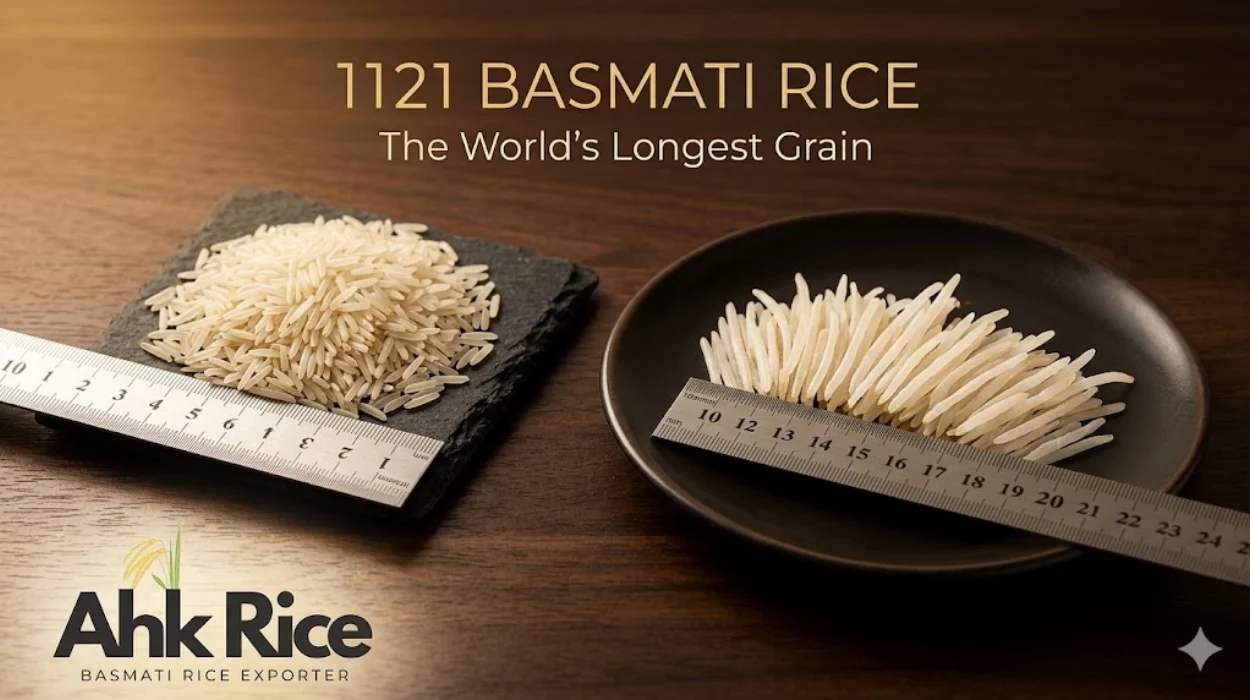
1121 Basmati Rice has the longest grain in the world because its genetic characteristics, cultivation conditions, and milling properties allow the grain to reach 8.30–8.50 mm before cooking and up to 20–22 mm after cooking. 1121 Basmati was developed through selective breeding, grows under specific climatic conditions in the Indo-Gangetic plains, and maintains exceptional elongation during cooking without excessive width expansion.
What Is 1121 Basmati Rice?
1121 Basmati Rice is a premium aromatic rice variety with a raw grain length of 8.30–8.50 mm and a cooked grain length reaching 20–22 mm.
1121 Basmati Rice is a long-grain aromatic rice variety cultivated primarily in Punjab regions of Pakistan and India. The variety gained international recognition because of its exceptional grain length and cooking performance.
1121 Basmati Rice belongs to the Basmati family, which is known for aroma, elongation, and soft texture. The term “Basmati” refers to fragrant rice varieties traditionally grown in the fertile plains surrounding the Himalayan foothills.
1121 Basmati Rice differs from ordinary long-grain rice because the grain expands mainly in length rather than width during cooking. This characteristic creates an elegant appearance preferred by restaurants, caterers, and households worldwide.
The definition of 1121 Basmati Rice establishes its unique position among rice varieties. The next question is why this variety achieves such exceptional grain length.
Why Does 1121 Basmati Rice Have the Longest Grain in the World?
Genetic selection, environmental conditions, and grain structure combine to produce grains measuring 8.30–8.50 mm before cooking and up to 22 mm after cooking.
1121 Basmati Rice was developed through systematic breeding programs focused on grain length, elongation ratio, aroma, and yield. Researchers selected plants that consistently produced longer grains across multiple growing seasons.
The grain structure contains elongated starch cells that stretch significantly during cooking. These starch cells absorb water evenly and extend along the grain’s length.
Punjab’s climate supports this development. Warm temperatures during grain filling, controlled irrigation, and fertile alluvial soil allow the rice plant to mature properly.
The grain also contains a balanced amylose content. This composition helps the rice remain separate after cooking while supporting maximum elongation.
Other rice varieties produce long grains. Examples include Jasmine Rice, IR64, and Long Grain White Rice. None consistently achieve the elongation levels recorded by 1121 Basmati Rice.
The reasons behind the grain length are clear. The next step is understanding how the cultivation process influences these characteristics.
How Is 1121 Basmati Rice Cultivated?
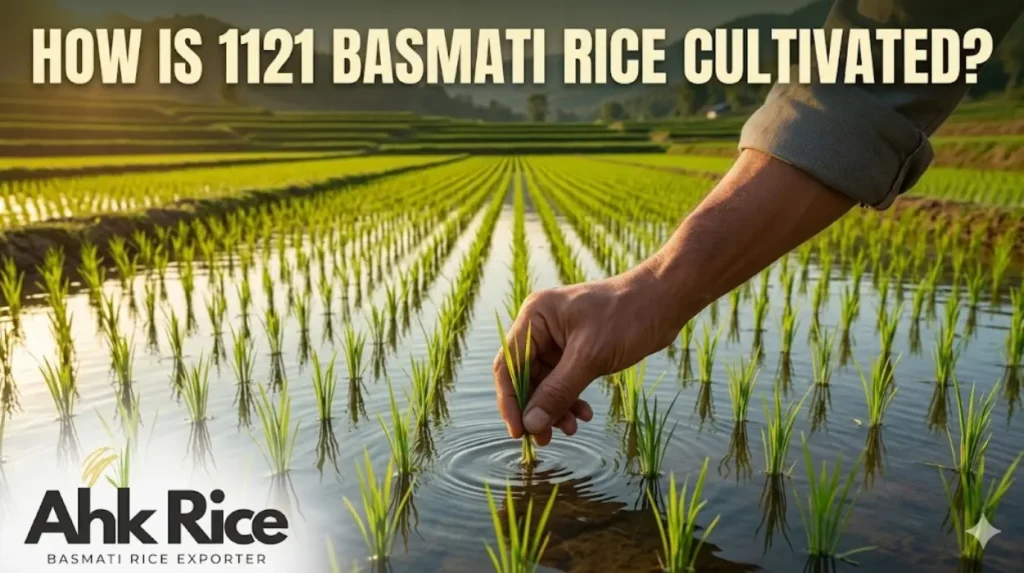
Farmers cultivate 1121 Basmati Rice through nursery preparation, transplantation, irrigation management, harvesting, and post-harvest handling.
Cultivation begins with seed selection. Farmers choose certified seeds to maintain varietal purity and grain consistency.
Seed Preparation
Farmers soak seeds before sowing. Proper soaking improves germination rates and ensures uniform plant growth.
Nursery Development
Farmers prepare nursery beds and sow seeds under controlled conditions. Young seedlings typically remain in nurseries for 25–35 days.
Field Transplantation
Farmers transplant seedlings into prepared fields. Proper spacing promotes root development and improves airflow between plants.
Crop Management
Farmers irrigate fields according to crop requirements. Water management influences grain formation and final grain quality.
Farmers inspect crops regularly for pests and diseases. Integrated crop management protects yield and quality.
Harvesting
Farmers harvest the crop when grain moisture reaches suitable levels. Timely harvesting reduces grain breakage and quality loss.
The cultivation process shapes grain development. The next question explores what happens after harvesting.
How Is 1121 Basmati Rice Processed Step by Step?
1121 Basmati Rice undergoes cleaning, drying, de-husking, polishing, grading, sorting, testing, packaging, and export preparation.
Processing transforms harvested paddy into export-quality rice. Each stage influences appearance, purity, and cooking performance.
Step 1: Clean the Paddy
Processors remove dust, stones, straw, and foreign material. Clean raw material improves milling efficiency.
Step 2: Dry the Paddy
Processors reduce moisture content to safe levels. Controlled drying prevents grain cracking.
Step 3: De-Husk the Grain
Processors remove the outer husk layer. De-husking reveals brown rice beneath the protective covering.
Step 4: Polish the Grain
Processors remove bran layers according to product specifications. Polishing creates the white appearance preferred in many markets.
Step 5: Grade the Rice
Processors separate grains by size and quality. Grading ensures consistency within each shipment.
Step 6: Sort by Length
Processors use length graders to separate head rice from broken rice. Length sorting maintains specification standards.
Step 7: Colour Sort the Rice
Processors remove discolored grains using optical sorting technology.
Step 8: Test the Product
Laboratories inspect moisture, purity, broken percentage, and grain dimensions.
Step 9: Package the Rice
Processors pack rice in PP bags, BOPP bags, paper bags, and retail packaging formats.
The processing stages create different commercial grades. The next section explains these grades.
What Grades of 1121 Basmati Rice Are Available?
1121 White, Steam, Golden Sella, Brown, and Broken grades serve different cooking and commercial requirements.
1121 White Basmati Rice
1121 White Rice undergoes complete milling and polishing. The grain appears bright white and cooks quickly.
1121 Steam Basmati Rice
1121 Steam Rice receives steam treatment before milling. The process improves grain strength and reduces breakage.
1121 Golden Sella Basmati Rice
1121 Golden Sella Rice undergoes parboiling before milling. The grain develops a golden color and stronger texture.
1121 Brown Basmati Rice
1121 Brown Rice retains the bran layer. The grain contains more fiber than fully polished rice.
1121 Broken Basmati Rice
1121 Broken Rice consists of fragmented grains separated during milling. Food processors and industrial users commonly purchase this grade.
Different grades meet different market requirements. The next question explains where these grades are consumed globally.
Which Countries Import 1121 Basmati Rice?
Saudi Arabia, United Arab Emirates, Iraq, Kuwait, United Kingdom, Canada, Australia, and European countries import significant volumes of 1121 Basmati Rice.
Middle Eastern countries represent major import destinations. Consumers in Saudi Arabia, UAE, Kuwait, Qatar, and Iraq prefer long-grain aromatic rice for traditional dishes.
European markets import premium grades for ethnic retail stores and food service channels. The United Kingdom remains one of the largest Basmati rice markets outside South Asia.
North American markets continue expanding demand. Canada and the United States import Basmati rice for multicultural consumer segments.
African markets also import Basmati rice. Examples include South Africa, Kenya, and Tanzania.
Different markets often prefer different processing grades. Gulf buyers frequently purchase Golden Sella Rice. European retailers commonly source White and Steam Rice. For food service operations requiring longer storage periods, Golden Sella provides stronger grain durability than White Rice.
Understanding import demand helps explain the importance of quality standards. The next section covers certifications.
What Certifications Apply to 1121 Basmati Rice Exports?
ISO certification, HACCP compliance, phytosanitary certification, fumigation certification, and food safety standards support international trade.
Export markets require documented quality assurance systems. Certification verifies compliance with buyer requirements and import regulations.
Quality Certifications
Quality certifications include:
- ISO 22000
- HACCP
- GMP
- BRC Food Safety Standards
These certifications demonstrate food safety management and process control.
Export Documents
Export shipments commonly require:
- Phytosanitary Certificate
- Certificate of Origin
- Fumigation Certificate
- Commercial Invoice
- Packing List
- Bill of Lading
Government authorities inspect and verify these documents before shipment.
Laboratory Testing
Laboratories test:
- Moisture content
- Grain length
- Broken percentage
- Purity level
- Foreign matter content
Certification protects product integrity throughout the supply chain. The next question examines practical benefits.
What Benefits Make 1121 Basmati Rice Popular Worldwide?
Exceptional elongation, aroma, appearance, cooking performance, and market versatility drive global demand.
1121 Basmati Rice delivers visual appeal after cooking. Long, separate grains create a premium presentation.
1121 Basmati Rice provides a distinct aroma. Natural aromatic compounds contribute to its characteristic fragrance.
1121 Basmati Rice performs consistently in large-scale cooking environments. Restaurants and catering companies value predictable cooking results.
1121 Basmati Rice supports multiple applications. Examples include biryani, pilaf, pulao, mandi, kabsa, and plain steamed rice.
The benefits explain market popularity. The next section addresses common misconceptions.
What Misconceptions Exist About 1121 Basmati Rice?
The longest raw grain does not guarantee identical cooking results, and all 1121 grades do not perform the same way.
Many buyers assume all long-grain rice belongs to the Basmati category. Grain length alone does not define Basmati rice. Aroma, elongation, and origin also contribute.
Many buyers assume all 1121 grades cook identically. White Rice cooks differently from Steam Rice and Golden Sella Rice because processing methods change grain structure.
Many buyers assume longer storage reduces quality immediately. Proper storage conditions preserve quality for extended periods. Golden Sella generally maintains storage stability longer than White Rice. In warehouse environments reaching 40°C, Golden Sella often retains quality for up to 18 months, while White Rice typically performs best within 12 months.
1121 Basmati Rice has the longest grain in the world because of its unique genetics, favorable growing conditions, specialized cultivation practices, and advanced processing methods. The variety achieves raw grain lengths of 8.30–8.50 mm and cooked lengths reaching 20–22 mm, making it the benchmark for premium long-grain rice worldwide. Its multiple grades, strong export demand, and strict certification requirements have established 1121 Basmati Rice as one of the most recognized rice varieties in international trade.
Frequently Asked Questions
Why is 1121 Basmati Rice longer than other rice varieties?
1121 Basmati Rice contains genetic traits that support exceptional grain elongation. The grain structure expands primarily in length during cooking.
What is the raw grain length of 1121 Basmati Rice?
The raw grain length typically ranges from 8.30 mm to 8.50 mm, depending on crop conditions and processing grade.
How long does 1121 Basmati Rice become after cooking?
Properly cooked 1121 Basmati Rice can reach 20–22 mm in length.
Which grade of 1121 Basmati Rice is most popular?
1121 Steam and 1121 Golden Sella are among the most widely traded grades because they combine strong grain integrity with excellent cooking performance.
Which countries import the most 1121 Basmati Rice?
Major importers include Saudi Arabia, UAE, Iraq, Kuwait, the United Kingdom, Canada, and several European countries.
Does 1121 Basmati Rice contain a natural aroma?
Yes. 1121 Basmati Rice contains naturally occurring aromatic compounds that create its distinctive fragrance during cooking.
What dishes use 1121 Basmati Rice?
Common dishes include biryani, pulao, pilaf, kabsa, mandi, and steamed rice preparations.