Why Are Vermont Consumers Choosing Premium Imported Basmati Rice?
Premium imported Basmati rice is gaining attention because its long grain, natural aroma, cooking behavior, and distinct texture create a different eating experience from ordinary long-grain rice. Vermont consumers encounter these characteristics through grocery stores, specialty food retailers, restaurants, and international cuisines.
Basmati is an aromatic rice traditionally associated with the Himalayan foothills and the Punjab region of Pakistan and India. In Pakistan, Punjab is the principal production area for commercial Basmati. The Punjab Agriculture Department lists numerous fine and aromatic varieties, including Super Basmati and PK 1121 Aromatic, and identifies rice as an important cash crop.
Pakistan’s export market also demonstrates the international position of Basmati. Pakistan Bureau of Statistics recorded Basmati rice among the country’s major export commodities in March 2026, with exports valued at PKR 13.374 billion for that month.
What is premium imported Basmati rice?
Premium imported Basmati rice is a high-value aromatic rice defined by variety, grain characteristics, processing quality, cooking performance, and origin rather than price alone. Its long grains, aroma, expansion, and separate cooked texture distinguish it from standard rice.
The word Basmati describes a category of aromatic rice rather than one single grain specification. Commercial products differ by genetic variety, milling condition, aging, parboiling method, broken-grain percentage, moisture, grain length, and packaging.
Pakistan’s recognized rice portfolio includes varieties such as Super Basmati, Basmati 385, PK 386, PK 1121 Aromatic, and other fine rice varieties. The Rice Exporters Association of Pakistan separately identifies 1121 Basmati among Pakistan’s commercial rice types.
The premium segment therefore has several measurable attributes. A buyer can compare raw grain length, chalkiness, broken kernels, foreign matter, moisture, milling recovery, aroma, cooked expansion, firmness, and visual appearance.
For Vermont consumers, the distinction becomes visible after cooking. A high-quality Basmati grain generally produces a slender cooked kernel with a defined aroma and separated appearance. These characteristics make it suitable for dishes where rice remains a visible part of the meal.
Where is Basmati rice grown and why does origin matter?
Basmati rice is grown mainly in specific South Asian agricultural regions where soil, water, climate, rice genetics, and farming practices support aromatic grain development. Pakistan’s Punjab is a major production region with established Basmati research and cultivation.
Pakistan’s Punjab Agriculture Department reports that more than 90% of Punjab’s rice-cropped area is covered by varieties developed through its Rice Research Institute, Kala Shah Kaku. The institute has developed fine, aromatic, and extra-long grain varieties over several decades.
The production environment matters because Basmati quality begins before milling. Rice plants require suitable water availability, temperature patterns, soil conditions, and a variety with the correct genetic characteristics.
PK 1121 Aromatic is one example. Punjab’s agricultural research records identify it as a fine aromatic variety released in 2013, with a reported grain-quality measurement of 8.16 millimeters in the cited research data. Super Basmati is another established fine Basmati variety.
Origin also matters for traceability. A packaged rice product should identify the country of origin and provide accurate product information. For imported food entering the United States, FDA requirements apply to imported and domestically produced foods alike.
This makes origin more than a marketing statement. It connects the finished grain with its agricultural region, processing facility, documentation, and import compliance.
How is premium Basmati rice processed from paddy to packaged grain?
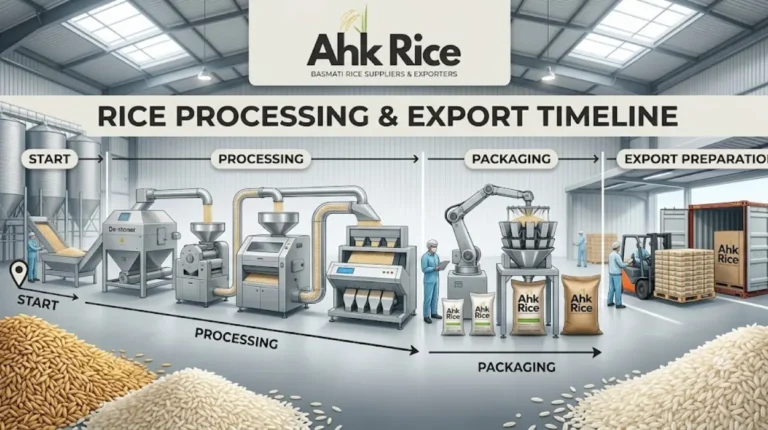
Premium Basmati processing converts harvested paddy into a controlled food product through cleaning, drying, dehusking, milling, sorting, grading, optional aging or parboiling, inspection, packaging, and export preparation. Each stage affects the final cooking result.
The process starts with paddy, which is harvested rice containing its outer husk. Farmers deliver paddy to processing facilities where incoming material is evaluated before milling.
The first stage is cleaning. Stones, straw, dust, immature material, and other foreign matter are removed. This protects milling equipment and improves food quality.
The second stage is drying and moisture control. Rice requires controlled moisture because excessive moisture affects milling, while excessive drying increases breakage. A processor therefore manages grain condition before mechanical milling.
The third stage is dehusking. Rubber-roll machinery removes the outer husk and produces brown rice.
The fourth stage is paddy separation. Unhulled kernels are separated from brown rice and returned to the appropriate processing stream.
The fifth stage is milling and polishing. The bran layers are removed to produce white rice. Milling intensity affects appearance, yield, and broken-kernel levels.
The sixth stage is length grading and sorting. Modern processing systems separate kernels according to size and remove defective grains. Optical sorting can identify discolored, damaged, or otherwise unwanted kernels.
The seventh stage depends on product type. White Basmati follows conventional milling. Steam or parboiled Basmati receives controlled heat and moisture treatment before final drying and milling. This changes the grain’s physical structure and cooking characteristics.
The eighth stage is quality inspection. Measurements include moisture, broken percentage, foreign matter, grain dimensions, purity, and appearance. Cooking tests also evaluate expansion, separation, aroma, firmness, and texture.
The ninth stage is packaging. Rice can be packed in consumer-size bags or larger foodservice formats. Packaging protects the product from moisture, contamination, handling damage, and quality deterioration.
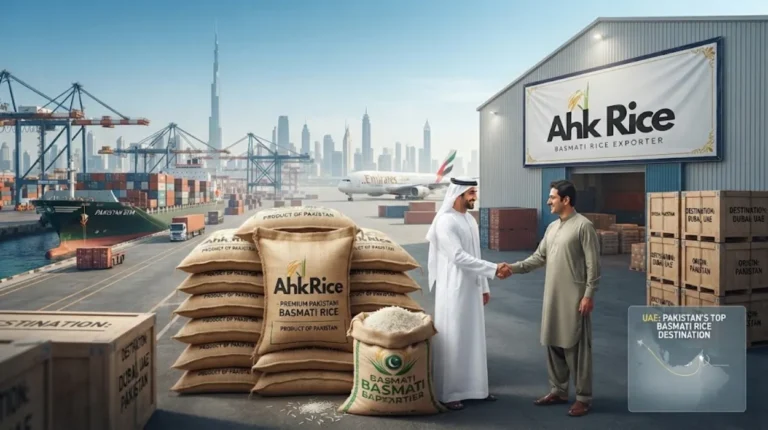
The final stage is export preparation. Documentation, container loading, shipping records, and U.S. import requirements connect the processed rice with the Vermont market.
Which grades and product types are available?
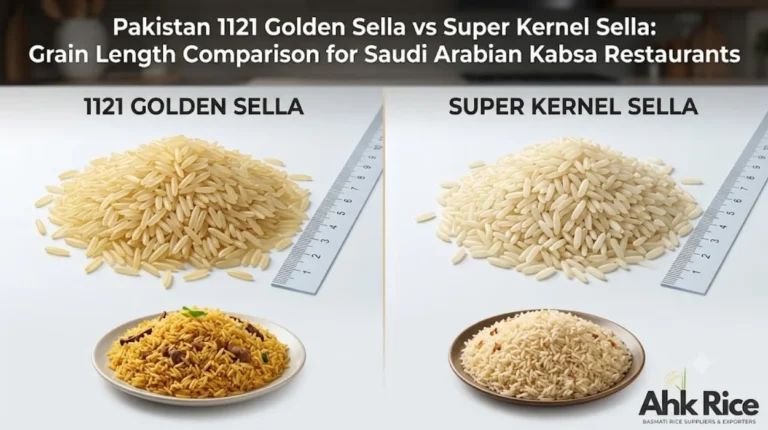
Premium Basmati is available in several commercial varieties and processing forms, including 1121, Super Kernel or Super Basmati-related products, 1509, white rice, steam rice, Sella or parboiled rice, brown rice, and different broken-grain grades.
1121 Basmati is an extra-long aromatic variety associated with long slender grains and strong cooked expansion. Pakistan’s agricultural research system lists PK 1121 Aromatic as a fine aromatic variety.
Super Kernel Basmati is a commercial premium category associated with long, slender aromatic kernels and established South Asian food applications. Product specifications differ between suppliers, so buyers should verify the exact variety and grade rather than relying only on the name.
1509 Basmati is another commercially traded aromatic variety. It is used in white, steam, and parboiled forms depending on processing specifications.
White Basmati is milled rice with the bran and husk removed. It provides a clean appearance and is widely used for steamed rice, pilaf, biryani, curries, and rice bowls.
Steam Basmati receives steam treatment that changes kernel structure before milling. It is commonly selected when stronger grains and consistent cooking are important.
Sella or parboiled Basmati is produced through controlled soaking, steaming, drying, and milling. The process improves resistance to overcooking and produces a firmer cooked texture.
Brown Basmati retains the bran layer after dehusking. The result has a different color, texture, cooking time, and flavor profile from white Basmati.
Broken rice grades contain a defined proportion of broken kernels. They are used in applications where whole-kernel presentation is less important, including some processed foods and traditional dishes.
The key point is that “premium” does not describe one universal grade. The specification determines the actual product.
Why do Vermont consumers use premium imported Basmati rice?
Vermont consumers use premium imported Basmati rice because its aroma, grain shape, texture, and cooking behavior support diverse meals, including South Asian dishes, Middle Eastern food, grilled meats, vegetables, pilafs, curries, and contemporary rice bowls.
One use case is biryani. Biryani depends heavily on rice appearance because the grains remain visible after cooking. Long, separated kernels help create the traditional presentation.
Another use case is pilaf. Separate grains absorb stock, spices, vegetables, or meat flavors without producing the soft texture associated with overcooked rice.
A third use case is curry meals. Basmati provides a neutral but aromatic base for sauces containing vegetables, lentils, chicken, lamb, seafood, or legumes.
A fourth use case is grilled food. Long-grain rice pairs with grilled meats and vegetables while maintaining a distinct texture.
A fifth use case is rice bowls. Consumers can combine Basmati with roasted vegetables, beans, herbs, sauces, and proteins.
These applications explain why grain behavior matters. Consumers are not simply purchasing carbohydrates by weight. They are purchasing a specific cooking result.
The broader U.S. market also provides evidence of established demand for Pakistani Basmati. Pakistan’s FY2024 trade statistics recorded 22,276 metric tons of Basmati exports to the United States, valued at US$31 million.
What quality characteristics should consumers examine?
Consumers should evaluate Basmati through objective characteristics such as grain length, broken percentage, aroma, moisture, cleanliness, cooking expansion, grain separation, texture, packaging condition, origin, and labeling rather than relying only on premium terminology.
Grain length affects visual presentation. Extra-long kernels create a more pronounced appearance after cooking.
Aroma is a defining characteristic of Basmati. The fragrance becomes especially noticeable during cooking and serving.
Broken percentage affects appearance and cooking uniformity. A higher proportion of broken kernels produces a different finished texture.
Moisture affects storage stability and milling performance. Properly controlled rice maintains predictable physical characteristics during storage.
Purity refers to the absence of unwanted varieties and foreign material. Variety identification matters because different rice types have different cooking behavior.
Cooking expansion shows how the grain changes during preparation. Longitudinal expansion is particularly important for Basmati because the cooked grain becomes visibly longer.
Grain separation measures whether individual kernels remain distinct after cooking. This is important for biryani and pilaf.
Packaging condition protects the product throughout distribution. Damaged packaging exposes rice to moisture, pests, and contamination.
These characteristics create a better evaluation method than comparing package prices alone.
What certifications and compliance requirements apply to imported Basmati?
Imported Basmati sold in Vermont must comply with applicable U.S. food requirements, while certifications such as food-safety systems, organic certification, or third-party standards apply only when the product and supply chain actually meet those standards.
The U.S. Food and Drug Administration requires imported food to meet U.S. legal requirements for safety, sanitation, and labeling. FDA also requires applicable foreign food facilities to register and requires prior notice for imported food shipments.
Foreign Supplier Verification Program (FSVP) is an important importer responsibility. It requires applicable U.S. importers to establish and follow procedures that verify foreign suppliers produce food in a manner that meets applicable U.S. safety requirements.
Food facility registration applies to facilities that manufacture, process, pack, or hold food unless an exemption applies. FDA’s 2026 renewal period runs from October 1 through December 31, 2026, for facilities required to renew their registrations.
Prior Notice is another import requirement. FDA must receive advance notification for covered food shipments before they arrive in the United States.
Organic certification applies when a product is marketed as organic under the applicable U.S. organic framework. A rice package should not use an organic claim without the required certification basis.
HACCP, ISO 22000, BRCGS, and similar food-safety systems are different from government import approval. They represent documented food-safety management or third-party certification systems when properly implemented and certified.
Consumers therefore benefit from distinguishing between regulatory compliance, voluntary certification, and marketing claims.
What are the common misconceptions about premium imported Basmati?
The most common misconception is that every long-grain aromatic rice is identical to premium Basmati. Variety, origin, processing method, grade, purity, moisture, milling, and cooking performance create measurable differences between products sold under similar descriptions.
The first misconception is that long grain automatically means Basmati. Long-grain rice includes many varieties that lack Basmati’s characteristic aroma and cooking profile.
The second misconception is that higher price automatically means higher quality. A premium price should correspond to measurable specifications.
The third misconception is that all Basmati cooks identically. White, steam, Sella, brown, 1121, 1509, and other products produce different cooking results.
The fourth misconception is that country of origin does not matter. Agricultural region, variety development, processing infrastructure, and supply-chain controls influence product characteristics.
The fifth misconception is that certification equals quality in every dimension. A food-safety certification addresses defined management or safety criteria. It does not automatically guarantee preferred grain length, aroma, cooking expansion, or taste.
The sixth misconception is that imported rice lacks regulatory oversight. FDA applies U.S. food requirements to imported food, including applicable facility registration, prior notice, labeling, and importer responsibilities.
How should consumers understand the growing premium rice category?
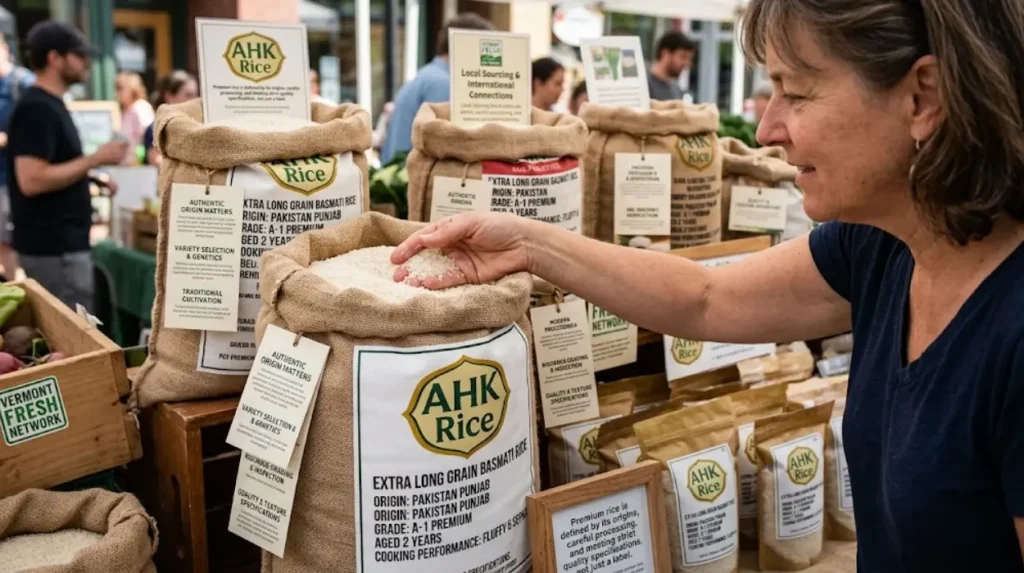
The premium rice category is best understood as a specification-driven food segment where origin, variety, processing, grade, cooking performance, packaging, and regulatory compliance determine the product experience rather than the word premium alone.
For Vermont consumers, imported Basmati connects an agricultural product from South Asian rice-growing regions with local retail and foodservice demand.
The product begins with variety selection and cultivation. It then passes through harvesting, drying, milling, sorting, grading, inspection, packaging, export documentation, international transport, U.S. import procedures, distribution, and final preparation.
Pakistan’s established rice research infrastructure continues to expand the range of fine and aromatic varieties. The Punjab Agriculture Department currently lists 33 rice varieties developed through its research system, including varieties released as recently as 2025.
That development explains why premium Basmati is not a single static product. It is a category shaped by genetics, agricultural conditions, processing technology, quality specifications, consumer applications, and international trade.
For readers moving from understanding the product toward evaluating why premium rice gains market value, the next logical topic is:
How product positioning influences premium rice sales growth. The linked article can explain how attributes such as origin, grain length, cooking performance, packaging, and quality documentation become commercial positioning factors.
Frequently Asked Questions
Why are Vermont consumers choosing premium imported Basmati rice?
Vermont consumers choose premium imported Basmati rice for its distinctive aroma, long slender grains, separate cooked texture, and suitability for biryani, pilaf, curries, rice bowls, and grilled foods.
What makes Basmati rice different from ordinary long-grain rice?
Basmati rice is an aromatic rice category known for its characteristic fragrance, slender grains, grain expansion during cooking, and separate cooked texture. Ordinary long-grain rice does not necessarily have these characteristics.
Where is premium Basmati rice grown?
Premium Basmati rice is primarily grown in South Asian regions, including Pakistan and India. Pakistan’s Punjab region is an important production area for fine and aromatic rice varieties.
What are the main Basmati rice varieties available?
Commercial Basmati products include 1121 Basmati, Super Basmati, 1509 Basmati, and other aromatic varieties. They are available as white, steam, Sella or parboiled, and brown rice products.
What is 1121 Basmati rice?
1121 Basmati is an extra-long aromatic rice variety recognized for its slender grain, aroma, and strong cooking expansion. It is widely used in biryani, pilaf, curries, and foodservice applications.
What is the difference between white, steam, and Sella Basmati rice?
White Basmati is conventionally milled. Steam Basmati receives controlled steam treatment before final processing. Sella Basmati is parboiled through soaking, steaming, drying, and milling, producing a firmer cooked grain.
How is premium Basmati rice processed?
Premium Basmati rice is processed through paddy cleaning, moisture control, dehusking, paddy separation, milling, polishing, sorting, grading, quality inspection, packaging, and export preparation.
What quality characteristics should consumers check?
Consumers should examine grain length, broken-kernel percentage, aroma, moisture, purity, appearance, cooking expansion, grain separation, texture, packaging condition, and country-of-origin information.
Does a higher price always mean better Basmati rice?
No. Premium pricing should correspond to measurable product characteristics such as variety, grain specifications, purity, processing quality, cooking performance, packaging, and documentation.