AHK Rice Pakistan 1121 Brown Basmati Supply for Indonesian Health Retailers
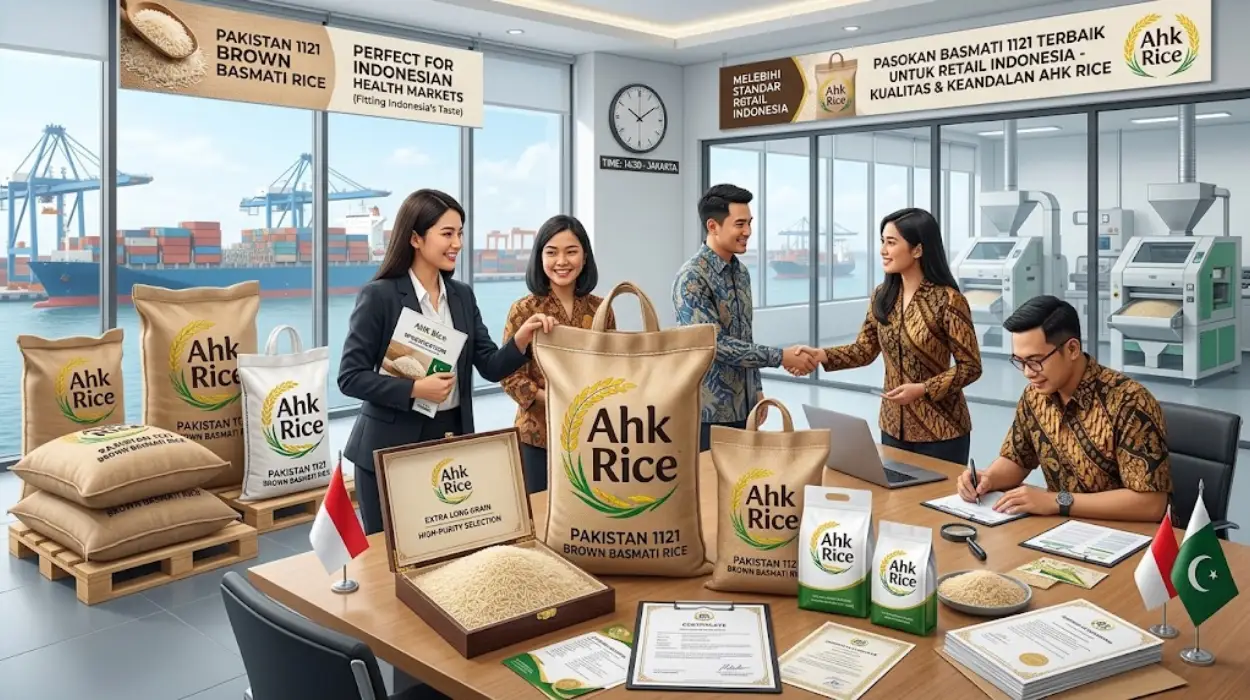
AHK Rice Pakistan 1121 Brown Basmati is best suited to Indonesian health retailers that need a premium whole-grain product with controlled specifications, retail-ready packaging, and export documentation. Here is why: 1121 Brown retains the bran layer, offers long aromatic grains, and fits Indonesia’s growing specialty-rice retail segment. AHK Rice can align the grade, packaging, inspection, and shipment plan with the retailer’s commercial specification.
For background on the product’s relevance to Indonesian consumers, see why Pakistan 1121 Brown Basmati is relevant to Indonesia’s health market. The buying decision should then move from product suitability to measurable specifications, sample approval, landed cost, and delivery planning.
What is the best solution for Indonesian health retailers?
The best solution is a specification-led 1121 Brown Basmati supply program covering grain quality, moisture, packaging, testing, documentation, and shipment planning. Here is why: health retailers need repeatable product quality rather than generic bulk rice.
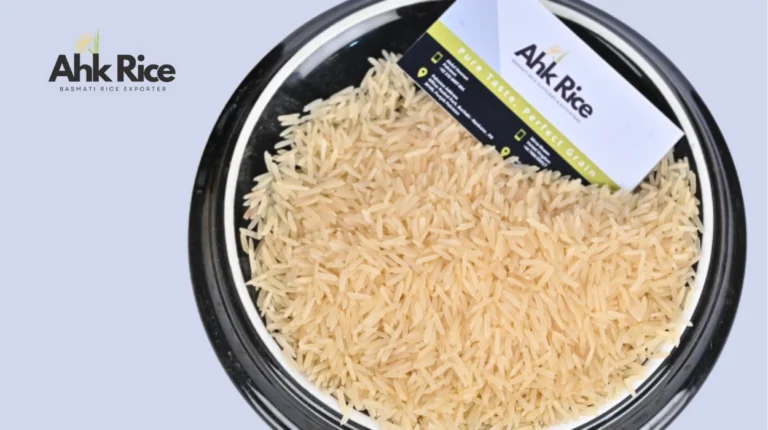
1121 Brown Basmati is produced from long-grain Basmati paddy cultivated in Punjab, Pakistan. The milling process removes the outer husk while retaining the bran layers. This produces a darker grain, firmer texture, and whole-grain positioning.
AHK Rice supplies Pakistani Basmati varieties including 1121, Super Kernel, and 1509 Basmati rice. For health-focused retail, 1121 Brown provides a distinct product position compared with polished white Basmati.
A retail buyer should define the product before discussing price. The specification should identify variety, grade, grain length, broken percentage, moisture, foreign matter, packaging, crop information, and inspection requirements.
| Specification | Retail buying focus |
|---|---|
| Variety | 1121 Basmati |
| Grade | Brown Basmati |
| Grain length | Approximately 8.0–8.4 mm |
| Moisture | Contract-defined, commonly around 12–13% |
| Broken percentage | Contract-defined |
| Foreign matter | Controlled to agreed specification |
| Packaging | 1 kg, 2 kg, 5 kg, or custom retail format |
AHK Rice can also coordinate packaging according to the buyer’s market positioning. Smaller consumer packs suit health retailers, while larger packs can support distributors and specialty wholesalers.
The solution therefore begins with a written specification, not a product name alone. The next decision concerns the supplier’s ability to execute that specification consistently.
Why choose AHK Rice for 1121 Brown Basmati supply?
AHK Rice combines Pakistani Basmati sourcing with milling, grading, sorting, packaging, quality control, and export coordination for international buyers. Here is why: retailers need one controlled supply process rather than separate vendors for rice, packaging, inspection, and logistics.
AHK Rice operates from Punjab, the principal production region for Pakistani Basmati. The supply chain begins with harvested paddy and continues through cleaning, dehusking, grading, sorting, testing, packing, and dispatch.
The AHK Rice service structure allows buyers to define the required product before production and packing. This matters for private-label and specialty retail programs where packaging and specification must remain consistent.
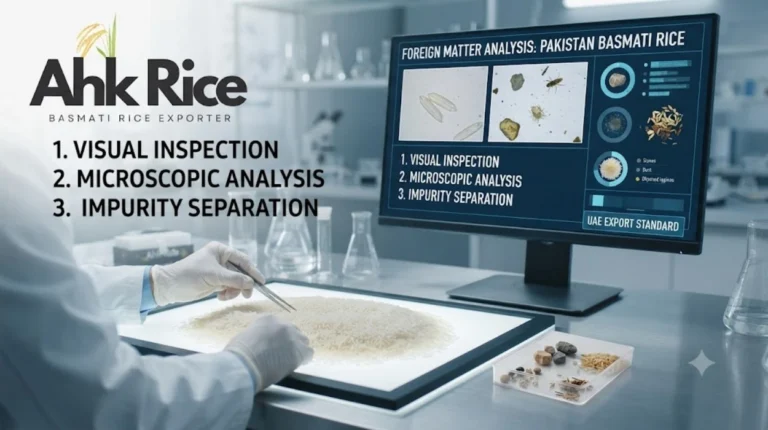
AHK Rice can support the main quality-control stages required by commercial buyers. These include moisture testing, grain grading, colour and defect sorting, foreign-matter control, packaging checks, and shipment documentation.
The product should also be evaluated through a representative sample. A retail buyer should not approve a large shipment from photographs or a single visual inspection.
A practical sample program starts with the agreed specification. AHK Rice can then provide a representative product sample for physical inspection and cooking evaluation. The buyer can assess grain appearance, aroma, texture, cooking behaviour, and packaging suitability.
Sample costs depend on the requested quantity, courier destination, packaging format, and testing requirements. A small courier sample can therefore cost more per kilogram than a commercial shipment.
The sample should be treated as a procurement control rather than a free product demonstration. Approval should record the exact specification that the commercial lot must meet.
What results can Indonesian health retailers expect?
Retailers can expect a more controlled procurement process, consistent product positioning, clearer shipment documentation, and a specification that supports repeat orders. Here is why: measurable controls reduce ambiguity between the approved sample and commercial cargo.
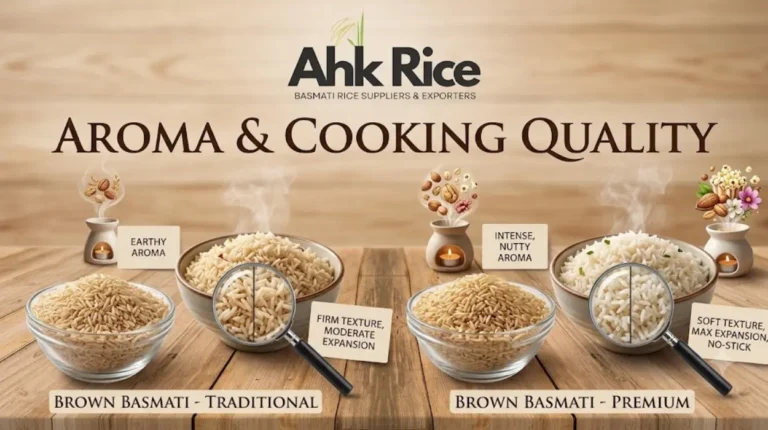
1121 Brown Basmati provides a long-grain appearance that differentiates it from ordinary brown rice. Its retained bran layer supports whole-grain positioning, while its Basmati identity adds aroma and premium-market appeal.
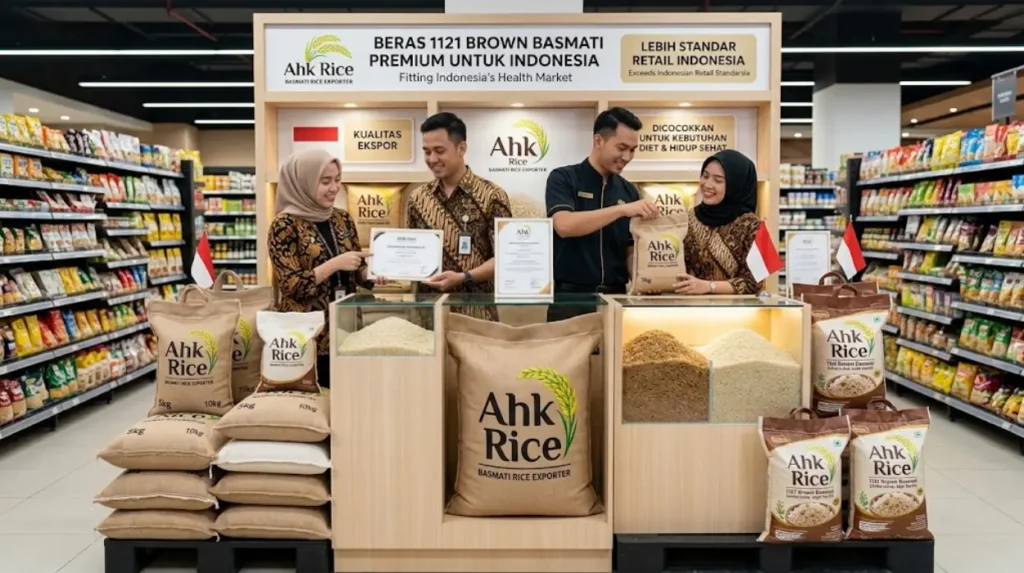
The retail outcome depends on packaging and positioning. A 1 kg pack can target trial purchases and health-conscious households. A 5 kg pack can target repeat household consumption or specialty-store customers.
Indonesia already has consumer availability of imported brown Basmati products through online retail channels. Current Indonesian listings include brown Basmati in 1 kg and 5 kg formats, showing that the category is commercially recognizable.
The product should not be marketed through unsupported medical claims. Brown rice can be positioned around whole-grain characteristics, bran retention, texture, aroma, and dietary preference. Specific health claims require appropriate Indonesian regulatory review.
AHK Rice can also support repeat procurement after the first shipment. A standardized specification makes subsequent orders easier to compare because the buyer has an established reference sample and acceptance criteria.
For buyers comparing supplier quality, the relevant consideration stage is how Indonesian buyers evaluate Pakistan 1121 Brown Rice for retail. This comparison helps connect product specifications with commercial purchasing decisions.
What affects the price of 1121 Brown Basmati supply?
Price depends on grade, crop year, grain specification, broken percentage, packaging, testing, order volume, Incoterm, freight, and destination handling costs. Here is why: a retail-ready shipment has more cost variables than bulk rice sold at origin.
Grade is the first major variable. 1121 Brown requires different milling and sorting requirements from white or parboiled 1121. Higher whole-grain specifications can also affect yield and processing cost.
Packaging is another major factor. Bulk PP bags, laminated bags, printed retail pouches, and private-label packaging have different material and production costs.
Order volume also changes the commercial calculation. A full container normally provides better logistics economics than small shipments because fixed freight and documentation costs are spread across more rice.
Freight depends on the selected Indonesian port, vessel schedule, container availability, season, and shipping terms. Buyers should therefore compare the complete landed cost rather than only the Pakistan-side rice price.
A useful commercial calculation is:
Landed Cost = Rice Price + Packaging + Inland Logistics + Export Charges + Ocean Freight + Insurance + Destination Charges + Applicable Taxes and Duties.
AHK Rice should quote against a defined specification and Incoterm. FOB pricing shows the export-side product cost, while CIF adds international freight and insurance to the named destination.
Indonesian buyers should also budget for sampling and laboratory checks. A representative pre-shipment test can cost less than resolving a quality dispute after arrival.
How long does shipping from Pakistan to Indonesia take?
Pakistan-to-Indonesia sea shipments commonly require about 15–30 days, depending on port, vessel schedule, transshipment, customs clearance, and destination region. Here is why: sailing time and total delivery time are not the same measurement. AHK Rice’s Indonesian sourcing guidance also identifies a typical 15–30-day range.
For Jakarta-area distribution, buyers should plan for production and packing before the vessel schedule begins. A practical commercial timeline includes specification approval, sampling, production, inspection, container loading, vessel departure, sailing, clearance, and local delivery.
A simplified planning model is:
| Stage | Typical planning period |
|---|---|
| Specification and quotation | 1–3 days |
| Sample dispatch and evaluation | 3–10 days |
| Production and packing | 7–14 days |
| Inspection and loading | 1–3 days |
| Sea shipment | 15–30 days |
| Destination clearance | Buyer-dependent |
Eastern Indonesian destinations can require additional domestic transportation after port clearance. Retailers should therefore forecast inventory from the expected warehouse arrival date, not the Pakistan loading date.
Health retailers should maintain enough stock to cover customs and domestic distribution variability. A repeat-order program can reduce the risk of waiting for a new production cycle.
The shipping plan becomes more reliable when the buyer approves the product specification before production. The next step is therefore the sample and ordering workflow.
How should Indonesian retailers start an order with AHK Rice?
Start with the retail specification, approve a representative sample, confirm commercial terms, verify documentation, and then authorize production and shipment. Here is why: each step creates a measurable control before the buyer commits to a full commercial cargo.
What should the buyer provide?
- Define the grade — Specify 1121 Brown Basmati and the required grain profile.
- Define the pack — Select 1 kg, 2 kg, 5 kg, or another retail format.
- Define the quality — Set moisture, broken percentage, purity, and foreign-matter limits.
- Define the volume — State the required metric tons or container quantity.
- Define the destination — Provide the Indonesian port and delivery requirements.
- Define the documents — Identify certificates, laboratory reports, and import documentation required.
- Define the inspection — Confirm supplier-side or independent inspection requirements.
What happens during sampling?
AHK Rice prepares the requested product according to the agreed grade. The sample should represent the commercial specification rather than an unrelated premium lot.
The buyer evaluates the sample for appearance, aroma, texture, cooking performance, grain uniformity, and packaging suitability. The buyer can also request laboratory analysis for agreed parameters.
Once approved, the specification becomes the reference for production. AHK Rice then processes, grades, sorts, packs, inspects, and loads the commercial order.
The final shipment should match the approved specification. Packaging, lot information, documents, and container condition should be checked before dispatch.
This process gives Indonesian health retailers a clear path from product selection to repeatable supply.
What should Indonesian health retailers check before choosing a supplier?
Choose the supplier that can prove product consistency, document quality controls, support retail packaging, and execute shipments against an agreed specification. Here is why: the lowest initial price does not protect retail margins when quality or delivery performance fails.
| Decision factor | What to verify |
|---|---|
| Product identity | 1121 Brown Basmati |
| Quality | Moisture, broken, purity, foreign matter |
| Processing | Cleaning, dehusking, grading, sorting |
| Retail readiness | Pack size, label, packaging material |
| Testing | Sample and laboratory verification |
| Logistics | Loading plan and shipping schedule |
| Documentation | Invoice, packing list, origin and applicable certificates |
AHK Rice is suited to buyers that want the commercial process managed around these controls. The objective is not simply to purchase brown rice from Pakistan. The objective is to establish a repeatable Indonesian retail supply specification.
For a commercial quotation based on your required grade, pack size, quantity, and Indonesian destination, request a quote from AHK Rice.
Frequently Asked Questions
Is 1121 Brown Basmati suitable for Indonesian health retailers?
Yes, 1121 Brown Basmati fits specialty and health-focused retail positioning through its retained bran layer and long-grain Basmati identity.
The product offers a distinct alternative to polished white rice.
Retailers can use smaller consumer packs for trial and repeat household purchases.
Packaging should support the product’s whole-grain positioning without unsupported medical claims.
Final claims should follow applicable Indonesian labeling requirements.
What grain length should buyers expect from 1121 Brown Basmati?
Commercial 1121 specifications commonly place raw grain length around 8.0–8.4 mm.
Exact measurements vary by supplier, crop, processing method, and contractual grade.
Buyers should define the acceptable grain-length range before ordering.
Sample approval should use the same measurement standard as commercial inspection.
AHK Rice can quote against the agreed specification.
How much does an Indonesian sample usually cost?
Sample cost depends on quantity, courier destination, packaging, and requested laboratory testing.
A small international courier shipment can have a high per-kilogram cost.
Laboratory analysis can add separate charges for selected parameters.
The buyer should request the sample cost before dispatch.
The commercial shipment price should be quoted separately from the sample cost.
How long does Pakistan-to-Indonesia rice shipping take?
Typical sea shipment planning is around 15–30 days after dispatch, depending on route and vessel schedule.
Production and packing time must be added before loading.
Destination clearance and domestic delivery add further time.
Jakarta and eastern Indonesian destinations can have different logistics requirements.
Retailers should therefore plan inventory from expected warehouse arrival.
What documents should Indonesian buyers request?
Buyers should request commercial and shipment documents matching the agreed transaction.
Common documents include the commercial invoice and packing list.
A Certificate of Origin and applicable phytosanitary documentation may also be required.
Laboratory and inspection reports should match the purchased specification.
The importer should confirm current Indonesian requirements before shipment.
Can AHK Rice provide retail packaging?
AHK Rice can coordinate packaging according to the buyer’s commercial requirement.
Retailers can specify pack size, packaging format, and private-label requirements.
The final packaging must comply with applicable Indonesian labeling rules.
Packaging specifications should be approved before production begins.
This approach helps maintain consistency across repeat shipments.
Why should retailers approve a sample before ordering?
Sample approval gives the buyer a physical reference for the commercial specification.
The buyer can assess appearance, aroma, cooking performance, and grain uniformity.
Laboratory tests can verify selected measurable characteristics.
The approved sample reduces uncertainty during production and inspection.
It also creates a clearer basis for repeat orders and quality claims.
How does AHK Rice support Indonesian buyers?
AHK Rice connects Pakistani Basmati sourcing with processing, grading, sorting, packaging, quality control, and export coordination.
The company can supply 1121 and other Pakistani Basmati varieties.
Buyers can define product and packaging specifications before production.
Sample approval and shipment documentation provide additional procurement controls.
The result is a structured supply process for Indonesian retail buyers.