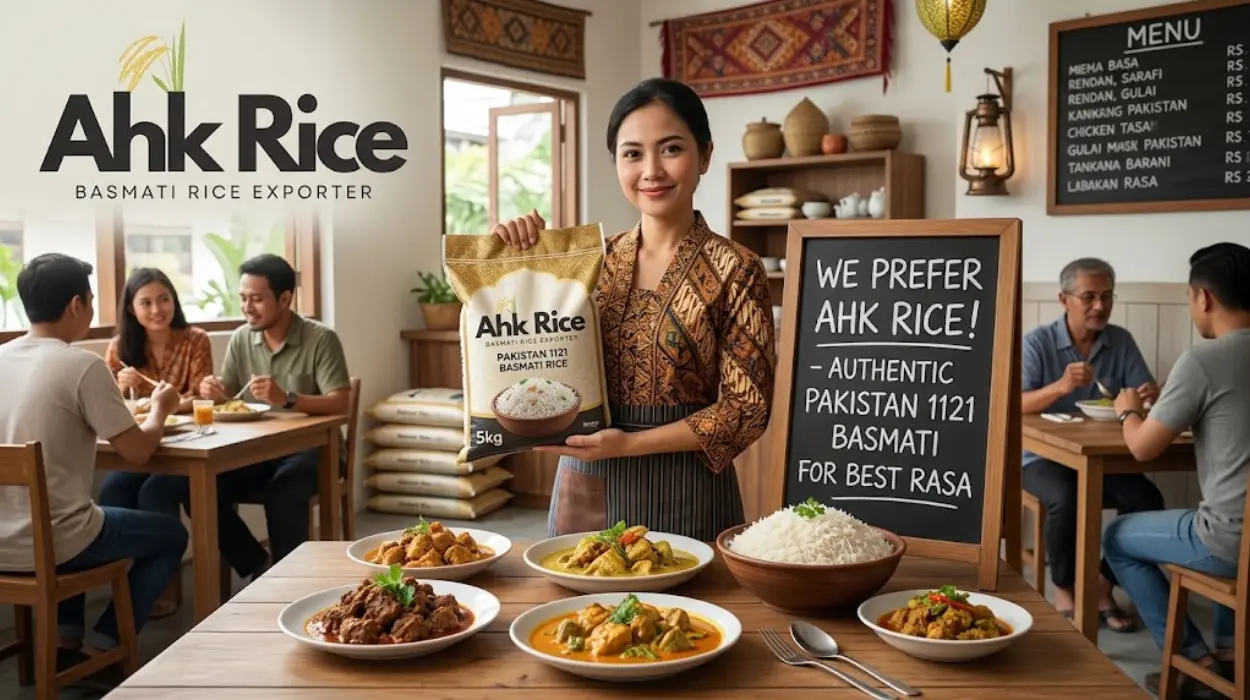
Why Do Indonesian Restaurants Prefer Pakistan 1121 Basmati Rice for Premium Dishes?
Pakistan 1121 Basmati rice suits premium Indonesian dishes through its long grain, aromatic profile, separate cooked texture, and multiple processing grades. Here is why: 1121 rice provides a consistent base for biryani, nasi-style rice dishes, catering menus, and premium restaurant portions.
What Is Pakistan 1121 Basmati Rice?
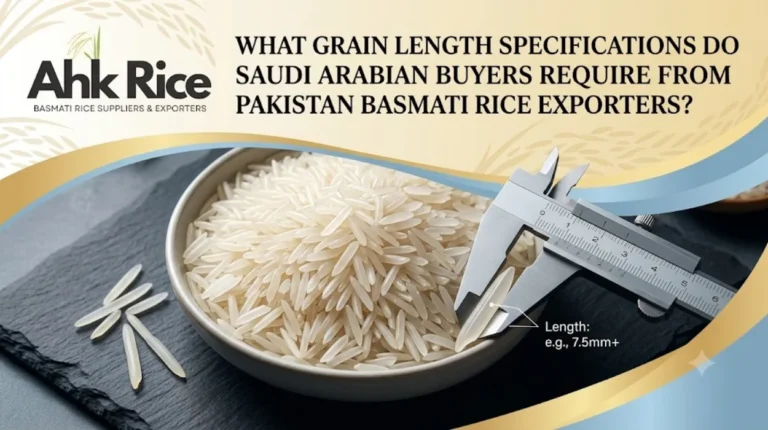
Pakistan 1121 Basmati is a long-grain aromatic rice cultivated in Punjab, with grains commonly reaching 8.05–8.30 mm before cooking. The variety belongs to Pakistan’s premium Basmati rice category. Its defining attributes include long grain length, natural aroma, slender appearance, and expansion during cooking.
Pakistan 1121 grows in Punjab’s rice-producing districts. Farmers cultivate the crop under controlled irrigation and harvest mature paddy. The harvested paddy then enters milling facilities for cleaning, dehusking, polishing, grading, and sorting.
Where Is 1121 Basmati Grown?
Punjab provides the principal agricultural environment for Pakistan’s Basmati production. The region combines suitable soil, irrigation, temperature, and seasonal conditions for aromatic rice cultivation. Pakistan’s rice sector supplies domestic consumers and international markets across Asia, the Middle East, Africa, and Europe.
Why Does Grain Length Matter?
Grain length directly affects presentation and portion perception. Long grains remain visually prominent after cooking. A premium rice plate therefore looks fuller without relying only on increased serving weight.
With the identity and growing region established, the next question is how 1121 moves from harvested paddy to finished rice.
How Is Pakistan 1121 Basmati Rice Processed?
Pakistan 1121 passes through cleaning, dehusking, polishing, grading, sorting, and packing stages that control appearance, purity, moisture, and grain uniformity. Each stage removes a specific defect or prepares the grain for its intended cooking and export specification.
What Are the Main Processing Steps?
- Clean the paddy — Remove stones, dust, straw, and other field material.
- De-husk the grain — Remove the outer husk from harvested paddy.
- Polish the grain — Refine the surface according to the required rice grade.
- Grade the grain — Separate grains according to length, size, and quality characteristics.
- Sort the rice — Remove discoloured grains, foreign matter, and unwanted particles.
- Process the selected grade — Apply white, steam, or parboiled processing according to specification.
- Pack the rice — Fill the finished product into the required retail or foodservice packaging.
Colour sorting provides another quality-control stage. Optical equipment identifies visual defects and separates unwanted grains. This process supports uniform appearance across commercial lots.
Moisture control also matters during storage and transportation. Export rice requires stable moisture management to protect grain quality. Packaging then protects the product from contamination and handling damage during international logistics.
With processing established, the next question is which 1121 grades Indonesian restaurants can encounter in the international rice trade.
Which 1121 Basmati Grades Are Available?
The principal 1121 processing grades include White, Steam, Golden Sella, Creamy Sella, and Brown Basmati rice. Each grade uses a different processing method and produces distinct cooking characteristics, colour, texture, and menu suitability.
What Is 1121 White Basmati?
1121 White uses conventional milling and polishing. The finished grain has a white appearance and a clean, slender profile. Restaurants use white rice for dishes requiring visible long grains and a lighter cooked appearance.
What Is 1121 Steam Basmati?
1121 Steam receives steam treatment during processing. Steam processing changes the grain structure and supports firmer cooked grains. The grade suits dishes requiring cooked rice that retains shape during preparation and serving.
What Is 1121 Golden Sella Basmati?
1121 Golden Sella is parboiled before milling and drying. The process produces a distinctive golden colour and firm grain structure. Golden Sella suits foodservice applications requiring grain separation and resilience during cooking.
What Is 1121 Creamy Sella Basmati?
1121 Creamy Sella is a parboiled grade with a lighter creamy appearance. Its processing retains the structural characteristics associated with Sella rice while producing a different visual presentation from Golden Sella.
What Is 1121 Brown Basmati?
1121 Brown retains more of the rice grain’s outer layers after milling. The result produces a darker appearance and a firmer eating texture. Restaurants select brown rice for menus that specifically require whole-grain characteristics.
The grade differences explain why restaurants compare processing types rather than treating every 1121 shipment as identical; the next question concerns premium-dish performance.
Why Does 1121 Basmati Suit Premium Indonesian Dishes?

1121 supports premium dishes through long cooked grains, aromatic character, visual uniformity, and grain separation. These attributes help restaurants present rice as a defined component rather than an indistinct side portion.
How Does 1121 Perform During Cooking?
Long-grain 1121 expands noticeably during cooking. Properly processed grains retain their individual form. This characteristic supports dishes where rice presentation matters, including biryani and other seasoned rice preparations.
Steam and Sella grades provide firmer structures than conventional white rice. Their processing supports applications involving cooking, holding, and serving. Restaurant kitchens therefore compare processing grades according to preparation method and required texture.
Why Does Aroma Matter?
Aromatic rice contributes fragrance before and after cooking. Basmati’s natural aroma differentiates it from many ordinary long-grain varieties. Premium dishes often depend on this sensory characteristic to create a recognizable rice profile.
Why Does Appearance Matter?
A long, slender cooked grain creates a distinct plate presentation. Uniform grains also reduce visual inconsistency between portions. This factor matters for restaurants serving repeated dishes across lunch, dinner, buffet, and catering operations.
With cooking and presentation attributes established, the next question is where international buyers use Pakistan 1121 Basmati.
Which Markets Import Pakistan 1121 Basmati Rice?
Pakistan 1121 Basmati enters international markets across the Gulf, Asia, Africa, Europe, and other regions through commercial rice importers and foodservice supply chains. Market requirements differ by cuisine, processing grade, packaging format, and quality specification.
Which Asian Markets Use Basmati?
Asian markets include Indonesia, the Philippines, and other countries where importers source specialty rice for restaurants, distributors, and foodservice operations. Indonesian buyers compare grain length, cooking behaviour, aroma, grade, packaging, and documentation.
Which Gulf Markets Import Pakistani Rice?
Gulf markets include the UAE, Saudi Arabia, Qatar, and other GCC destinations. These markets contain retail, wholesale, catering, and restaurant buyers. Sella grades receive attention in foodservice applications requiring firm cooked grains and operational consistency.
Which European Markets Import Pakistani Basmati?
The UK represents an important destination for Pakistani Basmati products. Importers supply supermarkets, wholesalers, restaurants, and foodservice businesses across England, Scotland, Wales, and Northern Ireland.
With market applications established, the next question is which certifications and quality controls support international rice trade.
Which Certifications Apply to Pakistan 1121 Basmati Rice?
International rice shipments require documented food-safety controls, product testing, traceability, and destination-specific compliance. Certification requirements depend on the importing market, buyer specification, processing facility, packaging format, and applicable food regulations.
What Quality Controls Apply?
Food businesses commonly evaluate:
- Food safety certification — Documents controlled production and food-safety systems.
- Laboratory testing — Verifies parameters such as moisture, contaminants, and microbiological requirements.
- Traceability documentation — Connects the finished shipment with production and processing records.
- Packaging compliance — Confirms that labels and packaging meet destination-market requirements.
- Export documentation — Supports customs clearance and shipment verification.
Certification does not replace product inspection. Importers still verify the physical and documentary specifications of each shipment. Requirements also differ between markets.
With certification and quality controls defined, the next question is which practical problems restaurants need to avoid when selecting 1121.
What Problems and Misconceptions Affect 1121 Basmati Selection?
The main misconception is that every 1121 shipment cooks identically. Processing grade, moisture, broken percentage, grain uniformity, packaging, storage conditions, and cooking method influence the final result.
Does Every 1121 Grade Have the Same Cooking Behaviour?
No. White, Steam, Golden Sella, Creamy Sella, and Brown rice use different processing methods. Those methods affect grain firmness, appearance, and cooking performance. Restaurants therefore need a grade-specific specification rather than only the variety name.
Does Longer Grain Automatically Mean Better Rice?
No. Grain length represents one quality attribute. A commercial specification also considers broken grains, foreign matter, moisture, colour, purity, aroma, and uniformity. Premium purchasing decisions require the complete specification.
Does Packaging Affect Rice Quality?
Yes. Packaging protects rice during storage, handling, and international transportation. Common formats include PP bags, woven bags, laminated bags, and consumer retail packs. Restaurants and distributors select packaging according to volume, handling, branding, and storage requirements.
Understanding these selection factors leads naturally to the next comparison: Pakistan 1121 Steam and Golden Sella require separate evaluation because their processing and cooking characteristics differ.
How Should Restaurants Compare 1121 Steam and Golden Sella?
Restaurants should compare Steam and Golden Sella through processing method, grain firmness, appearance, cooking behaviour, holding performance, menu requirements, and storage conditions. Neither grade replaces the other across every restaurant application.
The practical comparison requires a product specification rather than a variety name alone. Buyers should review grain length, broken percentage, moisture, foreign matter, processing grade, packing format, crop year, and certification documents.
For restaurants evaluating these two processing grades, a dedicated comparison explains the differences more precisely: [Insert Link to MOFU Article] how Indonesian restaurants compare Pakistan 1121 Steam and Golden Sella rice.
What Should Buyers Check Before Selection?
A restaurant purchasing team should check:
- Grain specification — Confirm length and appearance requirements.
- Processing grade — Confirm White, Steam, Golden Sella, Creamy Sella, or Brown.
- Cooking requirement — Match firmness and separation with the menu.
- Quality specification — Confirm moisture, broken percentage, and foreign matter limits.
- Packaging format — Match pack size with restaurant consumption and storage.
- Documentation — Verify certificates, laboratory results, and export records.
These checks connect the product’s agricultural origin with its processing, culinary performance, and international trade requirements.
Frequently Asked Questions
Why do Indonesian restaurants use Pakistan 1121 Basmati rice?
Indonesian restaurants use 1121 for its long grain, aroma, visual presentation, and range of processing grades. Steam and Sella grades also provide firm grains for dishes requiring separation.
What is the longest Pakistan Basmati rice variety?
1121 is recognized as a long-grain Basmati variety. Its uncooked grain commonly measures around 8.05–8.30 mm, depending on specification and grade.
What are the main 1121 Basmati grades?
The main grades are 1121 White, 1121 Steam, 1121 Golden Sella, 1121 Creamy Sella, and 1121 Brown.
Which 1121 grade has a golden colour?
1121 Golden Sella has the characteristic golden appearance produced through parboiling and subsequent drying and milling.
Is 1121 Steam the same as 1121 Golden Sella?
No. Both use heat-based processing, but Steam and Golden Sella follow different processing methods and produce different appearance and cooking characteristics.
Which countries import Pakistan Basmati rice?
Pakistan supplies Basmati rice to markets across Asia, the Gulf, Africa, and Europe. Specific demand varies according to cuisine, buyer specifications, and market regulations.
What certifications should rice importers check?
Importers should review applicable food-safety certifications, laboratory testing, traceability records, packaging compliance, and export documentation for the destination market.
Does AHK Rice supply 1121 Basmati?
AHK Rice is a Pakistan-based Basmati rice exporter in Punjab. Its product range includes 1121, Super Kernel, and 1509 varieties, with end-to-end processing and export services.