Why Do UK Buyers Track Basmati Rice Crop Cycles Closely?
UK buyers track Basmati rice crop cycles because crop timing directly influences rice availability, grain quality, export volumes, pricing, storage conditions, and long-term supply planning. Understanding the crop calendar helps importers secure consistent inventory and maintain stable distribution throughout the year.
The United Kingdom is one of the largest import markets for Basmati rice. Retail chains, food service distributors, wholesalers, and ethnic grocery suppliers rely on predictable shipments. Crop cycles determine when fresh harvests enter the market, how much stock exporters hold, and how supply levels change during a crop year.
Pakistan and India produce most of the world’s Basmati rice. Since harvest periods occur once per year, buyers monitor planting, growing, harvesting, milling, aging, and export schedules carefully. Understanding these stages helps businesses avoid shortages and improve purchasing decisions.
What Is a Basmati Rice Crop Cycle?
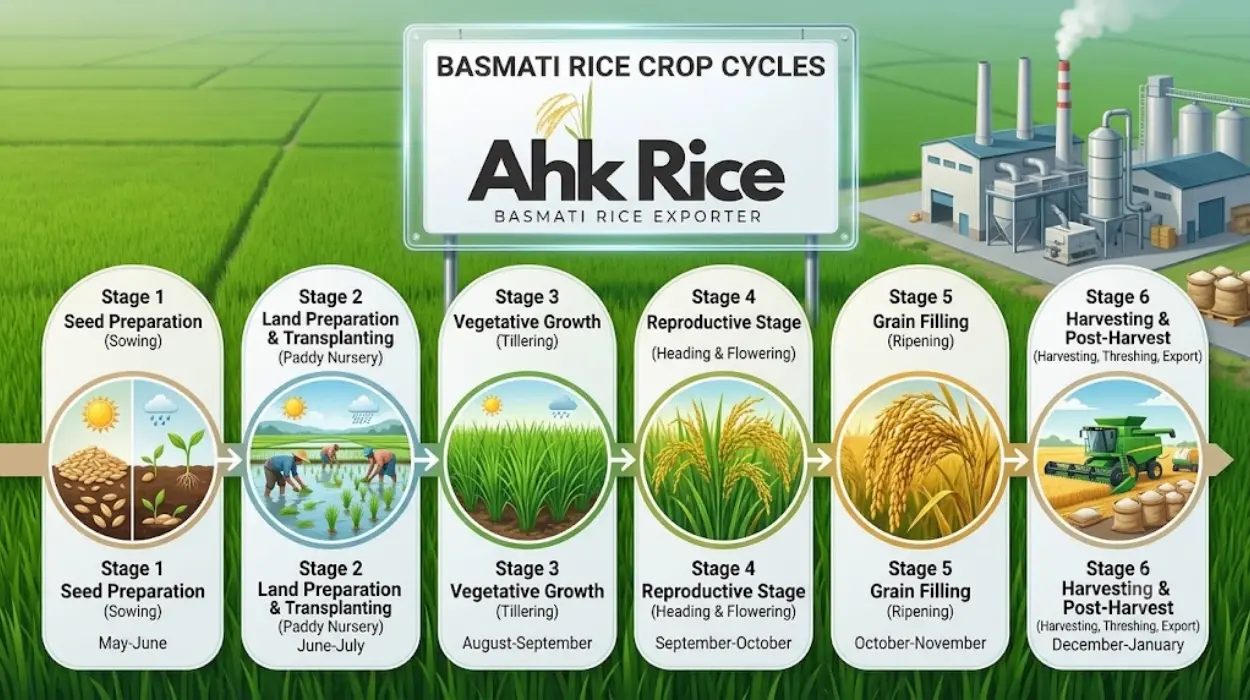
A Basmati rice crop cycle is the complete agricultural period from land preparation and planting to harvesting, milling, aging, and export distribution. The cycle determines annual production volume, grain quality, market availability, and supply conditions across importing countries such as the United Kingdom.
A crop cycle begins with field preparation. Farmers prepare soil, manage irrigation systems, and select seed varieties before planting starts.
Basmati rice is primarily grown in the Punjab regions of Pakistan and India. These areas provide fertile soil, suitable temperatures, and sufficient water resources that support long-grain aromatic rice production.
The crop follows a seasonal calendar. Seeds are planted during warmer months, cultivated through controlled irrigation, harvested during autumn, processed after harvest, and shipped throughout the year.
The crop cycle creates the foundation for global rice supply. Every importer, distributor, processor, and retailer depends on this agricultural timeline.
Which Basmati Varieties Follow These Crop Cycles?
Several Basmati varieties move through the same annual production cycle.
Common examples include:
- 1121 Basmati Rice
- Super Kernel Basmati Rice
- 1509 Basmati Rice
- Traditional Basmati Rice
- Brown Basmati Rice
Each variety has different maturity periods, grain lengths, and market demand patterns.
How Does the Basmati Rice Crop Cycle Work?
The Basmati rice crop cycle works through sequential stages including seed selection, nursery preparation, transplantation, crop growth, irrigation management, harvesting, drying, milling, grading, aging, packaging, and export shipment. Every stage influences the final quality received by international buyers.
The process starts with seed selection. Farmers choose certified seed varieties designed for specific market requirements.
After germination, seedlings are transferred into prepared rice fields. Controlled irrigation supports plant development throughout the growing season.
Plants mature over several months. During this period, farmers monitor water levels, nutrient application, and crop health.
Harvesting begins when grains reach maturity. Modern harvesting equipment improves efficiency and reduces grain damage.
After harvesting, rice undergoes drying. Moisture levels are reduced to protect grain quality during storage.
The dried paddy enters rice mills. Milling removes husk layers and produces white rice suitable for export markets.
What Happens After Milling?
After milling, rice passes through several processing stages.
These include:
- Length grading
- Color sorting
- Stone removal
- Broken grain separation
- Quality inspection
Many Basmati grades are then aged for several months. Aging improves cooking performance, aroma development, and grain elongation.
The finished rice is packaged and prepared for international shipment.
What Key Components Influence Basmati Crop Cycles?
Climate conditions, irrigation systems, seed genetics, farming practices, harvesting schedules, milling operations, storage management, and export logistics are the key components influencing Basmati crop cycles and determining annual market supply.
Climate remains the most important factor. Basmati rice requires specific temperature ranges during growth stages.
Water availability affects crop development. Punjab’s canal networks support large-scale rice cultivation.
Seed genetics influence grain length, aroma intensity, and maturity periods.
Harvest timing affects grain moisture content and storage quality. Delayed harvesting reduces efficiency and increases risk.
Storage facilities play an important role after harvest. Proper storage protects rice from moisture fluctuations and quality deterioration.
Why Is Rice Aging Important?
Aging is a recognized post-harvest process within the Basmati supply chain.
Benefits of aging include:
- Improved aroma
- Better grain separation
- Higher elongation ratio
- Enhanced cooking performance
Many importers specifically request aged rice because of these characteristics.
Why Do UK Buyers Monitor Crop Cycles Throughout the Year?
UK buyers monitor crop cycles throughout the year because crop progress affects future availability, shipment schedules, inventory planning, purchasing budgets, and retail supply commitments. Annual harvest outcomes directly impact import decisions.
Importers operate months before products reach store shelves.
A buyer planning inventory for January often evaluates harvest information collected during previous growing seasons.
Production forecasts help businesses estimate future supply levels.
Strong harvests generally increase export availability. Lower production volumes reduce available stocks and intensify competition among buyers.
Monitoring crop cycles also helps businesses align purchasing schedules with shipping schedules.
How Do Crop Cycles Affect Supply Planning?
Supply planning depends on understanding harvest timing.
Importers evaluate:
- Harvest volume
- Processing capacity
- Export readiness
- Storage inventory
- Shipping schedules
Businesses that understand these factors make more accurate purchasing decisions.
For a deeper understanding of inventory forecasting and harvest-related planning, readers can explore how crop-year changes influence procurement strategies in How Does Crop Year Affect Rice Availability and Supply Planning?
What Benefits Do Buyers Gain from Understanding Crop Cycles?
Understanding crop cycles helps buyers improve forecasting accuracy, manage inventory efficiently, reduce procurement uncertainty, optimize purchasing schedules, and maintain stable product availability across distribution networks and retail channels.
Predictability is a major benefit.
Importers understand when fresh harvest stocks become available and when aged inventories enter export channels.
This knowledge improves purchasing efficiency.
Buyers can coordinate contracts with suppliers based on production schedules instead of reacting to market shortages.
Understanding crop cycles also improves communication between exporters, distributors, wholesalers, and retailers.
How Does Crop Knowledge Support Pricing Analysis?
Crop knowledge helps buyers interpret market conditions.
When production increases, supply expands.
When production decreases, available export stock becomes limited.
Buyers who understand crop calendars can analyze pricing trends more accurately throughout the year.
Which Markets Import Basmati Rice and Why Do Crop Cycles Matter to Them?

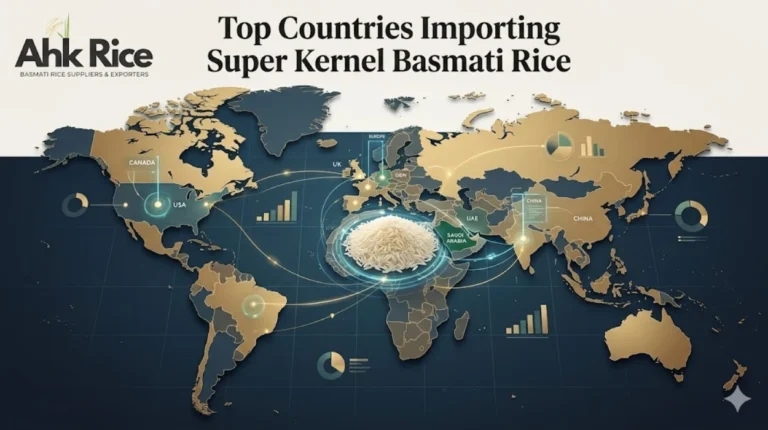
Major Basmati importing markets monitor crop cycles because annual harvest performance influences product availability, import volumes, inventory management, consumer demand fulfillment, and procurement planning across multiple distribution channels.
The United Kingdom imports significant quantities of Basmati rice every year.
Other major importing regions include:
- European Union countries
- Middle Eastern countries
- North American markets
- African markets
- Asia-Pacific markets
Each market has unique purchasing patterns.
Food service operators often require large-volume supply agreements.
Retail chains focus on consistent shelf availability.
Wholesalers prioritize inventory turnover and storage planning.
Which Basmati Grades Are Commonly Imported?
International markets import several grades.
Examples include:
- Extra-long grain Basmati
- Steam Basmati
- Sella Basmati
- White Basmati
- Brown Basmati
Each grade serves different consumer segments and commercial applications.
What Certifications Apply to Exported Basmati Rice?
Exported Basmati rice commonly follows certification systems covering food safety, quality management, traceability, agricultural compliance, processing controls, and international trade requirements demanded by importing markets.
Certification supports product consistency and regulatory compliance.
Importing countries evaluate documentation before accepting shipments.
Common certification frameworks include internationally recognized food safety and quality standards.
Which Certifications Are Frequently Used?
Frequently used certifications include:
- ISO 22000
- HACCP
- BRCGS
- SGS inspection reports
- Phytosanitary certification
- Certificate of Origin
These systems support transparency throughout the export supply chain.
Traceability has become increasingly important for importers seeking reliable sourcing information.
What Misconceptions Exist About Basmati Crop Cycles?
Many people incorrectly assume Basmati rice is harvested continuously throughout the year, that all crop years produce identical quality, or that harvest timing has no influence on export availability and supply planning.
Basmati production follows an annual agricultural cycle.
Harvesting occurs during specific seasonal windows rather than continuously.
Another misconception involves quality consistency.
Different crop years produce different outcomes because weather conditions, irrigation levels, and growing environments change annually.
Some buyers also assume harvested rice becomes immediately available for export.
In reality, drying, milling, grading, aging, packaging, inspection, and logistics require additional time before international shipment.
Why Does Crop-Year Knowledge Matter?
Crop-year knowledge helps buyers understand:
- Available inventory
- Quality characteristics
- Market timing
- Export readiness
- Procurement opportunities
This information supports more informed purchasing decisions throughout the year.
Conclusion
UK buyers track Basmati rice crop cycles because crop timing influences every stage of the supply chain. From planting and harvesting to milling, aging, certification, and export logistics, each step affects availability and planning decisions. Understanding crop cycles helps importers evaluate inventory levels, anticipate market conditions, analyze pricing trends, and maintain consistent supply throughout the year. As global demand for Basmati rice continues to grow, crop-cycle knowledge remains a critical part of successful procurement and supply management.
Frequently Asked Questions
Why is the Basmati rice crop cycle important for UK importers?
The crop cycle determines production volume, export availability, shipment timing, and inventory planning, helping importers manage supply more effectively.
When is Basmati rice typically harvested in Pakistan?
Basmati rice is generally harvested during the autumn season after completing its annual growing cycle.
Does crop year affect rice quality?
Yes. Weather conditions, irrigation management, and cultivation practices during a crop year influence grain quality, aroma, and yield.
What happens after Basmati rice is harvested?
The rice undergoes drying, milling, grading, sorting, aging, packaging, quality inspection, and export preparation.
Which countries import large quantities of Basmati rice?
Major importing regions include the United Kingdom, European Union countries, Middle Eastern markets, North America, Africa, and parts of Asia-Pacific.
Why do some buyers prefer aged Basmati rice?
Aged Basmati rice offers stronger aroma, improved grain separation, better elongation during cooking, and enhanced eating quality.