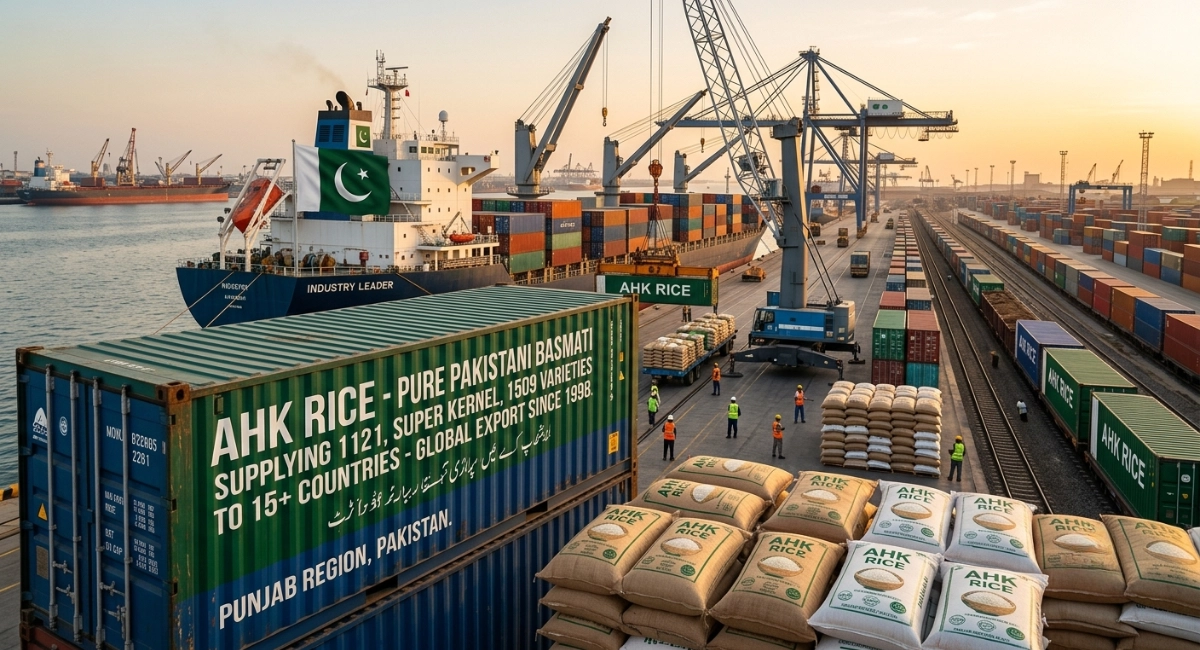
Why Pakistani Rice Remains Competitive in Global Markets
What is Pakistani Basmati rice?
Pakistani Basmati rice is an aromatic, extra-long grain cereal crop grown exclusively in the fertile alluvial soils of the Punjab region. It is characterized by its distinct fragrance, slender grain structure, and exceptional length expansion during the cooking process.
This premium food product occupies a distinct biological classification within the Oryza sativa family. The unique geographical indication of the Punjab province provides a specific combination of snow-fed river water, precise soil mineral profiles, and distinct seasonal temperature shifts. These environmental factors trigger the accumulation of 2-acetyl-1-pyrroline, the organic chemical compound responsible for the characteristic popcorn-like fragrance.
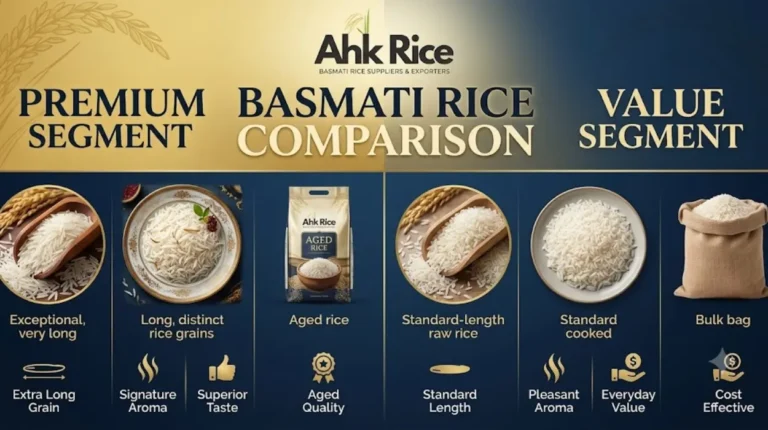
Global trade recognizes three primary commercial cultivars within this category. The 1121 Basmati variety represents the extra-long grain segment, maintaining an average pre-cooked grain length of 8.35 millimeters. The Super Kernel variety represents the traditional aromatic segment, favored for its historic flavor profile and an average raw length of 7.40 millimeters. The 1509 Basmati variety acts as an early-maturing cultivar with an average raw length of 8.10 millimeters, providing a competitive price-to-performance ratio for commercial food services.
Where is Pakistani Basmati rice grown?
Pakistani Basmati rice grows inside the historic “Basmati Bowl,” a specific geographic territory located within the northeastern plains of the Punjab province. The core cultivation areas encompass the districts of Gujranwala, Sialkot, Sheikhupura, Nankana Sahib, Narowal, and Hafizabad.
This specific agricultural belt features unique hydrological and geological characteristics. The melting glaciers of the Himalayan mountain ranges feed the Chenab and Ravi rivers, which carry mineral-rich silt into the plains. This alluvial soil contains high concentrations of potassium and nitrogen, which sustain the deep root systems of the rice stalks without requiring excessive chemical fertilization.
The local climate dictates the strict annual cultivation calendar. Farmers plant the nurseries during the extreme heat of June, transplanting the young seedlings into flooded paddies by July. The crop matures under the autumn sun of October and November, where dropping night temperatures stimulate the rapid synthesis of aromatic compounds within the endosperm.
How is Pakistani Basmati rice processed step by step?
The processing of Pakistani Basmati rice involves an multi-stage, automated mechanical sequence designed to transform raw paddy into export-ready grains. This end-to-end industrial workflow covers cleaning, husking, polishing, optical sorting, and controlled atmospheric packaging inside modern milling facilities.
The complete industrial workflow follows a precise configuration of mechanical steps:
1.Paddy Intake and Pre-Cleaning:Step 1.
Raw paddy arrives at the milling facility with a moisture content of 18 percent to 22 percent. Industrial vibratory sieves and magnetic separators remove physical debris, including straw, stones, dust particles, and metallic foreign bodies.
2.Precise Moisture Drying:Step 2.
The cleaned paddy passes through multi-stage vertical recirculating dryers. The system reduces the internal moisture level uniformly to 12 percent to 14 percent, preventing fungal growth and stabilizing the grain structure for mechanical husking.
3.De-Husking and Separation:Step 3.
Pneumatic rubber roll huskers subject the dried paddy to shear force, removing the outer protective hull. The resulting brown rice moves through a paddy separator, which isolates unhusked grains and returns them to the husker.
4.Milling and Friction Polishing:Step 4.
Abrasive whitening cones and mist polishers gently remove the outer bran layers from the brown rice. This process exposes the pearly white endosperm while injecting micro-sprays of water to create a high-gloss, smooth surface finish.
5.Grading and Thickness Sifting:Step 5.
Plan-sifters and rotary cylinder graders organize the polished white rice based on dimensional metrics. This step separates the full-length premium grains from the broken fractions, including large brokens, medium brokens, and small tips.
6.Color Sorting via Optical Cameras:Step 6.
The full-length grains flow through high-definition monochrome and trichromatic optical sorters. Computerized air jets shoot down any individual grain exhibiting discoloration, chalkiness, or micro-cracks at a speed of 1000 grains per second.
What are the key components and available grades of this product?
The available grades of Pakistani Basmati rice are determined by the specific parboiling, steaming, or raw processing methods applied to the grain. These industrial treatments yield distinct commercial formats, specifically White, Steam, Creamy Sella, and Golden Sella varieties.
Each commercial processing format serves distinct market requirements globally:
White Basmati Rice
This format represents the traditional milled rice option. The processing line removes the hull and bran layers through dry friction polishing. The final product exhibits a brilliant white translucent appearance, a fast cooking time of 15 minutes, and maximum aroma release.
Steam Basmati Rice
The steam processing method subjects the unhusked paddy to hot steam injection before drying and milling. This thermal treatment hardens the exterior starch matrix without gelatinizing the grain interior. The resulting rice maintains a high level of brightness, exceptional fluffiness, and resists clumping during extended buffet holding times.
Creamy Sella (Parboiled) Rice
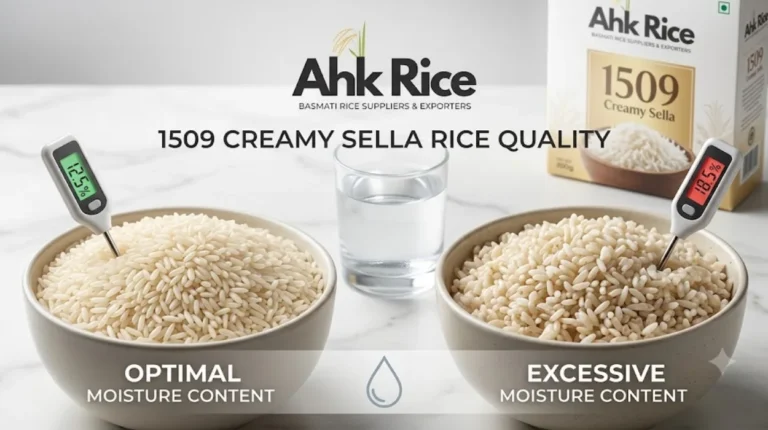
Importers utilize Creamy Sella for large-scale catering operations. The production line steams and vacuum-dries the paddy, forcing water-soluble vitamins from the bran layer directly into the endosperm. This gelatinizes the internal starch, making the grain completely immune to overcooking and breaking.
Golden Sella Rice
The Golden Sella grade utilizes a prolonged parboiling and heat-drying process. This intense thermal contact alters the color profile of the grain into a deep amber hue. The process preserves the nutritional value of the kernel and provides maximum volume expansion, with cooked grains stretching to more than 20 millimeters.
What are the benefits of importing Pakistani Basmati rice?
The benefits of importing Pakistani Basmati rice center on its high cooking yield, structural grain resilience, and advantageous international pricing structures. These factors allow global distributors to maximize profit margins while delivering consistent quality metrics to culinary end-users.
Commercial food systems derive clear financial advantages from these grain characteristics. The elongation ratio of 1121 Basmati exceeds 2.2 times its original size upon hydration, meaning 1 kilogram of raw premium rice yields up to 2.5 kilograms of cooked food. This volumetric expansion reduces the portion cost for commercial restaurants, catering companies, and hospitality chains.
The structural durability of the grain provides another operational benefit. The starch profile contains high amylose levels exceeding 22 percent, which prevents the grains from bursting or turning into a sticky paste during automated high-pressure cooking cycles. This non-sticky nature minimizes food waste in large commercial kitchens.
What are the target use cases for each variety?
The target use cases for each variety depend on the specific culinary traditions, preparation methods, and scale requirements of the end consumer market. Commercial operators select specific varieties to match distinct ethnic dishes and automated kitchen formats.
The table below outlines the ideal applications for each primary cultivar:
| Cultivar Variety | Primary Processing Grade | Ideal Culinary Application | Commercial Kitchen Format |
| 1121 Basmati | Steam / Golden Sella | Premium Biryani, Festive Pulao | Fine Dining Restaurants, Event Caterers |
| Super Kernel | White / Raw Milled | Traditional Arabic Kabsa, Mandi | Heritage Restaurants, Luxury Hotels |
| 1509 Basmati | Steam / Creamy Sella | Daily Rice Dishes, Fried Rice | Centralized Canteens, Fast Food Chains |
The 1121 Steam grade is the standard requirement for high-end biryani preparation, where individual long grains must stand apart visually on the plate. Super Kernel serves the Middle Eastern markets, where the traditional fragrance profile must overpower heavy spice mixtures. The 1509 variety fulfills high-volume commercial food production contracts where cost-per-plate limitations apply.
What are the common misconceptions about this product?
The common misconceptions about this product include the belief that yellow-tinted sella rice is old or damaged, and that all long-grain rice varieties possess identical aromatic qualities. These factual errors lead to improper purchasing choices and incorrect processing expectations.
Many retail buyers mistakenly assume that brilliant white rice is superior to yellowish sella rice. The yellow coloration of Golden Sella rice is a direct result of controlled starch gelatinization during thermal parboiling, which locks nutrients inside the kernel. It does not indicate chemical spoilage, age, or a low quality tier.
Another commercial error is treating non-aromatic long grains, such as IRRI-6 or IRRI-9, as substitute Basmati products. These coarse varieties lack the 2-acetyl-1-pyrroline compound entirely. They do not elongate linearly upon cooking, instead expanding sideways, which alters the mouthfeel and visual presentation of traditional dishes.
Which international markets import this rice and what certifications apply?
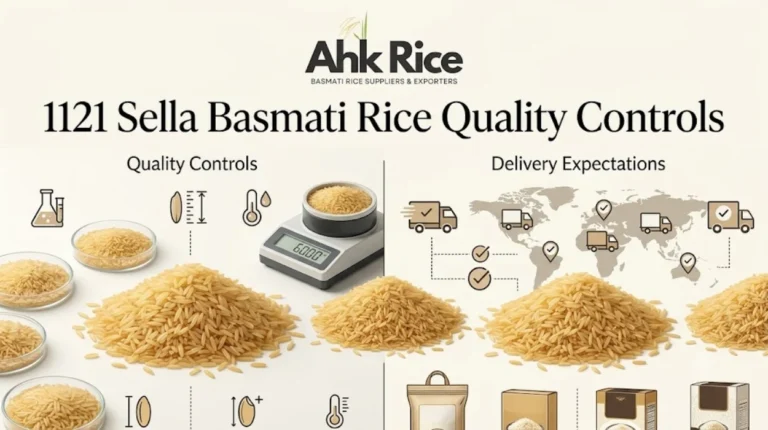
The international markets importing this rice span over 15 countries across the Middle East, Europe, East Africa, and Southeast Asia. To access these international territories, milling facilities must hold strict food safety certifications, including ISO 22000, HACCP, GMP, Halal, and regional customs clearances.
The global distribution network follows strict regulatory frameworks:
Regional Import Destinations
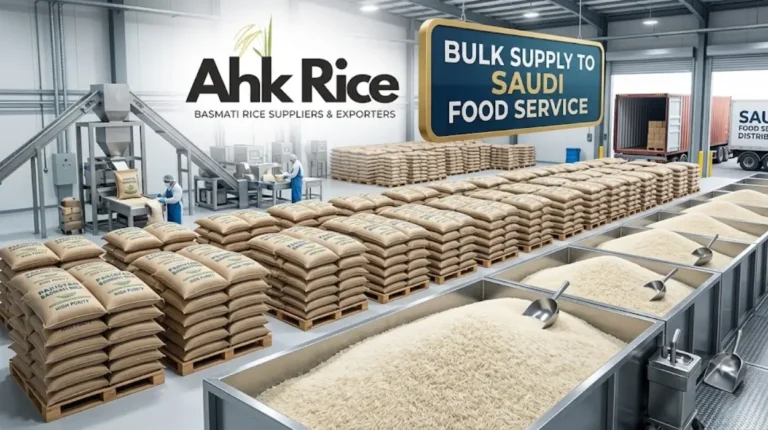
The Gulf Cooperation Council countries, including Saudi Arabia, the United Arab Emirates, and Oman, represent the largest market for premium 1121 and Super Kernel grades. European Union nations import aged white basmati varieties under strict maximum residue limit controls. Southeast Asian nations, including Indonesia and Malaysia, import large volumes of 1509 and 1121 grades to satisfy the high demand from their retail and hospitality sectors.
Mandatory Compliance Certifications
- ISO 22000:2018: Verifies the implementation of an end-to-end food safety management system across the milling line.
- HACCP Certification: Confirms continuous chemical, physical, and biological hazard monitoring at every stage of processing.
- Phytosanitary Certification: Issued by the Department of Plant Protection Pakistan to guarantee the shipment is free from pests.
- Halal Certification: Ensures all processing agents and packaging materials comply with Islamic dietary laws.