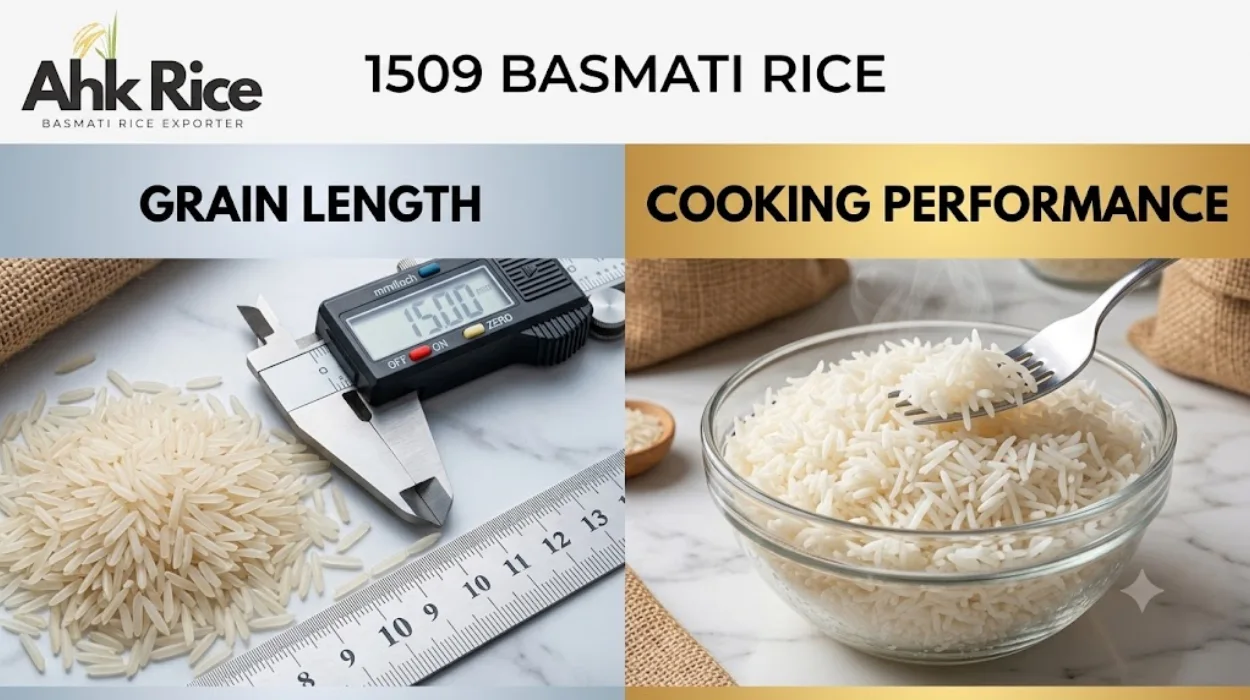
1509 Basmati Rice: Grain Length and Cooking Performance Explained
1509 Basmati Rice delivers raw grain lengths of 8.10–8.50 mm, cooks with significant elongation, and offers high volume yield, making it one of Pakistan’s most widely exported extra-long grain Basmati varieties. Here is why: the variety combines genetic grain length, efficient milling performance, and strong cooking characteristics that meet importer requirements across multiple markets.
1509 Basmati Rice is a modern Basmati variety cultivated in Pakistan and India. The variety gained popularity because it produces longer grains, matures faster than traditional Basmati types, and provides strong cooking performance.
1509 Basmati Rice serves retail, wholesale, catering, and foodservice sectors. Importers value the variety because it delivers visual appeal before cooking and consistent elongation after cooking.
Understanding grain length alone does not explain the full value of this variety. Cooking performance, processing grades, quality specifications, and market preferences also determine its commercial importance.
The related processing grades used in export markets differ significantly. Buyers comparing processed forms can learn more through this guide on choosing between steam and Golden specifications.
What Is 1509 Basmati Rice?
1509 Basmati Rice is an extra-long grain aromatic rice variety with raw grain lengths of 8.10–8.50 mm, strong elongation characteristics, and high milling recovery rates.
1509 Basmati Rice belongs to the Basmati family of aromatic rice varieties. The variety was developed to improve productivity while maintaining the visual characteristics expected from premium Basmati rice.
1509 Basmati Rice grows primarily in Punjab regions where fertile soil, irrigation systems, and seasonal temperature patterns support grain development. Farmers cultivate the crop during the Kharif season and harvest it when grain moisture reaches appropriate harvesting levels.
1509 Basmati Rice differs from traditional varieties because the grains are naturally longer. Exporters frequently select the variety for markets that prioritize visual grain appearance.
What Are the Main Physical Characteristics of 1509 Basmati Rice?
| Specification | Typical Value |
|---|---|
| Raw Grain Length | 8.10–8.50 mm |
| Grain Type | Extra Long Grain |
| Grain Shape | Slender |
| Aroma | Moderate to High |
| Cooked Grain Length | 13–16 mm |
| Moisture | 12–14% |
| Milling Recovery | High |
1509 Basmati Rice achieves strong commercial acceptance because buyers often evaluate grain length before making procurement decisions.
With the definition of 1509 Basmati Rice established, the next question is how its grain length translates into cooking performance.
How Does 1509 Basmati Rice Achieve Its Cooking Performance?

1509 Basmati Rice achieves strong cooking performance through grain structure, starch composition, moisture control, and proper milling processes.
Cooking performance refers to how rice behaves after preparation. Importers evaluate elongation ratio, grain separation, texture, water absorption, and volume expansion.
1509 Basmati Rice contains a grain structure that supports lengthwise expansion. The grains elongate primarily in length rather than width. This characteristic produces a premium appearance on serving plates.
Processing also affects cooking quality. Rice that undergoes controlled drying, grading, and polishing maintains better consistency during cooking.
What Happens During Cooking?
The cooking process changes moisture content inside the grain. Water enters the rice kernel and hydrates the starch structure.
1509 Basmati Rice responds by expanding in length. The grains remain separate when cooked correctly.
Typical Cooking Performance Metrics
| Cooking Attribute | Typical Result |
|---|---|
| Elongation Ratio | 1.7–2.0x |
| Grain Separation | High |
| Water Absorption | Good |
| Stickiness | Low |
| Volume Expansion | High |
| Texture | Soft Yet Separate |
Catering businesses often prefer rice varieties with high expansion because larger cooked volume improves serving efficiency.
With cooking behavior explained, the next question is which components influence these results.
What Components Determine Grain Length and Quality?
Genetics, cultivation practices, harvesting standards, milling quality, and moisture management determine the final grain length and cooking quality of 1509 Basmati Rice.
Rice quality begins in the field. The genetic characteristics of the variety establish potential grain length.
Farmers cultivate 1509 Basmati Rice under controlled irrigation schedules. Proper nutrient management supports uniform grain formation.
Harvesting timing also affects grain quality. Early harvesting reduces maturity. Delayed harvesting increases breakage risk during milling.
Which Processing Steps Influence Quality?
Rice processors perform multiple operations before export.
- Clean the harvested paddy.
- Dry the paddy to target moisture levels.
- De-husk the grain.
- Separate husk materials.
- Polish the rice surface.
- Grade by grain size.
- Sort defective grains.
- Inspect quality parameters.
- Pack export-ready rice.
Each step affects grain appearance and cooking performance.
What Quality Parameters Are Tested?
Quality laboratories inspect several specifications before shipment.
- Moisture content
- Broken percentage
- Grain length
- Foreign matter
- Damaged grains
- Chalky grains
- Purity level
- Cooking performance
Quality verification helps maintain consistency across export shipments.
With the quality factors understood, the next question is why buyers specifically choose this variety.
What Are the Benefits of 1509 Basmati Rice?
1509 Basmati Rice provides extra-long grain appearance, strong elongation, high volume expansion, efficient milling recovery, and broad market acceptance.
Importers frequently select 1509 Basmati Rice because appearance strongly influences consumer purchasing decisions.
Extra-long grains create a premium visual presentation. Restaurants and retailers use this characteristic to position products in higher-value categories.
How Does Grain Length Benefit Buyers?
Long grains improve presentation quality.
Cooked rice dishes appear more premium because individual grains remain visible and separate.
Rice dishes such as biryani, mandi, pulao, kabsa, and banquet rice preparations benefit from longer grain appearance.
How Does Cooking Yield Benefit Commercial Users?
High volume expansion creates more servings from the same quantity of rice.
Foodservice operators value this characteristic because cooked output directly affects operational efficiency.
Commercial Benefits
| Benefit | Impact |
|---|---|
| Long Grain Appearance | Premium presentation |
| High Elongation | Better cooked appearance |
| Strong Yield | More servings |
| Low Stickiness | Grain separation |
| High Demand | Easier market acceptance |
With the benefits established, the next question is where global markets use this variety.
Where Is 1509 Basmati Rice Commonly Used?
1509 Basmati Rice serves retail consumers, catering businesses, food manufacturers, wholesalers, and restaurant chains across Asia, the Middle East, Africa, Europe, and North America.
The variety performs well across multiple consumption channels.
Which Markets Import 1509 Basmati Rice?
Middle Eastern markets import large volumes because long-grain presentation aligns with regional cuisine preferences.
Examples include:
- Saudi Arabia
- United Arab Emirates
- Qatar
- Oman
- Kuwait
African markets also import significant quantities because affordability and cooking performance support wholesale distribution.
Examples include:
- South Africa
- Kenya
- Tanzania
- Mozambique
European importers focus on retail packaging and ethnic food distribution.
Examples include:
- United Kingdom
- Germany
- Netherlands
- France
Which Food Applications Use 1509 Basmati Rice?
Restaurants use 1509 Basmati Rice for:
- Biryani
- Kabsa
- Mandi
- Pulao
- Buffet rice
Retail consumers use it for daily meals and special occasions.
With market applications covered, the next question concerns available processing grades.
What Grades of 1509 Basmati Rice Are Available?
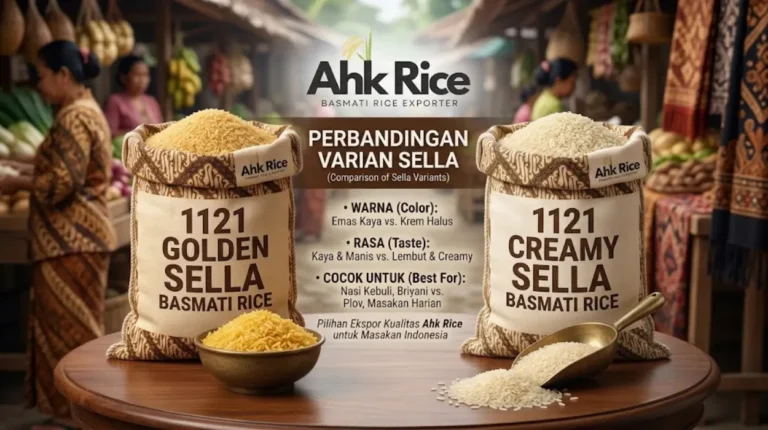
1509 Basmati Rice is available in Steam, Golden Sella, White Rice, Creamy Sella, and specialized export grades with varying cooking and storage characteristics.
Processing grade affects color, shelf stability, cooking texture, and market suitability.
1509 White Basmati Rice
1509 White Rice undergoes standard milling and polishing processes.
The grains maintain a bright white appearance and cook quickly.
1509 Steam Rice
1509 Steam Rice receives steam treatment before final milling.
Steam processing strengthens grains and improves cooking consistency.
1509 Golden Sella Rice
1509 Golden Sella Rice undergoes parboiling before milling.
The process creates a golden appearance and improves grain durability.
1509 Creamy Sella Rice
1509 Creamy Sella Rice follows a specialized parboiling process that produces a cream-colored grain.
Many importers select this grade for premium retail programs.
Grade Comparison Table
| Grade | Color | Durability | Cooking Time |
|---|---|---|---|
| White | White | Moderate | Short |
| Steam | White | High | Medium |
| Golden Sella | Golden | Very High | Medium |
| Creamy Sella | Cream | Very High | Medium |
With grade differences established, the next question is which misconceptions buyers commonly encounter.
What Misconceptions Exist About 1509 Basmati Rice?
The most common misconceptions are that longer grain guarantees better quality, all processing grades cook identically, and all export specifications are the same.
Grain length alone does not determine quality.
Moisture content, purity level, broken percentage, and milling standards influence overall quality.
Does Longer Grain Always Mean Better Rice?
Long grain improves appearance.
Quality evaluation also requires inspection of defects, broken percentage, and cooking consistency.
Do All Grades Cook the Same Way?
Processing methods create different cooking characteristics.
Golden Sella maintains stronger grain structure after cooking.
Steam Rice provides a softer texture profile.
White Rice cooks faster than parboiled grades.
Are All Export Specifications Identical?
Export specifications differ by importer requirements.
Different markets request different moisture limits, broken percentages, and packaging formats.
Understanding these distinctions helps buyers evaluate rice beyond simple grain length measurements.
With misconceptions clarified, the final topic concerns certification requirements that support international trade.
What Certifications Apply to 1509 Basmati Rice Exports?
1509 Basmati Rice exports commonly require food safety, phytosanitary, quality management, and country-specific compliance certifications.
Certification verifies product safety and trade compliance.
Importers often require documented inspection and testing before shipment.
Common Export Certifications
- ISO 22000 Food Safety Management
- HACCP Certification
- Phytosanitary Certificate
- Certificate of Origin
- Fumigation Certificate
- Health Certificate
- SGS Inspection Reports
- Bureau Veritas Inspection Reports
Certification requirements vary according to destination market regulations.
Quality certification supports international trade by providing documented evidence of compliance.
1509 Basmati Rice combines extra-long grain characteristics, efficient processing performance, and strong cooking behavior. These characteristics explain why the variety remains one of the most traded Basmati rice grades in global markets.
Frequently Asked Questions
What is the average grain length of 1509 Basmati Rice?
1509 Basmati Rice typically measures 8.10–8.50 mm in raw grain length, depending on harvest quality and milling specifications.
How long does 1509 Basmati Rice become after cooking?
The grain commonly reaches 13–16 mm after cooking due to its strong elongation characteristics.
Is 1509 Basmati Rice suitable for biryani?
Yes. 1509 Basmati Rice is widely used for biryani because the grains remain separate and elongate significantly during cooking.
Which grade is most durable during transportation?
1509 Golden Sella Rice offers the highest grain durability because parboiling strengthens the grain structure before milling.
Which countries import 1509 Basmati Rice?
Major importing regions include the Middle East, Africa, Europe, and North America.
What moisture level is acceptable for export?
Most export specifications require moisture levels between 12% and 14%, depending on buyer requirements.