Why Is 1121 White Basmati Rice Popular Among Saudi Retail Consumers?
1121 White Basmati Rice is popular among Saudi retail consumers because it combines extra-long grain length, bright white appearance, high cooking yield, soft texture, and strong value for everyday family consumption. Saudi households prefer rice that delivers consistent plate presentation, absorbs traditional Gulf flavors, and remains economical across frequent purchases. Here is why: 1121 White Basmati Rice offers raw grain lengths of 8.20–8.40 mm, expands significantly during cooking, and aligns with Saudi preferences for Kabsa, Bukhari Rice, Mandi, and home-cooked rice dishes (source: REAP export data, December 2025).
Pakistan remains one of the leading suppliers of Basmati rice to Gulf markets. Saudi Arabia continues to import substantial volumes of premium and mid-premium Basmati varieties due to strong consumer demand for long-grain aromatic rice (source: Pakistan Bureau of Statistics, FY2024-25).
1121 White Basmati Rice has become a common retail shelf product across supermarkets, hypermarkets, independent grocery chains, and ethnic food stores. Understanding its popularity requires examining its characteristics, production process, quality grades, market applications, and consumer expectations.
What Is 1121 White Basmati Rice?
1121 White Basmati Rice is an extra-long grain aromatic rice variety cultivated in Pakistan and India, milled directly from harvested paddy, and polished to produce a bright white appearance preferred by retail consumers.
1121 White Basmati Rice belongs to the Basmati family. Basmati refers to a group of aromatic long-grain rice varieties cultivated primarily in the Punjab region. The variety gained international recognition because of its exceptional grain length and cooking performance.
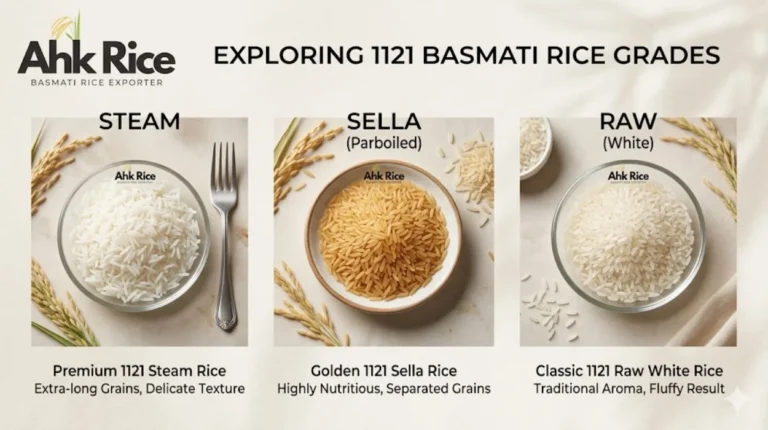
1121 White Basmati Rice differs from parboiled rice products because the grains move directly through milling and polishing processes without undergoing parboiling treatment. This production method preserves a lighter color and softer texture after cooking.
Saudi consumers frequently select 1121 White Basmati Rice for household consumption because the variety balances appearance, aroma, cooking expansion, and affordability. Family buyers often evaluate grain length before purchase. Longer grains create a premium visual presentation after cooking.
The cultivation of 1121 White Basmati Rice occurs primarily in Punjab, Pakistan. The region provides fertile alluvial soil, irrigation infrastructure, and climatic conditions suitable for Basmati cultivation. Farmers cultivate the crop between June and November before harvest and milling.
With the definition of 1121 White Basmati Rice established, the next question is how the product moves from field cultivation to retail packaging.
How Does 1121 White Basmati Rice Reach Saudi Retail Shelves?
1121 White Basmati Rice passes through nine processing stages: cultivation, harvesting, drying, cleaning, dehusking, milling, polishing, grading, and packaging before export to Saudi Arabia.
Rice quality begins during cultivation. Farmers cultivate certified seed varieties across Punjab’s Basmati-growing regions. Irrigation schedules, soil management practices, and crop monitoring influence final grain quality.
What Are the Processing Steps?
The processing chain follows a structured sequence.
- Harvest the mature paddy.
- Dry the harvested paddy.
- Clean the raw material.
- Dehusk the grain.
- Mill the rice kernels.
- Polish the rice surface.
- Grade by size.
- Sort through optical machines.
- Package for export.
Drying reduces moisture content to safe storage levels. Moisture control protects grain integrity during storage and shipment.
Dehusking removes the outer husk. Milling removes bran layers. Polishing creates the bright white appearance expected by Saudi retail consumers.
Grading separates kernels according to size and quality. Optical sorting systems remove discolored grains, foreign matter, and defects. Quality teams inspect and test each batch before shipment.
Packaging protects the rice during transport. Retail packs commonly include 1 kg, 2 kg, 5 kg, and 10 kg formats for supermarket sales. Bulk export formats include 20 kg, 25 kg, and 40 kg bags.
With processing established, the next question focuses on the physical characteristics that consumers recognize immediately.
What Key Characteristics Make 1121 White Basmati Rice Attractive to Saudi Consumers?
The most important characteristics are grain length, aroma, cooking expansion, white appearance, soft texture, and flavor absorption.
Saudi consumers often evaluate rice visually before purchase. Grain length serves as a major quality indicator. 1121 White Basmati Rice delivers raw grain lengths between 8.20 mm and 8.40 mm, placing it among the longest commercial rice varieties available.
Why Does Grain Length Matter?
Long grains create a premium cooked appearance. Individual kernels remain separate after cooking. Saudi dishes frequently emphasize rice presentation during family meals and gatherings.
Why Is Aroma Important?
Basmati rice contains naturally occurring aromatic compounds. These compounds create the characteristic fragrance associated with premium rice products.
Saudi consumers often connect aroma with authenticity and quality. Aromatic rice complements traditional dishes such as Kabsa, Mandi, Bukhari Rice, and Madghout.
Why Is Cooking Expansion Valued?
1121 White Basmati Rice expands significantly after cooking. Longer cooked grains increase visual appeal and serving volume.
Higher expansion also improves household value perception. Consumers receive more cooked rice from the same raw quantity.
The physical characteristics explain consumer preference. The next question examines practical household benefits.

What Benefits Does 1121 White Basmati Rice Provide for Saudi Households?
The primary benefits are visual appeal, consistent cooking performance, flavor compatibility, household versatility, and value efficiency.
Saudi families prepare rice frequently throughout the week. Consistency therefore becomes an important purchasing factor. 1121 White Basmati Rice offers predictable cooking behavior when proper water ratios are used.
How Does It Improve Meal Presentation?
Long cooked grains create a cleaner appearance on serving platters. Traditional Gulf cuisine often emphasizes visual presentation during family gatherings and social events.
Separate grains improve dish aesthetics. Kabsa platters, for example, benefit from elongated kernels that maintain shape after cooking.
How Does It Support Traditional Saudi Recipes?
Rice functions as the base ingredient for numerous Saudi meals. Examples include Kabsa, Chicken Mandi, Lamb Mandi, Bukhari Rice, and Fish Sayadiyah.
Flavor absorption enables spices, stock, and meat juices to penetrate the grains effectively. This characteristic improves eating experience without compromising grain structure.
How Does It Deliver Household Value?
Cooking expansion increases the volume of cooked rice produced from each kilogram.
Large families often consider serving yield alongside retail pricing. Higher yield supports routine household consumption while maintaining preferred quality standards.
These benefits explain household demand. The next section examines where the product is commonly used.
Where Is 1121 White Basmati Rice Commonly Used in Saudi Arabia?
1121 White Basmati Rice is used in households, supermarkets, restaurants, catering operations, hospitality businesses, and food service distribution channels.
Households represent the largest retail consumption segment. Family buyers purchase rice through supermarkets and neighborhood grocery stores.
How Do Restaurants Use It?
Restaurants require consistent grain appearance and reliable cooking results. Long-grain Basmati varieties support menu standardization.
Examples include family restaurants, South Asian restaurants, Gulf cuisine establishments, and buffet operations.
How Do Catering Businesses Use It?
Catering companies prepare large meal volumes. Consistent grain quality simplifies operational planning.
Examples include wedding catering, corporate catering, institutional catering, and event catering.
How Does Retail Packaging Influence Usage?
Retail packaging supports different consumer segments.
Examples include:
- 1 kg packs for trial purchases
- 2 kg packs for small households
- 5 kg packs for medium families
- 10 kg packs for regular household consumption
Usage diversity explains broad market demand. The next question focuses on available quality grades.
What Grades of 1121 White Basmati Rice Are Available?
The main grades include Extra Long Grain, Premium Grade, Standard Grade, Broken Percentage Grades, Sortex Grade, Double Sortex Grade, and Silky Polished Grade.
Saudi retail buyers often compare multiple white Basmati varieties before selecting products for supermarket shelves. Grain appearance, cooking performance, consumer preference, and shelf positioning influence these decisions. While 1121 White Basmati Rice is known for its extra-long grain length and strong cooking elongation, other varieties also compete for retail space in Gulf markets. Buyers who want to understand how different white Basmati grades perform in Saudi supermarkets should explore a detailed comparison of grain specifications, target consumers, and retail suitability in our article discussing the differences between 1121 White Rice and Super Kernel White Rice for Saudi supermarket shelves.
Extra Long Grain Grade
Extra Long Grain Grade contains highly uniform kernels with superior length retention. Premium retail brands often select this specification.
Sortex Grade
Sortex Grade undergoes optical sorting technology to remove defects and discoloration. Export markets frequently require this specification.
Double Sortex Grade
Double Sortex Grade passes through multiple sorting stages. The process enhances visual consistency and shelf presentation.
Silky Polished Grade
Silky Polished Grade features a bright appearance and smooth surface texture. Retail consumers often associate this finish with premium quality.
Broken Percentage Grades
Broken Percentage Grades classify rice according to the proportion of broken kernels.
Examples include:
- 1% broken
- 2% broken
- 5% broken
- 10% broken
- 15% broken
Grade selection influences consumer perception and retail positioning. The next question examines importing markets.
Which Markets Import 1121 White Basmati Rice?
Saudi Arabia, the United Arab Emirates, Kuwait, Qatar, Oman, Bahrain, Iraq, the United Kingdom, Canada, and the United States are major importing markets.
Saudi Arabia remains one of the most important destinations for Pakistani Basmati exports because rice forms a central component of daily cuisine (source: REAP export data, December 2025).
Why Do Gulf Markets Import Large Volumes?
Gulf countries maintain strong rice consumption rates. Climatic conditions limit domestic rice cultivation, increasing reliance on imports.
Examples include Saudi Arabia, UAE, Kuwait, Qatar, Bahrain, and Oman.
Why Do Western Markets Import Basmati Rice?
Growing South Asian, Middle Eastern, and international consumer communities support demand for aromatic rice.
Examples include the United Kingdom, Canada, Germany, Australia, and the United States.
Global demand demonstrates the commercial importance of the variety. The next section examines quality certifications.
What Certifications Apply to 1121 White Basmati Rice Exports?
The most common certifications include ISO 22000, HACCP, Halal Certification, Phytosanitary Certification, Fumigation Certification, and Health Certification.
Food safety requirements influence international rice trade.
What Documents Support Export Compliance?
Export shipments typically require:
- Phytosanitary Certificate
- Certificate of Origin
- Fumigation Certificate
- Packing List
- Commercial Invoice
- Health Certificate
Inspection agencies verify compliance before shipment.
Why Is Halal Certification Important?
Saudi consumers prioritize Halal-compliant food products. Certification supports regulatory compliance and consumer confidence.
Why Are Food Safety Certifications Important?
Food safety systems establish documented procedures for quality control.
Examples include:
- ISO 22000 Food Safety Management
- HACCP Risk Control Systems
- Laboratory Testing Protocols
Certification frameworks support market access and import approvals.
Quality assurance explains purchasing confidence. The final question addresses common misconceptions.
What Misconceptions Exist About 1121 White Basmati Rice?
The most common misconceptions involve aroma levels, nutritional value, cooking behavior, and grain quality indicators.
Some consumers assume longer grains always indicate higher quality. Grain length remains important, but grading, sorting, moisture control, and processing standards also determine final quality.
Another misconception involves cooking difficulty. Proper water ratios and cooking procedures produce consistent results across household kitchens.
Some buyers believe all white rice varieties deliver identical performance. 1121 White Basmati Rice differs through aroma, grain length, and cooking expansion characteristics.
Another misunderstanding involves origin. Authentic Basmati cultivation occurs within recognized growing regions of the Punjab area, where environmental conditions support characteristic aroma and grain development.
Understanding these misconceptions provides a complete picture of why Saudi consumers continue selecting this rice variety across retail channels.
Frequently Asked Questions
What makes 1121 White Basmati Rice different from ordinary long-grain rice?
1121 White Basmati Rice differs from ordinary long-grain rice because it offers a natural aroma, extra-long grain length, and superior cooking elongation. The grains remain separate after cooking and provide the texture preferred for traditional Saudi and Gulf dishes.
Is 1121 White Basmati Rice suitable for Kabsa and Mandi?
Yes, 1121 White Basmati Rice is widely used for Kabsa, Mandi, Bukhari Rice, and other Saudi recipes. Its ability to absorb spices and stock while maintaining grain separation makes it suitable for these dishes.
Which country supplies most 1121 White Basmati Rice to Saudi Arabia?
Pakistan is one of the leading suppliers of 1121 White Basmati Rice to Saudi Arabia. The Punjab region produces high-quality Basmati rice due to its fertile soil, irrigation systems, and favorable climate conditions.
How long can 1121 White Basmati Rice be stored?
When stored in a cool, dry environment, 1121 White Basmati Rice typically maintains quality for 18 to 24 months. Proper packaging and moisture control help preserve aroma, texture, and grain quality during storage.
What certifications are important for imported 1121 White Basmati Rice?
Important certifications include ISO 22000, HACCP, Halal Certification, Phytosanitary Certification, and Fumigation Certification. These certifications verify food safety, quality management, and compliance with Saudi import requirements.