Why Should Scottish Buyers Evaluate Rice Production Capacity Carefully?
Scottish buyers should evaluate rice production capacity carefully. Here is why: production capacity determines supply continuity, shipment scheduling, quality consistency, inventory availability, and price stability throughout the year. Buyers who verify production capacity reduce supply interruptions, delayed containers, and specification changes.
Rice procurement depends on more than grain quality. Production capacity reflects how much rice a supplier can cultivate, process, store, inspect, and dispatch within a defined period. Scottish importers, wholesalers, retailers, ethnic food distributors, and foodservice companies rely on stable supply chains. Production capacity directly affects that stability.
Pakistan remains one of the world’s leading Basmati rice exporters. Scottish buyers import varieties such as 1121 Basmati, Super Kernel Basmati, and 1509 Basmati for retail and catering markets. Understanding production capacity helps buyers assess whether a supplier can fulfill current orders and future demand increases.
What Is Rice Production Capacity?
Production capacity measures the total volume a supplier can cultivate, process, store, and ship within a specific timeframe.
Rice production capacity combines agricultural output, milling capability, storage infrastructure, labor resources, quality control systems, and logistics management. It represents the maximum quantity a supplier can consistently supply without reducing quality standards.
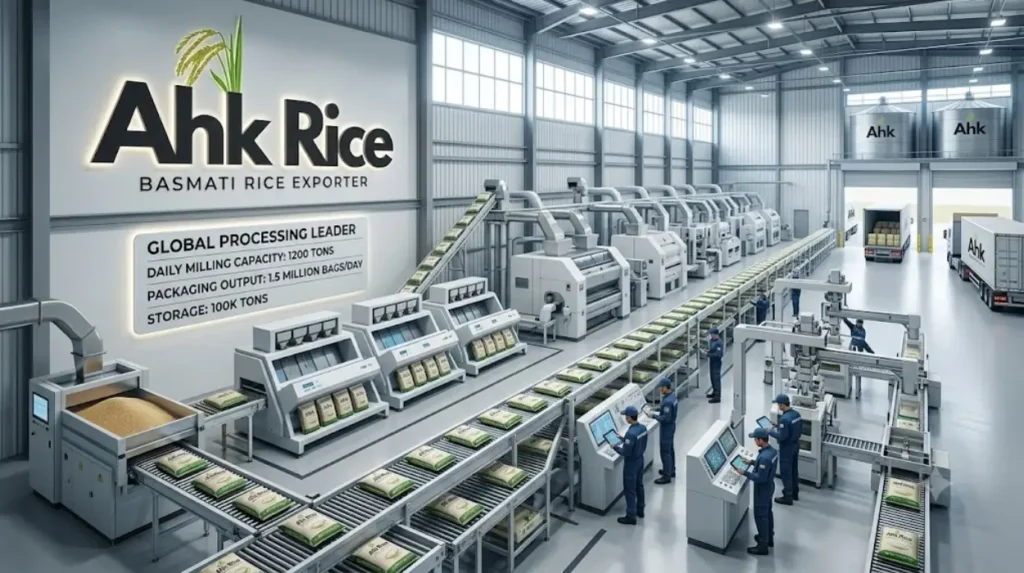
Production capacity includes multiple operational stages. Paddy cultivation generates raw material. Rice mills dehusk and polish grain. Warehouses store inventory. Quality teams inspect specifications. Export departments dispatch containers.
Scottish buyers often focus on price and grain appearance. Production capacity provides equally important information because supply reliability depends on operational scale.
Large production capacity does not automatically mean better quality. Verified production capacity indicates that a supplier can maintain quality standards while handling larger volumes.
With production capacity defined, the next question is how this capability functions throughout the rice supply chain.
How Does Rice Production Capacity Work?
Production capacity works through coordinated farming, processing, storage, quality inspection, and export operations.
Rice production begins with cultivation. Farmers cultivate paddy fields during specific growing seasons. Harvested paddy enters processing facilities for milling and grading.
Production systems operate through interconnected stages:
- Clean the harvested paddy.
- De-husk the grain.
- Dry the rice.
- Polish the kernels.
- Sort by size.
- Grade by specification.
- Inspect quality parameters.
- Package according to requirements.
- Dispatch export shipments.
Each stage contributes to overall capacity. A bottleneck at one stage limits total output. A mill processing 500 metric tons daily cannot support exports requiring 1,000 metric tons daily.
Storage capacity also influences production performance. Warehouses allow suppliers to maintain inventory between harvest seasons. Stored inventory supports uninterrupted exports throughout the year.
Logistics capacity completes the process. Exporters load containers, clear customs documentation, and ship cargo according to agreed schedules.
With the operational process explained, the next question is which components determine actual production capacity.
What Components Determine Rice Production Capacity?
Cultivation area, milling facilities, storage infrastructure, workforce, quality systems, and logistics networks determine production capacity.
Cultivation Capacity
Cultivation capacity refers to agricultural production volume. Larger cultivation areas generate greater paddy availability. Irrigation systems, seed quality, and harvesting efficiency influence total output.
Basmati cultivation regions in Punjab contribute significantly to Pakistan’s rice exports. Production volume depends on cultivated acreage and yield per hectare.
Milling Capacity
Milling capacity measures processing output. Rice mills transform paddy into export-ready rice through mechanical processing stages.
Important milling functions include:
- De-husking
- Polishing
- Length grading
- Color sorting
- Density separation
- Broken removal
Higher milling capacity supports larger export commitments.
Storage Capacity
Storage capacity protects inventory quality between harvest and shipment periods. Modern warehouses maintain controlled conditions and reduce losses.
Storage availability supports year-round supply. Suppliers without adequate storage depend heavily on harvest timing.
Quality Control Capacity
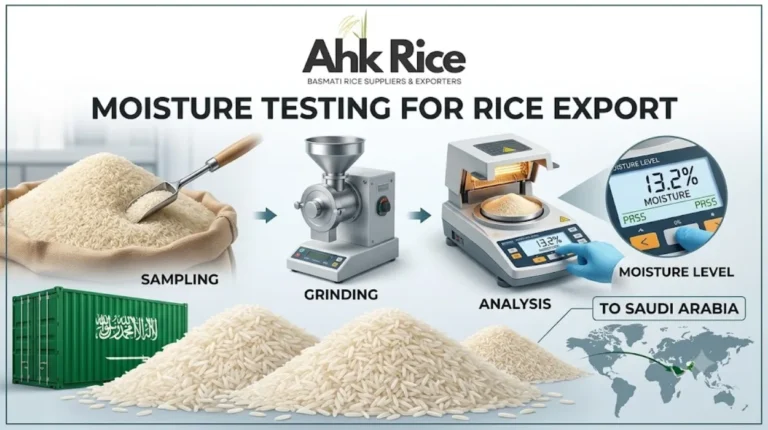
Quality systems inspect moisture, grain length, purity, and broken percentages. Testing laboratories verify specifications before shipment.
Quality control capacity ensures consistency across multiple containers and repeat orders.
Logistics Capacity
Logistics capacity includes container loading, freight coordination, customs clearance, and shipment scheduling.
Efficient logistics systems reduce delivery delays and support predictable supply chains.
With key components identified, the next question is why Scottish buyers benefit from evaluating them.
What Benefits Do Scottish Buyers Gain From Evaluating Production Capacity?
Supply reliability, consistent quality, predictable pricing, inventory security, and reduced procurement risk are the primary benefits.
Supply reliability remains the most important advantage. Buyers importing regularly require uninterrupted product availability. Production capacity indicates whether suppliers can fulfill repeat orders.
Quality consistency improves when suppliers operate standardized processing systems. Consistent grading and inspection produce uniform specifications across shipments.
Pricing stability often reflects production capability. Suppliers with stronger operational resources manage inventory more effectively. Inventory management reduces exposure to short-term market fluctuations.
Inventory security protects retailers and distributors. Larger storage and processing resources support replenishment programs throughout the year.
Procurement risk decreases when buyers verify operational capabilities before contracting. Verified capacity provides evidence that a supplier can meet contractual obligations.
Scottish foodservice distributors benefit particularly from capacity verification because catering demand often requires predictable volume availability.
With benefits established, the next question is where production capacity evaluation becomes most important.
Where Is Production Capacity Evaluation Most Useful?
Wholesale importing, retail distribution, foodservice supply, private-label programs, and long-term procurement contracts require production capacity evaluation.
Wholesale Importing
Wholesale importers purchase large volumes and require regular replenishment. Production capacity determines whether suppliers can support expanding order schedules.
Retail Distribution
Retail chains depend on continuous shelf availability. Stock shortages create lost sales opportunities and disrupt consumer purchasing patterns.
Production capacity supports retail inventory planning and seasonal demand increases.
Foodservice Operations
Restaurants, caterers, and hospitality groups require predictable supply. Consistent rice availability supports menu planning and procurement forecasting.
Private Label Programs
Private-label rice brands require specification consistency. Production systems must support identical standards across multiple production runs.
Long-Term Supply Agreements
Long-term contracts often span several months or years. Production capacity evaluation helps buyers assess long-term supplier suitability.
With major use cases explained, the next question concerns common misunderstandings about production capacity.
What Common Misconceptions Exist About Rice Production Capacity?
Production capacity is not identical to quality, inventory size, company age, or annual export volume.
One common misconception assumes large capacity guarantees superior quality. Quality depends on inspection systems, grading standards, and processing controls.
Another misconception equates warehouse inventory with production capacity. Inventory represents available stock. Production capacity represents operational output capability.
Some buyers assume older companies possess greater production capacity. Company age does not determine cultivation area, milling infrastructure, or storage resources.
Export volume also differs from production capacity. A supplier may export large quantities through trading activities while operating limited processing facilities.
Capacity verification requires examining multiple operational factors instead of relying on a single indicator.
Understanding these misconceptions helps buyers conduct more accurate supplier evaluations.
How Can Scottish Buyers Evaluate Production Capacity Effectively?
Facility verification, production data review, inventory assessment, certification checks, and shipment history analysis provide the most reliable evaluation methods.
Scottish buyers should request documented production information. Processing volumes, storage capacities, and annual output figures provide measurable indicators.
Buyers should review operational infrastructure. Milling equipment, grading systems, warehouses, and laboratories reveal actual processing capability.
Certification records provide additional verification. Common certifications include:
- ISO 22000
- HACCP
- BRCGS
- Halal Certification
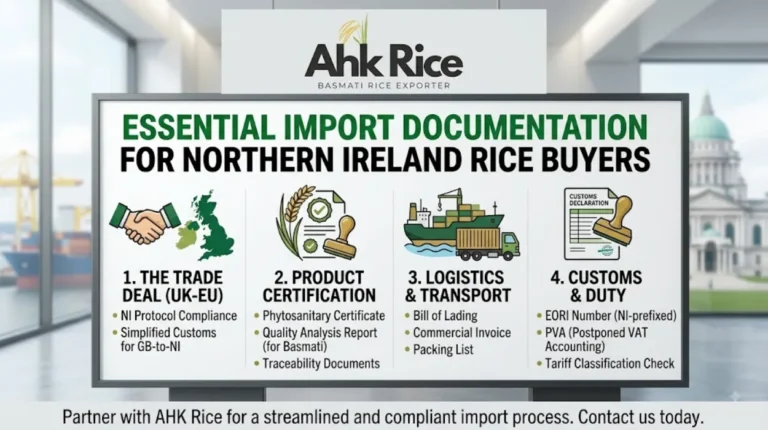
- Phytosanitary Certification
- Fumigation Certification
Shipment history also provides useful evidence. Consistent export activity demonstrates operational experience and supply chain management capability.
Production capacity evaluation becomes especially important during periods of increasing demand. Buyers who verify capacity before procurement decisions reduce operational risk and improve supply continuity.
A deeper understanding of production capability naturally leads to exploring how capacity supports uninterrupted annual supply schedules.
Frequently Asked Questions
Why is production capacity important when importing rice?
Production capacity indicates whether a supplier can consistently fulfill orders, maintain quality standards, and support long-term supply requirements.
Does a larger production capacity guarantee better rice quality?
No. Quality depends on inspection procedures, grading systems, processing controls, and certification standards rather than production volume alone.
How does production capacity affect rice prices?
Strong production capacity supports inventory management and operational efficiency, which helps reduce supply disruptions and price volatility.
Which factors should buyers review when evaluating production capacity?
Buyers should review cultivation volume, milling output, storage facilities, quality control systems, certifications, and shipment history.
Why do Scottish distributors need year-round rice availability?
Retailers, wholesalers, and foodservice companies require uninterrupted inventory to maintain customer supply, operational continuity, and purchasing consistency.