1121 vs 1509 Basmati Rice: Which Grade Should Bulk Importers Choose?
1121 Basmati rice delivers higher length, stronger elongation, and premium export value, while 1509 Basmati offers faster turnover, lower cost, and efficient bulk distribution. Here is why: 1121 averages 8.2 mm grain length with 2.5x elongation, while 1509 averages 7.4 mm with shorter cooking cycles and lower FOB pricing.
Bulk importers select between 1121 and 1509 based on market positioning, storage conditions, and price sensitivity. This comparison defines each grade, evaluates performance across supply chains, and maps the correct choice for each buyer segment.
For foundational understanding of basmati grading, read our educational guide on basmati rice grade comparison.
What are the available solutions in 1121 vs 1509 basmati rice comparison?
1121 and 1509 represent two distinct long grain basmati solutions: premium elongation-focused rice and cost-efficient high-yield rice.
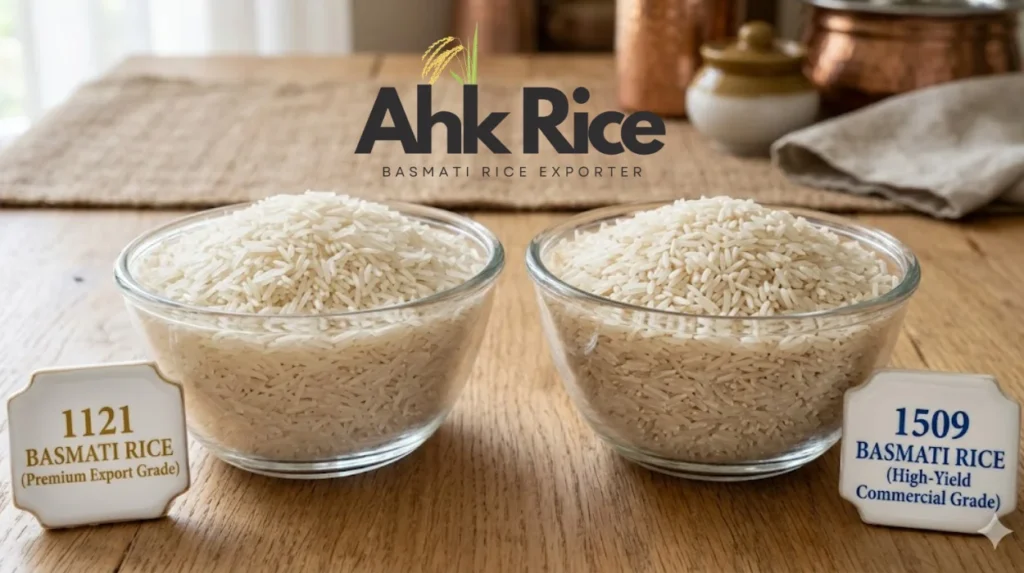
1121 Basmati Rice (Premium Export Grade)
1121 basmati rice defines the premium long grain category. Farmers cultivate this variety in Punjab using controlled irrigation and seasonal harvesting cycles. Millers process it through parboiling or steam methods to enhance elongation and aroma.
Key specifications:
- Grain length: 8.00–8.40 mm
- Cooked length: up to 21–22 mm
- Aroma: strong basmati fragrance
- Texture: fluffy, separate grains
- Processing types: Steam, Sella, Golden Sella
1121 performs best in high-end retail and catering markets. Buyers import it for visual appeal and plate presentation.
1509 Basmati Rice (High-Yield Commercial Grade)
1509 basmati rice defines the fast-moving commercial category. Farmers cultivate this hybrid variety for early harvest and high yield per acre. Millers process it with shorter drying cycles, which reduces production costs.
Key specifications:
- Grain length: 7.20–7.60 mm
- Cooked length: moderate elongation
- Aroma: mild basmati scent
- Texture: soft and slightly sticky
- Processing types: Steam, Sella
1509 performs best in price-sensitive markets and large-volume distribution.
Processing Steps for Both Grades
Both grades follow structured processing:
- Clean the paddy
- Dehusk the grain
- Polish the rice
- Sort by length
- Grade by broken percentage
- Dry to target moisture
- Inspect for quality
- Pack into export bags
- Load and dispatch shipments
With both solutions defined, the next step is a structured comparison of their specifications.
How do different approaches compare in 1121 vs 1509 basmati rice?
1121 outperforms in length, elongation, and shelf life, while 1509 leads in price, yield, and cooking speed.
Specification Comparison Table
| Attribute | 1121 Basmati Rice | 1509 Basmati Rice |
|---|---|---|
| Grain Length | 8.00–8.40 mm | 7.20–7.60 mm |
| Elongation Ratio | 2.2–2.5x | 1.6–1.8x |
| Aroma Strength | High | Medium |
| Cooking Time | Longer (12–15 min) | Shorter (8–10 min) |
| Price per MT (FOB) | Higher ($950–$1200) | Lower ($650–$850) |
| Shelf Life | 18–24 months | 12–16 months |
| Market Position | Premium retail & catering | Mass market & wholesale |
Shelf Life Comparison (Real-World Conditions)
1121 Golden Sella lasts longer than 1509 Steam.
- In a 40°C UAE warehouse, 1121 maintains quality for 18–24 months.
- In the same condition, 1509 requires turnover within 12–16 months.
- For non-climate-controlled storage, 1121 is the safer specification.
Price Per Metric Ton Comparison
- 1121 commands higher export pricing due to grain length and demand.
- 1509 reduces procurement cost by 20–30% per MT.
- African bulk buyers prefer 1509 for cost control.
- Gulf retailers prefer 1121 for premium shelf positioning.
(source: REAP export data, December 2025)
Regional Market Preferences
Middle East (UAE, Saudi Arabia, Qatar)
- Preference: 1121 Golden Sella
- Reason: Long grain presentation and premium dining standards
- Use case: Hospitality, weddings, luxury retail
Africa (Nigeria, Kenya, Senegal)
- Preference: 1509 Steam or Sella
- Reason: Affordable pricing and high consumption volume
- Use case: Daily consumption and wholesale distribution
(source: Pakistan Bureau of Statistics, FY2024-25)
With performance differences established, the next step is identifying which method fits specific importer scenarios.
Which method works best for different cases?
1121 works best for premium positioning, while 1509 works best for volume-driven distribution and fast turnover.
Case 1: Premium Retail Importers
1121 basmati rice fits premium retail because it delivers visual appeal and aroma. Supermarkets in the Gulf display long grain rice as a quality indicator.
Correct specification: 1121 Steam or Golden Sella
Case 2: Catering and Hospitality Buyers
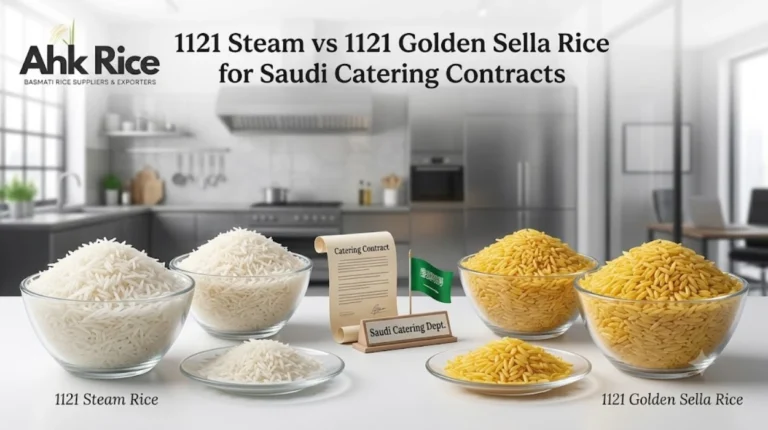
1121 Golden Sella performs better in bulk cooking. The grains remain separate after large-scale preparation.
Correct specification: 1121 Golden Sella
Case 3: Price-Sensitive Wholesale Markets
1509 basmati rice reduces procurement cost. Importers distribute it in 25–50 kg bags for daily consumption.
Correct specification: 1509 Steam
Case 4: High Turnover Distribution Chains
1509 supports faster inventory cycles. Its shorter cooking time suits quick-service food operations.
Correct specification: 1509 Sella
With use cases mapped, the next step is evaluating advantages and trade-offs.
What are the pros and cons of 1121 vs 1509 basmati rice?
1121 delivers premium quality but higher cost, while 1509 delivers affordability but lower sensory performance.
1121 Basmati Rice
Pros:
- Superior grain length
- Strong aroma profile
- High elongation after cooking
- Longer shelf life
- Strong export demand
Cons:
- Higher procurement cost
- Longer cooking time
- Requires careful storage
1509 Basmati Rice
Pros:
- Lower cost per MT
- Faster cooking time
- High yield production
- Efficient bulk distribution
Cons:
- Shorter grain length
- Lower aroma intensity
- Reduced elongation
- Shorter shelf life
Example Comparison
1121 Golden Sella performs better than 1509 Steam in premium markets. In UAE catering, 1121 maintains grain separation after 2 hours of holding. In African wholesale markets, 1509 sells faster due to lower pricing.
With trade-offs defined, the next step is a structured decision framework.
What decision factors should bulk importers evaluate?
Importers should evaluate price, market demand, storage conditions, and brand positioning before selecting between 1121 and 1509.

Decision Framework Table
| Factor | Choose 1121 | Choose 1509 |
|---|---|---|
| Target Market | Premium retail | Mass market |
| Budget Range | High | Medium to low |
| Storage Duration | Long-term | Short-term |
| Cooking Requirement | Visual presentation | Speed & efficiency |
| Brand Positioning | High-end | Value-driven |
Key Decision Insights
- Premium positioning requires 1121 because grain length drives perception.
- High-volume markets require 1509 because price controls demand.
- Long storage requires 1121 because shelf life is longer.
- Fast turnover requires 1509 because cooking and distribution are faster.
Export Documentation Requirements
- Phytosanitary certificate
- Certificate of origin
- Fumigation certificate
- Packing list
- Commercial invoice
Each document ensures compliance during shipment clearance.
Final Recommendation
1121 basmati rice suits importers targeting premium segments with longer storage cycles. 1509 basmati rice suits importers prioritizing cost efficiency and fast-moving inventory.
For buyers ready to evaluate suppliers and specifications, read our detailed guide on buy 1121 basmati rice wholesale AHK Rice Pakistan.
Frequently Asked Questions
What is the main difference between 1121 and 1509 basmati rice?
1121 offers longer grains and higher elongation, while 1509 provides lower cost and faster cooking. 1121 averages 8.0–8.4 mm, while 1509 averages 7.2–7.6 mm, making them suitable for different market segments.
Which basmati rice grade is better for bulk import?
1121 suits premium markets, while 1509 suits high-volume, price-sensitive markets. Importers targeting Gulf retail choose 1121, while African wholesale buyers prefer 1509 for affordability and faster turnover.
Why is 1121 basmati rice more expensive than 1509?
1121 costs more because it delivers superior grain length, aroma, and export demand. Its processing and aging requirements increase value, while 1509 focuses on yield and cost efficiency.
Which rice has a longer shelf life: 1121 or 1509?
1121 basmati rice lasts longer, typically 18–24 months, while 1509 lasts 12–16 months. 1121 performs better in hot storage conditions, making it suitable for long-distance export.
Is 1509 basmati rice suitable for daily consumption?
1509 basmati rice works well for daily meals due to its lower price and shorter cooking time. It is widely used in bulk distribution markets where affordability and efficiency matter most.