Why Is Pakistani Basmati Rice Growing in Premium USA Grocery Stores?
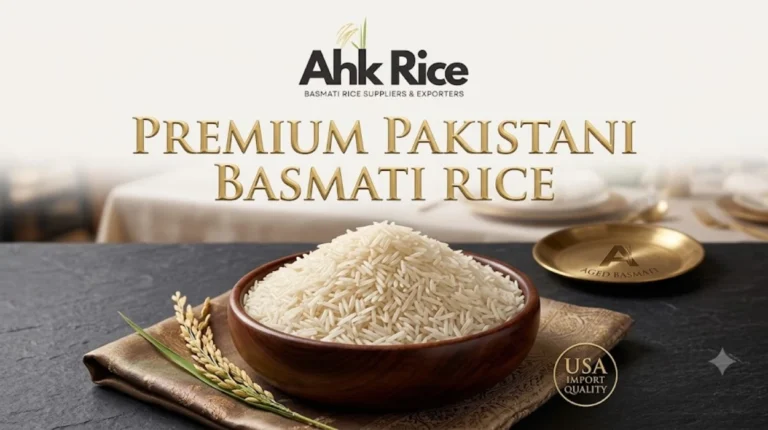
Premium Pakistani Basmati rice has become a larger category in American grocery retail because consumers now prioritize authentic aroma, grain length, cooking consistency, clean labeling, and internationally certified food quality. According to 2026 market trends, premium supermarkets, ethnic grocery chains, specialty food retailers, and online grocery platforms continue expanding their selections of imported Pakistani Basmati varieties to satisfy growing demand from multicultural households and quality-conscious shoppers. For more information read:
How Do Retailers Position Premium Basmati Rice Against Competitors?
What Is Pakistani Basmati Rice?
Pakistani Basmati rice is an aromatic long-grain rice cultivated primarily in Punjab using traditional varieties and modern processing standards. It delivers distinctive fragrance, elongated cooked grains, soft texture, and internationally recognized quality that premium grocery retailers increasingly stock throughout the United States.
Pakistani Basmati rice belongs to a specific group of aromatic rice varieties grown within approved geographical cultivation zones. The unique combination of fertile alluvial soil, Himalayan river irrigation, seasonal climate, and generations of farming experience creates grain characteristics that remain difficult to reproduce elsewhere.
The most common export varieties include:
Each variety offers different grain dimensions, cooking performance, and commercial applications.
Premium USA grocery stores classify these products within specialty rice shelves rather than standard commodity rice because consumers actively seek authentic origin, consistent cooking quality, and recognizable varieties.
Unlike ordinary long-grain rice, Pakistani Basmati develops significant grain elongation after cooking while maintaining individual grain separation and natural aroma.
Why Are Premium USA Grocery Stores Expanding Pakistani Basmati Rice Shelves?
American grocery retailers increasingly dedicate shelf space to Pakistani Basmati rice because customer demand, premium product positioning, international cuisine growth, and repeat purchasing create higher value than conventional long-grain rice across multiple retail formats during 2026.
Consumer food preferences have changed significantly during the past decade.
More households regularly prepare:
- Indian cuisine
- Pakistani cuisine
- Middle Eastern cuisine
- Persian cuisine
- Mediterranean dishes
These recipes require aromatic long-grain rice rather than ordinary white rice.
Premium grocery retailers also recognize that shoppers increasingly read packaging information before purchasing food products.
Important purchasing factors include:
- Country of origin
- Variety name
- Grain length
- Aroma
- Food safety certifications
- Ingredient simplicity
Pakistani Basmati satisfies these purchasing expectations because the product naturally contains only rice without artificial enhancement.
Retail data also shows that premium grocery customers willingly pay higher prices for products delivering consistent eating quality and authentic culinary experiences.
How Is Pakistani Basmati Rice Grown?
Pakistani Basmati rice grows through a structured agricultural cycle beginning with seed preparation and ending with harvesting after approximately 120 to 150 days. Punjab remains the country’s primary production region because its climate supports premium aromatic grain development.
Rice cultivation follows carefully planned stages.
Land Preparation
Farmers level agricultural fields to improve irrigation efficiency.
The soil is prepared before transplanting begins.
Nursery Development
Selected certified seed varieties are planted in nurseries.
Healthy seedlings develop before field transplantation.
Field Transplantation
Young rice plants move into flooded production fields.
Plant spacing supports healthy root development.
Crop Management
Farmers monitor:
- Irrigation
- Weed control
- Nutrient management
- Pest management
Balanced crop management protects grain quality throughout the growing season.
Harvesting
Harvesting begins when grain maturity reaches commercial standards.
Mechanical harvesting improves harvesting efficiency while minimizing grain damage.
How Is Pakistani Basmati Rice Processed Before Export?
Export-quality Pakistani Basmati rice passes through multiple controlled processing stages including cleaning, drying, milling, grading, polishing, sorting, packaging, inspection, and container loading to maintain international food quality requirements throughout the global supply chain.
Processing begins immediately after harvested paddy arrives at the rice mill.
Paddy Reception
Every truckload undergoes inspection before unloading.
Moisture, impurities, and variety identification receive initial evaluation.
Drying
Controlled drying reduces moisture to export specifications.
Proper moisture protects storage stability.
Cleaning
Advanced equipment removes:
- Stones
- Dust
- Straw
- Foreign materials
- Broken plant residue
Husking
Machines remove the outer husk.
Brown rice remains after husking.
Milling
Milling removes bran layers according to product specifications.
Different milling levels create different commercial grades.
Grading
Machines classify grains by:
- Length
- Thickness
- Whole grain percentage
- Broken percentage
Color Sorting
Optical sorters remove:
- Discolored grains
- Chalky grains
- Foreign grains
- Defective kernels
Packaging
Rice enters food-grade packaging in multiple commercial sizes including 1 kg, 2 kg, 5 kg, 10 kg, 20 kg, 25 kg, and 50 kg.
Final Inspection
Quality inspectors verify compliance before shipment.
What Are the Main Types of Pakistani Basmati Rice Found in USA Stores?
Premium grocery retailers stock multiple Pakistani Basmati varieties because different consumers prefer specific grain lengths, cooking characteristics, aroma intensity, and culinary applications. Product diversity supports broader retail assortment strategies across the specialty rice category.
1121 Basmati Rice
1121 produces extremely long cooked grains.
It remains popular for:
- Biryani
- Pilaf
- Catering
- Restaurants
Super Kernel Basmati Rice
Super Kernel combines traditional aroma with soft texture.
Consumers frequently purchase it for everyday family meals.
1509 Basmati Rice
1509 matures earlier than traditional varieties.
It offers excellent cooking performance and competitive pricing.
Retailers frequently stock all three varieties to satisfy different customer preferences.
What Quality Standards Make Pakistani Basmati Rice Suitable for Premium Retail?
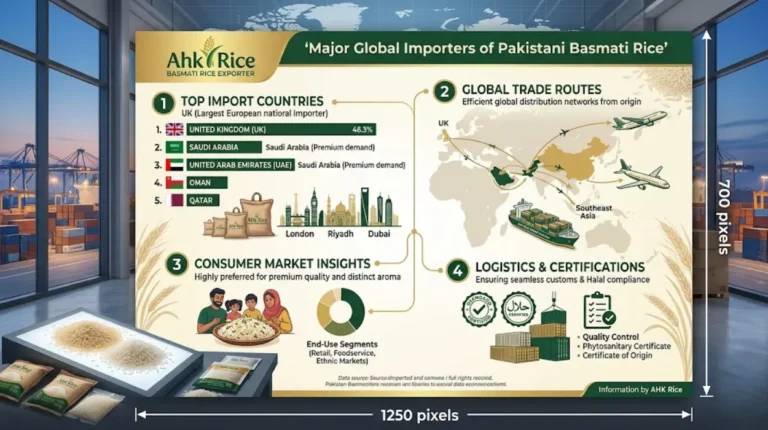
Premium grocery retailers require internationally recognized quality controls covering food safety, grain consistency, packaging integrity, traceability, and export compliance before placing imported Basmati rice onto store shelves for American consumers.
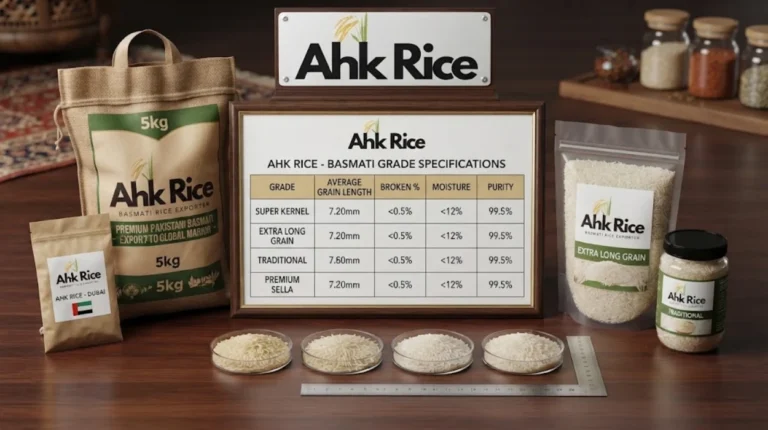
Quality evaluation includes measurable specifications.
Retail buyers commonly review:
- Grain length
- Moisture percentage
- Broken grain percentage
- Foreign matter limits
- Purity
- Aroma
- Color consistency
Food safety programs also support international trade.
Common certifications include:
- ISO 22000
- HACCP
- FSSC 22000
- BRCGS Food Safety
- Halal Certification
- Phytosanitary Certification
- Certificate of Origin
- Laboratory quality reports
These certifications document compliance with recognized international food safety standards during export.
What Benefits Do American Consumers Receive from Pakistani Basmati Rice?
Consumers choose Pakistani Basmati rice because it combines natural aroma, attractive grain appearance, reliable cooking consistency, versatile meal preparation, long shelf stability, and authentic culinary performance across numerous international recipes prepared at home.
Premium rice provides multiple practical advantages.
The grains remain separate after cooking.
Long cooked grains improve plate presentation.
Natural aroma enhances eating experience.
The rice complements many protein and vegetable dishes.
Examples include:
- Chicken biryani
- Lamb pilaf
- Vegetable pulao
- Grilled salmon with rice
- Persian-style rice dishes
Premium grocery shoppers also appreciate consistent cooking performance because predictable results reduce meal preparation errors.
Where Is Pakistani Basmati Rice Used Beyond Home Kitchens?
Pakistani Basmati rice serves numerous commercial food sectors including restaurants, hotels, airlines, catering companies, institutional kitchens, and packaged food manufacturers because consistent grain quality supports large-scale food preparation requirements.
Commercial buyers value consistency.
Restaurants prepare signature rice dishes daily.
Hotels require dependable cooking performance.
Airlines prioritize attractive presentation.
Institutional kitchens need standardized quality across large production volumes.
Packaged meal manufacturers also incorporate premium Basmati into ready-to-cook food products.
These diverse applications strengthen demand beyond household grocery purchasing.
What Common Misconceptions Exist About Pakistani Basmati Rice?
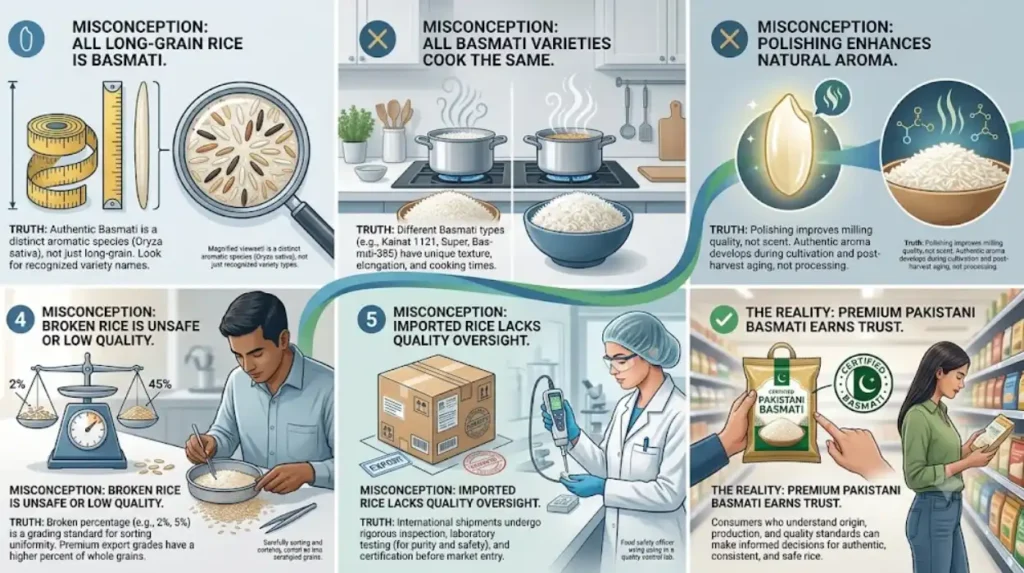
Several misconceptions confuse consumers about premium Pakistani Basmati rice. Understanding variety names, processing methods, grading systems, and certification standards helps buyers distinguish authentic premium products from ordinary long-grain rice available within retail markets.
One misconception assumes every long-grain rice qualifies as Basmati.
Authentic Basmati belongs to recognized aromatic varieties.
Another misconception assumes all Basmati varieties cook identically.
Different varieties produce different grain lengths, textures, and cooking characteristics.
Some consumers also believe polishing changes aroma.
Natural aroma develops through the variety itself rather than polishing.
Another misunderstanding involves broken rice.
Broken percentage represents grading classification rather than food safety.
Premium export grades simply contain higher percentages of whole grains.
Many shoppers also assume imported rice lacks quality oversight.
International export shipments undergo documented inspection, laboratory testing, and certification before entering commercial distribution channels.
As consumers become more informed about origin, production, and quality standards, premium Pakistani Basmati rice continues earning greater shelf presence in American grocery stores because it satisfies expectations for authenticity, consistency, and internationally verified food quality.
Frequently Asked Questions
What makes Pakistani Basmati rice different from ordinary long-grain rice?
Pakistani Basmati rice is naturally aromatic, produces significantly longer cooked grains, and maintains grain separation after cooking. Ordinary long-grain rice does not offer the same aroma, elongation, or premium culinary characteristics.
Which Pakistani Basmati rice variety is most commonly sold in USA grocery stores?
The most common varieties are 1121 Basmati Rice, Super Kernel Basmati Rice, and 1509 Basmati Rice. Each variety serves different cooking preferences based on grain length, texture, and intended recipes.
Why are premium USA grocery stores increasing their Pakistani Basmati rice selection?
Premium grocery retailers respond to growing consumer demand for authentic international foods, consistent quality, natural aroma, and internationally certified imported rice products.
How is Pakistani Basmati rice processed before export?
The rice passes through cleaning, drying, husking, milling, grading, color sorting, quality inspection, and food-grade packaging before export to international markets.
Which certifications are commonly available for exported Pakistani Basmati rice?
Export shipments commonly comply with ISO 22000, HACCP, FSSC 22000, BRCGS Food Safety, Halal Certification, Phytosanitary Certification, Certificate of Origin, and laboratory quality reports.
Is Pakistani Basmati rice suitable for everyday cooking?
Yes. Pakistani Basmati rice is suitable for daily meals as well as premium recipes including biryani, pulao, pilaf, grilled meat dishes, and international cuisines because of its consistent cooking performance.
Does Pakistani Basmati rice contain artificial flavoring?
No. Authentic Pakistani Basmati rice develops its distinctive aroma naturally from its variety, cultivation environment, and proper processing without artificial flavoring.