Rice Packaging Sizes and Emirates Authority Labelling Rules for UAE 2026
Rice packaging sizes define the standardized weight formats used for retail and bulk rice distribution, while UAE Arabic labeling rules require mandatory product information in Arabic, including origin, weight, ingredients, and expiry details, regulated for all imported rice products entering the UAE market in 2026.
Rice packaging sizes refer to the exact weight units used when packing rice for different markets. These include retail packs such as 1 kg, 5 kg, and 10 kg, and bulk packs such as 25 kg and 50 kg. Each size serves a distinct purpose in supply chains.
UAE Arabic labeling rules define how information must appear on packaging. The label must include Arabic text. English can appear alongside Arabic, but Arabic must be clear and readable. The regulation ensures consumers understand the product without language barriers.
In 2026, labeling enforcement has become stricter. Every imported rice bag must comply before entering retail or wholesale channels in cities such as Dubai and Abu Dhabi. Non-compliant shipments face rejection or relabeling at the port.
How do rice packaging sizes and UAE labeling systems work?
Rice packaging works by segmenting products into standardized weight units for retail and wholesale distribution, while UAE labeling systems function through regulated information fields that must be printed or affixed on each package in Arabic for legal market entry.
Packaging starts at the milling stage. After processing, rice is sorted and graded. Then it is packed into defined sizes based on the target market. For example, supermarkets prefer 1 kg to 10 kg packs, while restaurants and distributors require 25 kg and 50 kg bags.
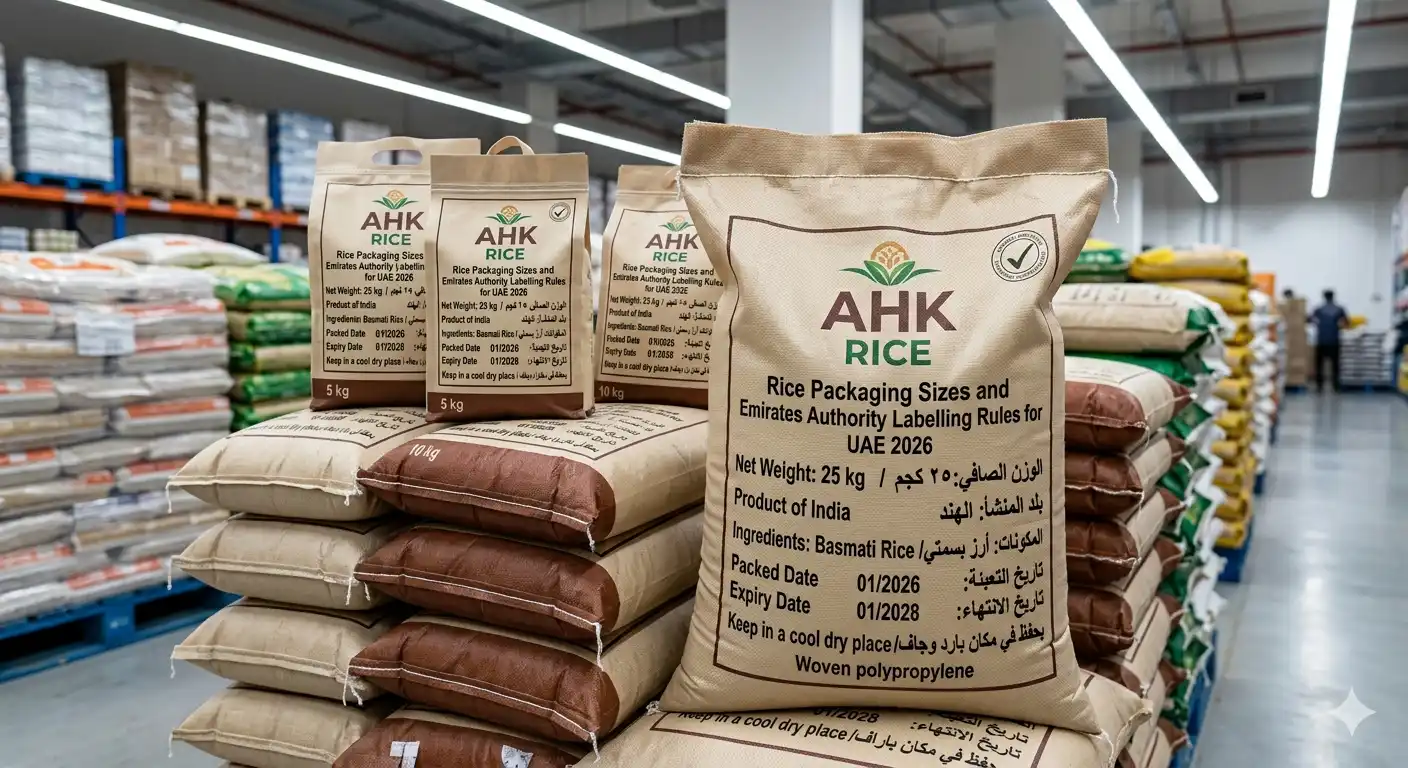
Labeling works as a compliance layer. Each bag must display key fields. These include product name, rice variety, net weight, country of origin, packing date, expiry date, and storage instructions. All fields must appear in Arabic.
Authorities in the UAE inspect shipments at entry points. Customs and food safety departments verify both packaging size accuracy and labeling compliance. Incorrect weight declaration or missing Arabic text leads to delays.
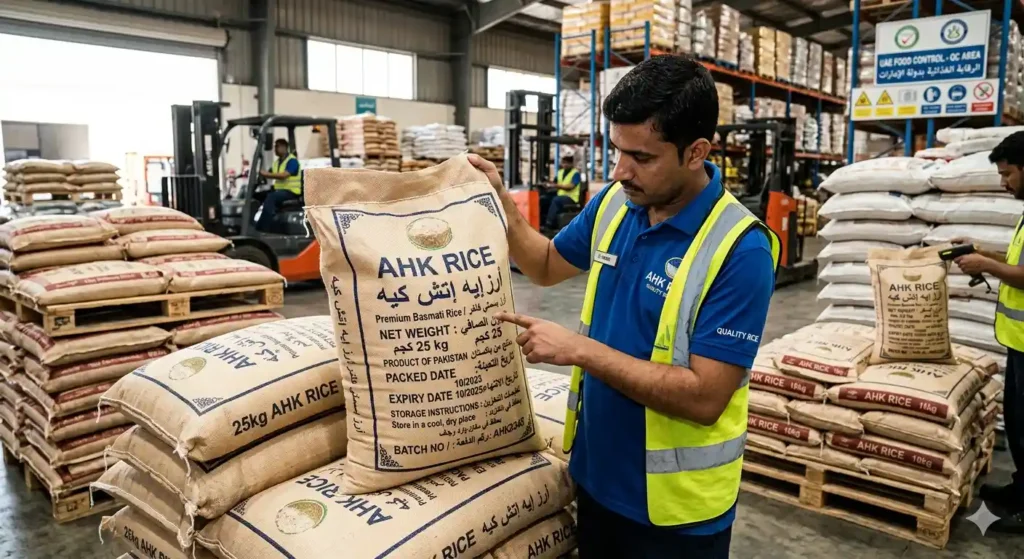
What are the key components of rice packaging and UAE food labels?
The key components include standardized bag sizes, packaging materials, sealing methods, and mandatory Arabic label fields such as product identity, origin, weight, and expiry, all structured to ensure safety, traceability, and regulatory compliance in UAE markets.
Packaging Components
Rice packaging involves several technical elements:
- Bag sizes: 1 kg, 2 kg, 5 kg, 10 kg, 20 kg, 25 kg, 50 kg
- Materials: woven polypropylene bags, laminated pouches, vacuum packs
- Sealing methods: heat sealing, stitching, vacuum sealing
- Durability features: moisture resistance, tear resistance
Each component ensures the rice remains protected during storage and transport. For example, woven polypropylene bags are used for bulk exports because they resist moisture and tearing.
Labeling Components
UAE food labeling requires specific fields:
- Product name (e.g., Basmati rice)
- Rice variety (e.g., 1121, Super Kernel, 1509)
- Net weight in metric units
- Country of origin (e.g., Pakistan)
- Packing date and expiry date
- Storage instructions
- Importer details
Arabic translation must match the English content exactly. Any mismatch creates compliance issues during inspection.
What are the benefits of standardized rice packaging and UAE labeling rules?
Standardized packaging ensures consistency in distribution and storage efficiency, while UAE labeling rules enhance consumer trust, product transparency, and regulatory compliance, reducing import risks and improving market acceptance for rice products in retail and wholesale sectors.
Standard packaging improves logistics. Warehouses stack uniform bags efficiently. Retailers organize shelves based on consistent sizes. This reduces handling time and storage costs.
Labeling rules improve transparency. Consumers can read product details in Arabic. This builds trust in imported rice brands. Clear labeling also reduces confusion between rice varieties.
Regulatory compliance reduces financial risk. Shipments that meet UAE standards pass inspection quickly. This prevents delays, penalties, and relabeling costs at ports.
For example, a correctly labeled 5 kg Basmati rice bag enters supermarket shelves faster than a non-compliant product requiring manual correction.
What are the common use cases of different rice packaging sizes in the UAE?
Rice packaging sizes serve specific use cases such as small retail purchases, family consumption, horeca supply, and bulk distribution, with each size designed to match consumption patterns, storage capacity, and purchasing behavior in UAE households and businesses.
Retail Use Cases
Small packaging sizes are designed for households:
- 1 kg packs for single users or small families
- 5 kg packs for weekly household consumption
- 10 kg packs for large families
These sizes are common in supermarkets across Dubai and Sharjah. Consumers prefer manageable weights for easy storage.
Commercial Use Cases
Large packaging sizes serve business needs:
- 20 kg and 25 kg bags for restaurants
- 50 kg bags for wholesalers and distributors
Hotels and catering services use bulk packaging to reduce cost per kilogram. These buyers prioritize volume over branding.
Export-Oriented Use Cases
Exporters choose packaging based on market demand. For UAE retail chains, 5 kg and 10 kg laminated bags with high-quality printing are preferred. For wholesale markets, 25 kg woven bags dominate.
What problems and misconceptions exist in rice packaging and UAE labeling?
Common problems include incorrect Arabic translations, inconsistent weight declarations, and poor packaging quality, while misconceptions involve assuming English-only labels are sufficient or believing bulk packaging requires less compliance, both of which lead to shipment rejection in UAE markets.
One major problem is incorrect translation. Arabic labels must accurately reflect the original content. Direct translation errors create legal issues. For example, mislabeling rice variety leads to product misrepresentation.
Another issue is weight inconsistency. The declared weight must match the actual weight. Authorities use random sampling to verify this. Even small discrepancies result in penalties.
A common misconception is that English labeling is enough. UAE law requires Arabic as the primary language. English can support it but cannot replace it.
Another misconception involves bulk packaging. Some exporters assume 25 kg or 50 kg bags need minimal labeling. In reality, all packaging sizes must comply with the same labeling standards.
How does rice packaging and labeling integrate into the export process?
Rice packaging and labeling integrate into the export process at the final stage of processing, where products are packed, labeled according to destination regulations, inspected for compliance, and then shipped with documentation matching the physical packaging details.
The process begins after milling and grading. Rice is sorted into specific varieties. Each variety is assigned to a packaging size based on the target market.
Packaging machines fill bags with precise weight. Quality control teams verify weight accuracy. Then labels are applied, ensuring all required fields are present in Arabic.
After packaging, inspection teams check compliance. They verify labeling, sealing, and packaging quality. Only approved batches move to container loading.
Documentation must match packaging. For example, the weight declared in shipping documents must match the bag label. Any mismatch delays customs clearance in the UAE.
How do UAE labeling rules impact Dubai retail rice packaging?
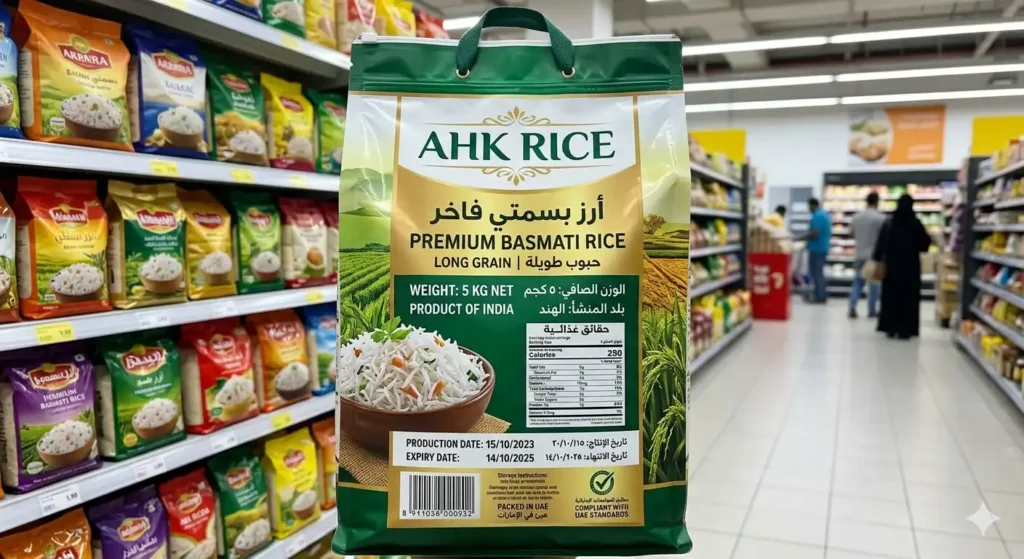
UAE labeling rules directly shape Dubai retail rice packaging by enforcing Arabic language requirements, standardized information fields, and high visual clarity, ensuring that all rice products displayed in retail stores meet strict consumer transparency and regulatory standards.
Retail packaging in Dubai focuses on clarity and presentation. Labels must be easy to read. Arabic text must be prominent, not hidden or minimized.
Design also plays a role. While branding is important, regulatory information cannot be overshadowed. Product name, weight, and origin must be clearly visible.
Retailers reject non-compliant packaging. Supermarkets only accept products that meet UAE labeling laws. This creates a strict filter before products reach consumers.
For example, a 5 kg laminated rice bag with clear Arabic labeling, accurate weight, and visible expiry date gains faster shelf placement compared to poorly labeled alternatives.
What role do certifications play in rice packaging and labeling for UAE?
Certifications validate that rice packaging and labeling meet international safety and quality standards, supporting compliance with UAE regulations and ensuring that products are traceable, hygienic, and suitable for consumer markets across retail and wholesale channels.
Certifications support regulatory acceptance. Common certifications include ISO standards for quality management and HACCP for food safety.
These certifications ensure that packaging processes follow strict hygiene protocols. They also confirm that labeling information is accurate and traceable.
UAE authorities recognize certified exporters as reliable sources. This reduces inspection delays and increases trust in imported rice products.
For example, a certified processing facility ensures that every 10 kg rice bag meets both packaging integrity and labeling accuracy requirements.