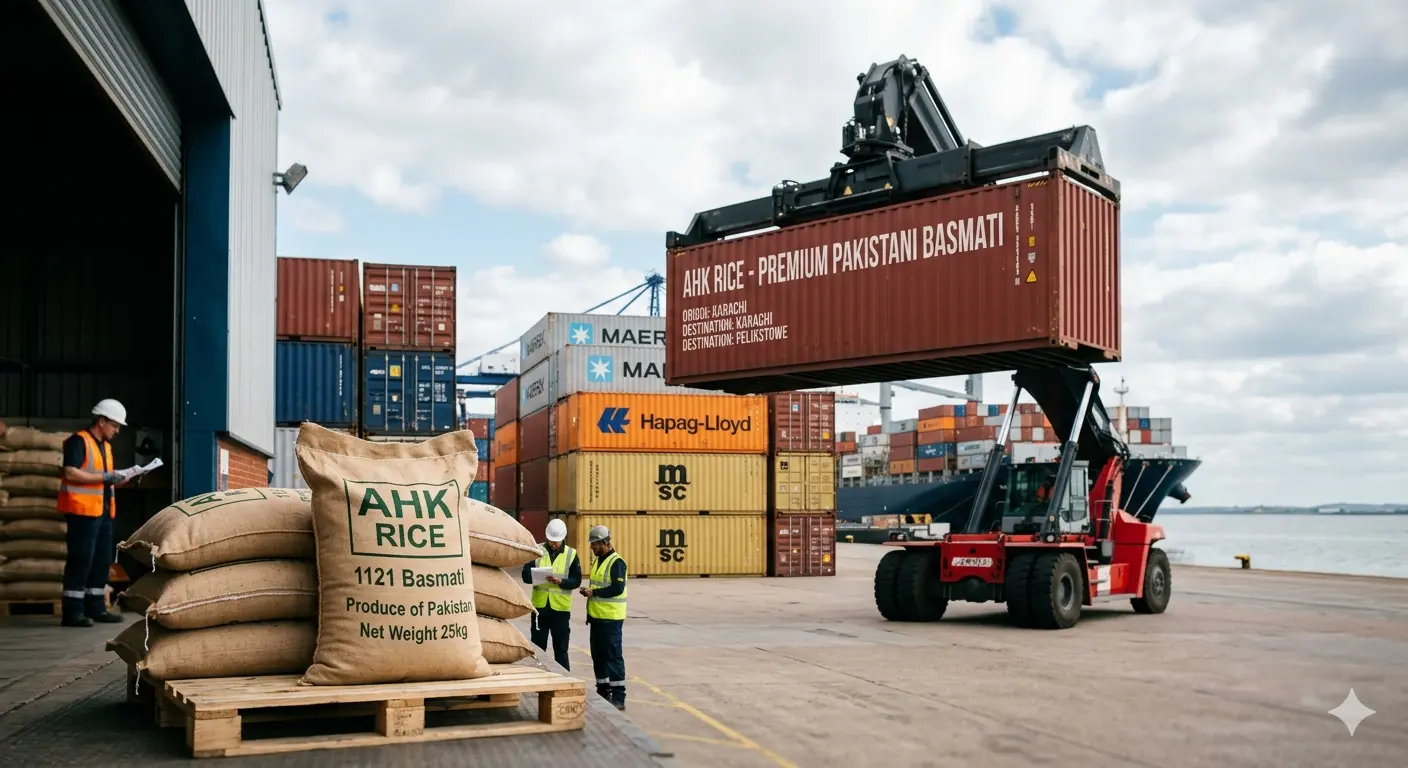
Pakistan to UK Rice Shipping Duration via Felixstowe Port in 2026
Rice shipping from Pakistan to the UK in 2026 refers to the structured export process where Basmati rice is transported via sea freight from Karachi ports to UK entry ports such as Felixstowe and Southampton, with an average transit time of 28 to 40 days.
Rice shipping between Pakistan and the United Kingdom is a standardized logistics operation. It involves bulk or containerized movement of processed rice varieties such as 1121 Basmati, Super Kernel Basmati, and 1509 Basmati. These varieties are cultivated in Punjab and transported to Karachi for export.
The UK is a mature import market. It demands consistent grain length, aroma retention, and compliance with strict food safety standards. Ports like Felixstowe act as primary entry points due to their high container handling capacity and efficient customs clearance systems.
Shipping duration is not a single fixed number. It is a combination of inland transport time, port handling time, vessel sailing duration, and final delivery to warehouses or distributors in the UK.
How does sea freight Pakistan UK work for rice shipments?
Sea freight from Pakistan to the UK follows a multi-stage process including inland haulage, port consolidation, customs clearance, ocean transit, UK port unloading, and final inland delivery, typically executed in containerized shipping formats such as 20ft and 40ft containers.
Inland Transport and Port Arrival
Rice is first moved from processing units in Punjab to Karachi ports. This inland journey takes 2 to 4 days depending on distance and logistics coordination.
Export Documentation and Clearance
Exporters prepare documentation including:
- Commercial invoice
- Packing list
- Phytosanitary certificate
- Certificate of origin
Customs clearance in Pakistan takes 2 to 5 days depending on inspection requirements.
Container Loading and Vessel Scheduling
Rice is packed into containers. Common formats include:
- 20ft container: 24–26 metric tons
- 40ft container: 26–28 metric tons
Vessels are scheduled based on shipping line availability. Waiting time ranges from 2 to 6 days.
Ocean Transit
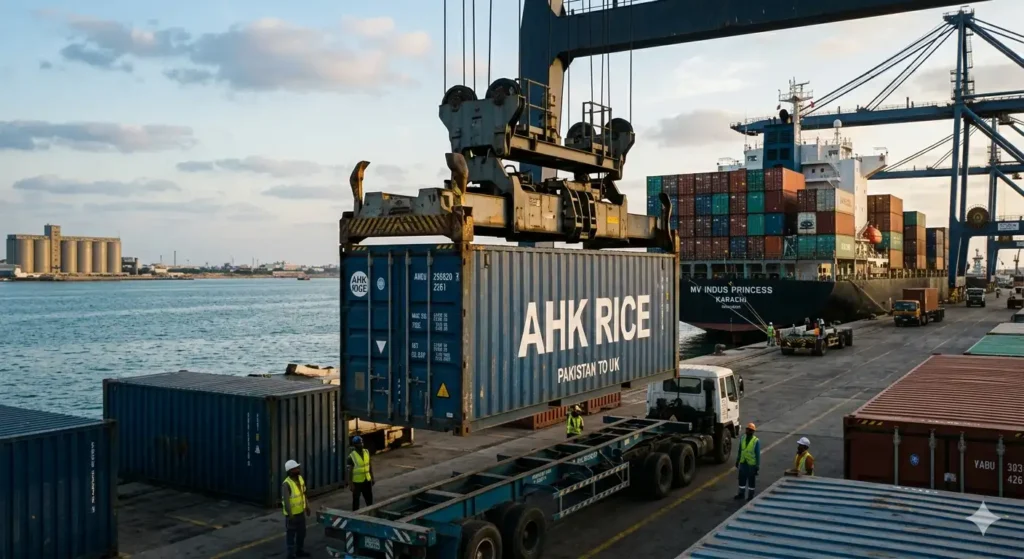
The vessel travels from Karachi to UK ports. The most common route includes:
- Arabian Sea
- Suez Canal
- Mediterranean Sea
- North Atlantic
This journey takes 22 to 30 days.
UK Port Handling and Delivery
At ports like Felixstowe or Southampton:
- Unloading takes 1 to 3 days
- Customs clearance takes 3 to 7 days
Final inland delivery to warehouses takes 2 to 5 days.
What is the average Karachi to UK shipping time in 2026?
The total Karachi to UK rice shipping time in 2026 ranges between 28 and 40 days, including inland transport, port processing, ocean transit, and final delivery to distribution centers in the United Kingdom.
Shipping duration depends on operational efficiency at each stage.
Time Breakdown Example
- Inland transport: 3 days
- Export clearance: 4 days
- Port waiting and loading: 3 days
- Ocean transit: 25 days
- UK clearance and delivery: 5 days
Total: 40 days
Fast Shipment Scenario
With optimized logistics:
- Reduced port delays
- Direct vessel routing
- Pre-cleared documentation
Total time reduces to 28–32 days.
Why is Felixstowe port rice transit important?
Felixstowe port is the primary UK entry point for rice shipments due to its advanced container handling infrastructure, faster customs clearance systems, and direct shipping routes from Asia, reducing overall transit time and logistics costs.
Felixstowe handles over 40% of the UK’s container traffic. This makes it the most efficient port for bulk food imports.
Advantages of Felixstowe
- High container throughput capacity
- Automated cargo handling systems
- Direct shipping routes from Karachi
- Reduced congestion compared to smaller ports
Impact on Rice Shipments
Efficient handling ensures:
- Reduced demurrage costs
- Faster unloading
- Lower risk of moisture exposure
This directly affects rice quality preservation during transit.
How does Southampton rice delivery compare?
Southampton rice delivery offers an alternative UK entry point with slightly longer processing times but better access to southern distribution networks, making it suitable for specific regional supply chains.
Southampton is strategically located for southern UK distribution.
Key Differences
- Felixstowe: Faster clearance, higher volume
- Southampton: Regional accessibility, slightly slower processing
Use Case Example
Importers supplying:
- London
- Birmingham
- Southern retail chains
often prefer Southampton due to proximity.
What are the key components affecting shipping duration?
Rice shipping duration from Pakistan to the UK is influenced by vessel schedules, port congestion, customs clearance efficiency, weather conditions, and documentation accuracy, each contributing specific delays or efficiencies in the logistics chain.
Vessel Scheduling
Shipping lines operate on fixed schedules. Missed cut-off times add 5 to 7 days.
Port Congestion
Busy ports increase waiting time. Example:
- Peak season delays add 3 to 6 days
Documentation Accuracy
Incorrect paperwork leads to inspection delays. This adds 2 to 5 days.
Weather Conditions
Storms or rough seas slow vessel speed. This extends transit by 2 to 4 days.
Customs Inspections
Random inspections in the UK add 3 to 7 days.
What are the benefits of optimized sea freight Pakistan UK logistics?
Optimized sea freight logistics ensures faster delivery, reduced costs, improved rice quality preservation, and predictable supply chain planning, which are critical for maintaining consistency in international rice trade operations.
Cost Efficiency
Bulk shipping reduces cost per ton compared to air freight.
Quality Preservation
Controlled container environments protect:
- Aroma
- Grain length
- Moisture levels
Predictable Supply Chain
Fixed transit times allow importers to:
- Plan inventory
- Manage retail distribution
Scalability
Large volumes can be shipped in a single container, supporting wholesale operations.
What are common use cases for Pakistan to UK rice shipping?
Rice shipping from Pakistan to the UK is used for wholesale distribution, retail packaging, food service supply chains, and ethnic market demand fulfillment, with each use case requiring specific packaging and logistics strategies.
Wholesale Distribution
Large importers buy bulk rice for redistribution.
Retail Packaging
Rice is repacked into:
- 1 kg bags
- 5 kg bags
- 10 kg bags
Food Service Supply
Restaurants require consistent quality. Examples include:
- Indian restaurants
- Pakistani restaurants
- Middle Eastern cuisine outlets
Ethnic Market Demand
South Asian communities in the UK drive demand for authentic Basmati rice.
What are common problems and misconceptions in rice shipping?
Common issues in rice shipping include misunderstanding transit timelines, underestimating documentation requirements, and assuming all UK ports provide equal efficiency, which leads to delays, increased costs, and quality risks.
Misconception: Shipping Always Takes 30 Days
Actual duration ranges from 28 to 40 days depending on conditions.
Problem: Incomplete Documentation
Missing certificates cause shipment holds at ports.
Misconception: All Ports Are Equal
Felixstowe processes containers faster than smaller ports.
Problem: Poor Packaging
Improper packaging leads to:
- Moisture damage
- Broken grains
Misconception: Direct Routes Always Exist
Some shipments involve transshipment, adding 5 to 10 days.
How does rice processing impact shipping readiness?
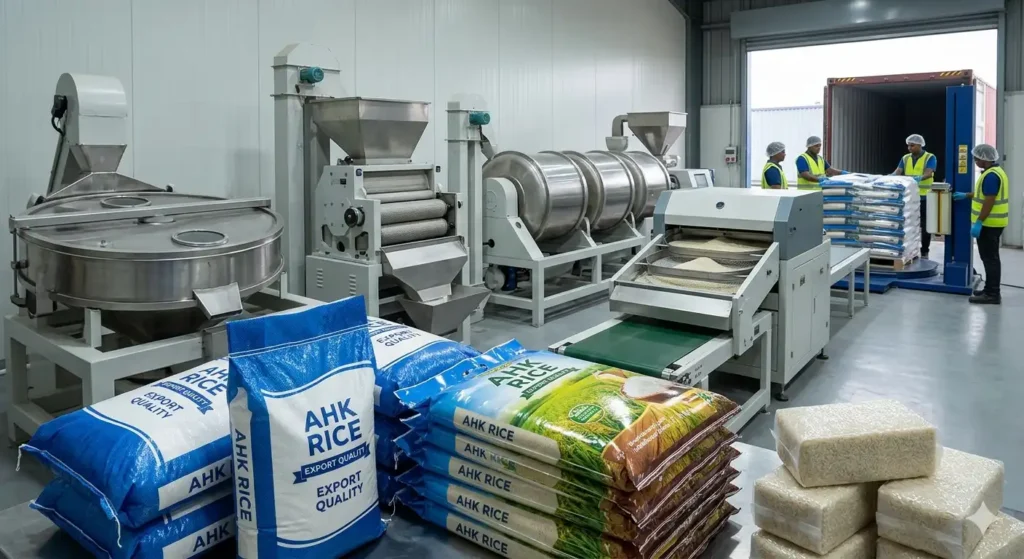
Rice processing determines export readiness by ensuring cleaning, grading, polishing, and packaging meet international standards, directly affecting shipping efficiency, inspection approval, and final product quality in the UK market.
Processing Steps
- Cleaning removes impurities
- Husking removes outer shell
- Polishing enhances grain appearance
- Grading separates rice by size and quality
Packaging Standards
Export packaging includes:
- PP bags
- BOPP laminated bags
- Vacuum packaging
Each type serves different market needs.
What certifications are required for UK rice imports?
UK rice imports require compliance with food safety and quality certifications such as ISO standards, HACCP, phytosanitary certification, and EU-equivalent regulations, ensuring the rice meets health and safety requirements.
Key Certifications
- ISO 22000 for food safety management
- HACCP for hazard control
- Phytosanitary certificate for plant health
- Certificate of origin for trade validation
Compliance Importance
Non-compliance results in:
- Shipment rejection
- Financial losses
- Supply chain disruption