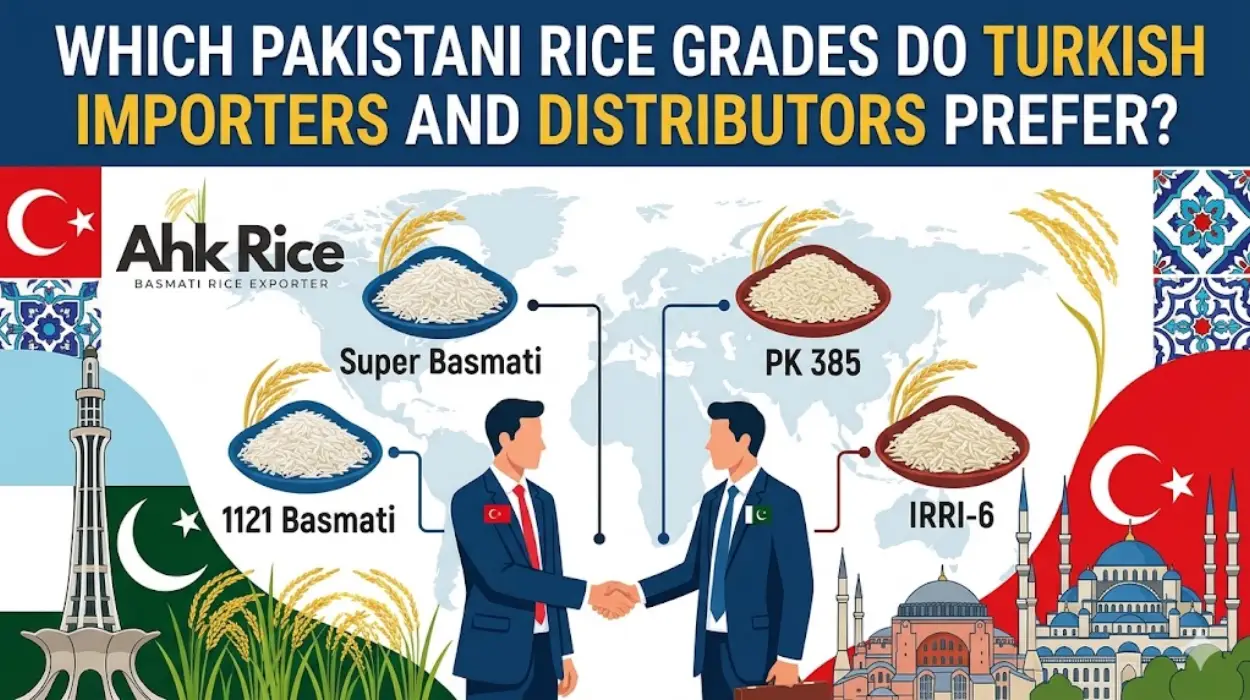
Which Pakistani Rice Grades Do Turkish Importers and Distributors Prefer?
Turkish importers and distributors prefer Pakistani 1121 Steam, 1121 Golden Sella, and Super Kernel Basmati grades because these varieties balance grain length, aroma retention, shelf life, and competitive CIF pricing. Turkish retail chains prioritize visual appearance and cooking consistency, while foodservice distributors focus on storage stability and cost-per-portion performance. Here is why: Pakistan supplies long-grain aromatic rice with strong milling yields and lower landed costs than Indian alternatives during high-demand periods (source: REAP export data, December 2025).
Pakistani exporters now ship multiple rice grades to Turkey for supermarkets, restaurants, wholesalers, and repackers. Turkish buyers compare grain length, broken percentage, moisture level, cooking elongation, and shelf stability before procurement. Buyers researching premium aromatic rice usually begin with educational market comparisons such as understanding Pakistan rice export Turkey gateway market Iraq. Meanwhile, exporters like AHK Rice supply customized specifications, private labeling, and export documentation for Turkish distributors sourcing directly from Punjab, Pakistan.
What Pakistani rice grades do Turkish importers and distributors prefer?
Turkish buyers consistently prefer 1121 Steam, 1121 Golden Sella, Super Kernel Basmati, and 1509 Basmati because these grades deliver long grain appearance, stable cooking performance, and flexible pricing across retail and catering channels. Turkish wholesalers prioritize visual uniformity, while Istanbul foodservice distributors prioritize holding stability and lower breakage during transport.
Pakistan cultivates several export-grade Basmati varieties in Punjab. Turkish distributors usually compare four commercial categories before finalizing procurement contracts.
1121 Steam Basmati Rice
1121 Steam Basmati dominates premium Turkish retail shelves because the grains remain white, glossy, and extra-long after cooking. Turkish supermarkets position this grade as a premium aromatic product for family dining and hospitality use.
1121 Steam typically measures 8.30–8.50 mm before cooking. The grains elongate significantly after cooking. Turkish consumers associate this elongation with premium quality.
Turkish importers also prefer Steam processing because the rice cooks faster than parboiled alternatives. Istanbul restaurants serving Persian, Ottoman, and Gulf-style menus frequently source this specification.
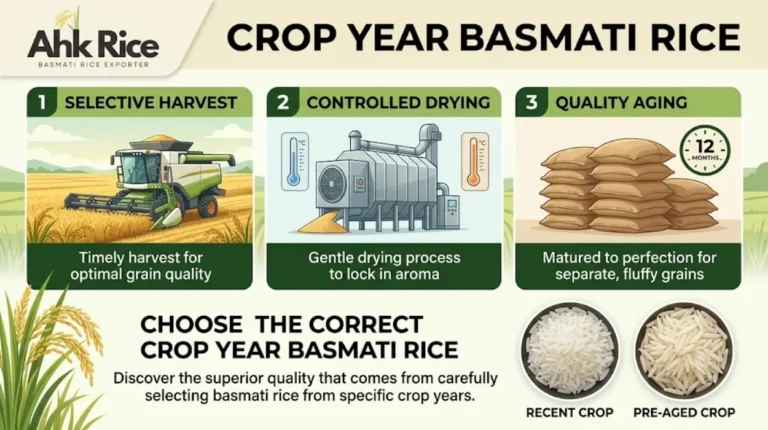
The grade performs best in climate-controlled storage. Steam rice usually maintains optimal aroma for 12 months under controlled warehousing conditions.
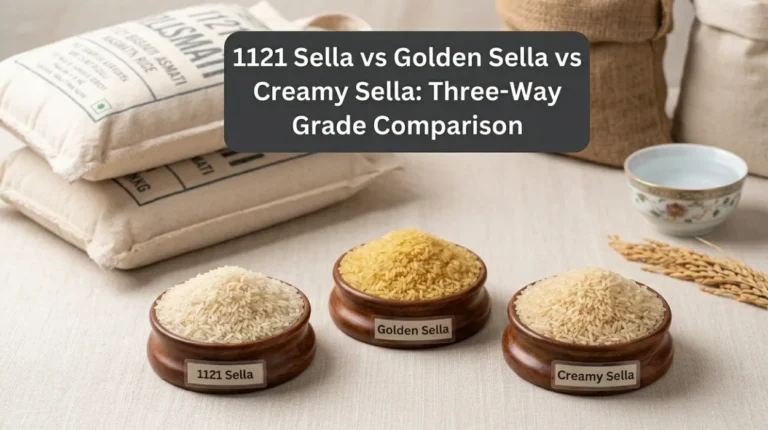
1121 Golden Sella Basmati Rice
1121 Golden Sella serves Turkish catering distributors and bulk wholesalers because parboiling strengthens the grain structure. Turkish importers supplying hotels and banquet halls prioritize this grade for large-scale meal preparation.
Golden Sella withstands longer transit periods. The parboiling process improves resistance to grain breakage during loading, shipping, and inland distribution.
Golden Sella usually maintains export quality for 18–24 months in dry warehouses. In hot storage facilities near southern Turkish ports, Golden Sella preserves texture more effectively than Steam rice.
Turkish catering buyers also value Golden Sella because the rice remains separate after cooking. Foodservice kitchens handling buffet operations require this performance consistency.
Super Kernel Basmati Rice
Super Kernel Basmati remains popular among traditional Turkish distributors serving ethnic grocery chains. The variety offers strong aroma and competitive pricing compared with ultra-premium 1121 grades.
Super Kernel grains measure around 7.00–7.40 mm. The rice delivers classic Basmati fragrance at a lower procurement cost.
Turkish repackers often blend Super Kernel with other aromatic varieties. This strategy controls retail pricing while maintaining aroma expectations.
1509 Basmati Rice
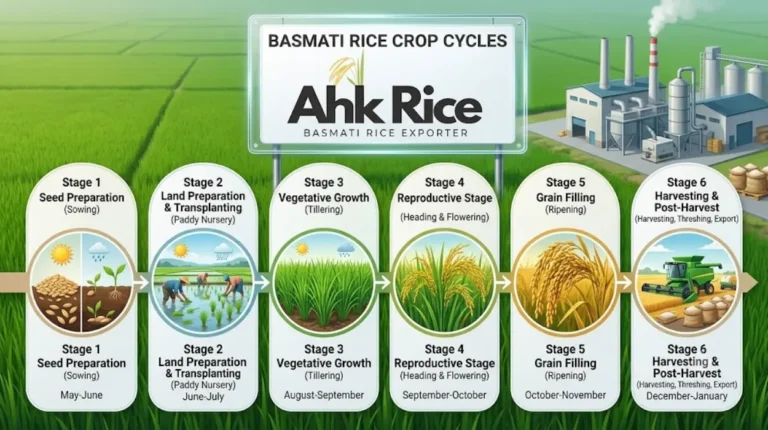
1509 Basmati attracts Turkish importers seeking lower landed costs and faster harvest availability. Pakistani mills harvest 1509 earlier than 1121 varieties, improving seasonal supply flexibility.
1509 cooks quickly and performs well in institutional catering. Turkish buyers serving universities and industrial kitchens frequently source this grade.
The definition of preferred grades establishes the market foundation. The next question is how these specifications compare commercially and technically.
How do Pakistani rice grades compare for the Turkish market?
1121 Steam delivers the best retail presentation, 1121 Golden Sella provides the longest storage life, Super Kernel offers balanced aroma and pricing, and 1509 supplies the lowest entry cost for institutional buyers. Turkish importers select grades according to channel margins, storage conditions, and consumer positioning.
Comparison of Major Pakistani Rice Grades for Turkey
| Attribute | 1121 Steam | 1121 Golden Sella | Super Kernel Basmati | 1509 Basmati |
|---|---|---|---|---|
| Grain Length | 8.30–8.50 mm | 8.20–8.40 mm | 7.00–7.40 mm | 8.00–8.20 mm |
| Processing Method | Steam polished | Parboiled Golden Sella | White milled | Steam or white |
| Aroma Strength | High | Medium-high | High | Medium |
| Cooking Elongation | Very high | High | Medium-high | High |
| Shelf Life | 12 months | 18–24 months | 12–18 months | 12 months |
| Breakage Resistance | Medium | Very high | Medium | Medium-high |
| Typical Turkish Use | Premium retail | Catering & bulk | Ethnic retail | Institutional catering |
Turkish importers evaluate rice grades differently across retail and foodservice channels. Istanbul supermarkets prioritize glossy appearance and long cooked grain length. Catering suppliers prioritize holding performance during buffet service.
Retail Preference in Turkey
Turkish premium retailers usually select 1121 Steam because the polished white appearance matches consumer expectations. Premium grocery chains market this rice as a luxury imported staple.
Retail buyers also prefer attractive packaging formats. Pakistani exporters commonly load 1 kg, 5 kg, and 10 kg laminated bags for Turkish supermarkets.
Foodservice Preference in Turkey
Turkish catering distributors prioritize Golden Sella because the grains remain separate after extended holding periods. Hotels and banquet kitchens need rice that tolerates reheating without texture collapse.
Golden Sella also reduces breakage losses during handling. Turkish wholesalers transporting rice through multiple inland hubs benefit from stronger grain integrity.
Regional Preferences Within Turkey
Western Turkish distributors generally prefer Steam rice because urban consumers prioritize premium presentation. Eastern Turkish wholesalers purchase more Golden Sella because bulk catering demand remains stronger in institutional sectors.
Turkish Mediterranean resort regions also purchase large Golden Sella volumes during tourism seasons. Hotels require stable cooking performance for buffet operations.
The commercial comparison explains performance differences. The next section evaluates pricing, shelf life, and procurement economics.
What price and shelf life differences matter most to Turkish buyers?
Turkish importers compare CIF pricing, warehouse stability, and cooking yield before selecting Pakistani rice grades because landed cost alone does not determine profitability. Golden Sella reduces storage risk, while Steam rice improves retail margins through premium positioning.
CIF Turkey Price Comparison by Grade
| Rice Grade | Typical CIF Turkey Range per MT | Preferred Buyer Type |
|---|---|---|
| 1121 Steam | $1,150–$1,350/MT | Premium retailers |
| 1121 Golden Sella | $1,050–$1,250/MT | Catering distributors |
| Super Kernel | $900–$1,050/MT | Ethnic wholesalers |
| 1509 Basmati | $850–$980/MT | Institutional buyers |
Prices fluctuate according to harvest volume, freight rates, and Indian export policy changes (source: REAP export data, December 2025).
1121 Steam commands higher pricing because Turkish retailers achieve stronger shelf margins. Consumers pay premium prices for visual grain quality and aroma.
Golden Sella delivers stronger inventory protection. Turkish distributors storing rice through humid summer conditions experience lower spoilage risk with parboiled grades.
Super Kernel performs well in value-oriented retail channels. Turkish wholesalers targeting ethnic stores often prioritize affordability over maximum grain length.
1509 provides the lowest acquisition cost among aromatic long-grain options. Institutional kitchens frequently prioritize predictable budgeting over luxury presentation.
Shelf Life Comparison for Turkish Warehousing
| Grade | Controlled Warehouse | Non-Climate Storage | Recommended Market |
|---|---|---|---|
| 1121 Steam | 12 months | 8–10 months | Premium retail |
| 1121 Golden Sella | 18–24 months | 16–18 months | Catering |
| Super Kernel | 12–18 months | 10–12 months | Ethnic retail |
| 1509 Basmati | 12 months | 9–10 months | Institutional |
Golden Sella lasts longer than Steam rice because parboiling strengthens the grain surface. In warehouses exceeding 35–40°C, Golden Sella maintains structure more effectively.
Steam rice requires faster inventory turnover. Turkish supermarket distributors usually rotate inventory rapidly, making shorter shelf life less problematic.
Shelf life analysis clarifies operational tradeoffs. The next section identifies which rice grades work best for specific Turkish buyer profiles.
Which Pakistani rice grade works best for different Turkish import cases?
1121 Steam works best for premium supermarkets, Golden Sella works best for catering distribution, Super Kernel works best for value-focused ethnic wholesalers, and 1509 works best for institutional procurement contracts. Each specification aligns with a different commercial objective.
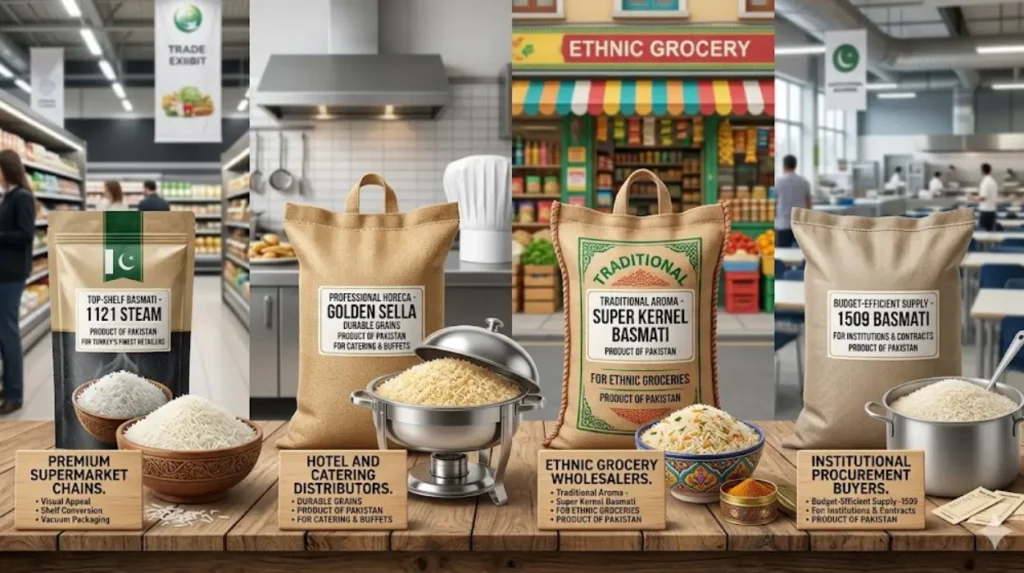
Premium Supermarket Chains
1121 Steam fits Turkish premium retailers because visual presentation directly affects shelf conversion rates. Long white grains create stronger consumer perception of quality.
Retailers also benefit from premium packaging flexibility. Pakistani exporters supply vacuum packs, laminated pouches, and private-label supermarket packaging.
Hotel and Catering Distributors
1121 Golden Sella works best for hotels because the rice tolerates high-volume cooking. Buffet operations require grains that remain separate during extended service.
Golden Sella also reduces operational losses. Foodservice kitchens experience lower breakage and lower overcooking rates.
Ethnic Grocery Wholesalers
Super Kernel suits ethnic wholesalers because traditional aroma remains the main purchase driver. Turkish stores serving South Asian and Middle Eastern communities frequently stock this grade.
Super Kernel also improves affordability. Wholesalers can offer aromatic Basmati at lower retail pricing.
Institutional Procurement Buyers
1509 fits institutional buyers because procurement teams prioritize consistency and budget predictability. Universities and industrial kitchens often purchase through annual supply contracts.
1509 also reaches market earlier after harvest. Turkish importers seeking early-season supply frequently source this variety.
Decision Framework for Turkish Rice Buyers
| Buyer Situation | Recommended Grade | Main Reason | Storage Requirement | Margin Potential |
|---|---|---|---|---|
| Premium supermarket | 1121 Steam | Visual quality | Climate-controlled | High |
| Hotel catering | 1121 Golden Sella | Grain stability | Flexible | Medium-high |
| Ethnic grocery | Super Kernel | Aroma value | Moderate | Medium |
| Institutional kitchen | 1509 | Lower cost | Moderate | Medium |
| Long-distance redistribution | Golden Sella | Low breakage | Flexible | Stable |
Buyer-specific selection criteria establish the optimal commercial fit. The next section explains how Turkish importers evaluate suppliers and processing quality.
How do Turkish importers evaluate Pakistani rice suppliers?
Turkish importers evaluate milling consistency, certification systems, export documentation, packaging capability, and shipment reliability because procurement risk affects retail reputation and operational continuity. Turkish buyers prioritize exporters that maintain stable specifications across multiple shipments.
Pakistani exporters process rice through multiple controlled stages before shipment. Professional mills maintain consistency through measurable specifications.
Core Processing Steps Turkish Buyers Expect
- Clean the harvested paddy.
- De-husk the grain.
- Dry the rice to export moisture levels.
- Polish the milled rice.
- Grade by grain length.
- Sort through color sorting systems.
- Inspect broken percentage levels.
- Test moisture and purity.
- Load export containers.
Turkish importers also require certification compliance. Large distributors often request ISO certification, fumigation reports, phytosanitary certificates, and SGS inspection documents.
Key Specification Factors
Moisture Level
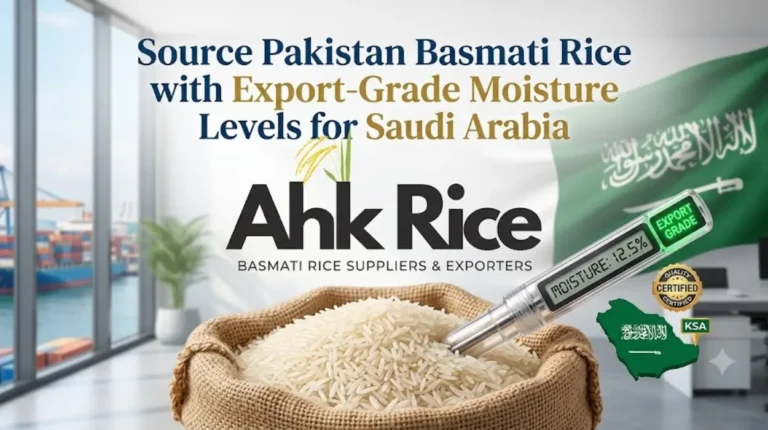
Turkish buyers usually require 12–14% moisture because excess moisture increases spoilage risk during sea transit.
Broken Percentage
Premium Turkish retailers often demand 2–5% broken rice limits. Catering buyers may accept higher breakage levels for lower pricing.
Packaging Options
Turkish importers purchase several packaging formats:
- Laminated PP bags
- Non-woven fabric bags
- Vacuum retail packs
- Private-label cartons
- Bulk jumbo bags
Exporters serving Turkey also customize Turkish-language labeling. Retail compliance affects customs clearance and supermarket acceptance.
Supplier evaluation now connects directly to sourcing strategy. The final section explains how Turkish buyers should choose specifications according to business goals.
What should Turkish importers consider before choosing a Pakistani rice grade?
Turkish importers should match rice grades to sales channels, storage conditions, target margins, and customer expectations because each Pakistani Basmati specification solves a different commercial problem. Correct alignment improves turnover, reduces complaints, and stabilizes procurement costs.
Turkish premium retailers achieve stronger consumer perception with 1121 Steam. The grade supports premium branding and upscale packaging.
Turkish catering operators reduce operational risk with Golden Sella. The stronger grain structure improves buffet performance and storage flexibility.
Ethnic wholesalers maintain competitive retail pricing with Super Kernel. The grade balances aroma and affordability.
Institutional buyers stabilize procurement budgets with 1509. Earlier harvest availability improves supply continuity.
Pakistani exporters supplying Turkey also support customized milling specifications. Companies such as AHK Rice process 1121, Super Kernel, and 1509 Basmati varieties in Punjab for international distributors requiring tailored grain length, packaging, and export documentation.
Distributors moving from market research into procurement planning usually compare current CIF Istanbul offers, packaging formats, and shipment timelines before supplier selection.
Frequently Asked Questions
Which Pakistani rice grade sells most in Turkey?
1121 Steam Basmati sells most in Turkey because premium supermarkets and urban consumers prefer extra-long white grains with strong aroma. Turkish retailers position this grade as a premium imported rice for family dining and hospitality use.
Why do Turkish catering companies prefer Golden Sella rice?
Turkish catering companies prefer 1121 Golden Sella because parboiled grains remain separate after cooking and withstand long buffet holding periods. Golden Sella also maintains quality longer in warm storage environments.
What moisture level do Turkish rice importers require?
Turkish rice importers usually require 12–14% moisture content because controlled moisture improves shelf life and reduces spoilage risk during sea shipment and warehouse storage.
Which Pakistani rice grade offers the lowest CIF Turkey pricing?
1509 Basmati usually offers the lowest CIF Turkey pricing among aromatic Pakistani rice grades. Institutional buyers and industrial kitchens often source 1509 because it balances long grain appearance with lower procurement costs.
How do Turkish buyers verify Pakistani rice quality?
Turkish buyers verify Pakistani rice quality through SGS inspections, phytosanitary certificates, moisture testing, broken percentage analysis, and milling specifications. Importers also inspect grain length consistency and packaging quality before shipment approval.