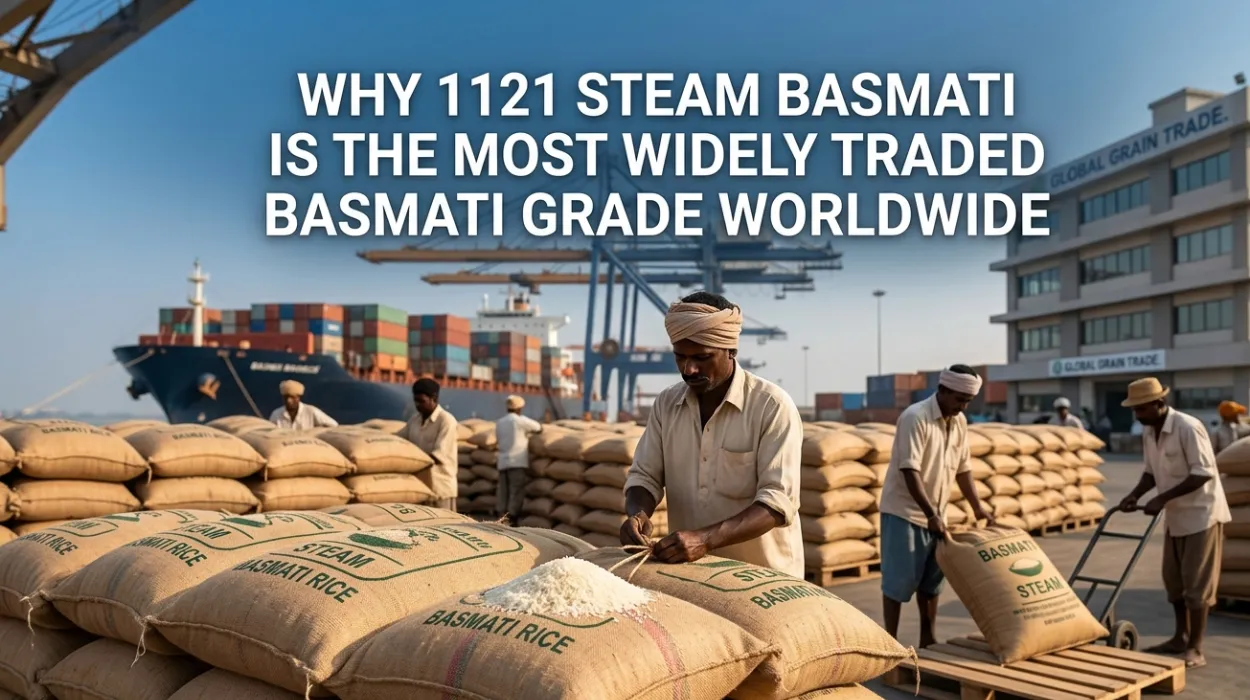
Why 1121 Steam Basmati Is the Most Widely Traded Basmati Grade Worldwide
1121 Steam Basmati is a long-grain, extra-long aromatic rice grade made from the 1121 Basmati variety and processed with steam treatment. It is defined by exceptional grain elongation, strong aroma, high cooking yield, and export demand across bulk and branded markets.
1121 is one of the most recognisable Basmati varieties in international rice trade. The name refers to the varietal line, while “steam” refers to the processing method used after paddy milling and before grading and packing. Steam processing stabilises the grain, improves milling performance, and helps preserve visual uniformity during export handling. The result is a premium Basmati grade that combines appearance, aroma, and consistency.
This grade sits within the broader family of Pakistani and Indian Basmati exports, but it has gained a distinct position in wholesale trade because buyers value its stretch, fragrance, and dependable cooking result. Exporters use it for retail packs, foodservice supply, and bulk distribution. Importers select it for markets where consumers expect long grains, separated texture, and clear aromatic character.
1121 Steam Basmati is not a single farm product in the simple sense. It is a processed export grade built from raw paddy, cleaned, milled, steamed, sorted, and packed to commercial specification. That processing chain is one reason it dominates large-scale trade. Buyers do not purchase paddy. They purchase a graded, quality-controlled export rice with stable performance across consignments.
Where is 1121 Steam Basmati grown?
1121 Steam Basmati is grown mainly in the Punjab rice belt of Pakistan and in adjacent Basmati-growing zones in South Asia. The crop depends on alluvial soils, canal irrigation, and a seasonal climate that supports aromatic long-grain development and export-grade paddy quality.
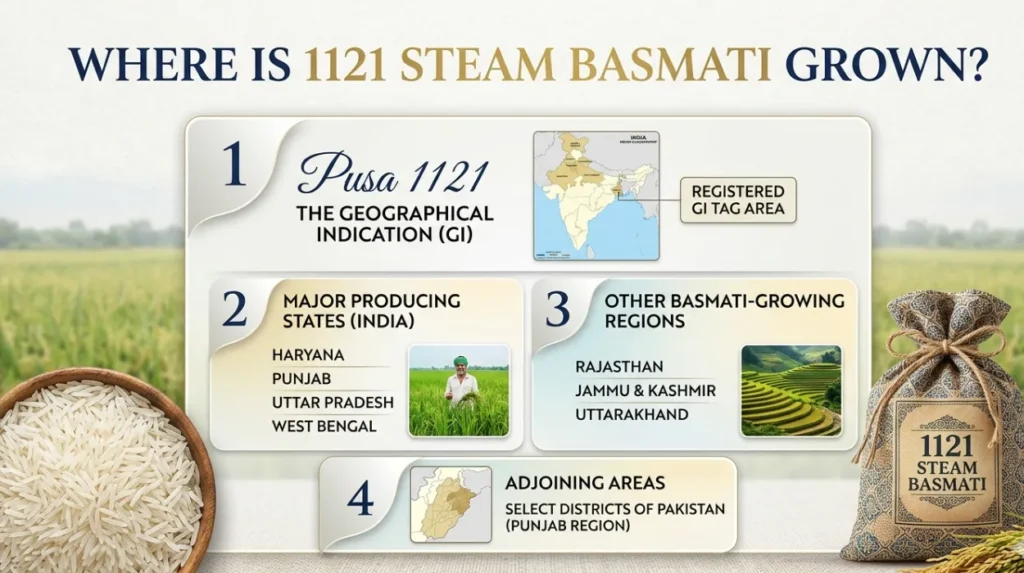
Punjab is the core origin zone for this rice. In Pakistan, the districts known for Basmati cultivation lie in irrigated plains with fertile soil and a strong tradition of rice farming. These conditions support the grain structure associated with authentic Basmati. The crop is planted in the kharif season, grown during warm months, and harvested when the paddy reaches exportable maturity.
The geography matters because Basmati quality depends on agronomy, not only variety. Soil type, water management, planting density, and harvesting timing shape grain length and head rice recovery. Farmers in Basmati regions rely on experience with these variables because premium export grades require uniform paddy. The better the raw paddy, the stronger the final export lot.
AHK Rice operates from Punjab, which places it inside the primary supply zone for this category. That location matters for traceability, paddy sourcing, and export continuity. Buyers in international markets often prefer origin-linked supply from established Basmati belts because it reduces uncertainty and supports specification control.
How does the processing work step by step?
1121 Steam Basmati is processed through cleaning, dehusking, paddy separation, polishing, steaming, grading, sorting, and packing. Each stage protects grain length, improves appearance, and reduces defects, which makes the final export lot more acceptable to importers in bulk and branded trade.
The process starts with paddy procurement. The paddy arrives from farms or aggregation points and is first cleaned to remove straw, stones, dust, and other foreign matter. This initial cleaning step is essential because impurities reduce milling efficiency and damage grain quality. Clean paddy also improves the accuracy of later grading stages.
The second stage is dehusking. Machines remove the husk and produce brown rice. After that, paddy separators divide fully dehusked grains from remaining unhusked paddy, which improves recovery rates. This stage matters because incomplete separation creates uneven output. Export mills depend on efficient separation to maintain commercial grade consistency.
The third stage is whitening and polishing. The bran layer is removed in controlled passes. The aim is to retain kernel integrity while giving the rice a clean, market-ready surface. Aggressive milling damages grain and lowers head rice yield. Controlled milling keeps the grain intact and preserves value.
The fourth stage is steaming. Steam treatment stabilises the grain and improves processing behaviour. In export rice, steaming supports colour consistency and helps the rice perform well during cooking. This is one reason steam grade has such strong trade value. Buyers associate steam-processed Basmati with reliable cooking expansion and a more controlled texture after boiling.
The fifth stage is grading and length separation. Broken grains are separated from full kernels by size, shape, and weight. Long kernels are isolated for premium commercial lots. Export contracts often define exact specifications for broken percentage, moisture level, and grain length. These details determine whether the shipment meets a particular market standard.
The final stages are colour sorting, lab inspection, and packing. Optical sorters remove discoloured grains and foreign particles. Laboratory checks confirm moisture, purity, and defect levels. Packaging then follows buyer specification, ranging from 5 kg consumer packs to 50 kg bulk export bags. This final stage matters because packaging affects shelf life, transport efficiency, and market presentation.
What are the key components of 1121 Steam Basmati?
The key components are varietal identity, grain length, aroma, low broken ratio, steaming process, and export-grade sorting. These elements define quality, determine commercial value, and separate 1121 Steam Basmati from ordinary long-grain rice in international trade.
The first component is varietal identity. The 1121 line is known for extra-long grain potential and strong elongation after cooking. This is one of the major reasons it is traded at scale. When buyers request 1121, they expect a specific grain profile, not a generic aromatic rice.
The second component is aromatic character. Basmati rice is defined by fragrance, and 1121 carries the aroma profile that buyers associate with premium South Asian rice. Aroma creates consumer appeal in retail markets and helps foodservice buyers maintain product differentiation. This sensory quality is one of the strongest commercial drivers in export trade.
The third component is grain length and elongation. 1121 is valued because it produces long, separate grains after cooking. That visual result is important in household cooking, catering, and restaurant settings. Buyers use that characteristic to justify premium positioning and repeat purchase. The longer grain profile also improves plate presentation.
The fourth component is processing control. Steam treatment, polishing, sorting, and packing affect the final appearance and usable yield. A lot can only trade at premium levels when processing keeps breakage low and consistency high. Poor processing reduces commercial trust even when the underlying variety is strong.
The fifth component is compliance with moisture and purity standards. Export rice must meet moisture targets, impurity thresholds, and defect tolerances. These factors influence storage stability and shipment safety. They also affect whether a consignee accepts the lot without claims or deductions.
Why does 1121 Steam Basmati lead global trade?
1121 Steam Basmati leads global trade because it combines high consumer appeal, stable export performance, broad market acceptance, and flexible packing options. It fits bulk trade, private label supply, and branded retail demand across multiple import markets with predictable results.
One reason for its leadership is buyer familiarity. Importers and wholesalers already understand the grade, which reduces negotiation friction. When a rice grade becomes widely recognised, it trades faster because buyers know what to expect. That familiarity lowers risk for both sides of the transaction.
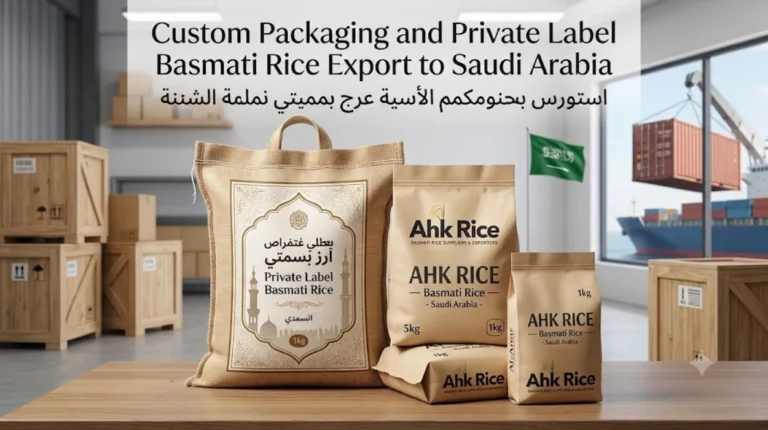
Another reason is versatility. 1121 Steam Basmati works in retail packs, 5 kg family bags, 10 kg wholesale bags, and 50 kg bulk shipments. That flexibility expands its use across markets with different consumer and distribution structures. A grade that fits both premium retail and bulk wholesale will always move more easily.
A third reason is cooking performance. The grain elongates, stays separate, and keeps a premium look after preparation. That is exactly what consumers want in Basmati markets. The stronger the cooking result, the more stable the demand. This repeat demand supports large export volumes.
A fourth reason is shipment practicality. Steam processing and industrial grading create a product that handles transport well. The rice remains commercially attractive after long transit when it is properly packed and stored. That matters in international trade, where delivery time, humidity, and handling all influence final value.
Which markets import it most?
The strongest import markets include the Middle East, Iraq, Saudi Arabia, the United Arab Emirates, and parts of Africa, alongside South Asian diaspora markets in Europe and North America. These buyers import 1121 Steam Basmati because they value aroma, grain length, and export consistency in Iraq wholesale market.
The Middle East remains one of the most important destinations for Basmati trade because consumer preference strongly favours aromatic long-grain rice. Iraq is especially important in wholesale demand, where buyers often compare steam and sella grades for cooking yield and market pricing. Saudi Arabia and the UAE also import heavily due to retail demand, foodservice use, and restaurant supply chains.
African markets import this rice for both retail and wholesale channels. In these markets, the grade is valued for visible quality, cooking performance, and stable supply. Some importers focus on bulk procurement, while others purchase branded packs for urban retail segments. The trade pattern depends on local consumer purchasing power and channel structure.
Europe and North America import smaller but commercially important volumes through ethnic retail and speciality food channels. Here, the grade trades on authenticity, aroma, and premium positioning. The diaspora customer base creates a steady demand profile, especially for 5 kg and 10 kg packs. That supports a stable export pipeline across multiple continents.
What certifications apply in export trade?
Export trade typically requires food safety, traceability, phytosanitary control, and buyer-specific compliance documents. Certifications strengthen trust, support customs clearance, and confirm that the rice meets importing-country standards for hygiene, residue control, and product handling.
The main requirement is food safety compliance. Exporters document production, storage, and packing conditions so buyers can verify that the rice was handled correctly. Traceability records show origin, batch identity, and processing history. These records matter because importers need proof of consistent quality and legal conformity.
Phytosanitary documentation is also essential. Rice shipments cross borders under plant health rules that protect importing countries from pests and contamination. These documents confirm the cargo has been inspected and cleared according to export regulations. Without them, shipments face delays or rejection at port.
Buyer-specific certifications also matter in this category. Some importers request HACCP systems, ISO-aligned controls, or third-party inspection reports. Others require laboratory test results for moisture, broken percentage, and foreign matter. The exact certificate set depends on the destination market and contract terms. Certification does not change the rice itself, but it changes its tradeability.
What are the common problems and misconceptions?
The most common misconception is that all Basmati grades perform the same in trade. They do not. Steam grade, sella grade, and raw grade each differ in processing, cooking behaviour, and market value, which changes where and how they trade.

One common error is treating 1121 Steam Basmati as identical to other 1121 forms. The steam process creates a different commercial result from raw and parboiled styles. That difference affects texture, appearance, and buyer preference. Importers choose based on the market they serve, not only the varietal name.
Another misconception is that the widest-traded grade is automatically the cheapest. That is false. Widely traded grades move in large volumes because they fit high-demand markets, not because they are low value. In many cases, the most traded grade also carries a premium due to recognisable quality and consistent acceptance.
A third problem is assuming export success depends only on cultivation. Processing, grading, moisture control, packing, and documentation shape the final trade outcome. A strong crop can still fail commercially if the milling and export handling are weak. Trade value is built across the whole chain, not just on the farm.
Why 1121 Steam Basmati keeps its trade advantage
1121 Steam Basmati remains the most widely traded Basmati grade because it satisfies the core requirements of global rice trade at the same time. It offers recognisable quality, export stability, broad market acceptance, and flexible commercial packing. Those factors make it practical for importers, wholesalers, retailers, and foodservice buyers across multiple regions.
Its strength comes from the combination of origin, processing, and commercial fit. Punjab supplies the paddy. Steam milling preserves export quality. Sorting and grading create consistency. Import markets recognise the product and repeat orders follow that trust. That is why the grade continues to dominate global Basmati trade.