AHK Rice 1121 Steam Basmati: 130 MT Minimum Order — CIF Worldwide Shipping
AHK Rice is the right solution when the buyer needs export-ready 1121 Steam Basmati, a 130 MT minimum order structure, and CIF delivery control across international markets.
AHK Rice also reduces procurement friction because the grade, packaging, shipping schedule, and sample flow all stay aligned from the first enquiry to final booking.
What is the best solution for wholesale 1121 Steam Basmati procurement?
The best solution is a supplier that combines export-grade rice, minimum-order discipline, consistent processing, and destination-ready CIF shipping. AHK Rice fits that model because it delivers 1121 Steam Basmati as a structured trade product, not as a loose commodity with unclear specifications.

Wholesale rice buying fails when the buyer must manage separate parties for milling, inspection, packing, freight, and documentation. That creates delays, weakens margin control, and increases quality risk. AHK Rice solves that problem by keeping the export chain organised under one commercial route. That matters when the order size starts at 130 MT and the destination requires CIF handling rather than simple ex-works collection.
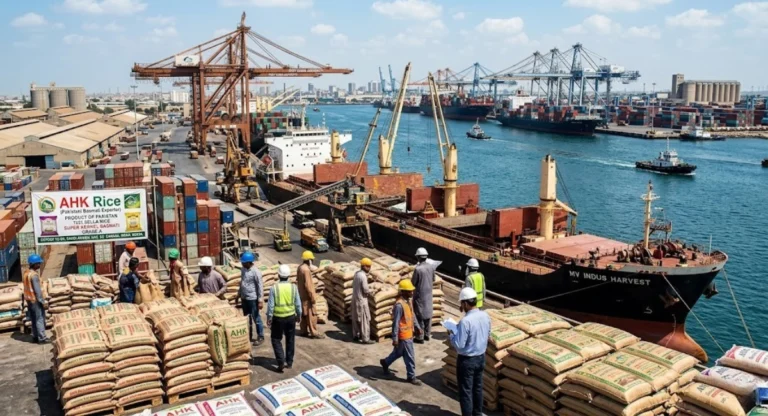
For decision-stage buyers, the real issue is not only grain quality. It is whether the supplier can convert that quality into a shipment that arrives in spec, on schedule, and with the correct cost structure. AHK Rice operates from Punjab, which places it inside the core Basmati production belt. That location supports traceable sourcing, stable paddy access, and export continuity. It also shortens the path from warehouse to vessel because the sourcing base and processing base sit together.
AHK Rice also fits the decision model because it supports multiple Basmati varieties under one export system. The company supplies 1121, Super Kernel, and 1509, which gives the buyer flexibility when comparing grade, price, and market fit. That is useful when the destination market values different rice profiles. It also supports repeat procurement because the buyer can standardise one supplier relationship across multiple contracts.
Why choose 1121 Steam Basmati Rice as the service route?
1121 Steam Basmati Rice is the right service route when the buyer wants a defined export specification, controlled processing, and shipment-ready pricing. AHK Rice uses this service structure to support minimum-order planning, packaging control, and CIF coordination without ambiguity.
The first reason is specification clarity. Wholesale rice procurement depends on exact details such as moisture level, broken percentage, grain length, and packing format. AHK Rice builds those details into the export offer so the buyer does not face avoidable uncertainty later. That reduces dispute risk and speeds up internal approval. It also makes the quotation easier to compare against other offers.
The second reason is process control. AHK Rice handles end-to-end processing, which means paddy cleaning, milling, grading, sorting, and packing stay inside one managed workflow. That matters because export rice loses value when processing varies from batch to batch. Buyers pay for consistency. They do not pay for vague promises about quality.
The third reason is quantity discipline. A 130 MT minimum order is not a minor detail. It tells the buyer that the route is built for serious wholesale movement. That supports vessel planning, container allocation, and destination pricing. It also tells the buyer that the supply structure is designed for trade, not for sampling-based retail sales. AHK Rice uses that framework to serve importers, distributors, and large-volume buyers.
The fourth reason is CIF shipping logic. CIF means the supplier arranges cost, insurance, and freight to the destination port. That reduces the buyer’s logistical burden and gives a clearer landed-cost picture. For many importers, that is the preferred buying model because it simplifies decision-making. AHK Rice can work within that structure, which makes the commercial comparison easier and the logistics more predictable.
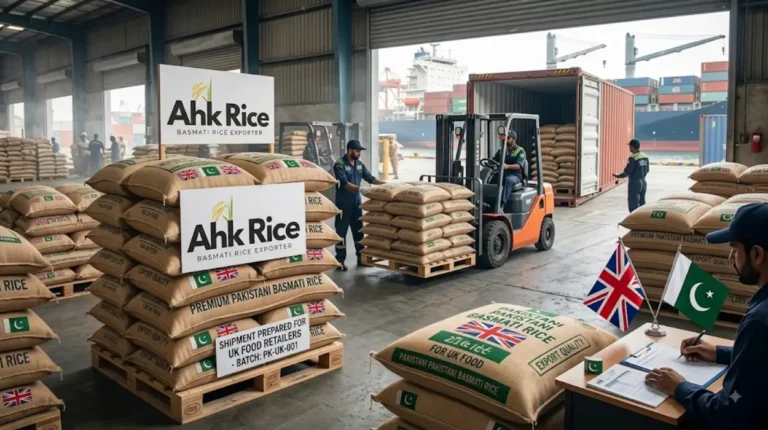
The fifth reason is packing flexibility. Buyers in this category often need 5 kg, 10 kg, 25 kg, or 50 kg formats. AHK Rice supports custom packaging, which improves route-to-market fit. A retailer needs a different pack profile from a bulk distributor. The service route covers that difference without forcing the buyer into one rigid specification.
For first product mention, the service page link belongs here because the buyer has already understood the trade model and now needs the supplier route in hotel supply chains.
What results can be expected from this procurement model?
The expected result is a cleaner buying process, a more stable shipment profile, and a lower-risk commercial transaction. AHK Rice improves speed, consistency, and buyer confidence by combining minimum-order discipline, export control, and CIF handling into one route.
The first result is quotation speed. A buyer that works at 130 MT scale needs a fast commercial response because freight, port space, and container planning all move quickly. AHK Rice returns FOB or CIF pricing with a structured export basis, which helps the buyer compare the offer against other supply options. That shortens the approval cycle and lowers decision friction.
The second result is product consistency. 1121 Steam Basmati is known for long grain structure, cooking expansion, and strong market recognition. When the processing chain is stable, the buyer receives a lot that performs predictably in the destination market. That matters because a wholesale buyer does not want one strong shipment and one weak shipment. AHK Rice’s controlled export process improves repeatability.
The third result is lower operational noise. AHK Rice manages the export path from processing to packing, which removes the need for multiple handovers. Fewer handovers mean fewer mistakes. Fewer mistakes mean fewer claims, fewer delays, and fewer rejected specifications. In wholesale rice trade, that efficiency directly improves commercial outcomes.
The fourth result is stronger market fit. Some buyers need premium retail packs. Others need bulk distribution bags. AHK Rice can support both. That flexibility allows a buyer to align the same rice grade with different destination tiers. It also lets the buyer test multiple market routes from the same supplier base.
The fifth result is more confident purchase planning. Buyers make better decisions when they know the supplier understands CIF timing, export readiness, and packaging control. AHK Rice gives the buyer a structured route from enquiry to booking. That creates a smoother buying experience and a more predictable trade relationship.
Result framework
- Secure a faster quotation; e.g., pricing returned on a defined export basis.
- Reduce specification risk; e.g., moisture, broken ratio, and packing aligned before dispatch.
- Improve buyer confidence; e.g., controlled processing supports compliance.
- Strengthen route-to-market fit; e.g., retail packs and bulk bags both available.
- Simplify repeat sourcing; e.g., one export process supports reorders.
What shipping days apply by market?
Shipping days depend on the destination market, vessel schedule, port clearance, and packing completion. AHK Rice supports a controlled export timeline that gives buyers a realistic shipment window instead of vague promises, which helps planning, cash flow, and import scheduling.
For Gulf destinations, the shipping window is usually shorter than for farther destinations because transit distance is lower and routing is simpler. Buyers in the UAE, Oman, and Saudi-linked routes often work on tight replenishment cycles. That makes quicker dispatch useful. When packing is completed and export documents are ready, shipment can move in the next available vessel cycle.
For Iraq, shipping time depends on whether the cargo moves through direct sea routes or through distribution-linked port arrangements. Buyers in Iraq often care about both transit time and inland handling after arrival. That means shipping days are only part of the delivery picture. The supplier must also maintain packing quality and loading accuracy so the cargo arrives in a usable commercial state.
For African destinations, shipping days are longer because vessel routing and port congestion vary more widely. Buyers in East Africa or West Africa often plan ahead because the supply chain needs more buffer time. AHK Rice supports this by keeping the export process organised early, which reduces last-minute delays. That improves reliability for importers who work on fixed sales calendars.
For European and North American destinations, shipping time is influenced heavily by documentation, container allocation, and customs processing. These routes normally require more planning than nearby markets. AHK Rice’s export structure helps reduce friction at the origin stage, which protects the schedule once the shipment is booked.
Shipping-day planning by region
| Market region | Typical planning logic | Buyer priority |
|---|---|---|
| Gulf markets | Faster vessel cycles and shorter transit | Speed and replenishment |
| Iraq | Route clarity and inland coordination | Consistency and timing |
| Africa | Longer routing and buffer planning | Reliability and forward stock |
| Europe | Documentation and customs preparation | Compliance and schedule control |
| North America | Longer lead time and strict import planning | Accuracy and advance booking |
What pricing factors affect CIF cost?
CIF cost depends on grain grade, crop availability, packaging, order volume, freight timing, and documentation readiness. AHK Rice keeps these variables visible so the buyer can judge the price properly instead of comparing one number without context or specification detail.
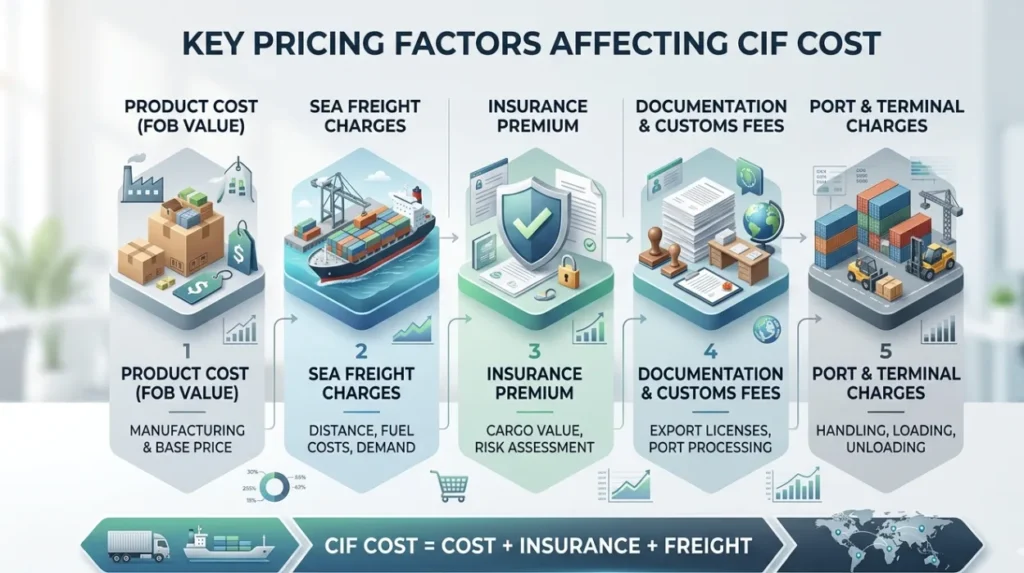
The first factor is grade. 1121 Steam Basmati prices differently from Super Kernel and 1509 because the market assigns different value to grain length, aroma, and cooking result. Buyers pay more for stronger market appeal and stronger consumer recognition. That is why a premium grade sits in a different cost band from standard export rice.
The second factor is packaging. Custom bags, branded packs, and private-label formats all add commercial complexity. A basic bulk shipment costs less to prepare than a retail-ready pack set. That difference affects the CIF quote because packing materials, labour, and quality checks all change with the order type. AHK Rice includes this in the export calculation.
The third factor is quantity. Larger orders usually improve cost efficiency because milling and packing runs are more economical at scale. Smaller orders often carry a higher unit cost because setup work stays the same while volume falls. Buyers who want better CIF pricing normally improve their position by increasing order size or consolidating shipments.
The fourth factor is timing. Rice pricing moves with crop availability, demand pressure, and freight conditions. A quote is only useful when it reflects the market at the time of enquiry. That is why a structured commercial response matters. It reduces timing risk and supports faster decision-making.
The fifth factor is specification control. Tight broken percentage, colour uniformity, moisture targets, and inspection terms all influence final pricing. A buyer who wants cleaner quality control pays for that control. A buyer who accepts broader specification tolerance usually sees a lower unit cost. AHK Rice makes those trade-offs visible rather than hiding them inside a vague quote.
Cost driver summary
- Select grade; e.g., 1121 Steam versus 1509 changes the price band.
- Choose packaging; e.g., bulk sacks cost less than retail packs.
- Increase volume; e.g., larger orders improve unit economics.
- Lock timing; e.g., faster confirmation reduces market exposure.
- Define specs; e.g., tighter quality tolerances affect CIF cost.