AHK Rice 1121 White Basmati: Aged Stock Available — Request Sample Today
The best solution is ready‑aged 1121 white basmati stock that has already undergone 12‑month storage, quality control, and export preparation so buyers can move directly from sample to order without waiting for the harvest‑to‑milling cycle.
For importers, brands, and foodservice buyers, the bottleneck is often time. Waiting for a fresh crop, milling, and ageing can delay launches, promotions, and menu roll‑outs. AHK Rice solves this by holding 1121 white basmati lots that are already 12‑month aged, stored under controlled conditions, and packed for export. That means the rice is not “in the pipe.” It is already in the warehouse, graded, and ready for customs and kitchen use.
AHK Rice applies that ageing logic to export‑grade 1121 white basmati, so the stock is not just available. It is optimised for cooking performance and shelf presentation. The problem is not just “getting 1121.” The problem is getting 1121 with the right aroma‑texture balance on a predictable schedule. That is the space AHK Rice fills.
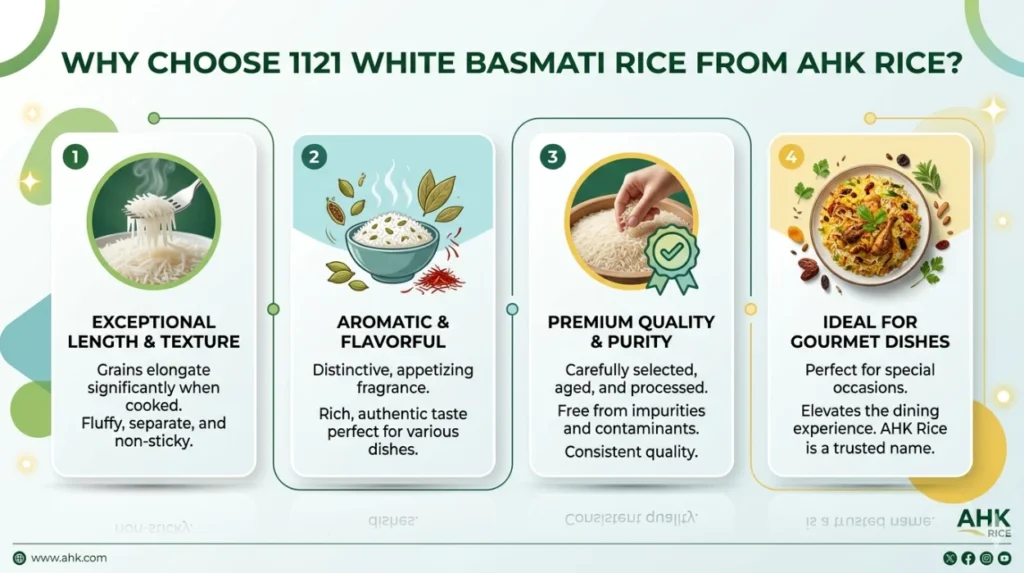
Why choose 1121 White Basmati Rice from AHK Rice?
1121 White Basmati Rice from AHK Rice is the right choice when the buyer needs premium long‑grain white basmati that is already 12‑month aged, export‑ready, and available in stable stock quantities.
AHK Rice is relevant because the company is a Pakistani basmati exporter based in Punjab, supplying 1121, Super Kernel, and 1509 varieties to 15+ countries. The 1121 white basmati line is one of the company’s core export products, and “aged stock” is a defined offering rather than an afterthought. This means the product is treated as a trade specification, not just a generic rice bag.
The decision hook is simple. Buyers who need 1121 white basmati do not always have time to wait for milling and ageing. AHK Rice 1121 aged stock removes that wait. The rice is already stored at the target 12‑month window, so the buyer can:
- Shorten the time from enquiry to kitchen test
- Align with menu launch or retail pack deadlines
- Avoid the risk of fresh‑milled grain that has not yet stabilised in texture
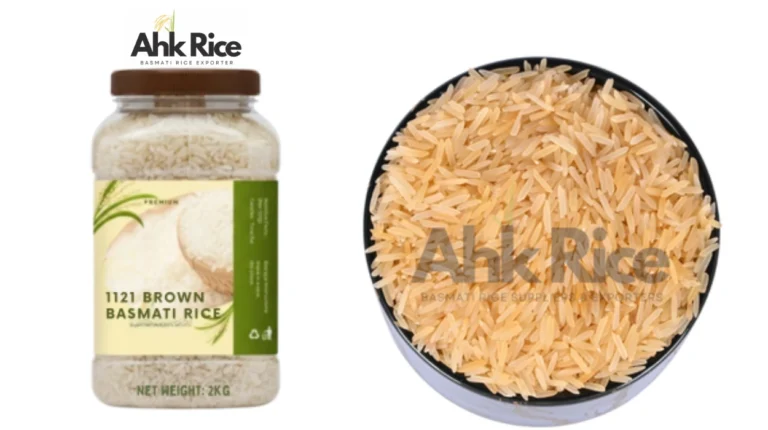
AHK Rice 1121 aged stock also fits buyers who want consistency. The 12‑month ageing window produces a more uniform grain temperature, moisture level, and aroma profile compared with just‑milled product. That consistency matters in foodservice and private label, where lot‑to‑lot variation affects both cooking and branding. The service page 1121 White Basmati Rice lays out the core spec so buyers can see the length, ageing model, and pack‑size options before they commit.
What results can be expected from AHK Rice 1121 aged stock?
Buyers can expect stable grain length, strong cooked elongation, bright white appearance, consistent moisture, and export‑ready packing that supports on‑time shipment into EU, Gulf, and other key markets.
Once the aged 1121 white basmati reaches the buyer, it should:
- Cook into long, separated grains with clear aromatic notes
- Show minimal breakage when prepared correctly
- Behave consistently across different batches
Because AHK Rice processes 1121 white basmati with end‑to‑end control, the grain moves from the Punjab field through cleaning, hulling, whitening, polishing, grading, ageing, and packing in one managed chain. That reduces the risk of raw‑material surprises. The 12‑month ageing step tightens the internal starch, stabilises moisture, and builds the aromatic profile. The practical outcome is rice that performs as expected on plate and pack, not only on the spec sheet.
AHK Rice 1121 aged stock is particularly useful for:
- Premium retail brands that need “aged basmati” labelling
- Foodservice chains that require consistent texture and aroma
- Importers launching a new basmati line without waiting for the next crop
The value is not just the product. It is the ability to treat 1121 as a scheduled commodity rather than a seasonal item.
How does shipping time work by market?
Shipping time depends on the destination market, vessel schedule, and port‑handling window, with AHK Rice 1121 white basmati usually moving faster to Gulf routes than to EU or UK lanes.
Exact transit days vary, but the pattern is clear. Shipments to the UAE, Saudi Arabia, and other Gulf states often sit in the shorter end of the range because the sea lane is shorter and the port process is streamlined. EU and UK routes take longer because the sea journey is extended and the customs and documentation checks are more complex. The AHK Rice export chain is built around this reality, so the rice is packed, certified, and documented with the target destination in mind.
For fine‑dining, gourmet retail, and bulk‑oriented buyers, timing matters. AHK Rice 1121 aged stock helps buyers meet cut‑off dates because the product is already in the warehouse. The main variable then becomes logistics, not milling. That is why AHK Rice allocates aged stock close to the shipment window whenever possible. The 1121 white basmati moves from storage to container, not from paddy to packing, which shortens the pre‑shipment timeline.
AHK Rice also tracks lot‑specific ageing data so buyers who need 12‑month aged product can verify that the stock meets the window. That transparency supports both quality and commercial planning. The buyer can then book the shipment without the extra step of coordinating ageing on top of packing.
What does the sample process involve?
The sample process involves confirming the spec, drawing the 1121 white basmati from the 12‑month aged lot, packing it securely, and shipping it to the buyer for kitchen or retail evaluation.
The first step is specification confirmation. The buyer and AHK Rice agree on the grade, ageing window, breakage level, and moisture level. The second step is lot selection. AHK Rice selects the 1121 aged stock that matches the agreed parameters. The third step is packing. The sample is sealed in a small, representative pack that reflects the commercial product.
The fourth step is courier dispatch. The sample travels by air or express cargo, depending on the market. The fifth step is evaluation. Buyers test the grain for length, whiteness, cooking time, separation, and aroma. For 1121 white basmati, those tests are especially important because buyers expect extra‑long, fragrant grains. The 1121 white basmati aging 12 months enhances aroma texture content explains the underlying ageing mechanism, but the sample is where the buyer sees the practical result.
AHK Rice 1121 aged stock samples are not free‑form. They are treated as a mini‑order, so the packing and documentation mirror the commercial route. That reduces the risk that the buyer approves a sample and then receives a materially different product at scale. The sample process is a bridge between specification and shipment, not just a courtesy.
What costs apply to samples?
Sample costs apply to courier charges, pack preparation, labelling, and handling, not to the grain itself, which is usually drawn from the same 12‑month aged stock used for export.
The main cost drivers are:
- Courier destination and speed
- Weight and volume of the sample
- Custom artwork or branding if the buyer wants to see the exact retail pack
AHK Rice 1121 white basmati samples are usually small, but the pack‑preparation and shipping still require a charge. The fee is small relative to the full order but meaningful as a decision‑support cost. That is why some buyers see the sample as part of the qualification process rather than a separate line item.
The sample cost is also linked to order intent. Buyers who move from sample approval to bulk order often treat the fee as part of the procurement cycle. For AHK Rice, the priority is not to minimise the sample price. The priority is to ensure the sample represents the aged‑stock product truthfully. That matters for trust, consistency, and the long‑run relationship with the buyer.
What factors affect the pricing of aged 1121 stock?
Pricing of AHK Rice 1121 aged stock depends on grade, breakage level, ageing window, pack configuration, compliance load, and shipping terms, because each factor changes the total export cost.
The 12‑month ageing window creates a premium over fresh‑milled 1121 white basmati, especially for buyers who want the strongest aroma and tightest texture. Lower breakage targets increase the price because they require more careful grading and less yield. Pack size and type also matter. Custom retail packs cost more than bulk sacks because of printed artwork, sealing, and unit‑control work. AHK Rice builds the quote around those variables so the buyer can match the rice to the channel.
Compliance and documentation are another layer. AHK Rice 1121 white basmati destined for the EU, UK, or Gulf needs phytosanitary certificates, certificates of origin, and often residue and moisture reports. Those costs are folded into the unit price rather than added as a surprise. The shipping terms themselves—FOB, CIF, DAP, and others—also shape the final landed price.
For buyers evaluating AHK Rice 1121 aged stock, the price is not just a per‑MT figure. It is the cost of:
- 12‑month controlled storage
- Standard or custom packing
- Compliance handling for the destination
- Freight and risk coverage
The AHK Rice 1121 white basmati aged stock price therefore reflects the full export‑grade chain rather than the mill‑only cost.
What is the full buying journey from sample to order?
The full buying journey moves from enquiry, to specification, to sample, to approval, to quote, to shipment, with AHK Rice 1121 aged stock cutting the lead time because the rice is already stored at the 12‑month window.
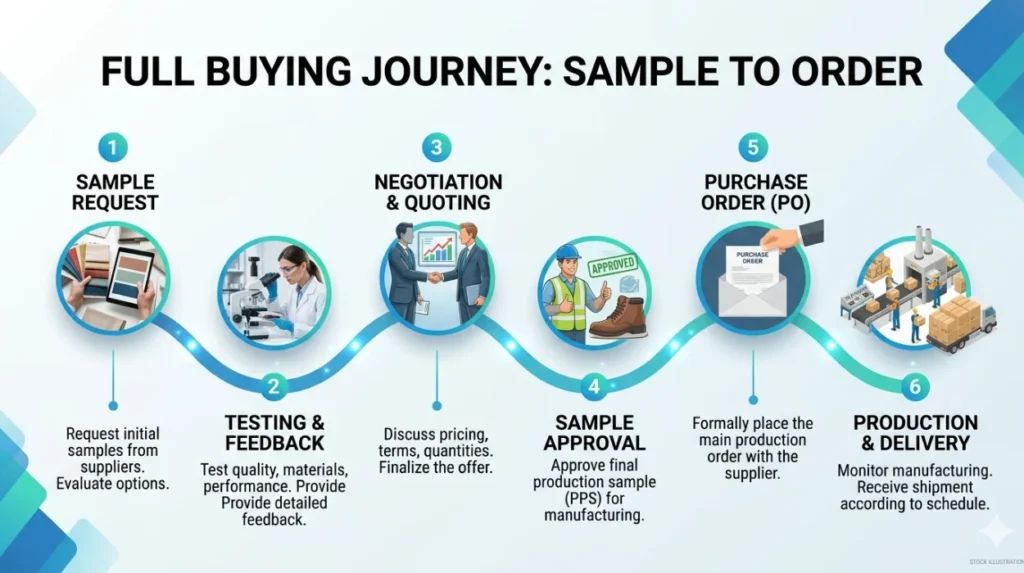
The journey usually starts with the buyer stating the need: 1121 white basmati, size and volume, ageing window, and destination market. AHK Rice then confirms the 12‑month aged lot status, breakage, and moisture. Once the spec is set, the buyer requests a sample. The sample approval is the first decision gate. If the grain performs as expected, the buyer can move into pricing, packing, and shipment scheduling.
AHK Rice 1121 aged stock shortens the typical “harvest → mill → ageing → pack” arc because the ageing is already done. The rice is in the warehouse, graded, and documented. That is the operational advantage. The AHK Rice chain is end‑to‑end, but for this product the buyer skips the front‑end cycle and moves straight into the ordering phase. The aroma texture supports that structure by explaining why the 12‑month window is valuable.
How to get started with AHK Rice?
Getting started means confirming the need for 1121 white basmati, selecting the ageing window and grade, requesting the sample, reviewing the results, and then moving into a commercial order that can ship within the agreed transit window.
AHK Rice is built for this stage because the company already supplies 1121 white basmati as a core product. The 12‑month aged stock offering is a defined lane, not a one‑off. The service is geared toward buyers who need consistency, predictable shipping, and clear labelling. That is why the spec, the sample, and the export process all move in one connected flow.
AHK Rice 1121 white basmati buyers often start with a small‑scale test, extend to a trial shipment, and then scale up once the product is validated. The 12‑month ageing window, the grain length, and the end‑to‑end export handling all support that model. The final decision is not just which basmati to use. It is how tightly the supply chain can match the buyer’s calendar.
To progress from evaluation to procurement for AHK Rice 1121 white basmati aged stock, buyers can request a quote.