Pakistan Rice Export Documentation to UAE: What Every Importer Must Have
Pakistan rice export documentation for UAE importers includes the commercial invoice, packing list, bill of lading, certificate of origin, phytosanitary certificate, fumigation certificate, import permit, and laboratory compliance reports. Here is why: UAE customs authorities inspect food safety, shipment traceability, and labeling compliance before cargo clearance. Missing one document delays customs release, increases port storage charges, and blocks food distribution licenses.
Pakistan exported over 5 million metric tons of rice during FY2024-25, with the UAE remaining one of the largest Gulf destinations for Basmati and non-Basmati shipments (source: Pakistan Bureau of Statistics, FY2024-25). UAE buyers import 1121 Basmati, Super Kernel Basmati, and IRRI long grain rice for retail chains, catering companies, and foodservice distributors.
UAE food import regulations focus on product safety, shelf stability, fumigation compliance, and packaging traceability. Pakistan rice exporters prepare export documentation before loading containers because UAE customs systems require pre-arrival submission through Dubai Trade and municipal food control portals.
Importers searching for the complete shipment workflow can also review the detailed explanation about how Pakistani suppliers handle container preparation, shipping schedules, and customs coordination during the UAE delivery cycle in the article about rice shipment coordination and Gulf delivery timelines at bulk basmati rice order Pakistan UAE delivery process.
What Is Pakistan Rice Export Documentation for UAE Importers?
Pakistan rice export documentation for UAE importers includes 8 mandatory trade, shipping, and food safety documents required for customs clearance, food inspection, and commercial distribution inside the UAE.
Pakistan rice export documentation refers to the official records used to identify, certify, inspect, and clear rice shipments entering UAE ports. UAE customs authorities verify these documents before releasing cargo from Jebel Ali Port, Khalifa Port, Port Rashid, and Sharjah Port.
Rice export documents establish four critical shipment elements:
- Product identity
- Shipment ownership
- Food safety compliance
- Customs valuation
Pakistan exporters prepare these documents during milling, container loading, and shipment dispatch stages. UAE importers submit these documents electronically before vessel arrival because Dubai Municipality and Abu Dhabi Agriculture and Food Safety Authority require advance compliance review.
What Documents Do UAE Rice Importers Require?
UAE rice importers require the commercial invoice, packing list, bill of lading, certificate of origin, phytosanitary certificate, fumigation certificate, health certificate, and import permit.
Each document performs a separate customs and compliance function.
Commercial Invoice
Commercial invoices define the cargo value, HS code, shipment quantity, exporter details, and payment terms. UAE customs authorities use invoice data to calculate import duties and VAT.
Packing List
Packing lists identify bag counts, packaging dimensions, gross weight, net weight, and pallet configuration. UAE warehouse operators use packing lists during unloading and stock verification.
Bill of Lading
Bills of lading confirm cargo ownership and vessel shipment details. Shipping lines issue this document after container loading and vessel departure.
Certificate of Origin
Certificates of origin confirm Pakistan as the manufacturing country. Pakistan chambers of commerce issue these certificates for Gulf customs verification.
Phytosanitary Certificate
Phytosanitary certificates verify pest-free agricultural cargo conditions. Pakistan’s Department of Plant Protection issues these certificates after cargo inspection.
Fumigation Certificate
Fumigation certificates confirm insect treatment before shipment dispatch. UAE food authorities inspect fumigation records because rice storage pests damage imported grain quality.
Import Permit
Import permits authorize UAE companies to import food products legally. UAE importers secure permits through local municipal food registration systems.
With the required document categories established, the next question is how exporters prepare these records during the rice export process.
How Does Pakistan Rice Export Documentation Work?
Pakistan rice exporters prepare documentation in 6 operational stages from milling and laboratory testing to customs clearance and vessel dispatch.
Rice export documentation follows the physical movement of the shipment. Every stage generates records required by customs authorities and shipping lines.
How Do Exporters Prepare Rice for Documentation?
Exporters inspect, mill, grade, test, and package rice before issuing commercial and compliance certificates.
Rice mills process paddy through structured operational stages:
- Clean the harvested paddy
- De-husk the grain
- Polish the rice kernels
- Grade by grain length
- Sort damaged kernels
- Test moisture levels
- Inspect foreign material
- Package export bags
- Load shipping containers
UAE buyers require moisture levels between 12% and 14% because higher moisture increases fungal growth during Gulf storage conditions.
1121 Basmati rice usually measures 8.30 mm before cooking and expands up to 18 mm after cooking. UAE hospitality buyers prefer this specification for buffet presentation and restaurant serving performance.
How Do Exporters Obtain the Phytosanitary Certificate UAE Authorities Require?
Pakistan’s Department of Plant Protection inspects rice consignments and issues phytosanitary certificates after pest and contamination verification.
The phytosanitary certificate UAE authorities require confirms the shipment contains no live insects, harmful fungi, or quarantine pests. Inspectors collect rice samples directly from packed consignments before container sealing.
Inspection teams verify:
- Insect absence
- Grain cleanliness
- Moisture stability
- Packaging condition
- Container hygiene
Dubai Municipality rejects agricultural cargo lacking phytosanitary approval because imported food products must meet UAE Federal Food Safety standards.
How Does Fumigation Rice Compliance Work?
Fumigation rice compliance requires approved chemical treatment, sealed container handling, and certified treatment records before vessel loading.
Rice fumigation eliminates storage insects including rice weevils and grain borers. Exporters complete fumigation before customs sealing because untreated cargo risks rejection at UAE inspection terminals.
Approved fumigation procedures include:
- Aluminium phosphide treatment
- Controlled exposure duration
- Ventilation verification
- Gas residue inspection
- Treatment certification
Golden Sella Basmati retains storage stability longer than Steam Basmati under Gulf temperatures. In UAE warehouses exceeding 40°C, Golden Sella maintains quality for 18 months. Steam rice performs best within 12 months of shipment. UAE catering companies storing inventory for long periods prefer Golden Sella specifications.
With the documentation workflow explained, the next question concerns the key compliance components UAE authorities inspect most closely.
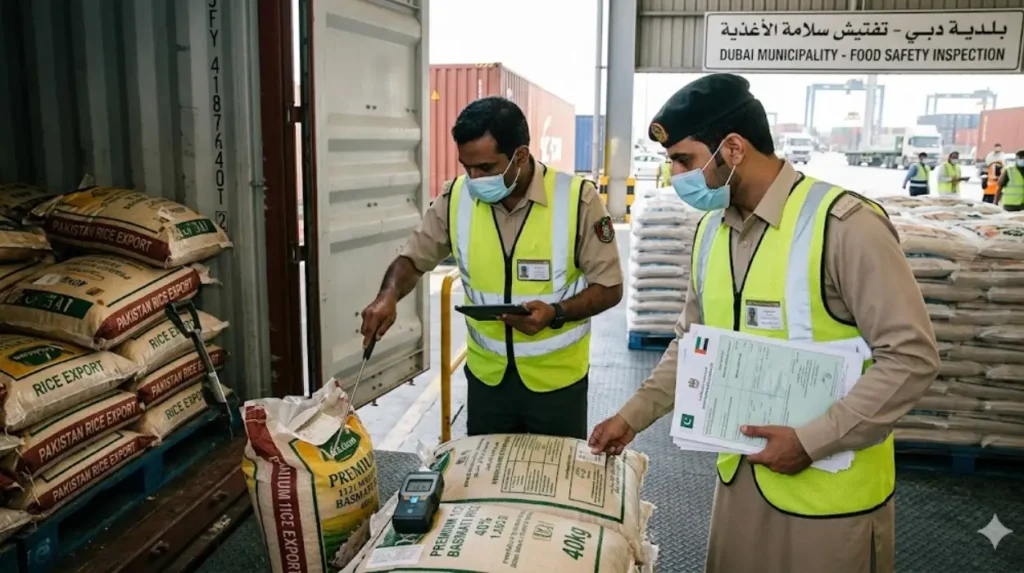
What Are the Most Important UAE Rice Import Documents?
The phytosanitary certificate, fumigation certificate, certificate of origin, and bill of lading receive the highest customs inspection priority during UAE rice clearance.
UAE customs systems focus on food traceability and agricultural compliance. Incorrect documentation creates shipment delays, demurrage charges, and municipal inspection holds.
Why Is the Phytosanitary Certificate UAE Requirement Critical?
The phytosanitary certificate proves the rice shipment meets UAE agricultural quarantine standards and contains no restricted pests.
Agricultural imports entering Gulf countries undergo strict quarantine inspections because high-temperature climates accelerate pest spread inside storage facilities.
The phytosanitary certificate contains:
- Exporter details
- Importer details
- Cargo description
- Treatment status
- Inspection confirmation
- Country of origin
Dubai Municipality cross-checks phytosanitary data against shipping documents before approving food distribution licenses.
Why Is the Fumigation Rice Certificate Necessary?
The fumigation rice certificate confirms insect treatment compliance and prevents warehouse infestation risks during UAE storage.
Rice shipments stored at Gulf ports remain exposed to high humidity and elevated temperatures. Untreated cargo develops insect activity rapidly under these conditions.
UAE importers prioritize fumigation verification because:
- Retail chains require clean storage records
- Catering distributors store bulk inventory
- Port inspections include pest screening
- Food warehouses maintain audit documentation
IRRI-6 rice for institutional catering usually undergoes strict fumigation review because large-volume shipments remain in storage longer than retail-packed Basmati consignments.
Why Does the Bill of Lading Matter?
The bill of lading establishes legal cargo ownership and authorizes shipment release at UAE ports.
Shipping lines issue bills of lading after vessel departure. Importers submit these documents to customs brokers and port operators during cargo release procedures.
Bills of lading contain:
- Container numbers
- Vessel details
- Port of loading
- Port of discharge
- Cargo quantity
- Consignee information
Electronic bills of lading reduce UAE customs clearance times because digital processing integrates directly with Dubai Trade systems.
With the core documents clarified, the next question involves the business advantages importers gain from complete documentation accuracy.
What Benefits Do Accurate Rice Export Documents Provide UAE Importers?
Accurate rice export documents reduce customs delays, lower port storage charges, improve food safety compliance, and accelerate retail distribution approval.
UAE ports apply storage fees immediately after free-time expiration. Delayed documentation increases operational costs quickly.
How Do Accurate Documents Reduce Customs Delays?
Correct documentation allows UAE customs systems to verify shipment data before vessel arrival and accelerate cargo release.
Pre-approved documents shorten inspection procedures because customs officers compare electronic records against container manifests before unloading.
UAE importers benefit from:
- Faster customs release
- Lower demurrage charges
- Reduced warehouse delays
- Earlier retail distribution
- Lower inspection risk
Jebel Ali Port processes thousands of food containers weekly. Pre-cleared rice shipments move faster through customs inspection lanes.
How Do Accurate Documents Improve Food Safety Compliance?
Complete records establish traceability from Pakistani rice mills to UAE retail shelves and foodservice warehouses.
Food traceability systems identify:
- Production batch numbers
- Milling dates
- Packaging dates
- Laboratory reports
- Treatment records
UAE supermarket chains require traceable food records before approving supplier registration.
How Do Accurate Documents Support Retail Distribution?
Retail distributors use shipment documents for labeling approval, inventory management, and municipal food registration.
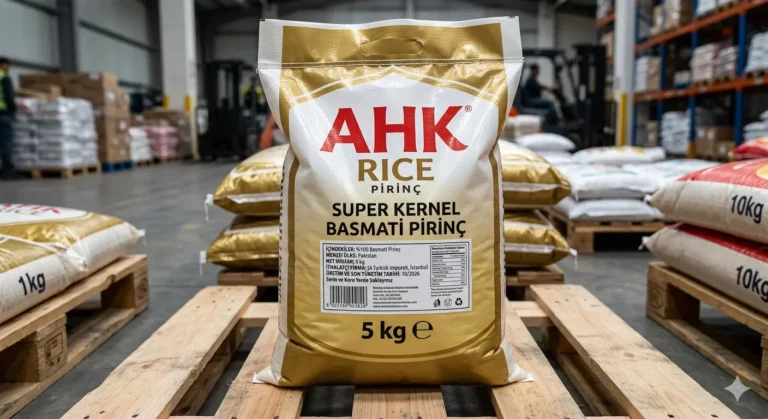
Retail-ready rice packaging entering the UAE requires Arabic labeling compliance, nutritional information, and origin identification.
Retail chains inspect:
- Product specifications
- Packaging weights
- Barcode registration
- Shelf-life declarations
- Country of origin labels
1121 Steam Basmati packaged in 5 kg consumer bags performs strongly in UAE supermarkets because retail buyers prioritize aroma and soft cooking texture for household consumption.
With the benefits explained, the next section addresses practical use cases across UAE rice import sectors.
How Do UAE Businesses Use Pakistan Rice Import Documents?
UAE businesses use rice import documents for wholesale distribution, supermarket retail, catering supply, and hospitality procurement operations.
Different UAE industries require different rice grades and documentation priorities.
How Do Supermarkets Use Rice Import Documents?
Supermarkets use import documents to verify labeling compliance, shelf-life declarations, and food safety approvals.
Retail chains inspect every imported food product before shelf placement. Documentation supports municipal food registration and inventory traceability.
Retail buyers usually prefer:
- 1121 Steam Basmati
- Super Kernel Basmati
- Retail-ready packaging
- Arabic labeling compliance
- Barcode registration
How Do Catering Companies Use Rice Import Documents?
Catering companies use import documents to confirm bulk shipment quality, fumigation compliance, and warehouse safety standards.
UAE catering suppliers purchase rice in:
- 25 kg PP bags
- 40 kg woven bags
- 50 kg bulk sacks
Institutional buyers prioritize storage stability because hotel and labor camp operations maintain large monthly inventory volumes.
Golden Sella Basmati performs better than White Basmati in high-volume catering operations. Golden Sella maintains grain separation after holding periods exceeding 2 hours in buffet service conditions.
How Do Hospitality Buyers Use Rice Import Documents?
Hospitality buyers use specification documents to confirm grain length, aroma profile, and cooking expansion ratios.
Luxury hotels in Dubai and Abu Dhabi prefer extra-long grain Basmati because presentation quality influences premium dining standards.
Hospitality procurement teams inspect:
- Grain length reports
- Broken percentage
- Moisture reports
- Cooking expansion ratios
- Crop year details
With the industry applications explained, the final question addresses common documentation mistakes UAE importers encounter.
What Problems Do UAE Importers Face With Rice Export Documentation?
UAE importers face shipment delays, rejected certificates, incorrect labeling, and incomplete fumigation records during customs clearance.
Most documentation problems originate from inconsistent shipment data between certificates.
What Documentation Mistakes Delay UAE Customs Clearance?
Incorrect HS codes, mismatched container numbers, incomplete certificates, and inaccurate product descriptions create the most common customs delays.
Customs authorities compare every shipping document during inspection. One incorrect detail stops cargo release procedures.
Frequent problems include:
- Incorrect net weight declarations
- Missing phytosanitary signatures
- Expired fumigation certificates
- Wrong consignee details
- Inconsistent invoice values
What Misconceptions Exist About UAE Rice Import Rules?
Many importers incorrectly assume commercial invoices alone satisfy UAE food import requirements.
UAE food imports require agricultural compliance verification in addition to customs paperwork.
Another misconception concerns fumigation timing. Some importers believe fumigation after port arrival satisfies UAE requirements. UAE authorities require pre-shipment fumigation certification before vessel loading.
Another misconception concerns packaging language. UAE retail distribution requires Arabic labeling for consumer products. English-only packaging delays supermarket registration approval.
Why Do Food Safety Inspections Increase Shipment Costs?
Food safety inspection failures increase storage charges, laboratory testing expenses, and container detention costs.
Port storage charges accumulate daily after inspection holds begin. Reevaluation procedures also extend customs processing timelines.
UAE importers reduce inspection risk by ensuring:
- Accurate certificate preparation
- Correct packaging labels
- Approved fumigation treatment
- Verified laboratory reports
- Consistent shipment records
Pakistan rice export documentation forms the operational foundation of UAE rice trade because customs authorities inspect food safety, traceability, and shipment accuracy before cargo release. Importers using complete documentation systems reduce customs delays, protect warehouse inventory quality, and maintain uninterrupted retail and catering distribution across the UAE market.
Frequently Asked Questions
What documents are mandatory for exporting rice from Pakistan to the UAE?
Pakistan rice exporters must provide the commercial invoice, packing list, bill of lading, certificate of origin, phytosanitary certificate, fumigation certificate, and import permit. UAE customs authorities inspect these documents before releasing cargo at ports such as Jebel Ali and Khalifa Port.
Why is the phytosanitary certificate important for UAE rice imports?
The phytosanitary certificate confirms the rice shipment is free from insects, fungal contamination, and quarantine pests. Pakistan’s Department of Plant Protection issues this certificate after cargo inspection. UAE food authorities require this document for agricultural clearance and food safety compliance.
How long does rice customs clearance take in the UAE?
UAE rice customs clearance usually takes 2 to 5 working days after vessel arrival. Complete documentation, correct HS codes, and approved fumigation records reduce inspection delays. Missing certificates increase port storage charges and customs processing time.
What type of rice packaging do UAE importers prefer?
UAE importers use different packaging formats for retail and bulk distribution. Supermarkets prefer 1 kg, 5 kg, and 10 kg consumer bags with Arabic labeling. Catering companies and wholesalers usually import 25 kg, 40 kg, and 50 kg woven polypropylene bags.
Why is fumigation rice certification required before shipment?
Fumigation rice certification confirms insect treatment before container loading. UAE customs and food safety authorities inspect fumigation records because Gulf temperatures accelerate pest activity during storage. Pre-shipment fumigation protects grain quality during sea transit and warehouse storage.