Import Low Moisture Pakistani Basmati Rice for UK Distribution
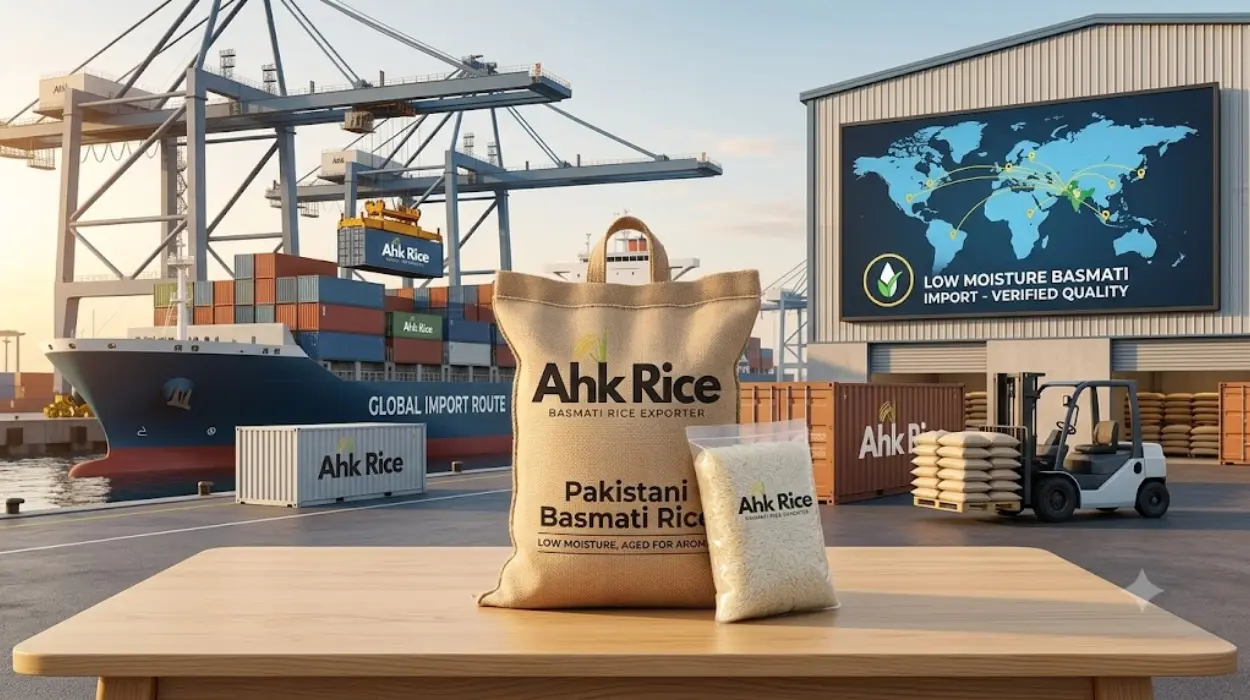
Importing low-moisture Pakistani Basmati rice is the best solution for UK distributors seeking longer shelf life, reduced transit risk, and consistent consumer quality. Here is why: rice maintained at 12–13% moisture withstands long shipping routes better, reduces spoilage risk, and preserves grain quality during storage and retail distribution.
UK importers increasingly prioritize moisture specifications because product quality directly affects warehouse performance, retailer acceptance, and consumer satisfaction. Buyers researching the importance of moisture control can first understand the fundamentals in our guide on Why Are Moisture Levels Important for Imported Basmati Rice Quality maintaining rice quality during international sourcing.
Pakistani Basmati rice remains one of the UK’s most demanded premium rice categories. Through AHK Ric, importers can source verified low-moisture Basmati grades suitable for wholesale, retail, catering, and ethnic food distribution channels.
What Is the Best Solution for UK Distributors Importing Pakistani Basmati Rice?
The best solution is sourcing rice with 12–13% moisture content, verified laboratory testing, export certification, and controlled container loading procedures.
Low-moisture Basmati rice delivers better storage performance across UK warehouses. Moisture control reduces the possibility of mold development, odor formation, grain discoloration, and packaging deterioration.
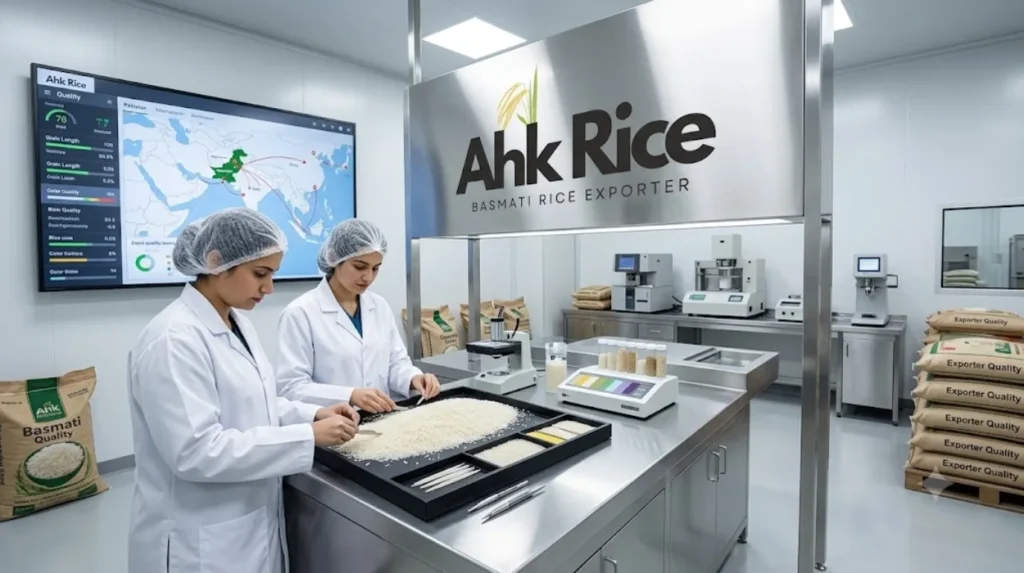
AHK Rice exports moisture-controlled Basmati rice after inspecting, testing, grading, and certifying every shipment. AHK Rice verifies moisture levels before loading containers. AHK Rice also tests grain length, broken percentage, purity, and foreign matter content.
Why Moisture Matters During UK Distribution
Rice travels thousands of miles before reaching UK consumers. Product quality must remain stable throughout shipping, customs clearance, warehousing, wholesale distribution, and retail placement.
Low-moisture rice offers several advantages:
- Reduced spoilage risk
- Longer shelf life
- Better grain appearance
- Improved aroma retention
- Lower warehouse losses
- Consistent cooking performance
Specification Table for UK Imports
| Specification | Recommended Value |
|---|---|
| Moisture | 12–13% |
| Broken Grains | 0–5% |
| Purity | 95–100% |
| Grain Length | 8.0 mm+ |
| Foreign Matter | Minimal |
| Shelf Life | 18–24 Months |
| Packaging | 5kg–50kg |
AHK Rice supplies multiple Basmati grades that meet these specifications for UK distribution networks.
With the ideal moisture specification established, the next question is selecting the right supplier.
Why Choose AHK Rice for UK Distribution?
AHK Rice provides quality-tested rice, export documentation, moisture verification, and reliable shipping schedules for UK importers.
AHK Rice specializes in exporting Pakistani Basmati rice to international markets. AHK Rice manages quality control from procurement through shipment dispatch.
Quality Verification Process
AHK Rice follows a structured quality process:
- Cultivate premium Basmati paddy
- Harvest mature grain
- Clean raw material
- Mill and dehusk rice
- Polish selected grades
- Sort by length and purity
- Test moisture content
- Certify export specifications
- Load containers for dispatch
Each step supports consistency across commercial shipments.
Available Basmati Grades
AHK Rice exports:
- 1121 Steam Basmati
- 1121 Golden Sella Basmati
- 1121 White Basmati
- Super Basmati Rice
- PK 385 Basmati
- Brown Basmati Rice
- Organic Basmati Rice
Export Certifications
Common certifications include:
- Phytosanitary Certificate
- Certificate of Origin
- Fumigation Certificate
- Quality Inspection Reports
- Packing List
- Commercial Invoice
- Bill of Lading
UK importers require these documents for smooth customs processing.
Many buyers compare moisture performance before selecting a supplier. Our detailed guide explaining <a href=”/how-do-moisture-levels-affect-rice-shelf-life-during-storage/”>how storage moisture impacts shelf life and inventory performance</a> provides additional purchasing insight.
With supplier selection covered, the next question concerns expected commercial results.
What Results Can UK Importers Expect?
Importers typically achieve longer storage stability, lower wastage, stronger customer satisfaction, and improved inventory performance with low-moisture Basmati rice.
Low-moisture rice performs better during long-term storage. Warehouses experience fewer quality complaints and lower inventory losses.
Shelf Life Comparison
| Rice Condition | Expected Shelf Life |
|---|---|
| 12–13% Moisture | 18–24 Months |
| 14–15% Moisture | 12–18 Months |
| Above 15% Moisture | Higher Quality Risks |
Low-moisture rice lasts longer than higher-moisture alternatives.
In UK warehouses, low-moisture rice maintains quality for up to 24 months. Higher-moisture rice may experience quality decline sooner.
For wholesale distributors managing large inventories, low-moisture specifications reduce operational risk.
UK Market Benefits
Retailers value consistency.
Restaurants value cooking performance.
Wholesalers value reduced returns.
Consumers value aroma and grain elongation.
AHK Rice supports each requirement through moisture-controlled exports and verified specifications.
Shipping Transit Performance
Transit conditions affect rice quality. Controlled moisture levels help maintain grain integrity throughout the shipping cycle.
Typical transit times include:
| Market | Shipping Days |
|---|---|
| United Kingdom | 25–35 Days |
| Germany | 30–40 Days |
| Netherlands | 28–38 Days |
| France | 30–40 Days |
| Ireland | 30–40 Days |
Low-moisture rice remains stable throughout these transit periods when properly packed and loaded.
With expected outcomes established, buyers usually evaluate pricing factors next.
What Factors Affect Pricing for Low Moisture Pakistani Basmati Rice?
Pricing depends on rice grade, moisture specification, packaging type, certification requirements, and shipment volume.
Premium grades command higher prices because they deliver superior grain length and cooking characteristics.
Main Cost Factors
- Rice grade
- Moisture level
- Packaging requirements
- Container quantity
- Certification requests
- Destination port
- Freight conditions
Typical Commercial Scenario
A UK importer purchasing one full container receives different pricing than a buyer sourcing multiple monthly containers.
AHK Rice structures quotations according to shipment specifications rather than using generic pricing models.
Packaging Options
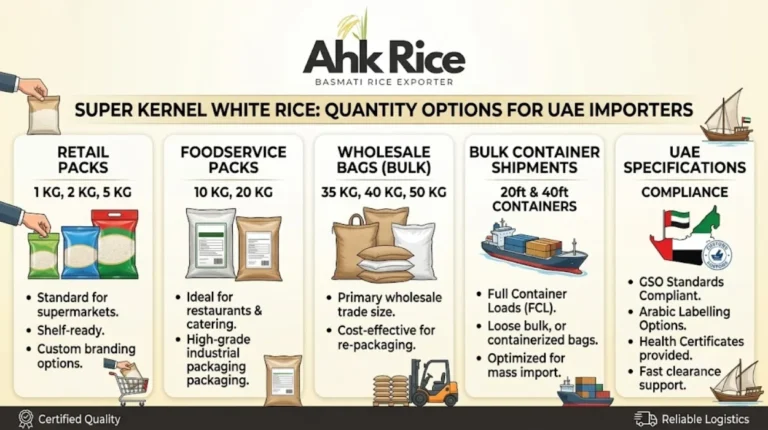
Common export packaging includes:
- 5 kg retail bags
- 10 kg retail bags
- 20 kg PP bags
- 25 kg PP bags
- 40 kg PP bags
- 50 kg PP bags
Packaging selection influences freight efficiency and retail readiness.
Market Demand Impact
UK demand for premium Basmati remains strong due to multicultural consumer preferences and restaurant sector growth (source: Pakistan Bureau of Statistics, FY2024-25).
Premium grades often maintain stronger market value than standard rice categories because consumers recognize quality differences.
With pricing considerations covered, the final step is understanding the sourcing process.
How Can UK Buyers Get Started?
The process involves sample approval, specification confirmation, container booking, production, inspection, and shipment dispatch.
AHK Rice follows a straightforward export workflow designed for international buyers.
Sample Process
Before placing a commercial order, buyers can request product samples.
Sample Workflow
- Request target specification
- Receive product recommendations
- Confirm preferred grade
- Dispatch samples
- Test cooking performance
- Approve specifications
- Confirm order quantity
Sample Costs
| Item | Typical Cost |
|---|---|
| Product Sample | Often Free |
| Courier Charges | USD 40–100 |
| Laboratory Testing | Optional |
| Commercial Sample Pack | By Request |
Courier costs vary by destination and package weight.
Order Fulfillment Timeline
| Stage | Duration |
|---|---|
| Sample Dispatch | 3–7 Days |
| Sample Evaluation | 5–14 Days |
| Production | 7–15 Days |
| Container Loading | 2–5 Days |
| UK Transit | 25–35 Days |
AHK Rice keeps buyers informed throughout each stage.
Why Importers Choose AHK Rice
- Moisture-controlled production
- Multiple Basmati grades
- Export documentation support
- Flexible packaging
- Container-scale supply capability
- International shipping experience
- Consistent quality verification
AHK Rice continues supporting UK distributors seeking dependable long-term rice supply partnerships.
With sourcing procedures complete, the next step is requesting a shipment-specific quotation based on your target market requirements through Request a Quote.
Frequently Asked Questions
How much moisture should imported Basmati rice contain?
The recommended moisture level is between 12% and 13% for export-quality Basmati rice. This range supports longer shelf life and better storage stability. UK importers often request moisture verification before shipment. Lower moisture reduces spoilage risks during transit. It also improves warehouse performance and product consistency.
How long does Pakistani Basmati rice take to reach the UK?
Most shipments reach the UK within 25 to 35 days. Transit times vary according to shipping line schedules and port operations. Container loading and customs processing can influence timelines. Proper moisture control helps maintain quality throughout transport. Importers should confirm schedules before placing orders.
Why is low-moisture rice preferred by distributors?
Low-moisture rice reduces the risk of mold, odor, and quality deterioration. Distributors benefit from longer storage periods and fewer inventory losses. Retailers receive more consistent products. Consumers enjoy better cooking performance and aroma retention. These advantages improve commercial outcomes.
What documents are required for UK rice imports?
Common documents include a phytosanitary certificate, certificate of origin, commercial invoice, packing list, and bill of lading. Importers may also request fumigation and quality reports. These documents support customs clearance. Accurate paperwork reduces delays. Exporters typically prepare documentation before dispatch.
Can I request samples before placing an order?
Yes, most commercial exporters provide samples for quality evaluation. Buyers can assess grain length, aroma, cooking results, and moisture specifications. Courier charges generally apply. Sample approval reduces purchasing risk. It also helps establish long-term supply relationships.