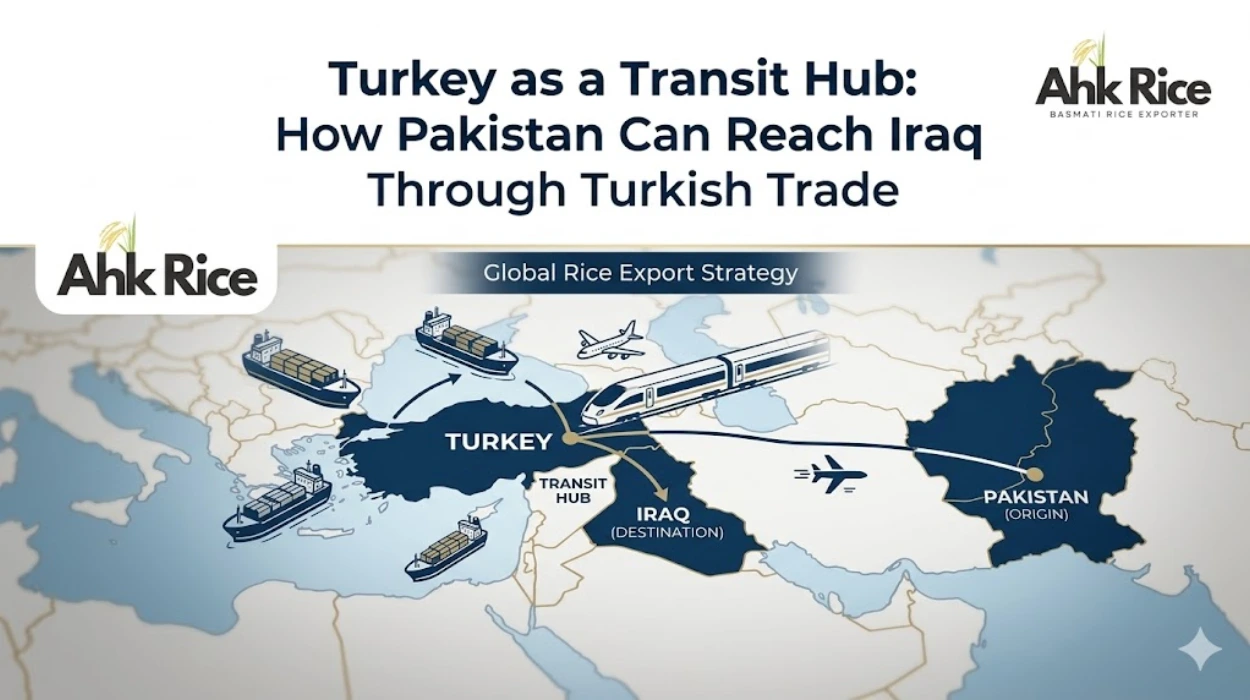
Turkey as a Transit Hub: How Pakistan Can Reach Iraq Through Turkish Trade
Pakistan can reach Iraq through Turkish trade routes because Turkey connects Asian suppliers with Middle Eastern buyers through established logistics corridors, customs infrastructure, free trade zones, and re-export networks. Here is why: Turkey operates as a commercial bridge between Pakistan and Iraq, allowing Pakistani rice exporters to access Iraqi demand through Turkish distribution systems.
What Is Turkey’s Role as a Transit Hub for Pakistan-Iraq Rice Trade?
Turkey functions as a strategic logistics bridge connecting Pakistani rice exports with Iraqi import markets through transit, warehousing, customs clearance, and re-export channels.
Turkey is a transcontinental country positioned between Asia, Europe, and the Middle East. Turkey controls access to major trade corridors linking South Asia with regional consumption markets. Turkish ports, inland logistics centers, and border crossings support cargo movement toward Iraq.
Pakistan exports agricultural products, textiles, and food commodities to global markets. Rice remains one of Pakistan’s largest agricultural export categories. Iraq imports significant rice volumes because domestic production does not satisfy national consumption requirements.
Turkey transit routes create an additional market access pathway. Pakistani exporters dispatch cargo to Turkish ports, logistics operators handle storage and customs procedures, and shipments continue toward Iraqi destinations.
Turkey transit trade differs from direct exports. Direct exports move cargo from Pakistan to Iraq without an intermediate commercial hub. Transit trade uses Turkey as a logistics and distribution platform before final delivery.
Turkey’s position creates the foundation for understanding how the trade route operates in practice.
How Does Turkey Transit Trade Work for Pakistani Rice Shipments to Iraq?
The process involves cargo dispatch from Pakistan, Turkish port handling, customs processing, warehousing, re-export documentation, and final transportation into Iraq.
Pakistan rice exports begin at cultivation areas across Punjab. Punjab produces major basmati varieties including 1121 Basmati, Super Kernel Basmati, and 1509 Basmati.
Rice exporters process grain through standardized production stages.
Which Processing Steps Prepare Rice for Transit Trade?
Rice moves through 9 processing stages before export readiness: cleaning, dehusking, drying, milling, polishing, grading, sorting, testing, and packaging.
Rice processors prepare export cargo using a structured workflow.
- Clean the harvested paddy.
- Dehusk the grain.
- Dry the rice to export moisture levels.
- Mill the kernels.
- Polish the grains.
- Grade by size and quality.
- Sort using optical technology.
- Test for compliance standards.
- Package for shipment.
Quality verification occurs before loading. Export laboratories inspect moisture, grain length, purity, and broken percentage.
After processing, logistics operators prepare cargo movement.
Which Logistics Steps Move Rice Through Turkey?
The logistics chain includes loading, shipping, port handling, customs clearance, warehousing, re-export documentation, and Iraqi border delivery.
Exporters load containers at Pakistani ports.
Shipping lines transport containers to Turkish ports such as Mersin, Izmir, and Istanbul.
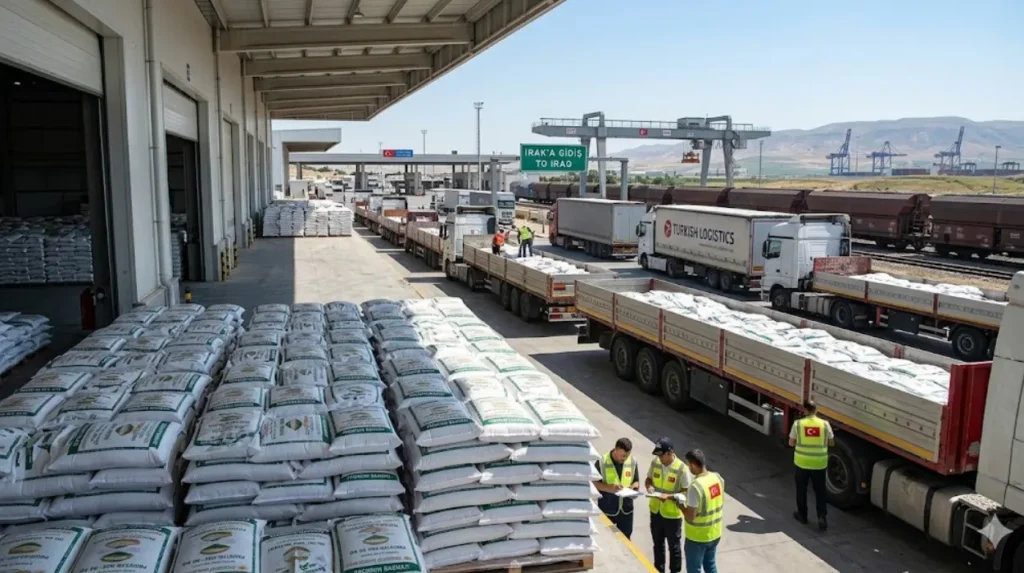
Turkish logistics providers unload cargo and transfer shipments into bonded warehouses. Customs authorities inspect documentation before transit approval.
Re-export operators prepare destination paperwork for Iraqi buyers. Trucking networks then dispatch cargo toward Iraqi commercial centers including Baghdad, Basra, Erbil, and Mosul.
With the operational process established, the next question concerns the infrastructure supporting this trade corridor.
What Are the Key Components of the Turkey-Iraq Rice Transit Corridor?
The corridor depends on ports, warehouses, customs systems, transport networks, certification procedures, and cross-border trade infrastructure.
Trade corridors operate through interconnected systems rather than single transport routes.
Which Turkish Ports Support Rice Transit Operations?
Mersin, Istanbul, Izmir, Gemlik, and Iskenderun serve as major cargo handling locations for regional trade movements.
Turkish ports process containerized agricultural cargo from international suppliers. Port operators provide unloading, storage, customs inspection, and cargo consolidation services.
Mersin holds particular importance because of its proximity to Middle Eastern trade routes. Logistics companies use Mersin for cargo redistribution toward Iraq and neighboring countries.
Which Certifications Support Rice Transit Trade?
Phytosanitary certificates, certificates of origin, fumigation certificates, quality reports, and customs declarations support compliant trade flows.
Rice exports require documentation verification before entering international markets.
Required export documents include:
- Certificate of Origin
- Phytosanitary Certificate
- Fumigation Certificate
- Commercial Invoice
- Packing List
- Bill of Lading
- Quality Inspection Report
Certification authorities inspect and certify cargo before shipment. Customs authorities verify documents during border clearance procedures.
Which Rice Grades Move Through Turkey Toward Iraq?
1121 Basmati, Super Kernel Basmati, 1509 Basmati, Steam Basmati, White Basmati, and Golden Sella Basmati represent major traded grades.
Rice grades differ according to grain length, processing method, and end-use requirements.
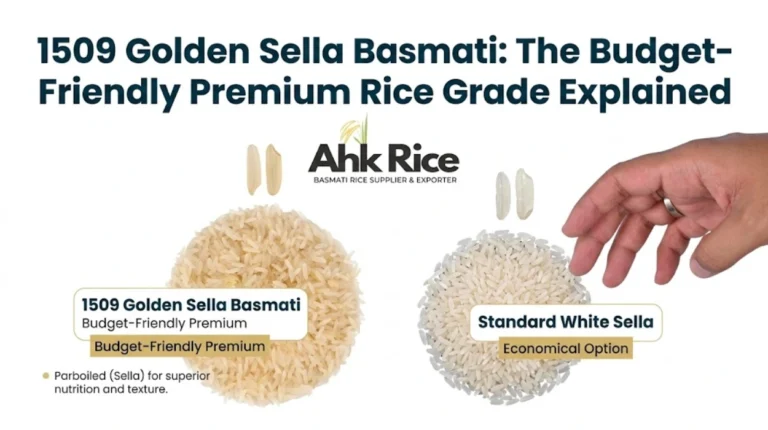
For example, Golden Sella Basmati differs from Steam Basmati. Golden Sella undergoes parboiling before milling. Steam Basmati receives steam treatment after processing. Golden Sella retains stronger grain structure during large-scale catering operations. Steam Basmati offers a softer texture for household consumption.
With the corridor components defined, the next question concerns the commercial advantages they create.
What Benefits Does Turkey Provide for Pakistan-Iraq Rice Trade?
Turkey provides market access, logistics flexibility, inventory management, regional distribution, customs support, and re-export opportunities.
Trade hubs reduce dependence on single shipping routes.
Turkish warehousing enables inventory positioning closer to Iraqi buyers. Regional distributors can maintain stock availability and respond faster to purchasing requirements.
Turkey also connects exporters with multiple neighboring markets. Cargo entering Turkey gains access to Iraq, Syria, Georgia, Azerbaijan, and parts of Eastern Europe through established logistics networks.
Commercial buyers often prefer regional stock availability. Warehousing inside Turkey reduces lead times compared with production-to-delivery models.
Trade infrastructure creates additional operational benefits.
How Does Turkey Improve Supply Chain Efficiency?
Turkey centralizes storage, documentation, transportation, and regional distribution within one integrated logistics ecosystem.
Integrated logistics systems reduce administrative complexity.
Warehousing facilities consolidate shipments from multiple suppliers. Customs systems process cargo documentation through established procedures. Transportation providers connect ports with inland markets through road and rail infrastructure.
Supply chain efficiency becomes especially important for food commodities because inventory timing directly affects purchasing cycles.
With the benefits explained, the next question examines actual market applications.
How Is Turkey Used in Real Rice Trade Scenarios?
Turkey serves as a storage location, redistribution center, consolidation point, and re-export platform for regional rice trade.
Trade hubs create flexibility across different commercial models.
How Do Distributors Use Turkey as a Regional Gateway?
Distributors import rice into Turkey, store inventory locally, and dispatch orders according to market demand.
Regional distributors often maintain warehouse inventory rather than waiting for every shipment to arrive directly from origin countries.
Stored inventory supports faster order fulfillment.
This model becomes important for foodservice companies, wholesalers, retailers, and institutional buyers.
How Do Iraqi Buyers Benefit from Turkish Transit Trade?
Iraqi buyers gain access to inventory availability, shorter replenishment cycles, and broader supplier networks.
Iraq remains one of the largest rice-consuming countries in the Middle East. Imported rice satisfies a significant share of national demand (source: FAO Rice Market Monitor, 2025).
Turkish logistics networks allow buyers to source inventory already positioned within the region rather than waiting for overseas production cycles.
A related topic involves understanding how different basmati grades fit Turkish domestic demand and re-export demand. Readers seeking deeper knowledge about grade selection, domestic consumption patterns, and redistribution channels can explore the article on how Turkish buyers evaluate basmati specifications across local and regional markets.
With practical applications covered, the next question addresses common misunderstandings surrounding the trade route.
What Misconceptions Exist About Turkey Transit Trade for Rice?
Turkey transit trade is often confused with direct importing, product transformation, and country-of-origin changes.
Misunderstandings create confusion in international trade discussions.
Does Transit Through Turkey Change Rice Origin?
No. Pakistani rice remains Pakistani rice regardless of Turkish transit handling.
Country of origin depends on production location.
Rice cultivated and harvested in Pakistan retains Pakistani origin status after storage, warehousing, or redistribution through Turkey.
Certificates of Origin verify production country during customs procedures.
Is Transit Trade the Same as Re-Export Trade?
No. Transit trade focuses on cargo movement, while re-export trade includes commercial redistribution after importation.
Transit cargo passes through logistics systems before reaching final destinations.
Re-export activity involves import procedures followed by resale and export procedures. Both models operate within Turkish trade infrastructure, but they serve different commercial purposes.
Does Turkey Replace Direct Pakistan-Iraq Trade?
No. Turkey complements direct trade by providing an alternative route and distribution platform.
Direct exports remain important for large-volume contracts.
Transit models support inventory management, regional redistribution, and multi-market supply strategies.
Understanding these distinctions clarifies how Turkish logistics systems fit within broader regional trade networks.
Why Does Turkey Continue Expanding as a Gateway Between Pakistan and Iraq?
Turkey combines geographic positioning, logistics infrastructure, customs expertise, and regional connectivity within a single trade ecosystem.
Trade hubs succeed because they connect producers and consumers efficiently.
Pakistan supplies globally recognized basmati rice varieties from Punjab cultivation zones. Iraq maintains consistent import demand for rice consumption. Turkey links these commercial interests through ports, warehouses, customs systems, and transportation corridors.
Turkey transit trade supports cargo movement from production centers to consumption markets. Rice travels through defined processing stages, verified certification procedures, structured logistics networks, and established distribution systems before reaching buyers.
Turkey’s role as a transit hub demonstrates how geography, infrastructure, and trade policy work together to connect agricultural exports with regional demand.
Frequently Asked Questions
How does Turkey help Pakistan export rice to Iraq?
Turkey helps Pakistan export rice to Iraq by providing access to established ports, bonded warehouses, customs services, and regional transportation networks. Pakistani rice shipments can enter Turkey, undergo transit or re-export procedures, and then move efficiently to Iraqi markets through road and logistics corridors.
Why is Turkey considered a transit hub for Pakistan-Iraq rice trade?
Turkey is considered a transit hub because it connects Asia, Europe, and the Middle East through strategic trade routes. Turkish logistics infrastructure supports cargo storage, customs clearance, and redistribution, making it an effective gateway for Pakistani basmati rice entering Iraq and neighboring markets.
Which Pakistani rice varieties are commonly traded through Turkey?
The most commonly traded Pakistani rice varieties through Turkey include 1121 Basmati Rice, Super Kernel Basmati Rice, 1509 Basmati Rice, White Basmati Rice, Steam Basmati Rice, and Golden Sella Basmati Rice. These grades serve wholesale, retail, foodservice, and institutional buyers across Iraq and the wider Middle East.
Does rice shipped through Turkey lose its Pakistani origin?
No. Rice cultivated, harvested, and processed in Pakistan remains Pakistani in origin even when it passes through Turkish ports or warehouses. Official Certificates of Origin and export documentation verify the country where the rice was produced and processed.
What are the advantages of using Turkey as a gateway to Iraq for rice exports?
Turkey offers faster regional distribution, warehousing options, inventory management, and access to established Iraq-bound logistics networks. Using Turkey as a gateway allows exporters and importers to position rice closer to Iraqi buyers, improve supply chain flexibility, and support continuous product availability in the market.