China’s Premium Rice Import Market Outlook and Opportunities for Pakistani Exporters in 2026
China’s premium rice import market continues to expand in 2026 because urban consumers demand higher-quality grains, food service operators require differentiated rice products, and imported specialty rice occupies a distinct position from domestic production. Here is why: premium rice consumption grows alongside income levels, international cuisine adoption, and demand for premium food experiences.
What Is China’s Premium Rice Import Market in 2026?
China imports premium rice to satisfy demand for specialty grains, including Basmati, Jasmine, organic rice, aromatic rice, and high-grade long-grain varieties that domestic production does not fully supply.
China is one of the world’s largest rice producers. Domestic cultivation satisfies most staple rice demand. Premium imported rice serves a different market segment. Imported rice targets consumers seeking aroma, grain length, texture, and culinary characteristics that differ from local varieties.
Premium rice includes several categories. Examples include Pakistani Basmati rice, Indian Basmati rice, Thai Jasmine rice, organic rice, and specialty aromatic rice. Each category serves distinct consumer preferences and food applications.
Chinese consumers increasingly purchase imported food products through supermarkets, specialty retailers, e-commerce platforms, and hospitality channels. Premium rice benefits from this trend because consumers associate imported products with quality, traceability, and authenticity.
China’s premium rice market consists of retail consumers, restaurants, hotels, catering companies, and food manufacturers. These buyers evaluate rice based on aroma, grain length, cooking performance, and consistency.
How Does China’s Premium Rice Import Market Work?
Premium rice enters China through licensed importers, passes customs and quality inspections, moves into distribution networks, and reaches consumers through retail and food service channels.
Rice imports follow a structured supply chain. Importers source rice from exporting countries. Exporters process, package, inspect, and ship rice according to Chinese import requirements.
The import process includes several stages:
- Source rice from approved exporting countries.
- Inspect product quality before shipment.
- Certify compliance with import regulations.
- Load containers at the export port.
- Ship cargo to Chinese ports.
- Clear customs inspections.
- Distribute products through wholesale channels.
- Deliver products to retailers and food service operators.
Chinese importers evaluate suppliers using measurable specifications. Examples include grain length, moisture content, broken grain percentage, purity level, and packaging standards.
Food service operators often prioritize cooking performance. Retail buyers focus on aroma, origin, branding, and packaging presentation. Both groups require consistency across multiple shipments.
Market operation explains product movement, while the next section identifies the main components shaping demand and supply.
What Are the Key Components of China’s Premium Rice Import Market?
Consumer demand, import regulations, distribution networks, food service growth, product differentiation, and quality certification determine premium rice market performance.
Consumer Demand
Consumer demand drives market growth. Urban households increasingly purchase premium food products. Premium rice consumption grows in major cities such as Beijing, Shanghai, Guangzhou, and Shenzhen.
Higher-income consumers prefer differentiated rice varieties. Examples include aromatic Basmati rice and premium Jasmine rice.
Import Regulations
Import regulations protect food safety and product quality. Chinese authorities require compliance with phytosanitary standards, labeling requirements, and inspection protocols.
Importers prioritize suppliers capable of maintaining consistent compliance across shipments.
Distribution Networks
Distribution networks connect importers with end users. Examples include supermarket chains, food distributors, online marketplaces, and hospitality suppliers.
Efficient distribution increases product availability and market penetration.
Food Service Expansion
Food service demand supports premium rice imports. International restaurants, hotels, catering businesses, and premium dining establishments require specialty rice products.
Basmati rice benefits from growth in Middle Eastern, South Asian, and international cuisine restaurants.
Quality Certification
Quality certification supports buyer confidence. Importers evaluate laboratory testing, traceability systems, and international certifications before approving suppliers.
These market components explain demand drivers and prepare the discussion of benefits generated by premium rice imports.
What Benefits Does China’s Premium Rice Import Market Create?
Premium rice imports provide consumer choice, support food service diversification, improve product quality standards, and create international trade opportunities.
Consumers benefit from broader product selection. Imported rice introduces new textures, aromas, and culinary experiences.
Restaurants benefit from access to authentic ingredients. Authentic ingredients improve menu quality and support cuisine-specific preparation methods.
Importers benefit from product differentiation. Specialty rice categories occupy premium market positions and generate higher value than commodity rice.
Exporting countries benefit from increased market access. Premium rice products compete based on quality attributes rather than only price.
The premium segment also encourages stronger quality management systems. Exporters invest in testing, grading, sorting, and certification processes to meet buyer requirements.
Benefits explain why demand exists. The next question examines where imported premium rice is actually used.
What Are the Main Use Cases for Premium Imported Rice in China?
Premium imported rice serves retail households, restaurants, hotels, catering companies, luxury food retailers, and specialty food manufacturers.
Retail Consumption
Retail consumers purchase imported rice for home cooking. Aromatic rice varieties attract buyers seeking premium dining experiences.
Pack sizes commonly range from 1 kg to 10 kg for household use.
Restaurant Applications
Restaurants use imported rice for cuisine authenticity. Examples include biryani, pilaf, kabsa, mandi, and specialty rice dishes.
Long-grain Basmati rice performs particularly well in these applications because grains remain separate after cooking.
Hospitality Sector
Hotels require consistent rice quality. Premium hospitality operators prioritize grain appearance, aroma, and cooking reliability.
Consistency supports customer satisfaction across large-scale operations.
Catering Operations
Catering businesses require rice that performs well in bulk preparation. Premium rice varieties maintain texture and appearance during large-volume service.
Food Manufacturing
Food manufacturers incorporate specialty rice into value-added products. Examples include ready meals, frozen meals, and premium packaged food products.
Understanding these use cases helps explain why specific rice origins gain market attention in China.
Why Do Pakistani Exporters Have Opportunities in China’s Premium Rice Market?
Pakistani exporters possess advantages in aromatic rice production, Basmati cultivation expertise, processing infrastructure, and competitive export capabilities.
Pakistan produces globally recognized Basmati rice varieties. Examples include 1121 Basmati, Super Kernel Basmati, and 1509 Basmati.
Punjab serves as the primary Basmati cultivation region. The area’s climate, soil composition, and irrigation systems support aromatic rice production.
Pakistani exporters process rice through specialized facilities. Processing stages include:
- Clean the harvested paddy.
- Dry the grain.
- De-husk the paddy.
- Mill the rice.
- Polish the grain.
- Grade by specification.
- Sort through color sorters.
- Inspect product quality.
- Package for export.
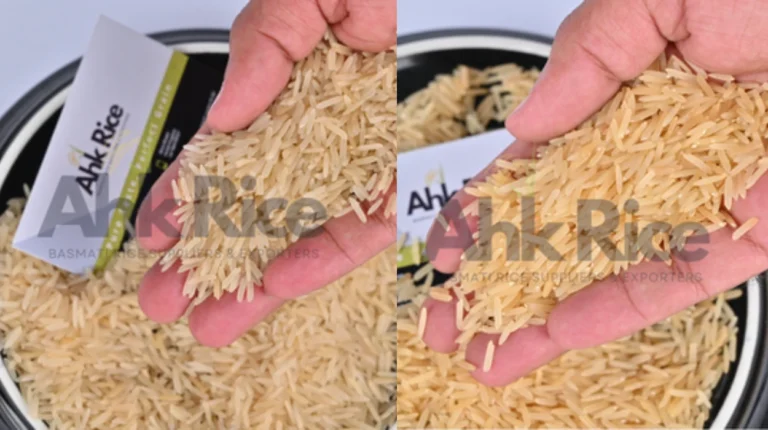
AHK Rice and other Pakistani exporters supply multiple processing categories. Examples include White Basmati, Steam Basmati, Golden Sella Basmati, and Parboiled Basmati.
Chinese buyers seeking premium aromatic rice evaluate these characteristics carefully. Long grain length, aroma retention, cooking performance, and appearance influence procurement decisions.
Buyers researching sourcing methods often examine supply chains and importer requirements before selecting suppliers. Detailed procurement procedures are discussed in the related article about sourcing Pakistani Basmati for Chinese bulk purchase.
Opportunities depend on demand growth, but misconceptions often create confusion about the market.
What Common Problems and Misconceptions Exist About China’s Premium Rice Imports?
Many buyers assume imported rice replaces domestic rice, premium rice serves only luxury consumers, or all imported rice categories compete directly with each other.
Misconception: Imported Rice Replaces Domestic Production
Imported rice occupies a specialized segment. Domestic production continues to satisfy the majority of staple rice demand.
Premium imported products address different consumer preferences.
Misconception: Premium Rice Targets Only Wealthy Consumers
Premium rice reaches multiple customer groups. Examples include middle-income households, restaurants, catering businesses, and specialty retailers.
Growing urban populations increase demand beyond luxury consumers.
Misconception: All Premium Rice Varieties Are Identical
Rice varieties differ significantly. Basmati rice offers elongated grains and distinct aroma. Jasmine rice provides a softer texture and floral fragrance.
Different applications require different specifications.
Misconception: Price Alone Determines Supplier Selection
Importers evaluate several factors simultaneously. Examples include quality consistency, food safety compliance, packaging standards, logistics reliability, and certification status.
Understanding these misconceptions improves market analysis and supports informed sourcing decisions.
Which Certifications Apply to Premium Rice Exports for China?
Phytosanitary compliance, food safety certifications, quality testing documentation, and traceability systems support premium rice exports to China.
Exporters maintain compliance through documented quality management processes.
Common certifications and documents include:
- Phytosanitary Certificate
- Certificate of Origin
- Fumigation Certificate
- Health Certificate
- Laboratory Test Reports
- Food Safety Management Certification
- HACCP Certification
- ISO 22000 Certification
Importers verify documentation before shipment approval. Quality assurance systems support consistent compliance across multiple export consignments.
Certification requirements connect directly to buyer confidence and long-term trade relationships.
What Is the Outlook for China’s Premium Rice Import Market in 2026?
China’s premium rice segment continues expanding through urban consumption growth, food service development, international cuisine adoption, and demand for differentiated food products.
Premium rice occupies a distinct market position. Consumer demand supports continued imports of aromatic and specialty rice categories.
Food service operators require authentic ingredients. Retail consumers seek premium food experiences. Importers prioritize quality consistency and regulatory compliance.
Pakistani Basmati exporters participate in this environment through specialized rice cultivation, advanced processing systems, and internationally recognized aromatic rice varieties.
China’s premium rice import market remains a significant area of interest for global rice exporters in 2026, particularly suppliers capable of delivering certified, traceable, and specification-driven products.
Frequently Asked Questions
Does China import Basmati rice?
Yes. China imports Basmati rice as part of its premium rice segment. Basmati serves retail consumers, restaurants, hotels, and specialty food distributors.
Which Pakistani rice varieties attract Chinese buyers?
1121 Basmati, Super Kernel Basmati, and 1509 Basmati attract interest because of their aroma, grain length, and cooking performance.
Why is Basmati rice considered premium?
Basmati rice contains natural aroma, elongated grains, and distinct cooking characteristics. These features differentiate it from standard rice varieties.
What documents are required for rice exports to China?
Common requirements include a Phytosanitary Certificate, Certificate of Origin, Health Certificate, laboratory reports, and import compliance documentation.
Which Chinese sectors consume imported premium rice?
Retail households, restaurants, hotels, catering companies, luxury retailers, and food manufacturers consume imported premium rice.