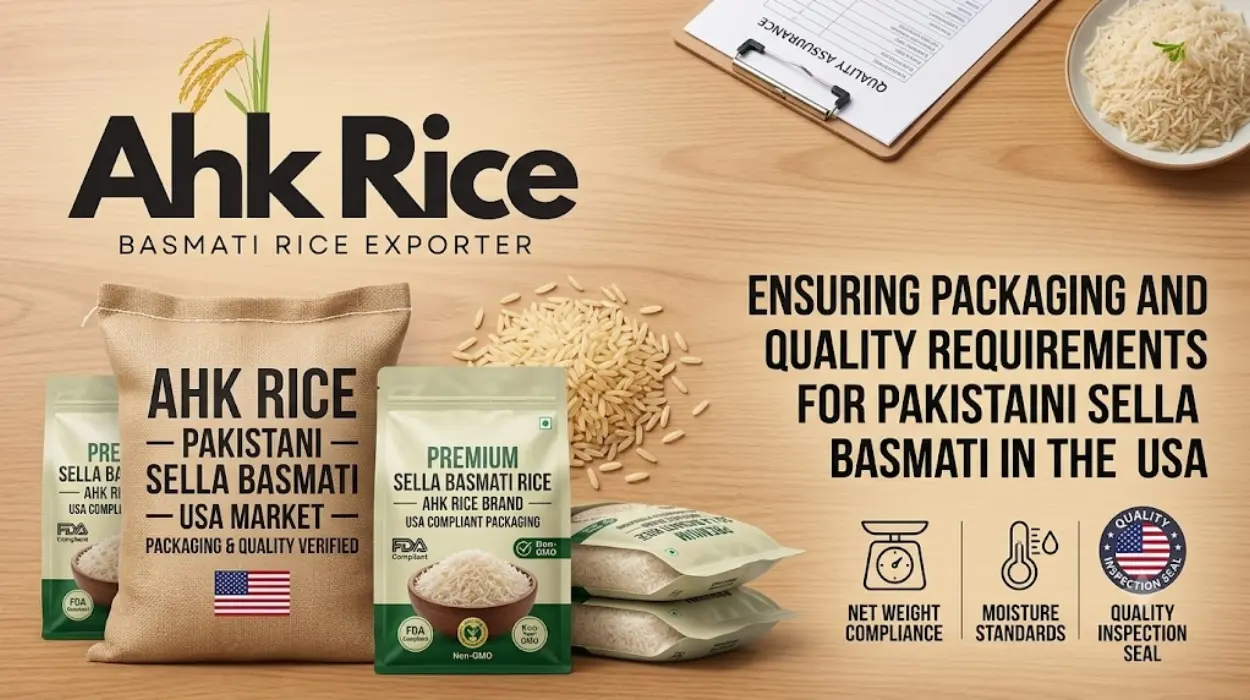
Packaging and Quality Requirements for Pakistani Sella Basmati Rice in the USA
Pakistani Sella Basmati Rice exported to the United States must meet strict packaging, labeling, food safety, and quality requirements. Buyers that comply with FDA regulations, use export-grade packaging, and maintain consistent quality specifications achieve smoother customs clearance and stronger retail performance. Here is why: US importers evaluate packaging integrity, traceability, grain consistency, and food safety before approving suppliers.
The United States remains one of the most quality-focused rice import markets. Retailers, distributors, wholesalers, and ethnic food chains expect rice to arrive in consumer-ready or bulk packaging formats that comply with American food regulations. Understanding these requirements helps importers reduce risk and select the correct supplier.
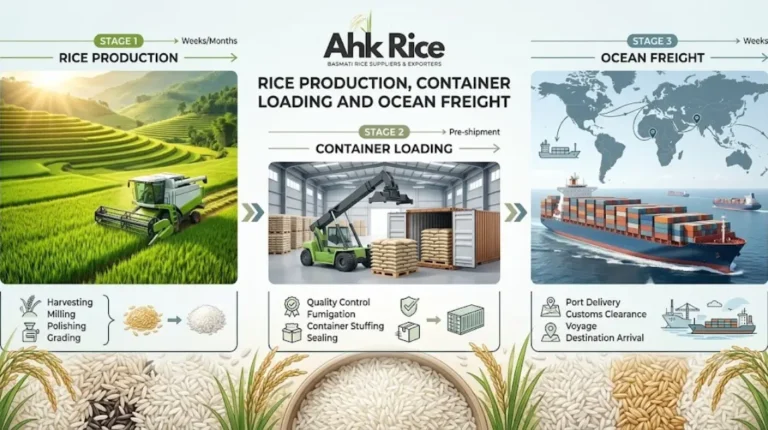
Importers evaluating suppliers should first understand how Pakistani Sella Basmati Rice is processed and standardized for export. Our guide on understanding the complete journey of Pakistani Sella Basmati from cultivation to export explains the production stages that directly influence quality performance in destination markets.
AHK Rice’s Pakistani Sella Basmati Rice Export Process for US Importers service supports buyers requiring end-to-end export documentation, custom packaging, quality verification, and shipment coordination from Pakistan to the United States.
What packaging solutions are available for Pakistani Sella Basmati Rice exports to the USA?
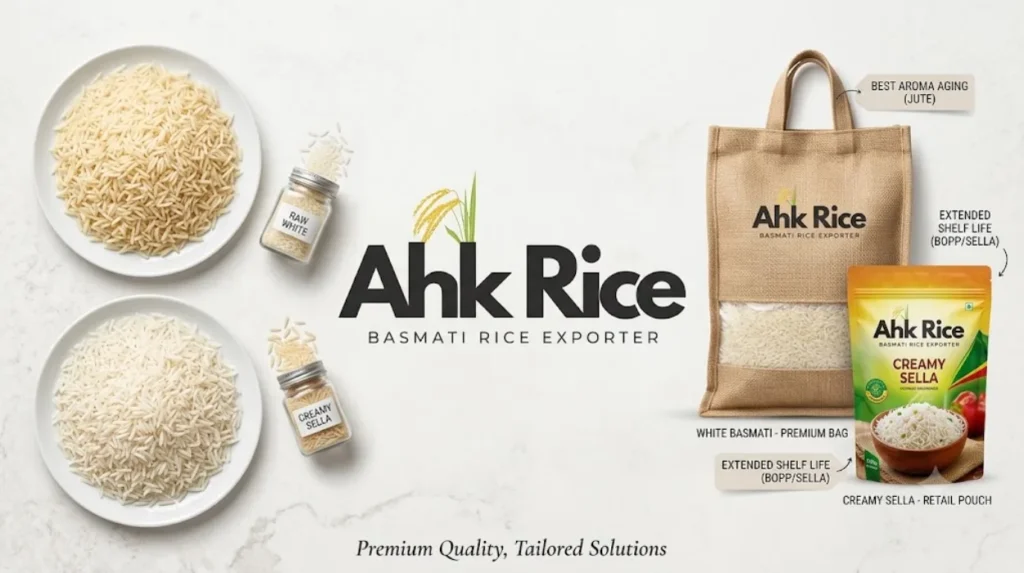
Consumer packs from 1 kg to 10 kg and bulk packs from 20 kg to 50 kg dominate the US market because they satisfy retail, wholesale, foodservice, and ethnic distribution channels efficiently.
Consumer Retail Packaging
Consumer packaging targets supermarkets, ethnic grocery chains, and online retailers. These packs focus on shelf appeal, brand visibility, and convenience.
Common retail packaging options include:
- BOPP laminated bags
- PP woven bags with printed branding
- Vacuum packs
- Stand-up pouches
- Handle bags
US retailers prefer high-resolution printing, nutritional information panels, barcode integration, and FDA-compliant labeling.
Foodservice Packaging
Foodservice distributors supply restaurants, caterers, and institutional kitchens.
Common foodservice formats include:
- 20 kg PP bags
- 25 kg PP bags
- 40 lb bags
- 50 lb bags
Foodservice buyers prioritize durability and transportation efficiency over shelf appearance.
Private Label Packaging
Private label packaging allows importers to market rice under their own brand.
Features include:
- Custom artwork
- Nutritional panels
- QR code traceability
- Batch identification
- Retail-ready design
Private label programs continue growing among US ethnic food distributors.
Packaging selection determines market positioning. The next step is understanding how quality specifications influence buyer approval.
How do different quality approaches compare for the US market?
Premium export specifications achieve higher acceptance rates because US buyers prioritize grain length, purity, moisture control, and consistency across shipments.
Specification Comparison Table
| Attribute | Premium Export Grade | Standard Export Grade |
|---|---|---|
| Grain Length | 8.20–8.40 mm | 7.80–8.10 mm |
| Broken Grains | 1–2% | 5–7% |
| Moisture | 12–13% | 13–14% |
| Foreign Matter | 0.1% max | 0.5% max |
| Chalkiness | Minimal | Moderate |
| Purity | 95–98% | 90–94% |
| Color Sorting | Advanced optical sorting | Basic sorting |
Premium specifications command stronger acceptance among supermarkets and specialty food retailers.
Quality Control Strategy
Exporters maintain consistency through a defined processing sequence.
- Clean the paddy.
- Parboil the grain.
- Dry the rice.
- Mill the kernels.
- Polish the surface.
- Sort by length.
- Color sort impurities.
- Inspect specifications.
- Load export containers.
Each stage directly affects final quality outcomes.
Quality standards determine market suitability. Regional buyer preferences further influence specification choices.
Which quality grades work best in different US market segments?
1121 Golden Sella and 1121 Creamy Sella dominate premium retail channels, while standard Sella grades serve foodservice and value-focused distribution networks.
Northeast USA Market
The Northeast contains large South Asian and Middle Eastern populations.
Preferred grades include:
Buyers prioritize appearance, elongation, aroma retention, and retail presentation.
Southern USA Market
Foodservice demand remains strong throughout Texas, Georgia, and Florida.
Preferred grades include:
- 1121 Sella
- 1509 Sella
- Standard Basmati Sella
Buyers focus on cooking yield and cost efficiency.
Market Preference Comparison
| Region | Preferred Grade | Primary Use |
|---|---|---|
| Northeast USA | 1121 Golden Sella | Retail |
| Midwest USA | 1121 Creamy Sella | Distribution |
| Texas | 1121 Sella | Foodservice |
| Florida | 1509 Sella | Catering |
| California | Premium 1121 Golden Sella | Retail & Ethnic Stores |
Regional demand patterns influence packaging requirements and pricing strategies.
What are the pros and cons of different packaging methods?
Laminated BOPP bags provide the strongest retail presentation, while woven polypropylene bags offer the best transportation durability and cost efficiency.
Packaging Method Comparison
| Packaging Type | Advantages | Limitations |
|---|---|---|
| BOPP Laminated | Premium appearance, moisture resistance | Higher cost |
| PP Woven | Strong durability, economical | Lower shelf appeal |
| Vacuum Pack | Extended freshness | Increased packaging cost |
| Stand-Up Pouch | Modern retail appeal | Lower bulk efficiency |
| Paper Composite Bag | Sustainable positioning | Reduced moisture protection |
Example: Retail Importer
A New York ethnic grocery chain benefits from BOPP laminated packaging because product presentation directly influences shelf sales.
Example: Foodservice Distributor
A Texas catering distributor benefits from woven PP bags because warehouse handling efficiency matters more than retail appearance.
Packaging decisions affect both logistics and customer perception. Pricing considerations further influence final packaging selection.
How do price per MT and shelf life compare across packaging and quality levels?
Premium grades generate higher selling prices and longer marketability because tighter moisture control and stronger packaging preserve product quality.
Price Comparison per Metric Ton
| Grade | Estimated Export Price Range |
|---|---|
| 1121 Golden Sella | $1,150–$1,350/MT |
| 1121 Creamy Sella | $1,050–$1,250/MT |
| Super Kernel Sella | $950–$1,150/MT |
| 1509 Sella | $850–$1,050/MT |
Prices vary according to harvest conditions, freight costs, and destination requirements (source: REAP export data, December 2025).
Shelf Life Comparison
| Packaging Type | Shelf Life |
|---|---|
| Vacuum Pack | 24 Months |
| BOPP Laminated | 18–24 Months |
| PP Woven | 12–18 Months |
| Paper Composite | 12 Months |
Vacuum packaging lasts longer than woven packaging. In humid storage environments, vacuum-packed rice maintains quality for up to 24 months. In distributor warehouses with fluctuating temperatures, woven bags typically perform within a 12–18 month range.
Price and shelf life establish commercial value. The final selection depends on importer objectives.
What decision factors should US importers evaluate before selecting a supplier?
Quality consistency, packaging compliance, documentation accuracy, traceability, and logistics capability determine long-term import success.
Decision Framework Table
| Decision Factor | Why It Matters |
|---|---|
| Quality Consistency | Reduces customer complaints |
| Packaging Compliance | Prevents customs issues |
| Food Safety Testing | Supports FDA expectations |
| Traceability Systems | Improves recall readiness |
| Export Experience | Reduces logistics risk |
Required Export Documents
- Commercial Invoice
- Packing List
- Certificate of Origin
- Phytosanitary Certificate
- Bill of Lading
- Quality Inspection Report
- Fumigation Certificate
Supplier Evaluation Checklist
- Verify processing facilities.
- Inspect quality certifications.
- Review laboratory reports.
- Confirm packaging capabilities.
- Evaluate shipment history.
Quality verification protects importer margins and brand reputation. The correct supplier combines reliable processing, compliant packaging, and documented quality controls.
Pakistani Sella Basmati Rice succeeds in the USA when exporters combine premium quality specifications with compliant packaging systems. Retail buyers prefer laminated consumer packaging and premium 1121 grades. Foodservice distributors prioritize durability, cooking performance, and logistics efficiency. Importers that evaluate packaging standards, shelf life, quality specifications, and supplier capabilities achieve better market performance and fewer supply chain disruptions.
Frequently Asked Questions
What packaging sizes are most common for Pakistani Sella Basmati Rice in the USA?
US importers commonly purchase 1 kg, 2 kg, 5 kg, and 10 kg retail packs. Foodservice distributors prefer 20 kg, 25 kg, and 50 lb bags. Packaging selection depends on the target customer segment. Retail stores prioritize presentation while foodservice buyers focus on handling efficiency. Both formats must meet labeling and traceability requirements.
Does the FDA require special labeling for imported rice?
FDA regulations require accurate food labeling and traceability information. Importers must include nutritional information, product identity, net weight, and manufacturer details. Labels should remain clear and readable throughout distribution. Compliance reduces customs delays and regulatory issues. Proper documentation supports smooth market entry.
Which Sella Basmati grade is preferred in the US retail market?
1121 Golden Sella is the leading premium grade for retail channels. Consumers value its long grain length, cooking performance, and visual appeal. Specialty grocery chains frequently stock this grade. Premium positioning supports stronger shelf presence. Many importers use it for branded retail programs.
How long can packaged Sella Basmati Rice be stored?
Storage life depends on packaging type and warehouse conditions. Vacuum-packed rice can remain marketable for up to 24 months. Laminated BOPP packaging generally supports 18 to 24 months of storage. Moisture control remains critical throughout the supply chain. Proper storage preserves grain quality and aroma.
What quality specifications do US importers check first?
Importers typically evaluate grain length, broken percentage, moisture content, purity, and color consistency. These specifications influence cooking performance and customer satisfaction. Laboratory testing verifies compliance before shipment. Consistent specifications reduce product claims and returns. Premium buyers often request detailed inspection reports.