Why Pakistani Sella Basmati Rice Fits the German Specialty Food Market
Pakistani Sella Basmati Rice fits the German specialty food market because it combines long grain length, consistent cooking performance, authentic Basmati aroma, strict quality controls, and international certifications that align with importer and consumer requirements. Here is why: Germany imports specialty rice products that deliver quality, traceability, and product consistency across retail, wholesale, and ethnic food channels.
Pakistani Sella Basmati Rice is a premium parboiled rice produced from Basmati paddy cultivated in Punjab, Pakistan. The grain undergoes a controlled parboiling process before milling. This process strengthens the grain structure and improves cooking stability.
Germany represents one of Europe’s most quality-focused food markets. Importers, distributors, and specialty food retailers evaluate rice based on grain length, cooking behavior, certification compliance, and supply consistency. Pakistani Sella Basmati Rice aligns with these requirements because it delivers measurable specifications and recognized quality standards.
AHK Rice operates within Pakistan’s Basmati-growing region and supplies multiple Basmati varieties through complete processing, grading, packaging, and export systems. Understanding why Sella Basmati fits Germany starts with understanding the product itself.
What Is Pakistani Sella Basmati Rice?
Pakistani Sella Basmati Rice is a parboiled Basmati rice known for grain lengths exceeding 8 mm, strong cooking performance, low breakage rates, and characteristic Basmati aroma.
Pakistani Sella Basmati Rice originates from the fertile plains of Punjab. Farmers cultivate Basmati varieties under specific climatic conditions that support grain elongation and aroma development.
The word “Sella” refers to the parboiling process. Processors soak, steam, and dry the paddy before milling. This treatment transfers nutrients from the outer layers into the grain and strengthens the kernel.
German specialty food buyers often seek differentiated products. Sella Basmati provides a distinct combination of visual appeal, cooking consistency, and premium positioning.
What Grades Are Available?
Pakistani exporters supply several commercial Sella grades.
1121 Golden Sella Basmati Rice
Grain length: 8.20–8.40 mm
1121 Golden Sella is recognized for extra-long grain length and significant post-cooking elongation. German ethnic supermarkets and premium distributors frequently source this grade because of its presentation quality.
1121 Creamy Sella Basmati Rice
Grain length: 8.10–8.35 mm
Creamy Sella offers a lighter appearance than Golden Sella while maintaining similar cooking performance.
Super Kernel Sella Basmati Rice
Grain length: 7.20–7.60 mm
Super Kernel remains one of Pakistan’s traditional Basmati varieties. The variety delivers strong aroma and a balanced grain profile.
1509 Sella Basmati Rice
Grain length: 8.00–8.30 mm
1509 provides high yield, long grain structure, and competitive pricing for importers targeting value-conscious market segments.
With the product definition established, the next question is how the Sella processing method creates these characteristics.
How Does Pakistani Sella Basmati Rice Work?
The Sella process strengthens grains through soaking, steaming, drying, milling, and grading, resulting in improved cooking stability and reduced grain breakage.
Parboiling changes the internal structure of the rice grain. Heat and moisture gelatinize starches before milling.
This process creates several performance benefits important to food service operators, wholesalers, and retailers.
Step-by-Step Processing Method
- Clean the harvested paddy.
- Soak the paddy in controlled water tanks.
- Steam the soaked paddy.
- Dry the steamed paddy.
- Store the dried paddy for stabilization.
- Dehusk the grain.
- Mill the rice.
- Polish the kernels.
- Sort by length and quality.
- Grade according to specification.
- Inspect for quality compliance.
- Package for export.
Each step affects the final product. Grain uniformity depends on accurate sorting. Cooking performance depends on controlled steaming and drying.
AHK Rice and other professional exporters apply multiple inspection points throughout the processing cycle to verify consistency.
With the processing system explained, the next question concerns the components that define product quality.
What Key Components Make Pakistani Sella Basmati Rice Suitable for Germany?
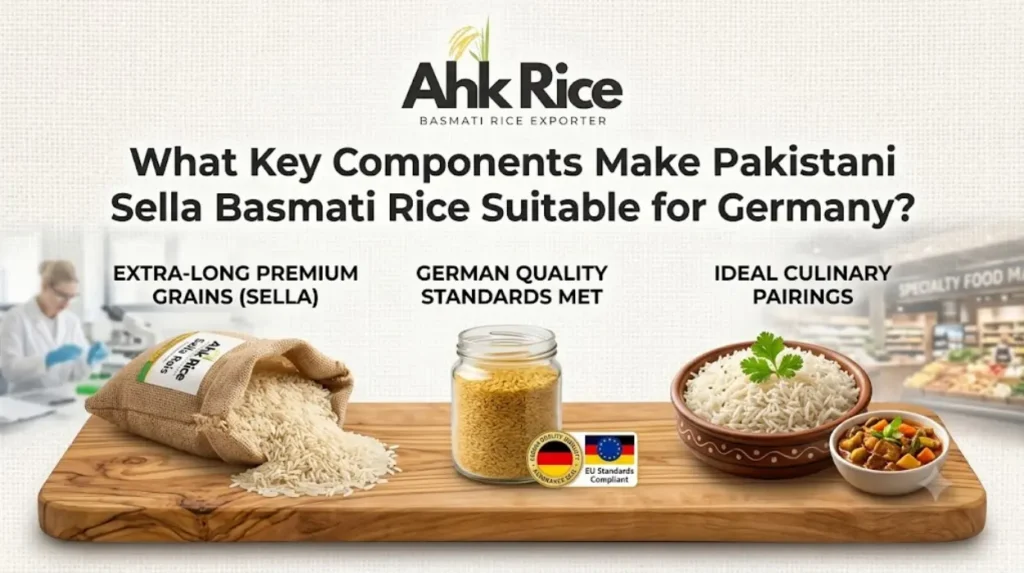
Long grain length, aroma, cooking elongation, low breakage, certification compliance, and traceability define the suitability of Pakistani Sella Basmati Rice for Germany.
German buyers evaluate rice using objective specifications rather than marketing descriptions.
Grain Length
8.00–8.40 mm
Long grain length creates visual differentiation. Premium retail products often emphasize grain appearance on packaging.
Aroma
Basmati aroma develops through natural compounds produced during cultivation and aging. Consumers associate this aroma with authentic South Asian rice.
Cooking Elongation
Up to 2 times original grain length
Elongation improves plate presentation. Restaurants and catering businesses often prioritize this characteristic.
Low Breakage
Typically 1–5% depending on grade
Low breakage improves product consistency and consumer satisfaction.
Uniformity
Colour sorting and grading systems remove defective kernels. Uniform grains support premium retail positioning.
Traceability
Batch tracking supports importer compliance programs and food safety documentation requirements.
These quality components directly influence the practical benefits discussed in the next section.
What Benefits Does Pakistani Sella Basmati Rice Offer?
Superior appearance, cooking consistency, shelf stability, premium positioning, and broad culinary compatibility make Pakistani Sella Basmati Rice valuable for specialty food markets.
German consumers increasingly seek authentic international food products. Basmati rice satisfies this demand through distinct sensory characteristics.
Better Cooking Stability
Sella processing reduces grain breakage during cooking. Food service operators benefit from more consistent results.
Enhanced Presentation
Long grains create visual appeal. Restaurants serving biryani, pilaf, and rice-based dishes value presentation quality.
Improved Storage Performance
Parboiled rice demonstrates stronger shelf stability than many conventional rice types.
Reduced Cooking Loss
Strong kernels remain separate after cooking. This characteristic supports commercial food preparation.
Premium Product Positioning
Specialty retailers use authentic Basmati rice to serve ethnic food consumers and premium food shoppers.
These benefits explain why multiple sectors within Germany import Pakistani Sella Basmati Rice.
Where Is Pakistani Sella Basmati Rice Used in Germany?
Retail chains, ethnic supermarkets, wholesalers, food service companies, and specialty food distributors use Pakistani Sella Basmati Rice across Germany.
Germany has a diverse food market that includes traditional retail channels and international food segments.
Ethnic Food Retailers
South Asian, Middle Eastern, and African communities purchase Basmati rice regularly. Specialty retailers stock multiple grades to serve these customers.
Restaurants
Indian restaurants, Pakistani restaurants, Middle Eastern restaurants, and fusion kitchens use Basmati rice as a menu staple.
Food Service Distributors
Distributors supply hotels, catering companies, and institutional kitchens requiring consistent rice specifications.
Premium Grocery Stores
Premium grocery chains offer authentic Basmati rice to consumers interested in international cuisine.
Wholesale Importers
Importers source container quantities and distribute products across regional markets.
Understanding market applications leads naturally to the certification requirements German buyers expect.
What Certifications Apply to Pakistani Sella Basmati Rice?
ISO, HACCP, BRCGS, phytosanitary compliance, fumigation certification, and food safety documentation support exports to Germany.
Food safety documentation plays a central role in European imports.
ISO Certification
ISO systems verify process management and quality controls.
HACCP
Hazard Analysis and Critical Control Points identify and manage food safety risks.
BRCGS
BRCGS standards support food manufacturing and supply chain requirements.
Phytosanitary Certification
Government authorities issue phytosanitary certificates after inspection of export consignments.
Fumigation Certification
Fumigation documentation verifies treatment according to importing country requirements.
Laboratory Testing
Laboratories test moisture, purity, broken percentage, and contamination parameters.
German importers frequently review certification records before approving suppliers.
Certification requirements often create misconceptions, which makes it important to address common misunderstandings.
What Common Misconceptions Exist About Pakistani Sella Basmati Rice?
Common misconceptions involve aroma loss, nutritional value, cooking quality, and grade differences. Technical specifications provide clear answers to these concerns.
Misconception: Sella Rice Has No Aroma
Parboiling preserves aroma characteristics. Premium grades continue to exhibit authentic Basmati fragrance.
Misconception: All Sella Grades Are Identical
1121, Super Kernel, and 1509 varieties differ in grain length, cooking performance, and market positioning.
Misconception: Parboiling Reduces Quality
Parboiling strengthens grain structure and improves cooking stability.
Misconception: Longer Grain Always Means Better Quality
Quality assessment includes purity, breakage percentage, aroma, moisture level, and grading consistency.
Misconception: Certifications Guarantee Product Performance
Certifications verify systems and compliance. Product specifications verify performance characteristics.
These clarifications complete the picture of why Pakistani Sella Basmati Rice remains relevant in Germany’s specialty food sector.
Why Does Pakistani Sella Basmati Rice Continue to Grow in Germany?
Authenticity, premium quality, consistent specifications, international certifications, and compatibility with multicultural food trends support continued demand for Pakistani Sella Basmati Rice in Germany.
German consumers increasingly purchase authentic international foods. Pakistani Sella Basmati Rice aligns with this trend through distinctive grain characteristics and recognized quality standards.
Importers evaluate measurable specifications. Retailers seek consistent products. Restaurants require reliable cooking performance. Sella Basmati satisfies these requirements through controlled cultivation, professional processing, and standardized grading systems.
Pakistan remains one of the world’s leading Basmati-producing countries, and Sella Basmati continues to hold an important position within Germany’s specialty food market.
Frequently Asked Questions
What is the difference between Sella and Steam Basmati Rice?
Sella Basmati Rice undergoes parboiling before milling. Steam Basmati Rice receives steam treatment without full parboiling. Sella offers stronger grain structure and longer shelf stability.
Which Pakistani Sella grade is most popular in Germany?
1121 Golden Sella Basmati Rice is widely recognized because of its extra-long grain length and strong cooking elongation.
How long is Pakistani Sella Basmati Rice?
Premium 1121 Sella grades typically measure 8.20–8.40 mm before cooking.
Is Pakistani Sella Basmati Rice suitable for restaurants?
Yes. Restaurants use it for biryani, pilaf, rice platters, and catering applications because of its cooking consistency.
What certifications do German importers request?
Importers commonly request HACCP, ISO, phytosanitary certificates, fumigation certificates, and laboratory test reports.
Why does Sella Rice have a golden colour?
The golden appearance develops during the parboiling process when heat treatment affects the grain’s outer layers.