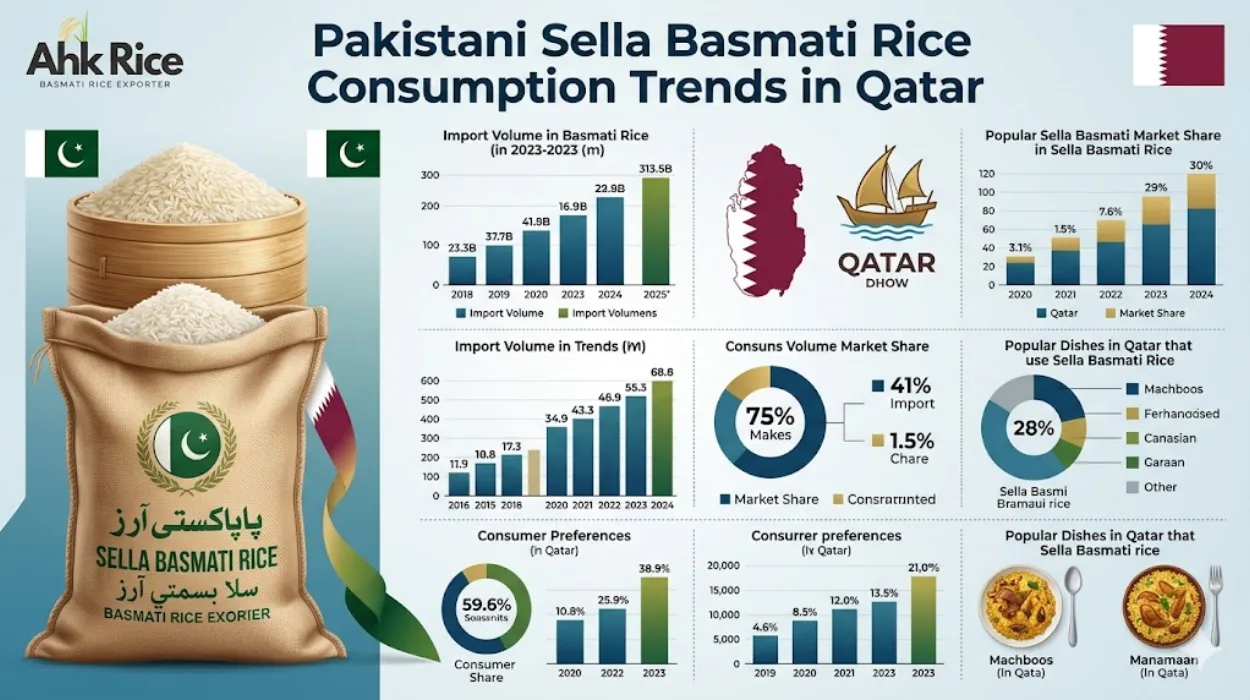
Pakistani Sella Basmati Rice Consumption Trends in Qatar
Pakistani Sella Basmati rice consumption in Qatar continues to grow because consumers prefer long-grain aromatic rice for daily meals, family gatherings, catering services, and hospitality operations. Here is why: Pakistani Sella Basmati rice delivers grain elongation, aroma retention, cooking consistency, and storage stability that match Qatari food consumption patterns.
Qatar imports substantial quantities of Basmati rice to meet domestic demand because local rice cultivation remains limited. Pakistani Sella Basmati rice occupies an important position in this supply chain due to its grain quality, established trade routes, and compatibility with traditional Gulf cuisine.
Understanding consumption trends requires examining the product itself, the processing method, quality specifications, importing patterns, and buyer preferences across the Qatari market.
What Is Pakistani Sella Basmati Rice?
Pakistani Sella Basmati rice is parboiled aromatic long-grain rice processed through soaking, steaming, drying, milling, and grading before export to international markets.
Pakistani Sella Basmati rice originates from the Punjab region of Pakistan. Punjab provides fertile soil, river irrigation networks, and climatic conditions suitable for cultivating premium Basmati varieties.
Sella refers to the parboiling process applied before milling. Parboiling transfers nutrients from the outer layers into the grain kernel. This process improves grain strength and reduces breakage during milling and cooking.
Pakistani Sella Basmati rice differs from white rice because the grain undergoes heat treatment before milling. Pakistani Sella Basmati rice also differs from brown rice because the bran layer is removed after parboiling.
Qatari consumers frequently use Pakistani Sella Basmati rice for dishes such as Machboos, Biryani, Kabsa, and large-scale catering meals. These applications require rice that remains separate after cooking.
Which Pakistani Basmati Varieties Are Commonly Exported as Sella Rice?
Pakistani exporters process several Basmati varieties into Sella grades.
Common varieties include:
- 1121 Basmati Rice
- Super Kernel Basmati Rice
- 1509 Basmati Rice
- PK 386 Basmati Rice
- Kainat Basmati Rice
1121 Basmati rice remains the most recognized export variety because of its extra-long grain length and significant elongation after cooking.
With the definition of Pakistani Sella Basmati rice established, the next question is how the Sella processing method creates the characteristics valued in Qatar.
How Does Pakistani Sella Basmati Rice Processing Work?
The Sella process includes soaking, steaming, drying, milling, grading, sorting, testing, packaging, and export preparation to improve grain strength and cooking performance.
Parboiling changes the internal structure of the grain. This process increases durability during transportation and cooking.
Step 1: Soak the Paddy
Soak the harvested paddy in controlled water tanks. Water penetration prepares the grain for heat treatment and nutrient migration.
Step 2: Steam the Paddy
Steam the soaked paddy under controlled temperature conditions. Steam gelatinizes starch inside the grain and strengthens the kernel.
Step 3: Dry the Paddy
Dry the steamed paddy to safe moisture levels. Proper drying prevents storage damage and preserves grain quality.
Step 4: Mill the Grain
Mill the dried paddy to remove the husk and outer layers. Milling prepares the rice for commercial distribution.
Step 5: Grade the Rice
Grade the rice according to grain length, purity, and broken percentage. Grading ensures buyers receive consistent specifications.
Step 6: Sort the Rice
Sort the rice using optical and mechanical systems. Sorting removes discolored grains, foreign matter, and defects.
Step 7: Inspect the Product
Inspect grain length, moisture, purity, and appearance. Inspection verifies compliance with export specifications.
Step 8: Package the Rice
Package the rice into export-ready bags. Packaging protects the product throughout shipping and distribution.
Step 9: Ship the Rice
Load containers and dispatch shipments through export channels. Shipping connects Pakistani mills with Qatari importers and distributors.
This processing method explains the performance characteristics that drive demand, leading naturally to the key components buyers evaluate.
What Key Components Influence Pakistani Sella Basmati Rice Consumption in Qatar?
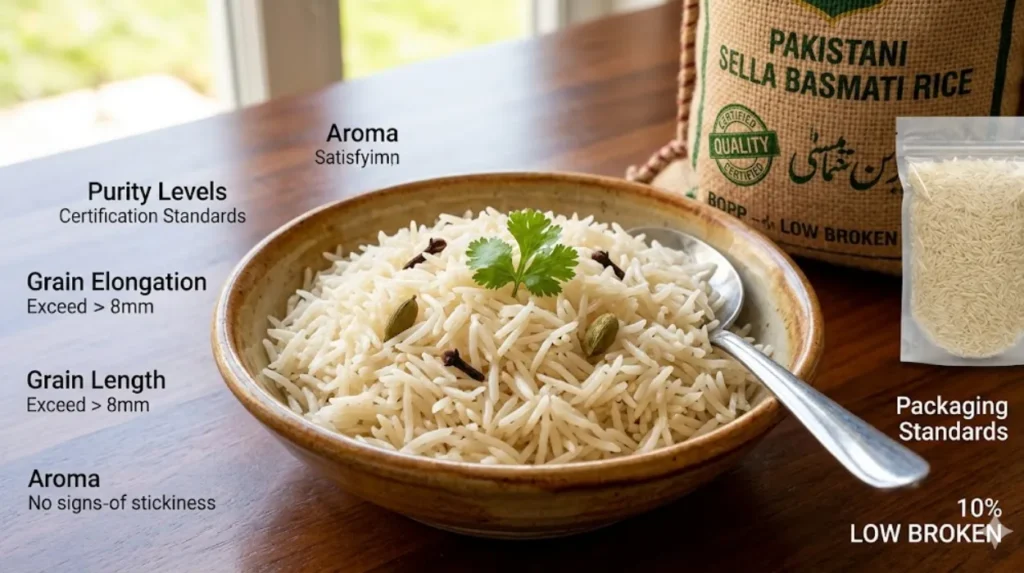
Grain length, aroma, elongation ratio, moisture level, purity, broken percentage, packaging quality, and certification standards influence purchasing decisions in Qatar.
Rice buyers evaluate multiple technical specifications before importing products. These specifications affect cooking performance, storage stability, and consumer acceptance.
Grain Length
Long grains create visual appeal and premium market positioning. Premium Sella Basmati varieties typically exceed 8.00 mm before cooking.
Aroma
Natural Basmati aroma remains a distinguishing characteristic. Aroma contributes significantly to consumer preference in Gulf markets.
Grain Elongation
High-quality Basmati rice expands substantially during cooking. Elongation creates a premium presentation for traditional dishes.
Moisture Content
Controlled moisture improves shelf stability. Export specifications commonly target moisture levels around 12% to 14%.
Purity Levels
High purity reduces contamination and improves consistency. Importers generally require purity levels above 92% depending on grade requirements.
Broken Percentage
Lower broken percentages support premium positioning. Buyers often select specifications ranging from 1% to 5% broken grains.
Packaging Standards
Packaging protects product quality throughout storage and transportation. Common packaging formats include PP bags, BOPP bags, woven sacks, and private-label retail packs.
These technical components explain why buyers select specific grades, which leads directly to the benefits driving consumption growth.
What Benefits Drive Pakistani Sella Basmati Rice Consumption in Qatar?
Long grain appearance, cooking consistency, storage durability, aroma retention, lower breakage, and suitability for Gulf cuisine drive sustained demand.
Pakistani Sella Basmati rice offers characteristics that align with consumer expectations across retail and foodservice sectors.
Cooking Consistency
Sella rice cooks uniformly across large batches. Consistency remains important for restaurants, hotels, and catering companies serving hundreds of meals daily.
Grain Separation
Parboiled grains remain separate after cooking. Separate grains improve presentation and texture in traditional Gulf dishes.
Storage Stability
Sella rice tolerates longer storage periods than many non-parboiled alternatives. Stability supports import distribution and inventory management.
Reduced Breakage
Parboiling strengthens grain structure. Stronger grains experience less damage during handling, packaging, and transportation.
Premium Appearance
Long grains create visual value for consumers. Appearance influences purchasing decisions in supermarkets and specialty food stores.
These advantages explain consumer preference, but actual consumption patterns become clearer when examining practical market use cases.
How Is Pakistani Sella Basmati Rice Used Across Qatar?
Households, restaurants, hotels, catering companies, wholesalers, and retail chains use Pakistani Sella Basmati rice for daily and commercial food preparation.
Consumption extends across multiple market segments.
Household Consumption
Families use Sella Basmati rice for everyday meals. Examples include Machboos, Biryani, rice platters, and festive dishes.
Restaurant Operations
Restaurants require consistent cooking performance. Consistency improves portion control and customer satisfaction.
Hotel Sector
Hotels prioritize presentation and premium quality. Long-grain rice supports buffet service and banquet operations.
Catering Services
Catering companies prepare large meal volumes. Strong grain structure reduces operational losses during cooking.
Retail Distribution
Retailers stock packaged rice for consumer purchases. Packaged products target different income levels and consumption preferences.
Food Processing Applications
Food manufacturers use rice in packaged meal products. Standardized specifications improve production consistency.
Understanding these applications helps explain demand growth, while misconceptions often create confusion about product quality and nutrition.
What Misconceptions Exist About Pakistani Sella Basmati Rice?
Sella rice is not artificial, not chemically treated, and not lower quality than white rice; parboiling is a traditional processing method.
Several misconceptions influence buyer perception.
Misconception 1: Sella Rice Contains Artificial Ingredients
Sella rice contains rice only. The parboiling process uses water, heat, and drying techniques.
Misconception 2: White Rice Is Always Higher Quality
Quality depends on grade specifications and processing standards. Premium Sella grades frequently command higher market value than standard white rice.
Misconception 3: Sella Rice Has No Aroma
Premium Pakistani Sella Basmati rice retains characteristic Basmati aroma. Aroma intensity varies according to variety and aging conditions.
Misconception 4: All Sella Rice Is Identical
Different varieties produce different results. Examples include 1121 Sella, Super Kernel Sella, and 1509 Sella grades.
Misconception 5: Packaging Does Not Affect Quality
Packaging directly affects storage performance. Proper packaging reduces moisture exposure and contamination risks.
Clarifying these misconceptions creates a clearer understanding of consumption behavior and buyer requirements.
Which Markets and Certifications Support Pakistani Sella Basmati Rice Exports to Qatar?
Qatar imports Pakistani Sella Basmati rice through established Gulf trade networks supported by quality certifications, inspection systems, and export documentation.
Pakistan exports Basmati rice extensively across Gulf Cooperation Council countries. Major destinations include Qatar, Saudi Arabia, the United Arab Emirates, Kuwait, Oman, and Bahrain (source: REAP export data, December 2025).
Exporters must comply with documented quality requirements before shipment.
Common Certifications
Certification systems support food safety and quality verification.
Common certifications include:
- ISO Certification
- HACCP Certification
- Halal Certification
- SGS Inspection Reports
- Phytosanitary Certification
- Health Certification
- Food Safety Management Certification
Export Documentation
Documentation facilitates customs clearance and international trade.
Common documents include:
- Commercial Invoice
- Packing List
- Certificate of Origin
- Bill of Lading
- Phytosanitary Certificate
- Health Certificate
- Inspection Certificate
Qatari importers use these certifications and documents to verify compliance before product distribution.
With certifications and market requirements established, consumption trends become easier to understand within the broader Qatar food sector.
Why Are Pakistani Sella Basmati Rice Consumption Trends Rising in Qatar?
Population growth, hospitality expansion, foodservice demand, preference for long-grain rice, and established Pakistan-Qatar trade relationships support rising consumption.
Qatar’s foodservice sector continues to require reliable rice supplies because restaurants, hotels, and catering companies serve large volumes of rice-based meals.
Pakistani Sella Basmati rice aligns with these requirements through grain elongation, aroma, storage stability, and cooking consistency. These characteristics support both household consumption and commercial food preparation.
Consumer familiarity also contributes to demand. Pakistani Basmati rice has maintained a presence in Gulf markets for decades, creating recognition among importers, retailers, and end consumers.
Quality specifications continue evolving alongside buyer preferences. Buyers increasingly evaluate grain length, purity levels, packaging formats, and certification requirements before sourcing rice. Understanding how Qatari importers select packaging formats and quality specifications helps explain purchasing decisions across retail and foodservice channels.
Frequently Asked Questions
Why is Pakistani Sella Basmati rice popular in Qatar?
Pakistani Sella Basmati rice is popular in Qatar because it offers long grain length, strong aroma, excellent cooking performance, and grain separation. These characteristics suit traditional dishes such as Machboos, Kabsa, and Biryani, which are widely consumed across households and foodservice businesses.
What is the difference between Sella Basmati rice and white Basmati rice?
Sella Basmati rice undergoes a parboiling process before milling, while white Basmati rice is milled directly after harvesting. The parboiling process strengthens the grain, reduces breakage, improves storage stability, and helps the rice remain separate after cooking.
Which Pakistani Basmati variety is most commonly consumed in Qatar?
1121 Sella Basmati rice is the most commonly consumed premium variety in Qatar. The variety is known for its extra-long grain length, significant elongation after cooking, attractive appearance, and suitability for hospitality and catering applications.
What packaging sizes are commonly used for Pakistani Sella Basmati rice in Qatar?
Pakistani Sella Basmati rice is commonly sold in 1 kg, 5 kg, 10 kg, 20 kg, 25 kg, and 40 kg packaging formats. Retail consumers usually prefer smaller packs, while restaurants, hotels, and catering companies often purchase larger commercial packaging sizes.
Which certifications are important for exporting Pakistani Sella Basmati rice to Qatar?
Important certifications include ISO Certification, HACCP Certification, Halal Certification, Phytosanitary Certification, Health Certificates, and SGS inspection reports. These documents help verify food safety, product quality, and compliance with import requirements.