Selecting the Right Pakistani Sella Basmati Rice Export Partner for Qatar
Selecting a reliable Pakistani Sella Basmati rice export partner is the most important factor for consistent quality, predictable pricing, and uninterrupted supply in Qatar. Here is why: the right exporter controls quality, documentation, logistics, and inventory management from procurement to final delivery. Buyers who understand the supplier selection process reduce risks, lower operational costs, and maintain customer satisfaction. Before evaluating exporters, many buyers first learn why Pakistani Sella Basmati rice continues to dominate the Qatari market through this guide on Pakistani Sella Basmati rice demand in Qatar.
Qatar remains one of the strongest Gulf markets for premium Pakistani rice. Restaurants, catering companies, wholesalers, and retailers source large volumes of 1121 Golden Sella and 1121 Steam Basmati because these grades offer long grain length, high cooking yield, and strong consumer acceptance. Selecting the right export partner determines whether those benefits consistently reach the end customer.
AHK Rice supports Qatari importers through structured procurement programs, verified quality controls, and dedicated export coordination. The decision process should focus on measurable performance rather than marketing claims.
What is the best solution for selecting a Pakistani Sella Basmati rice export partner for Qatar?
The best solution is choosing an exporter with verified processing capabilities, documented quality controls, stable supply capacity, Gulf export experience, and transparent logistics management. Buyers should prioritize measurable specifications, shipment consistency, and responsive communication over the lowest quoted price.
Qatari importers face several common sourcing challenges. Quality variations between shipments create customer complaints. Delayed documentation affects customs clearance. Inconsistent grain length reduces retail value. Unstable pricing impacts profitability.
A reliable exporter addresses these risks through process control.
AHK Rice manages the complete export chain from procurement to shipment. This approach improves consistency because every stage follows defined procedures.
How should importers evaluate an exporter?
Importers should verify operational capabilities rather than relying solely on sales presentations.
Key evaluation areas include:
- Processing capacity
- Quality testing procedures
- Export documentation systems
- Packaging options
- Container loading standards
- Gulf market experience
- Customer references
AHK Rice operates a structured processing system consisting of:
- Procure premium paddy
- Clean raw material
- Parboil selected lots
- Dry the grain
- Mill the rice
- Polish the kernels
- Grade by length
- Sort by color
- Inspect final lots
Each step contributes directly to export consistency.
What specifications matter most in Qatar?
Qatari buyers generally prioritize premium appearance and cooking performance.
| Specification | Preferred Range |
|---|---|
| Grain Length | 8.20–8.40 mm |
| Broken Ratio | 2–5% |
| Moisture | 12–14% |
| Purity | 95–100% |
| Color | Uniform Golden |
| Crop Freshness | Current Season |
| Packaging | 5kg–40kg |
Restaurants often prioritize cooking yield. Retail brands prioritize visual appearance. Wholesalers typically balance both factors.
AHK Rice provides detailed specifications before shipment approval. This practice reduces purchasing uncertainty and supports procurement decisions.
With supplier evaluation covered, the next question is why a specific exporter creates better long-term results.
Why choose AHK Rice?
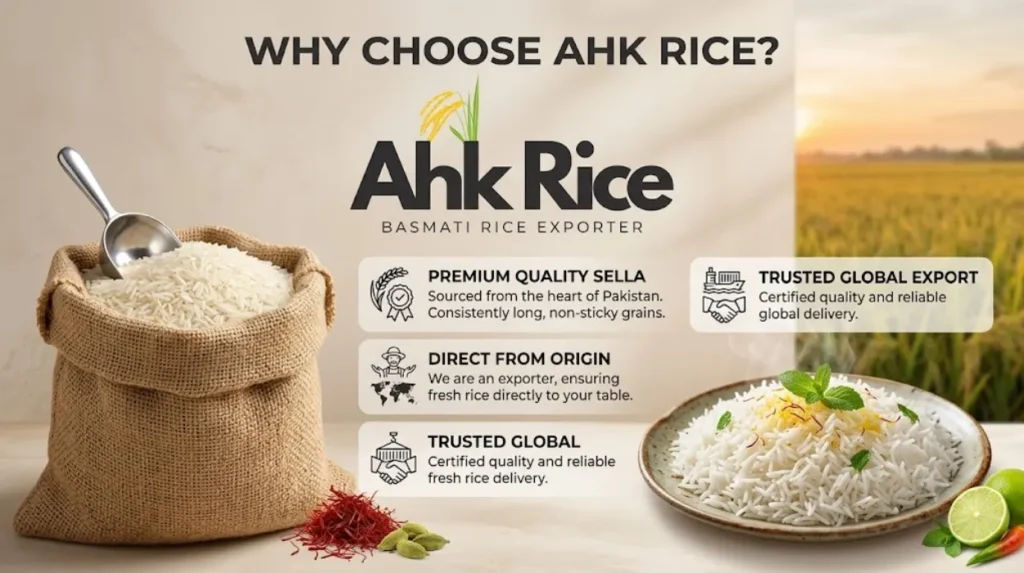
AHK Rice offers structured quality control, multiple processing grades, Gulf export expertise, flexible packaging, and transparent shipment management. These factors reduce sourcing risk and improve purchasing confidence for Qatari importers.
The rice export industry includes many traders and brokers. Direct exporters typically provide greater control over quality and logistics.
AHK Rice exports Pakistani Basmati rice directly from Punjab’s major rice-growing regions. This sourcing structure improves traceability and inventory planning.
The first factor that distinguishes AHK Rice is product specialization. Buyers can source multiple Sella grades through a single supplier relationship by visiting the official service page: https://ahkrice.com/
What grades are available?
AHK Rice supplies several export specifications for Qatar.
1121 Golden Sella Basmati
1121 Golden Sella remains the most demanded grade in Gulf markets. The grain delivers exceptional elongation and premium presentation after cooking.
1121 Steam Basmati
1121 Steam offers a lighter color profile and softer texture. Retail and hospitality buyers frequently select this grade.
Super Kernel Sella
Super Kernel Sella provides traditional aroma and strong market recognition.
1509 Sella Basmati
1509 offers competitive pricing while maintaining long grain characteristics.
What certifications matter?
Importers should verify quality and compliance documentation before shipment.
Common export documents include:
- Certificate of Origin
- Phytosanitary Certificate
- Fumigation Certificate
- Commercial Invoice
- Packing List
- Bill of Lading
- Quality Inspection Report
AHK Rice assists buyers with export documentation preparation to streamline customs clearance procedures.
Why does Gulf experience matter?
Export experience reduces operational mistakes.
Qatar-bound shipments require accurate documentation, proper container loading, and timely dispatch scheduling. Exporters familiar with Gulf requirements typically achieve smoother deliveries.
AHK Rice regularly serves international buyers and understands common import procedures for Gulf destinations.
With supplier capabilities established, buyers naturally evaluate expected commercial outcomes.
What results can be expected from the right export partnership?
Importers typically achieve better product consistency, lower complaint rates, predictable inventory planning, faster procurement cycles, and improved customer retention when working with an experienced exporter.
The benefits of supplier selection extend beyond purchasing.
Consistent grain quality improves customer confidence. Stable supply supports long-term contracts. Reliable logistics improve inventory planning.
What logistics performance should buyers expect?
Shipping schedules significantly influence purchasing decisions.
Approximate transit times from Pakistan are:
| Market | Average Shipping Days |
|---|---|
| Qatar | 7–12 Days |
| UAE | 7–10 Days |
| Oman | 8–12 Days |
| Bahrain | 10–14 Days |
| Kuwait | 10–15 Days |
| Saudi Arabia | 10–18 Days |
Transit times vary according to vessel schedules, port congestion, and customs processing.
AHK Rice coordinates shipment planning before container loading. This approach improves forecasting accuracy for importers.
What quality outcomes should buyers expect?
High-performing export programs focus on consistency.
Expected outcomes include:
- Uniform grain appearance
- Consistent cooking performance
- Reduced broken percentage
- Stable moisture levels
- Reliable packaging quality
AHK Rice implements inspection procedures before dispatch. This process helps maintain specification compliance throughout the export cycle.
What does a successful sourcing scenario look like?
A Qatari wholesaler importing 1121 Golden Sella requires monthly inventory replenishment.
The wholesaler needs stable grain length, reliable shipment timing, and accurate documentation.
AHK Rice provides approved specifications before production. The shipment proceeds after buyer confirmation. Documentation is prepared before vessel departure. The importer receives predictable inventory and consistent product quality.
With expected results established, buyers should understand pricing factors before placing orders.
What factors affect pricing and procurement costs?
Rice grade, grain length, crop quality, packaging type, order volume, freight rates, and market conditions are the primary cost drivers. Buyers should evaluate total landed cost rather than FOB price alone.
Price comparison should always include quality specifications.
Lower prices often reflect differences in broken percentage, grain length, or processing standards.
What influences export pricing?
Major pricing variables include:
- Paddy procurement cost
- Processing grade
- Packaging requirements
- Container quantity
- Freight charges
- Seasonal availability
- Currency fluctuations
Premium grades generally command higher prices because they require stricter sorting and grading processes.
What is the sample process?
The sample process allows buyers to verify quality before committing to container orders.
AHK Rice typically follows this process:
- Request product specifications
- Receive quotation
- Confirm sample requirements
- Dispatch sample package
- Evaluate cooking performance
- Approve specifications
- Place commercial order
Typical sample costs include:
| Item | Estimated Cost |
|---|---|
| Product Sample | Usually Free |
| Courier Charges | USD 30–80 |
| Laboratory Testing | Optional |
| Documentation | Minimal |
Courier costs vary according to destination and package weight.
Why compare suppliers before buying?
Comparison improves purchasing confidence.
Importers reviewing multiple exporters often gain a clearer understanding of specification differences, service levels, and pricing structures. Buyers seeking supplier evaluation criteria can review this comparison-focused guide on how experienced importers assess Pakistani rice exporters.
AHK Rice encourages specification-based comparisons because measurable quality indicators create better procurement decisions.
With pricing and evaluation factors understood, the final step is implementation.
How do you get started with a Pakistani Sella Basmati rice export partner?
Start by defining product specifications, requesting samples, reviewing documentation requirements, confirming shipping schedules, and placing a trial order before scaling procurement volumes.
Structured procurement reduces risk.
Buyers should begin with detailed specifications rather than general product descriptions.
What information should buyers provide?
Provide:
- Target grade
- Packaging requirement
- Monthly volume
- Destination port
- Private label requirements
- Quality specifications
This information allows exporters to provide accurate quotations.
What happens after inquiry submission?
The process generally follows a straightforward sequence.
- Submit inquiry
- Receive quotation
- Review specifications
- Approve samples
- Confirm order
- Produce shipment
- Load container
- Dispatch cargo
- Receive documents
- Clear goods at destination
AHK Rice supports each stage through dedicated export coordination.
Why start with a trial order?
Trial orders validate supplier performance.
Importers can evaluate packaging quality, shipment accuracy, documentation efficiency, and customer support before committing to larger contracts.
AHK Rice frequently works with trial shipments because they allow buyers to verify quality under actual market conditions.
Selecting the right Pakistani Sella Basmati rice export partner for Qatar ultimately depends on consistency, transparency, and operational capability. Importers seeking long-term supply stability typically prioritize verified quality systems, structured logistics, and responsive communication. AHK Rice provides these capabilities through integrated sourcing, processing, inspection, and export management. AHK Rice helps importers reduce procurement risk. AHK Rice supports multiple Sella grades. AHK Rice coordinates documentation. AHK Rice manages shipment planning. AHK Rice assists with sample evaluation. AHK Rice focuses on specification compliance. AHK Rice supports long-term procurement partnerships. Contact AHK Rice today via request-a-quote to discuss your requirements and receive a customized export quotation.
FAQs
How much rice can AHK Rice export to Qatar?
AHK Rice supports both container-scale and recurring commercial shipments. Volume depends on the selected grade and production schedule. Most importers begin with a trial order. Larger contracts follow after quality approval. Supply planning is arranged before production starts.
Which Sella Basmati grade is most popular in Qatar?
1121 Golden Sella Basmati is generally the leading choice. The grain delivers long cooked length and strong visual appeal. Restaurants prefer its presentation quality. Wholesalers value customer acceptance. Retailers benefit from premium shelf positioning.
How long does shipping from Pakistan to Qatar take?
Most shipments reach Qatar within 7 to 12 days after vessel departure. Transit time depends on shipping schedules. Port congestion can affect arrival dates. Customs processing also influences delivery speed. Buyers should confirm schedules before booking.
Does AHK Rice provide samples before bulk orders?
Yes, sample evaluation is part of the procurement process. Buyers can assess grain quality before ordering containers. Courier charges usually apply. Product samples are often provided without charge. Sample approval reduces commercial risk.
What documents are required for rice imports into Qatar?
Most shipments require a commercial invoice, packing list, certificate of origin, phytosanitary certificate, and bill of lading. Additional requirements may vary. Import regulations can change. Buyers should confirm local requirements. AHK Rice assists with export documentation preparation.