How Saudi Rice Importers Evaluate Pakistani Sella Basmati Rice Quality
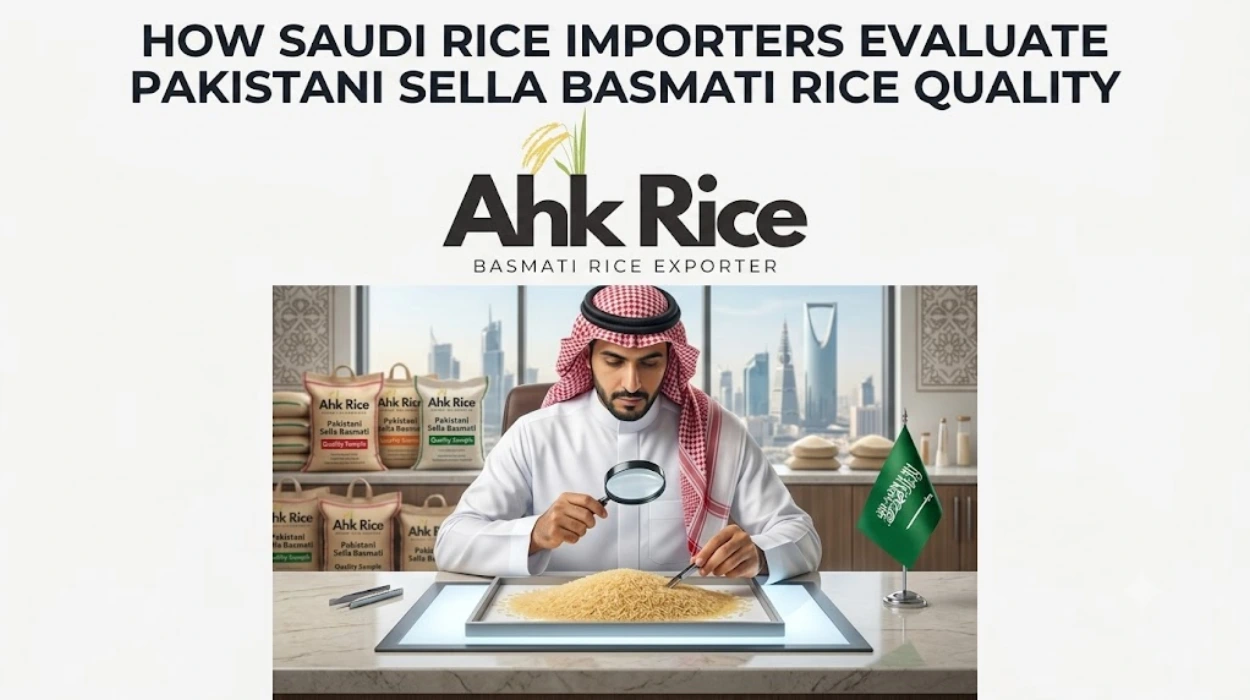
Saudi rice importers evaluate Pakistani Sella Basmati rice quality through grain length, purity, moisture content, cooking performance, color consistency, certification compliance, and processing standards. The highest-performing grades consistently deliver longer grain elongation, lower breakage, and stronger consumer acceptance in Saudi retail and foodservice markets.
Saudi Arabia remains one of the largest import destinations for Pakistani Basmati rice because consumers prefer long-grain aromatic rice for household and hospitality consumption. Buyers who understand quality specifications make better procurement decisions and reduce quality-related claims. Businesses seeking foundational knowledge about Pakistani Basmati categories can first explore our guide on pakistani sella basmati rice in saudi different Pakistani Basmati rice varieties and processing methods before evaluating supplier quality standards.
What quality factors do Saudi rice importers evaluate first?
Saudi buyers prioritize grain length above 8.2 mm, purity above 95%, moisture below 14%, low broken percentage, uniform color, strong aroma, and reliable certification because these factors directly affect cooking performance, shelf stability, customer satisfaction, and retail acceptance across Saudi distribution channels.
Pakistani Sella Basmati rice is a parboiled rice variety. Parboiling transfers nutrients from the husk into the grain before milling. This process strengthens the grain structure and reduces breakage during transportation.
Saudi buyers inspect grain length before any commercial discussion. Longer grains command higher wholesale prices because consumers associate grain length with premium quality. The preferred specification for premium Saudi retail markets remains 1121 Golden Sella Basmati.
1121 Golden Sella Basmati Specifications
| Specification Attribute | Premium Range |
|---|---|
| Grain Length | 8.30–8.40 mm |
| Broken Grains | 2–5% |
| Moisture Content | 12–14% |
| Purity Level | 95–98% |
| Foreign Matter | Below 0.1% |
| Average Elongation | 2.5x to 3x |
| Shelf Life | 18–24 Months |
Saudi importers also verify laboratory reports. Laboratory testing confirms moisture levels, broken grain percentage, and purity ratios. Independent verification reduces disputes after shipment arrival.
Certification plays another critical role. Buyers frequently request phytosanitary certificates, fumigation certificates, certificates of origin, and quality inspection reports before shipment dispatch.
Quality assessment begins with specifications, but comparison between grades determines which option provides the best commercial value.
How do different Pakistani Sella Basmati grades compare?
1121 Golden Sella delivers the longest grains and strongest visual appeal, Super Kernel Sella provides traditional aroma and balanced pricing, while 1509 Sella offers competitive costs and faster market turnover for price-sensitive wholesale channels.
Pakistani exporters process multiple Sella Basmati grades. Each grade serves a specific market segment and pricing strategy.
Specification Comparison Table
| Attribute | 1121 Golden Sella | Super Kernel Sella | 1509 Sella |
|---|---|---|---|
| Grain Length | 8.30–8.40 mm | 7.20–7.60 mm | 8.00–8.30 mm |
| Aroma Level | High | Very High | Medium |
| Grain Elongation | 2.5x–3x | 2.0x–2.3x | 2.2x–2.7x |
| Broken Ratio | 2–5% | 5–10% | 5–10% |
| Market Position | Premium | Traditional Premium | Value Premium |
| Shelf Life | 18–24 Months | 18–24 Months | 18–24 Months |
| Saudi Demand | Very High | Moderate | Growing |
1121 Golden Sella dominates premium supermarket channels. Saudi consumers value its long cooked grain appearance and attractive golden color.
Super Kernel Sella appeals to traditional consumers. Its aroma profile creates differentiation in family consumption segments and specialty stores.
1509 Sella attracts distributors focused on competitive pricing. The variety delivers strong cooking performance while maintaining lower procurement costs.
Grade comparison explains quality differences. The next question focuses on regional buying behavior and market preferences.
Which Pakistani Sella grades are preferred in different Saudi market segments?
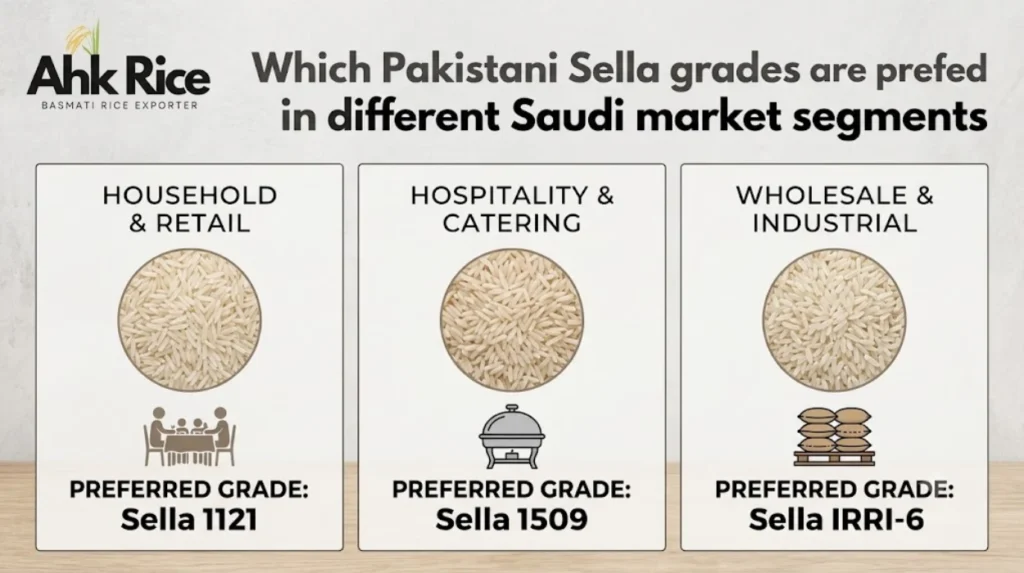
Central Saudi retail chains favor premium 1121 Golden Sella, while western hospitality buyers often source mixed specifications that balance grain appearance, cooking yield, and procurement costs for hotels, restaurants, catering companies, and institutional kitchens.
Saudi Arabia contains several distinct consumption regions. Each region demonstrates different purchasing priorities.
Central Region Preferences
Cities such as Riyadh prioritize premium packaged rice. Consumers expect long grains and strong visual presentation. Importers serving supermarkets often procure 1121 Golden Sella with maximum purity specifications.
Premium retailers frequently request:
- Grain length above 8.3 mm
- Broken ratio below 5%
- Purity above 95%
- Golden color consistency
- Premium packaging
Western Region Preferences
Cities such as Jeddah and Makkah support extensive hospitality and catering sectors.
Foodservice buyers prioritize:
- Consistent cooking yield
- Bulk procurement pricing
- Reduced cooking losses
- Reliable supply continuity
- Storage stability
1121 Golden Sella remains dominant. However, 1509 Sella increasingly appears in catering operations because it balances performance and cost.
Regional preferences influence purchasing decisions, but commercial buyers ultimately compare value against price.
How does price per metric ton compare between major Sella grades?
1509 Sella typically offers the lowest procurement cost, Super Kernel Sella occupies the middle range, and 1121 Golden Sella commands the highest price because longer grains, lower breakage, and stronger market demand create additional value.
Export pricing fluctuates according to crop conditions, freight costs, exchange rates, and global demand. Relative positioning remains consistent.
Typical Price Comparison Framework
| Grade | Relative Price Level |
|---|---|
| 1509 Sella | Lowest |
| Super Kernel Sella | Medium |
| 1121 Golden Sella | Highest |
Premium pricing reflects measurable quality attributes. Longer grains increase retail appeal. Lower breakage improves consumer satisfaction. Better elongation creates superior plate presentation.
1121 Golden Sella costs more because buyers receive stronger market acceptance. Saudi supermarkets consistently achieve better shelf presentation using premium specifications.
1509 Sella reduces procurement costs. Large-volume distributors often select this option when targeting budget-conscious customer segments.
Price alone never determines value. Shelf life and storage performance significantly influence long-term profitability.
How does shelf life affect quality evaluation?
Properly processed Sella Basmati rice maintains quality for 18–24 months, resists breakage better than white rice, tolerates transportation efficiently, and provides importers with greater flexibility for inventory management and regional distribution.
Shelf life directly affects inventory risk.
Parboiling strengthens the rice grain. Stronger grains resist cracking during handling, warehousing, and transportation.
Golden Sella maintains quality longer than many non-parboiled alternatives. In high-temperature Gulf storage conditions, properly packed Golden Sella retains commercial quality throughout extended distribution cycles.
For example, distributors maintaining warehouse inventory across multiple Saudi cities benefit from longer shelf stability. Extended shelf life reduces stock rotation pressure and minimizes quality deterioration.
Quality preservation depends on:
- Controlled moisture levels
- Proper fumigation
- Strong packaging materials
- Clean storage facilities
- Verified export inspections
Shelf life protects inventory value. The next step is determining which grade fits specific business objectives.
Which Sella Basmati grade works best for different buyer types?
1121 Golden Sella suits premium retailers, Super Kernel Sella fits traditional aroma-focused markets, and 1509 Sella serves cost-sensitive distributors seeking competitive pricing without sacrificing essential cooking performance standards.
Different commercial objectives require different specifications.
Decision Framework
| Buyer Type | Recommended Grade | Primary Reason |
|---|---|---|
| Premium Supermarket | 1121 Golden Sella | Longest grain appearance |
| Hospitality Chain | 1121 Golden Sella | Superior presentation |
| Traditional Retailer | Super Kernel Sella | Strong aroma profile |
| Catering Company | 1509 Sella | Cost efficiency |
| Wholesale Distributor | 1509 or 1121 | Depends on target segment |
Premium retail buyers require visual differentiation. Long grains create stronger shelf appeal and consumer recognition.
Hospitality operators require presentation consistency. High elongation supports premium dining experiences.
Traditional retailers focus on aroma and repeat purchases. Super Kernel Sella satisfies those expectations.
Large distributors often balance volume against cost. 1509 Sella creates flexibility for competitive pricing strategies.
Selecting the correct grade depends on business goals. Buyers must also evaluate supplier capabilities before placing large orders.
What are the pros and cons of different quality evaluation approaches?
Laboratory testing provides objective verification, physical inspection reveals visible defects, cooking tests demonstrate performance, and supplier audits confirm process reliability. Combining all four methods creates the most accurate quality assessment system.
Importers use several evaluation methods.
Laboratory Testing
Pros:
- Objective measurements
- Verifiable documentation
- Reduced disputes
Cons:
- Additional testing costs
- Longer approval timelines
Physical Inspection
Pros:
- Immediate quality assessment
- Visible defect identification
- Packaging verification
Cons:
- Limited scientific validation
- Dependent on inspector experience
Cooking Evaluation
Pros:
- Real performance measurement
- Consumer-focused assessment
- Elongation verification
Cons:
- Requires sample preparation
- Time-intensive process
Supplier Audits
Pros:
- Process transparency
- Risk reduction
- Long-term reliability
Cons:
- Travel costs
- Resource requirements
Leading Saudi importers combine all four methods because each reveals different quality indicators.
Quality assessment methods help buyers compare suppliers. Final procurement decisions require a structured verification process.
What decision factors should Saudi buyers prioritize before purchasing?
Specification consistency, certification compliance, processing standards, laboratory verification, packaging quality, export experience, and supply continuity create the strongest indicators of long-term procurement success and reduced commercial risk.
Saudi importers evaluate more than rice quality alone.
Supplier capability affects shipment consistency. Processing controls affect grain uniformity. Export experience affects documentation accuracy.
AHK Rice operates integrated processing systems that mill, parboil, grade, sort, inspect, and export Pakistani Basmati rice from Punjab. This comprehensive approach improves specification consistency across recurring shipments. Buyers evaluating suppliers can review our detailed guide on what saudi buyers should verify before choosing a pakistani rice exporter key verification checks before selecting a rice export partner to understand supplier assessment criteria.
Key decision factors include:
- Certification compliance
- Processing capability
- Quality inspection systems
- Packaging options
- Export documentation
- Shipment consistency
- Market experience
Importers that evaluate these factors systematically reduce procurement risks and improve customer satisfaction across Saudi distribution channels.
Saudi buyers assess Pakistani Sella Basmati quality through measurable specifications rather than marketing claims. Grain length, purity, moisture, elongation, shelf life, and certification remain the primary indicators. Among available grades, 1121 Golden Sella consistently delivers the strongest premium-market performance, while Super Kernel Sella and 1509 Sella provide specialized advantages for aroma-focused and cost-sensitive segments.
Frequently Asked Questions
How can Saudi buyers verify Pakistani Sella Basmati rice quality before shipment?
Saudi buyers should request laboratory reports, product specifications, sample approvals, and export certifications before shipment dispatch. Physical inspection confirms grain appearance, while cooking tests verify elongation and texture performance. Combining these verification methods reduces quality disputes and improves procurement confidence.
Why is 1121 Golden Sella more expensive than other Sella grades?
1121 Golden Sella commands higher prices because it offers longer grains, stronger elongation, lower breakage levels, and greater consumer acceptance. Retailers benefit from premium shelf presentation, while foodservice operators receive superior plate appearance. These advantages create additional commercial value.
What moisture level is considered acceptable for Saudi imports?
Most importers prefer moisture content between 12% and 14%. This range supports storage stability and reduces quality deterioration risks during transportation. Excessive moisture increases the possibility of spoilage, while extremely low moisture can increase grain breakage.
How long can Pakistani Sella Basmati rice be stored?
Properly processed and packaged Sella Basmati rice generally maintains quality for 18 to 24 months. Controlled storage conditions, strong packaging, and verified moisture levels support long-term shelf stability across Saudi distribution networks.
Which Pakistani Sella rice grade is best for catering businesses?
1509 Sella often provides the best balance between cost and performance for catering operations. The variety delivers reliable cooking results and competitive pricing. Premium catering businesses serving luxury venues frequently select 1121 Golden Sella for enhanced presentation.