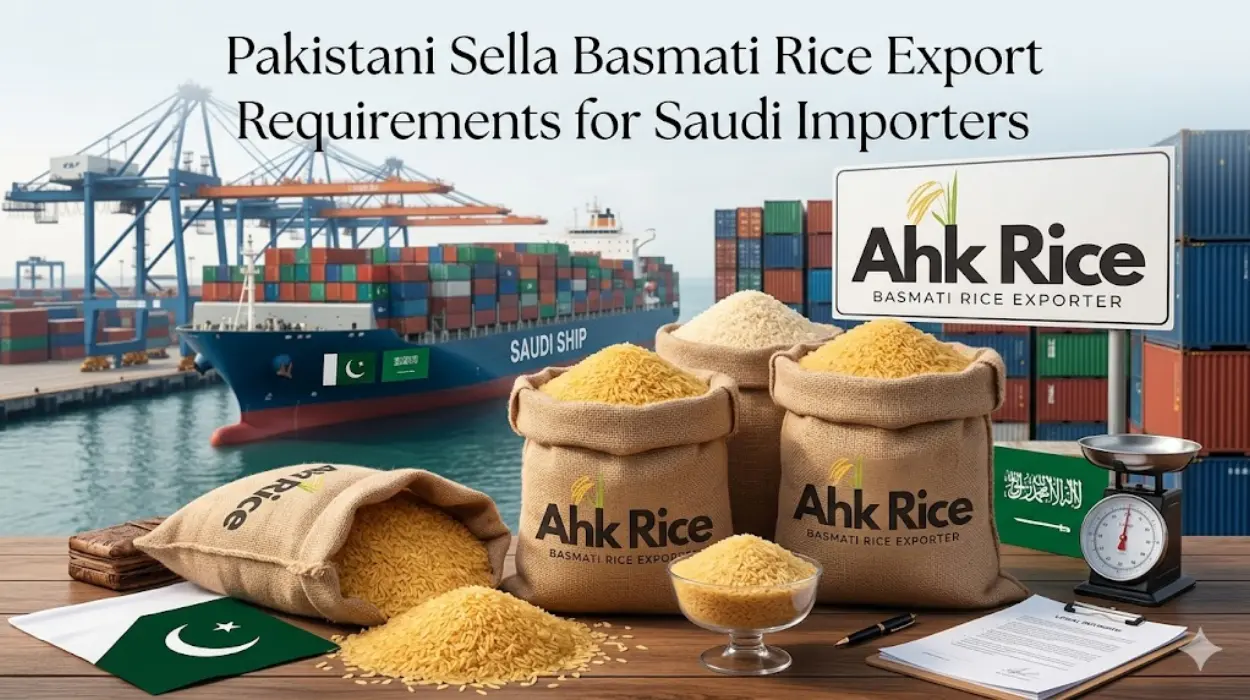
Pakistani Sella Basmati Rice Export Requirements for Saudi Importers
Pakistani Sella Basmati Rice exports to Saudi importers require REAP-certified parboiled grains with ≤12% moisture, ≤5% broken ratio, proper fumigation, and export documentation aligned with GCC food safety standards. Here is why: Saudi foodservice buyers demand consistent cooking performance, long storage stability, and halal-compliant supply chains.
This requirement directly impacts sourcing decisions for importers working with Ahk Rice, a structured supplier of export-grade basmati. The sourcing framework becomes clearer when aligned with the demand patterns explained in our TOFU article on Pakistani Sella Basmati Rice demand in Saudi Arabia’s foodservice sector.
When Saudi buyers evaluate Sella rice, they prioritize processing integrity over branding alone. This is where Ahk Rice export systems align with compliance-driven procurement. The same sourcing logic is expanded further in the MOFU comparison of sella basmati grades for wholesale buyers.
First product alignment begins at the official export service stage through Ahk Rice Sella Basmati Export Service where grading, milling, and shipment preparation are structured for GCC buyers.
What is the best solution for Saudi importers sourcing Sella Basmati Rice?
The best solution is sourcing REAP-certified 1121 Sella Basmati Rice with controlled parboiling, low broken percentage, uniform grain length, and verified fumigation. This ensures stable cooking yield, long storage life, and predictable procurement cycles for Saudi foodservice importers managing large-volume catering contracts.
Saudi importers face inconsistency when sourcing from unverified mills. Grain variability increases wastage and reduces plate yield in catering environments. The solution is structured procurement through Ahk Rice with grade-specific export control.
Sella rice must be milled, dehusked, parboiled, polished, and graded under controlled conditions. Each step impacts cooking elongation and aroma retention.
- Clean paddy removal of foreign matter
- De-husked grain separation for uniform kernel flow
- Parboiled soaking for starch stabilization
- Polished milling for controlled surface finish
- Graded sorting for length consistency
Ahk Rice applies multi-stage inspection to ensure export compliance before shipment. This reduces rejection risk at Saudi port clearance points.
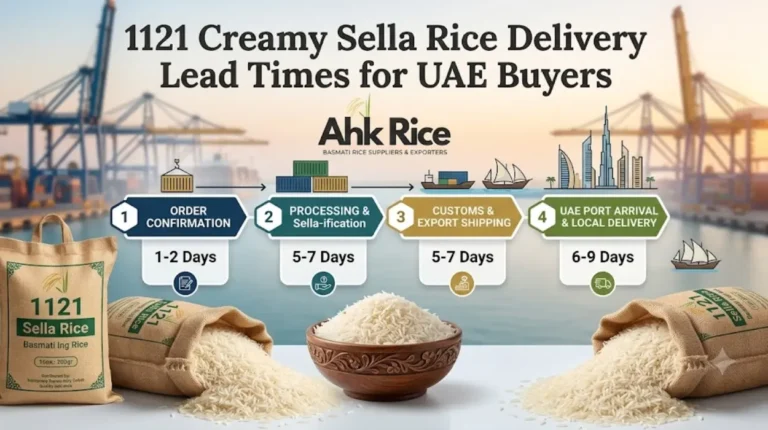
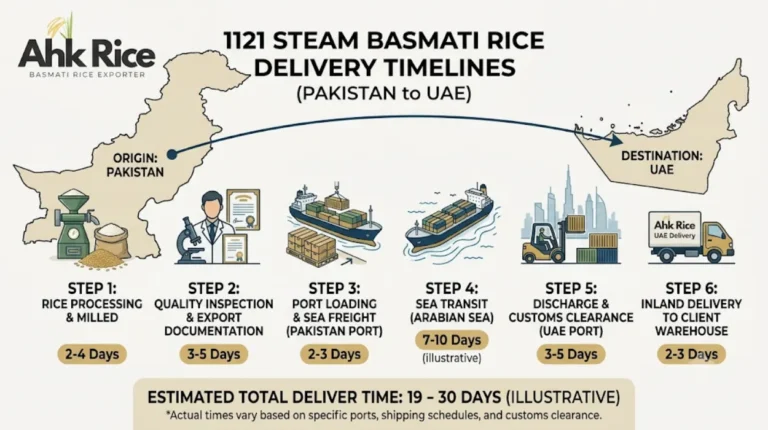
Shipping timelines remain predictable across GCC routes. Saudi importers typically receive shipments within 18–25 days from Karachi to Jeddah or Dammam ports. UAE shipments take 12–18 days, while inland GCC redistribution extends timelines slightly.
When buyers require stable supply chains, Ahk Rice ensures batch continuity across monthly shipments. This creates predictable foodservice inventory planning for restaurants and institutional kitchens.
With sourcing logic established, the next concern is why a structured exporter like Ahk Rice becomes necessary for long-term procurement stability.
Why choose Ahk Rice export service for Saudi Sella Basmati imports?
Ahk Rice provides controlled grading, REAP-certified milling, export documentation support, and GCC-compliant fumigation protocols that reduce shipment rejection risk. This ensures Saudi importers receive consistent grain quality, predictable delivery timelines, and structured procurement reliability for foodservice and wholesale distribution networks.
Consistency is the main failure point in global rice sourcing. Many exporters mix grades or fail to maintain moisture uniformity. Ahk Rice solves this through standardized processing workflows.
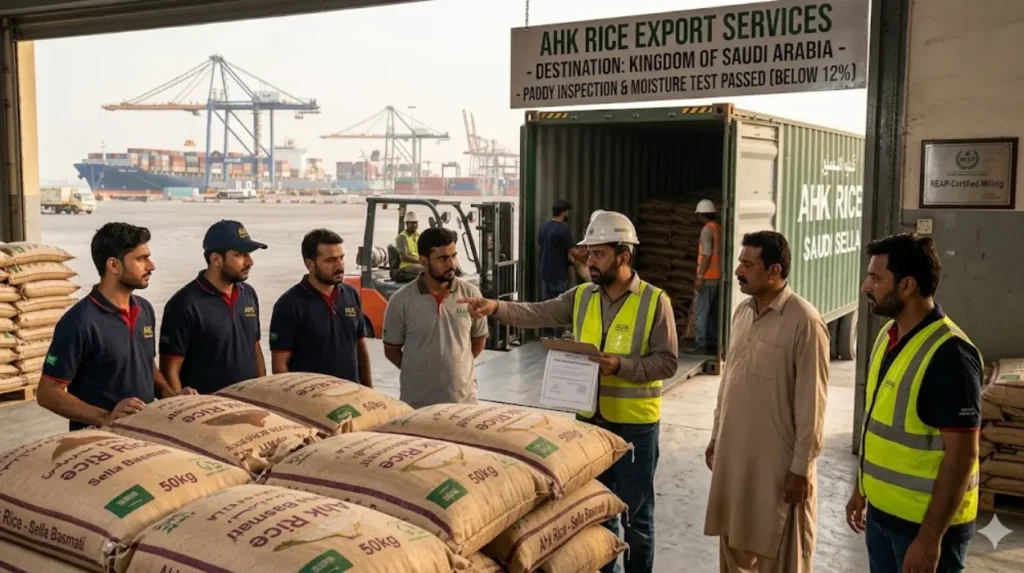
Quality assurance includes inspection, testing, certification, and verification at multiple stages. Each batch is tracked before dispatch.
- Inspection of raw paddy quality before milling
- Testing of moisture content below 12% threshold
- Certification of grain length between 7.3–8.3 mm range
- Verification of broken rice below 5% tolerance
- Fumigation under export phytosanitary protocols
Saudi importers prefer structured suppliers because restaurant chains cannot absorb inconsistency. Ahk Rice ensures repeatable results across all shipments.
Shipping performance remains a key advantage. Ahk Rice exports follow fixed maritime schedules with consolidation at Karachi ports. Predictability reduces storage pressure for Saudi buyers.
For example, bulk containers dispatched to Jeddah maintain consistent arrival cycles, allowing importers to plan seasonal demand spikes.
When compared with fragmented suppliers, structured exporters reduce procurement risk significantly. This is especially important for institutional catering contracts.
With supplier selection clarified, the next question focuses on actual performance outcomes from consistent sourcing.
What results can be expected from consistent Ahk Rice sourcing?
Importers sourcing from Ahk Rice can expect stable cooking expansion, reduced grain breakage, longer shelf life up to 18 months, and predictable yield performance across foodservice applications, resulting in lower wastage and improved per-plate cost efficiency for Saudi catering operations.
Consistent sourcing directly affects kitchen performance. Rice behaves differently depending on milling precision and parboiling consistency. Ahk Rice controls both variables through structured production systems.
Golden Sella varieties maintain firmness during long storage. Steam varieties offer softer texture but shorter shelf stability.
- Golden Sella maintaining 18-month storage stability in controlled warehouses at 40°C conditions
- Steam rice requiring 12-month consumption cycles under similar conditions
- Catering buyers in Saudi Arabia preferring Golden Sella for bulk meal distribution
- Institutional kitchens selecting uniform grain elongation for buffet service
Ahk Rice ensures batch uniformity, which improves cooking predictability across large-scale kitchens.
In foodservice environments, inconsistency increases operational cost. Variability forces chefs to adjust cooking ratios, increasing labor and fuel consumption.
With reliable sourcing, restaurants maintain stable portion control. This improves cost forecasting and reduces food waste.
Ahk Rice also supports branding consistency for importers supplying retail packs. Uniform grain appearance improves shelf presentation.
With performance outcomes established, pricing becomes the next key decision factor for Saudi importers.
What factors affect pricing of Sella Basmati Rice exports to Saudi Arabia?
Pricing depends on crop yield, parboiling grade, grain length, broken percentage, shipping container rates, fumigation requirements, and seasonal demand fluctuations. Ahk Rice structures pricing based on grade transparency, ensuring importers understand cost drivers and avoid hidden processing or logistics charges in procurement contracts.
Rice pricing is not fixed. It changes based on agricultural output and logistics conditions. Ahk Rice maintains transparent cost breakdowns to improve buyer decision-making.
Key pricing components include:
- Crop yield variations during harvest season
- Milling recovery rates after de-husking
- Parboiling energy consumption costs
- Container freight fluctuations in GCC routes
- Export certification and inspection fees
Saudi importers typically face higher costs during peak demand seasons such as Ramadan. Ahk Rice helps stabilize supply contracts through forward planning.
Grade selection significantly impacts price. Higher grain length and lower broken percentage increase export value.
For example, 1121 Golden Sella costs more than standard Sella grades. However, it delivers higher yield efficiency in catering kitchens.
Bulk contracts reduce per-metric-ton cost. Ahk Rice offers structured pricing for long-term buyers to stabilize procurement budgets.
With pricing understood, the final step is execution and onboarding into the export process.
How to get started with Ahk Rice export process for Saudi importers?
Getting started requires submitting buyer specifications, confirming required grade, reviewing sample quality, finalizing pricing contract, and initiating export documentation. Ahk Rice manages sampling, certification, and shipment coordination to ensure Saudi importers receive compliant and consistent Sella Basmati Rice deliveries.
The onboarding process is structured to reduce procurement friction. Each step ensures compliance and quality alignment.
- Submit requirement specification including grade and volume
- Confirm product grade selection with Ahk Rice export team
- Receive physical sample for cooking evaluation and verification
- Approve commercial invoice and finalize shipment schedule
- Dispatch container after inspection and certification completion
Sampling is a critical decision stage. Samples allow buyers to evaluate grain elongation, aroma retention, and cooking yield.
Sample logistics typically cost between $50–$120 depending on courier route and packaging weight. These samples are dispatched within 3–5 working days.
Documentation includes phytosanitary certificates, fumigation reports, and REAP export compliance records. Ahk Rice prepares all documents before dispatch.
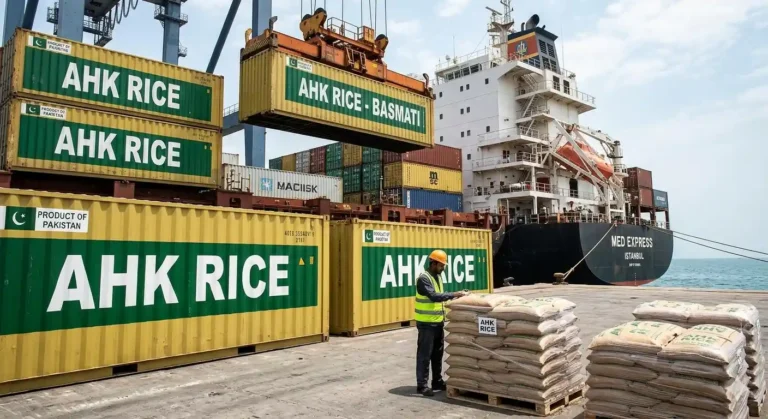
Once approved, containers are loaded and shipped through Karachi ports. Saudi delivery cycles remain stable due to fixed maritime schedules.
Importers benefit from predictable procurement cycles, especially when managing foodservice contracts with large institutions.
Ahk Rice ensures continuous supply alignment across monthly or quarterly shipments depending on buyer demand.
With onboarding steps completed, importers can scale procurement across multiple distribution channels without quality variation.
To begin structured sourcing and receive export-grade quotations aligned with Saudi import requirements, proceed through.
Frequently Asked Questions
What is required to export Sella Basmati Rice to Saudi Arabia?
Exporting Sella Basmati Rice to Saudi Arabia requires REAP certification, proper fumigation, moisture below 12%, and a broken ratio under 5%. These standards ensure compliance with GCC food safety regulations.
Why do Saudi importers prefer REAP-certified Sella Basmati Rice?
Saudi importers prefer REAP-certified rice because it guarantees consistent grain quality, halal-compliant handling, long shelf stability, and reliable cooking performance for large foodservice operations.
How does Ahk Rice ensure consistent rice quality for exports?
Ahk Rice ensures quality through multi-stage inspection, controlled parboiling, moisture testing, grain grading, and fumigation under export protocols. Each batch is verified before shipment to maintain consistency.
What is the shelf life of exported Sella Basmati Rice?
Properly processed Golden Sella Basmati Rice can have a shelf life of up to 18 months under controlled storage conditions, making it suitable for long-term foodservice and wholesale distribution.
How can Saudi importers start sourcing from Ahk Rice?
Importers can start by submitting their specifications, reviewing samples, confirming pricing, and completing export documentation. After approval, shipments are scheduled through Karachi ports.