How Pakistani Sella Basmati Rice Supports Saudi Arabia’s Rice Supply Needs
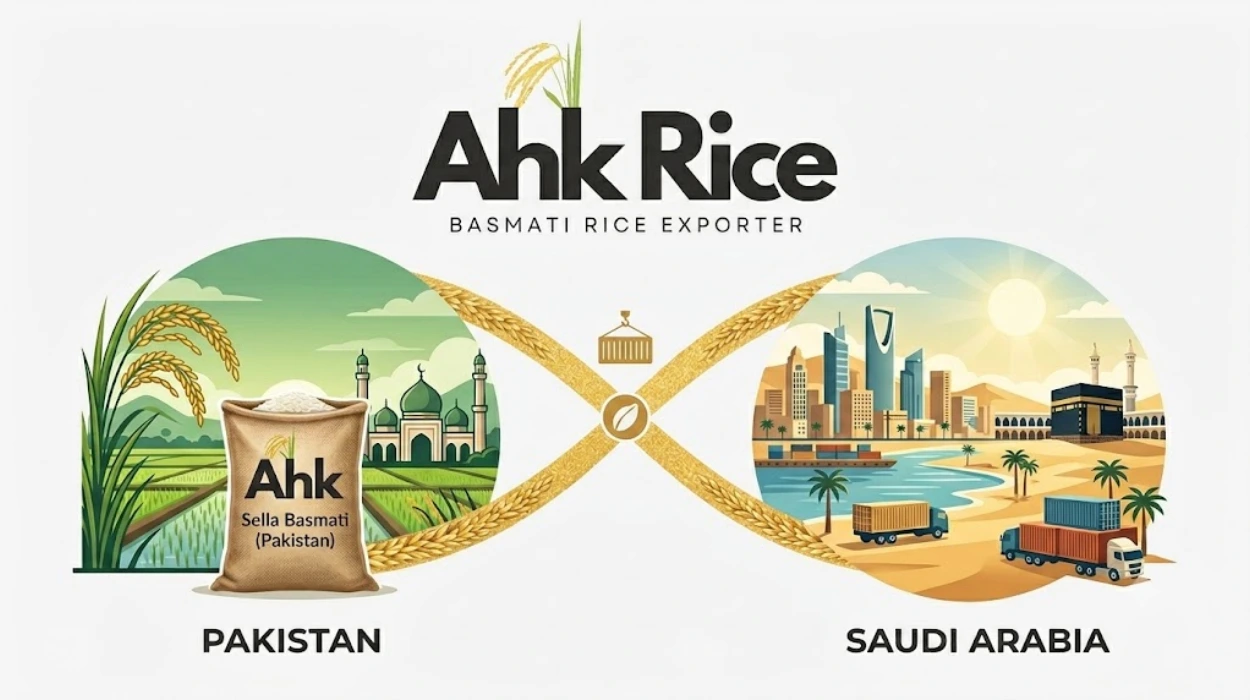
Pakistani Sella Basmati Rice supports Saudi Arabia’s rice supply by providing long-grain aromatic rice with stable availability, large export volumes, extended shelf life, and consistent quality. Here is why: Pakistan cultivates millions of tons of rice annually, while Saudi Arabia imports most of its rice requirements due to limited domestic rice production.
Saudi Arabia depends on imported rice because climatic conditions restrict large-scale rice cultivation. Pakistani Sella Basmati Rice fills this demand through organized farming, modern milling, international certifications, and established shipping routes between Pakistani ports and Saudi Arabian ports.
What Is Pakistani Sella Basmati Rice?
Pakistani Sella Basmati Rice is a parboiled aromatic long-grain rice with grain lengths reaching 8.30 mm, improved durability, and extended storage performance.
Pakistani Sella Basmati Rice originates from Basmati-growing regions of Punjab, Pakistan. Farmers cultivate the crop in fertile alluvial soil supported by canal irrigation systems. The rice belongs to the Basmati family, known for its aroma, grain elongation, and cooking performance.
Sella rice undergoes a parboiling process before milling. Parboiling transfers nutrients from the outer layers into the grain. The process strengthens grain structure and reduces breakage during milling and transportation.
Saudi consumers prefer Sella Basmati because the grains remain separate after cooking. Large catering companies, restaurants, and hospitality businesses use Sella rice for Kabsa, Mandi, Bukhari Rice, and other traditional dishes.
Which Sella Basmati Grades Are Exported to Saudi Arabia?
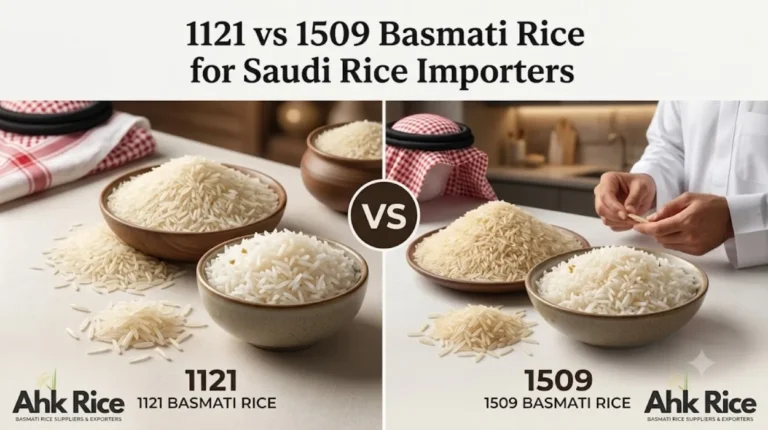
1121 Sella, Super Kernel Sella, and 1509 Sella represent the most common export grades supplied to Saudi importers.
| Grade | Average Grain Length | Aroma Level | Cooking Expansion | Common Saudi Use |
|---|---|---|---|---|
| 1121 Golden Sella | 8.30 mm | High | 2.0–2.5x | Premium retail |
| 1121 White Sella | 8.20 mm | High | 2.0x | Hospitality |
| Super Kernel Sella | 7.40 mm | Medium-High | 1.8x | Traditional markets |
| 1509 Sella | 8.00 mm | Medium | 2.0x | Catering sector |
Saudi importers select grades according to price targets, cooking preferences, and distribution channels.
With the definition of Pakistani Sella Basmati established, the next question is how the rice reaches export quality standards.
How Does Pakistani Sella Basmati Rice Processing Work?
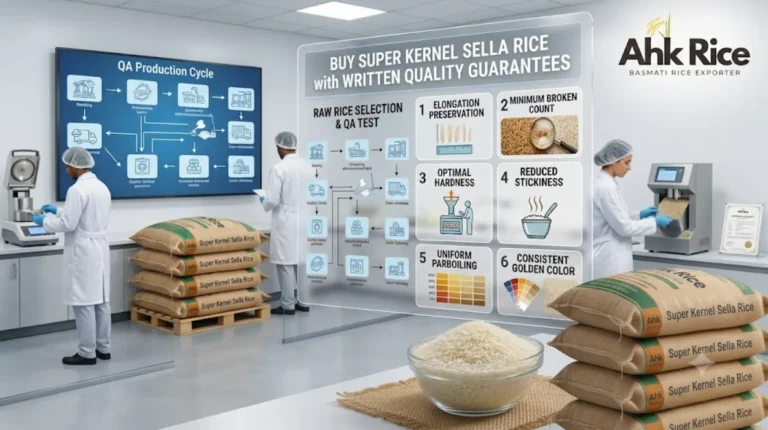
Nine major processing stages transform harvested paddy into export-ready Sella Basmati Rice with controlled moisture, uniform grain size, and verified quality.
Rice processing begins immediately after harvesting. Every stage affects quality, shelf life, and export compliance.
Step-by-Step Processing
- Clean the harvested paddy.
- Soak the paddy in controlled water tanks.
- Parboil the grains under monitored temperatures.
- Dry the paddy to export moisture levels.
- Dehusk the grain.
- Mill the rice.
- Polish the kernels.
- Grade and sort by size.
- Pack and load for export.
Parboiling creates the defining characteristic of Sella rice. Heat treatment strengthens the grain structure. Stronger grains generate fewer broken kernels during transportation and storage.
Modern rice mills inspect moisture content throughout processing. Export-grade Sella rice typically maintains 12–14% moisture content, supporting shelf life and product stability.
What Quality Controls Occur During Processing?
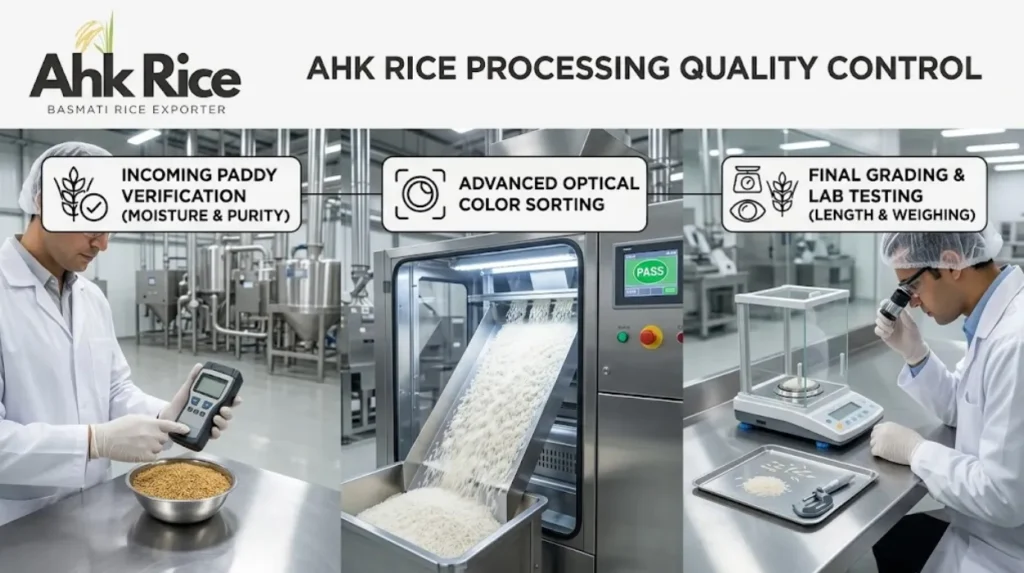
Moisture testing, color sorting, grading, metal detection, and laboratory inspection protect export quality.
Quality teams inspect rice multiple times before shipment. Each inspection verifies compliance with buyer specifications.
Quality controls include:
- Moisture testing
- Length grading
- Color sorting
- Metal detection
- Broken percentage analysis
- Purity verification
- Packaging inspection
Rice exporters test every production batch before loading containers. These inspections support consistency across large-volume shipments.
Processing explains how quality is achieved. The next section explains which components make Sella rice suitable for Saudi demand.
What Key Components Make Pakistani Sella Basmati Suitable for Saudi Arabia?
Long grains, aromatic compounds, parboiled structure, cooking expansion, and storage stability create the characteristics Saudi buyers require.
Several components distinguish Pakistani Sella Basmati from standard long-grain rice.
Grain Length
8.00–8.30 mm grains create the visual appeal preferred in Saudi households and restaurants.
Long grains remain a primary purchasing factor. Saudi consumers associate longer grains with premium rice quality.
Aroma
Natural Basmati aroma develops through genetic characteristics and controlled cultivation practices.
Punjab’s climate supports aroma formation during grain development. Temperature differences between day and night contribute to fragrance intensity.
Cooking Performance
Grains expand significantly while remaining separate after cooking.
Saudi food service operators value grain separation because dishes such as Kabsa require distinct, elongated grains.
Shelf Life
Properly packed Sella rice maintains quality for up to 24 months.
Golden Sella generally stores longer than standard white rice because parboiling improves grain stability. In hot warehouse conditions reaching 40°C, Golden Sella maintains quality for longer storage periods. For large Saudi distributors managing extensive inventories, this specification reduces stock risks.
These components explain product suitability. The next section explores the benefits generated by these characteristics.
What Benefits Does Pakistani Sella Basmati Rice Provide to Saudi Arabia?
Reliable supply, stable quality, long storage life, cooking efficiency, and large export availability support Saudi food security requirements.
Saudi Arabia imports substantial rice volumes annually because domestic production remains limited. Pakistani exporters contribute to supply diversification.
Supply Reliability
Large cultivation areas support consistent export volumes.
Punjab remains Pakistan’s primary Basmati-producing region. Extensive cultivation enables exporters to fulfill bulk contracts throughout the year.
Storage Efficiency
Extended shelf life supports inventory planning.
Importers store rice for distribution across multiple regions. Longer shelf life reduces losses caused by storage deterioration.
Transportation Durability
Parboiled grains resist breakage during shipping.
Containerized shipments travel thousands of kilometers between Pakistan and Saudi Arabia. Strong grain structure protects quality during transit.
Consumer Acceptance
Traditional Saudi dishes align with Basmati characteristics.
Restaurants and households prefer rice that delivers aroma, elongation, and visual presentation.
Market Stability
Multiple grades create pricing flexibility.
Importers source premium grades and value-oriented grades according to target consumers.
Benefits explain why Saudi Arabia imports Sella rice. The next section examines practical market applications.
How Is Pakistani Sella Basmati Rice Used Across Saudi Arabia?
Retail distribution, hospitality operations, catering services, government procurement, and food manufacturing represent major use cases.
Saudi Arabia consumes rice through several distribution channels.
Retail Markets
Packaged rice serves household consumption.
Retail brands distribute rice in bags ranging from 1 kg to 40 kg. Consumers select grades according to budget and cooking preferences.
Hospitality Sector
Hotels use premium Basmati grades for guest dining services.
Luxury establishments commonly select 1121 Sella because of its grain length and appearance.
Catering Industry
Large-scale food preparation requires durable rice with consistent cooking results.
Catering operators prepare thousands of meals daily. Consistency remains essential for operational efficiency.
Government Supply Programs
Bulk rice purchases support strategic food reserves and institutional demand.
Food security initiatives prioritize reliable staple products with long storage performance.
Food Manufacturing
Processed food companies use rice as a production ingredient.
Manufacturers require uniform grain quality for consistent outputs.
These use cases demonstrate demand patterns. The next section addresses common misconceptions surrounding Sella rice.
What Common Misconceptions Exist About Pakistani Sella Basmati Rice?
Many buyers incorrectly assume Sella rice contains additives, loses nutrition, or lacks aroma compared to white Basmati rice.
Several misunderstandings influence purchasing decisions.
Does Sella Rice Contain Artificial Additives?
No. Parboiling uses water, heat, and drying processes.
Processing modifies the grain structure without adding artificial ingredients.
Does Sella Rice Lose Nutritional Value?
No. Parboiling transfers nutrients into the grain before milling.
This process helps retain nutritional elements that normally disappear during milling.
Is Golden Sella Better Than White Sella?
Both grades serve different purposes.
Golden Sella provides stronger grain structure and longer storage performance. White Sella offers a lighter appearance preferred by some buyers. In high-temperature storage environments, Golden Sella maintains quality longer. For premium retail markets focused on appearance, White Sella often becomes the preferred specification.
Does Longer Grain Always Mean Better Quality?
No. Quality depends on multiple factors.
Aroma, purity, moisture, cooking behavior, and grading standards all contribute to final quality.
Misconceptions clarified product characteristics. The final section explains certifications and compliance requirements.
What Certifications Apply to Pakistani Sella Basmati Rice Exports?
Phytosanitary certification, quality inspection, food safety compliance, and origin verification support international trade requirements.
Rice shipments require documentation before export clearance.
Common Export Certifications
- Phytosanitary Certificate
- Certificate of Origin
- Fumigation Certificate
- Health Certificate
- Quality Inspection Report
- ISO Certification
- HACCP Certification
Certification systems help importers verify safety and compliance.
Saudi buyers review documentation before customs clearance. Exporters prepare these documents before loading containers for shipment.
Readers who understand certifications can better evaluate quality systems, packaging standards, and compliance requirements throughout the rice supply chain. For a deeper explanation understanding packaging standards, certification requirements, and quality verification procedures for Saudi rice imports.
Pakistani Sella Basmati Rice supports Saudi Arabia’s rice supply through large-scale cultivation, structured processing, export-grade quality controls, and internationally recognized certifications. Long grains, strong cooking performance, extended shelf life, and multiple grade options make it suitable for retail, hospitality, catering, and institutional markets. Punjab’s Basmati-growing regions continue supplying Saudi importers with premium aromatic rice that aligns with consumer preferences and food security requirements.
Frequently Asked Questions
How long does Pakistani Sella Basmati Rice remain fresh?
Properly packed Sella Basmati Rice maintains quality for up to 24 months when stored in dry and cool conditions.
Why does Saudi Arabia import rice from Pakistan?
Saudi Arabia imports rice because domestic rice production remains limited while consumer demand remains high.
What is the difference between Golden Sella and White Sella?
Golden Sella undergoes a stronger parboiling process and offers longer storage stability. White Sella provides a lighter grain appearance.
Which Pakistani Basmati grade is most popular in Saudi Arabia?
1121 Golden Sella Basmati Rice remains one of the most widely imported premium grades due to its grain length and cooking performance.
What documents are required for exporting Sella Basmati Rice?
Common export documents include a Phytosanitary Certificate, Certificate of Origin, Fumigation Certificate, Health Certificate, and Quality Inspection Report.