Packaging, Certification, and Quality Factors for Saudi Rice Buyers
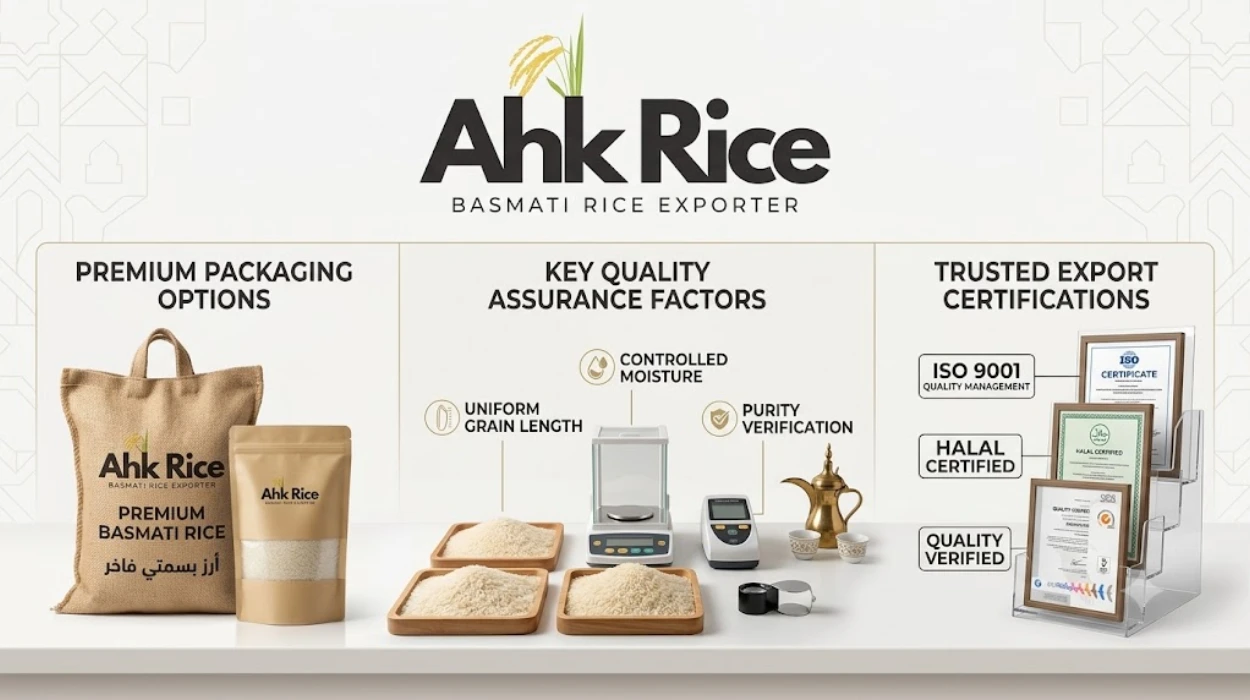
Saudi rice buyers achieve the best import results by selecting suppliers with verified certifications, market-specific packaging, documented quality controls, and consistent grading systems. Here is why: packaging affects shelf life, certification affects customs clearance, and quality systems determine customer satisfaction after delivery.
Saudi Arabia imports significant volumes of Basmati rice each year because rice remains a staple food across households, restaurants, catering companies, and food distributors. Buyers compare suppliers based on compliance, packaging performance, product consistency, and export capability before making procurement decisions.
Understanding how rice is processed, certified, tested, and packaged helps buyers reduce risks during sourcing. A useful starting point is understanding how Pakistani Basmati varieties are processed and graded before export through this guide on Pakistani Sella Basmati rice production and export requirements.
AHK Rice is a trusted Pakistani Basmati rice exporter based in Punjab, supplying 1121, Super Kernel, and 1509 varieties to more than 15 countries. AHK Rice manages end-to-end processing, grading, packaging, documentation, and export procedures to meet importer requirements.
What packaging solutions are available for Saudi rice buyers?
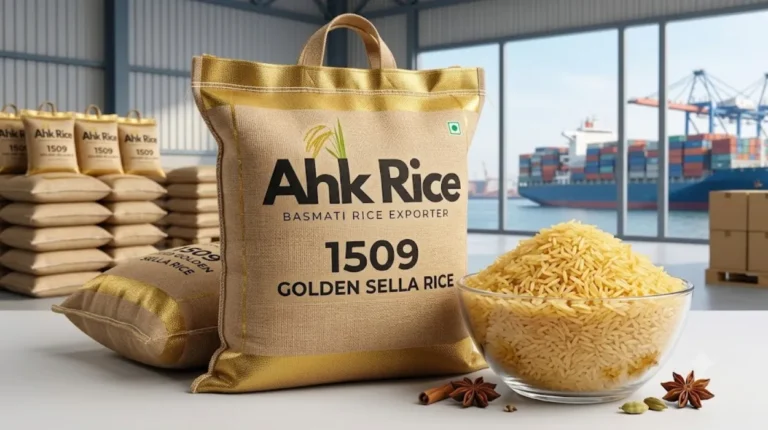
The most common solutions are 5 kg, 10 kg, 20 kg, 25 kg, 40 kg, and 50 kg packaging formats using PP woven bags, BOPP laminated bags, non-woven bags, and retail-ready printed packaging.
Packaging protects rice during transportation, warehousing, and retail distribution. Saudi importers select packaging according to their target customer segment rather than choosing a single format for all channels.
Retail Packaging Solutions
Retail packaging serves supermarkets, grocery stores, and consumer brands.
Common specifications include:
- 1 kg printed bags
- 2 kg branded packs
- 5 kg family packs
- 10 kg economy packs
BOPP laminated bags provide stronger branding opportunities. These bags resist moisture and maintain visual appeal during shelf display.
Wholesale Packaging Solutions
Wholesale packaging supports distributors, catering companies, and food service operators.
Common specifications include:
- 20 kg PP bags
- 25 kg PP bags
- 40 kg PP bags
- 50 kg PP bags
Large-volume buyers prefer PP woven bags because transportation costs remain lower per kilogram.
Comparison of Packaging Options
| Packaging Type | Primary Use | Durability | Branding Capacity | Cost Level | Typical Saudi Buyer |
|---|---|---|---|---|---|
| PP Woven Bag | Wholesale | High | Low | Low | Importers |
| BOPP Bag | Retail | High | High | Medium | Supermarkets |
| Non-Woven Bag | Premium Retail | Medium | High | High | Premium Brands |
| Vacuum Packaging | Specialty Products | Very High | Medium | High | Specialty Stores |
| Paper Packaging | Eco Segments | Medium | Medium | Medium | Niche Retailers |
Packaging selection directly affects product presentation. Certification requirements determine whether those products can legally enter Saudi Arabia.
Which certifications matter most for Saudi rice imports?
SFDA compliance, ISO certification, HACCP implementation, phytosanitary certification, fumigation certificates, and laboratory testing reports are the most important documents for Saudi rice imports.
Certification verifies that rice meets regulatory, safety, and quality requirements before shipment.
Key Certifications Used in Rice Exports
ISO 22000
ISO 22000 defines food safety management procedures. Exporters use documented controls throughout milling, grading, storage, and shipment.
HACCP
Hazard Analysis and Critical Control Points identifies food safety risks and establishes preventive measures.
Phytosanitary Certificate
Government authorities issue phytosanitary certificates after inspection. The document confirms the shipment meets plant health requirements.
Certificate of Origin
The certificate verifies the rice originates from Pakistan. Saudi customs authorities use this document during import processing.
Fumigation Certificate
Fumigation certificates confirm pest-control treatment before shipment.
Laboratory Analysis Reports
Laboratory reports verify:
- Moisture content
- Broken percentage
- Grain length
- Purity level
- Foreign matter levels
- Damaged grain percentage
Required Export Documentation
| Document | Purpose |
|---|---|
| Commercial Invoice | Transaction verification |
| Packing List | Shipment identification |
| Bill of Lading | Cargo transport record |
| Certificate of Origin | Country verification |
| Phytosanitary Certificate | Plant health compliance |
| Fumigation Certificate | Pest treatment verification |
| Quality Inspection Report | Product specification verification |
Certification creates import confidence. Quality systems determine whether the delivered rice matches those certifications.
How do suppliers verify rice quality before export?
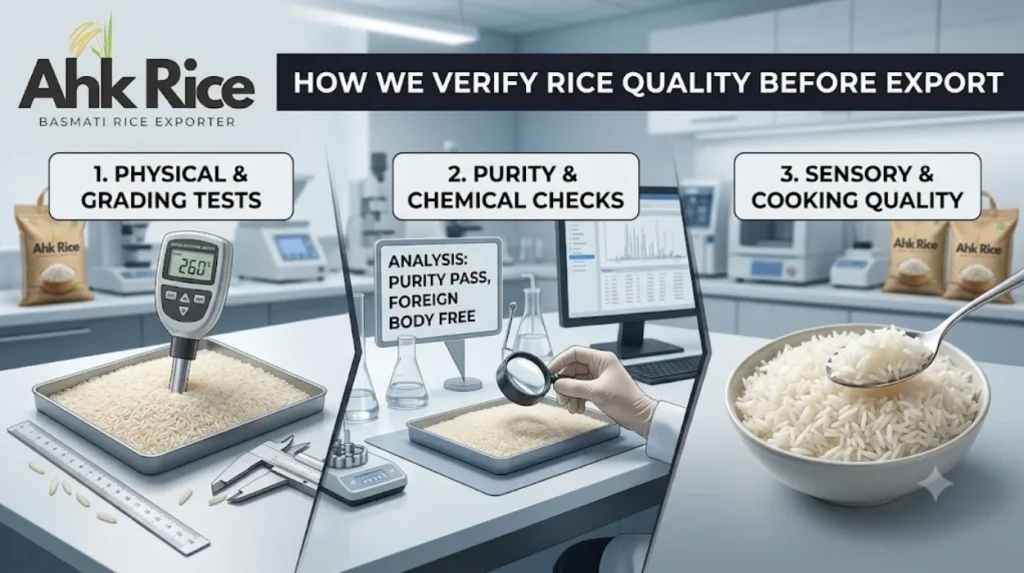
Quality verification depends on grain length measurement, moisture testing, purity inspection, broken percentage analysis, color sorting, and laboratory validation before shipment.
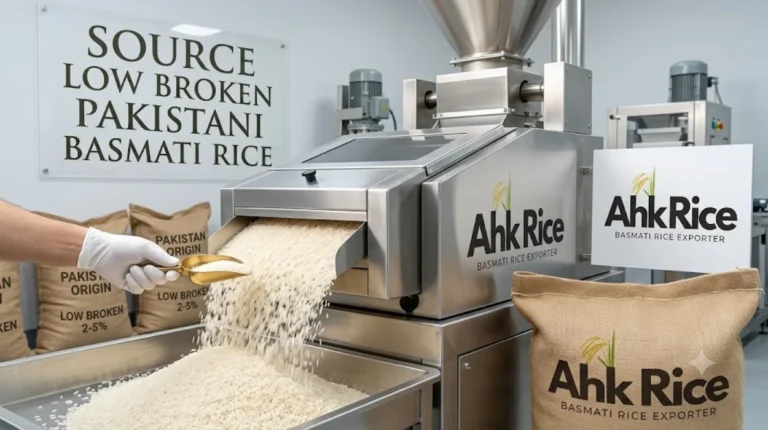
Quality control begins before milling and continues until container loading.
Standard Rice Processing and Quality Steps
- Harvest mature paddy.
- Clean incoming paddy.
- Dry the grain.
- De-husk the rice.
- Parboil selected grades.
- Mill the rice.
- Polish the grain.
- Sort by length.
- Color sort impurities.
- Inspect specifications.
- Pack according to requirements.
- Load export containers.
Each stage influences the final product received by Saudi buyers.
Common Quality Parameters
| Quality Factor | Typical Export Range |
|---|---|
| Grain Length | 7.4–8.4 mm |
| Purity | Up to 95–100% |
| Moisture | 12–14% |
| Broken Rice | 1–5% |
| Foreign Matter | Minimal |
| Damaged Grains | Controlled Limits |
| Color Uniformity | High Consistency |
Specification Comparison Table
| Attribute | 1121 Sella Basmati | Super Kernel Basmati | 1509 Basmati |
|---|---|---|---|
| Average Grain Length | 8.2–8.4 mm | 7.4–7.6 mm | 8.1–8.3 mm |
| Elongation After Cooking | Up to 2.5x | Up to 2.0x | Up to 2.3x |
| Aroma Strength | High | Traditional | Moderate |
| Moisture Target | 12–14% | 12–14% | 12–14% |
| Broken Percentage | 1–5% | 1–5% | 1–5% |
| Shelf Life | 18–24 Months | 18–24 Months | 18–24 Months |
| Primary Market Use | Hospitality | Premium Retail | Value Retail |
Quality verification ensures consistency. Different Saudi market segments require different specifications.
How do Saudi market segments compare in their rice preferences?
Western Saudi Arabia prefers premium long-grain grades for hospitality, while Central and Eastern regions purchase both premium and value-oriented grades depending on distribution channels.
Regional demand patterns influence purchasing decisions.
Western Saudi Arabia
Cities such as Jeddah and Makkah support hospitality, catering, and religious tourism sectors.
Preferred grades include:
- 1121 Golden Sella
- 1121 Steam Basmati
- Premium Super Kernel
Buyers prioritize grain length, appearance, and cooking performance.
Central and Eastern Saudi Arabia
Cities such as Riyadh and Dammam support retail chains and wholesale distribution networks.
Preferred grades include:
- 1121 Sella
- 1509 Sella
- Steam Basmati variants
Buyers balance quality and pricing considerations.
Price per MT Comparison
| Rice Grade | Typical Relative Price Position |
|---|---|
| 1121 Golden Sella | Highest |
| 1121 Steam | High |
| Super Kernel Sella | Medium-High |
| 1509 Sella | Medium |
| IRRI Long Grain | Lower |
Market preferences influence packaging and quality choices. Shelf life becomes another important evaluation factor.
How does shelf life differ between packaging and rice grades?
Properly processed Basmati rice generally maintains quality for 18–24 months, while packaging quality determines how effectively that shelf life is preserved during storage and distribution.
Shelf life depends on moisture management, storage conditions, and packaging performance.
Shelf Life Comparison
| Product Type | Typical Shelf Life |
|---|---|
| 1121 Golden Sella | 18–24 Months |
| 1121 Steam | 18–24 Months |
| Super Kernel Sella | 18–24 Months |
| 1509 Sella | 18–24 Months |
Golden Sella remains stable during long storage periods because parboiling strengthens the grain structure.
In warehouses reaching 40°C temperatures, quality packaging reduces moisture fluctuations. In distribution networks requiring extended storage periods, laminated packaging provides additional protection.
Shelf life evaluation naturally leads to supplier selection criteria.
Which sourcing method works best for different Saudi buyers?
Direct exporters work best for large-volume importers, trading companies suit mixed sourcing needs, and local distributors support smaller purchasing volumes.
Different procurement models serve different operational goals.
Decision Framework
| Buyer Situation | Recommended Method | Main Advantage | Main Limitation | Best For |
|---|---|---|---|---|
| Large Import Program | Direct Exporter | Better control | Higher commitment | Importers |
| Private Label Brand | Direct Exporter | Custom packaging | Development time | Retail Brands |
| Mixed Product Sourcing | Trading Company | Product variety | Less control | Traders |
| Small Volume Purchases | Distributor | Fast availability | Higher pricing | Small Retailers |
| Hospitality Procurement | Direct Exporter | Consistent specifications | Forecast planning | Catering Groups |
Pros and Cons of Direct Export Procurement
Advantages:
- Better specification control
- Custom packaging options
- Consistent grading standards
- Direct communication
- Documentation transparency
Limitations:
- Higher minimum quantities
- Longer planning cycles
- Greater forecasting requirements
Buyers evaluating procurement methods should compare supplier capabilities before making long-term sourcing decisions.
What decision factors should Saudi rice buyers prioritize?
Certification compliance, packaging suitability, quality consistency, export experience, documentation accuracy, and supply reliability are the most important evaluation criteria.
Supplier evaluation should focus on measurable performance indicators.
Core Evaluation Checklist
- Certification validity
- Laboratory testing procedures
- Packaging customization capability
- Export documentation accuracy
- Production capacity
- Container loading standards
- Quality inspection systems
- Market experience
Saudi buyers reduce procurement risks by verifying these factors before confirming contracts.
Packaging protects the product. Certification enables market access. Quality systems maintain consistency. Together, these three elements determine the success of a rice import program.
For buyers moving from evaluation to supplier selection, the next step is reviewing long-term sourcing criteria and supplier qualification standards.How Saudi importers evaluate long-term Pakistani Basmati supply partners.
Frequently Asked Questions
What certification is required to import rice into Saudi Arabia?
Saudi importers commonly require phytosanitary certificates, certificates of origin, fumigation certificates, commercial invoices, packing lists, and food safety compliance documentation.
Which packaging format is most popular in Saudi Arabia?
Wholesale buyers typically prefer 25 kg, 40 kg, and 50 kg PP woven bags, while retail brands prefer 1 kg, 2 kg, 5 kg, and 10 kg printed packaging.
Why is quality inspection important before shipment?
Quality inspection verifies grain length, moisture, purity, broken percentage, and appearance before loading containers. This reduces disputes after delivery.
Which Basmati grade is most commonly used in Saudi hospitality sectors?
1121 Golden Sella Basmati is widely used because of its long grain length, strong cooking performance, and attractive appearance.
How long does properly packaged Basmati rice last?
Properly processed and packaged Basmati rice generally maintains quality for 18 to 24 months under recommended storage conditions.
What should buyers check before selecting a supplier?
Buyers should verify certifications, inspection systems, packaging capabilities, export experience, laboratory testing procedures, and documentation accuracy.