Pakistan-China Rice Trade Growth and Emerging Import Opportunities in 2026
Pakistan-China rice trade is expanding in 2026 because Chinese buyers are increasing imports of premium aromatic rice, diversified grain specifications, and certified food products. Here is why: Pakistan supplies long-grain Basmati varieties, established export infrastructure, and competitive pricing that align with evolving Chinese import requirements.
Rice remains one of the most traded agricultural commodities between Pakistan and China. China represents one of the world’s largest food markets. Pakistan ranks among the leading rice-exporting countries and supplies multiple rice categories to international buyers.
The trade relationship extends beyond commodity sales. Pakistan cultivates specialized rice varieties, processes them according to international standards, and exports them through structured supply chains. Chinese importers source rice for retail distribution, food service operations, manufacturing, and premium consumer segments.
Understanding how this trade works requires examining the rice varieties, processing systems, certifications, market demands, and emerging opportunities shaping imports in 2026.
What Is Pakistan-China Rice Trade Growth in 2026?
China is increasing imports of premium Pakistani rice categories, particularly aromatic long-grain varieties, value-added processed rice, and certified food-grade products. The trade expansion reflects changing consumer preferences, urban food demand, and strengthened commercial relationships between both countries.
Pakistan-China rice trade refers to the commercial exchange of rice products exported from Pakistan and imported into China.
Pakistan cultivates rice primarily in Punjab and Sindh provinces. Punjab produces most Pakistani Basmati rice. Sindh produces large volumes of long-grain non-Basmati rice.
China imports rice to support food processing industries, retail markets, restaurants, and specialty food segments. Chinese consumers increasingly purchase premium aromatic rice because of its fragrance, texture, and cooking performance.
Trade growth in 2026 reflects several measurable factors:
- Rising demand for premium rice
- Expanding food service consumption
- Greater product diversification
- Increased focus on certified imports
- Improved trade connectivity
According to Pakistan export statistics, rice remains among the country’s leading agricultural export categories .
Understanding trade growth requires understanding the rice products themselves. The next question examines how the Pakistan-China rice trade system functions from farm to importer.
How Does Pakistan-China Rice Trade Work?
Rice moves through cultivation, harvesting, milling, grading, certification, export clearance, shipping, customs processing, and distribution. Each stage ensures compliance with importer requirements and food safety standards.
Rice exports follow a structured supply chain.
Cultivate the Rice Crop
Farmers cultivate rice in irrigated agricultural regions.
Punjab produces premium Basmati rice varieties. Examples include 1121 Basmati, Super Kernel Basmati, and 1509 Basmati.
Sindh produces long-grain non-Basmati varieties used in volume-focused markets.
Harvest the Paddy
Farmers harvest mature paddy after reaching target moisture levels.
Harvest timing directly affects grain quality, breakage rates, and storage performance.
Mill the Grain
Rice mills process harvested paddy through several stages:
- Clean the paddy
- De-husk the grain
- Separate impurities
- Polish the kernels
- Grade by size
- Sort by colour
- Inspect quality
- Test specifications
- Package for export
Each processing stage improves consistency and export suitability.
Certify the Product
Inspection agencies verify quality standards.
Testing commonly covers:
- Moisture content
- Grain length
- Broken percentage
- Purity level
- Residue compliance
Load and Ship
Exporters load rice into containers.
Shipments move through seaports before arriving at Chinese ports for customs clearance and distribution.
The trade process depends heavily on product specifications. The next section explains the key components supporting this expanding market.
What Are the Key Components of Pakistan’s Rice Exports to China?
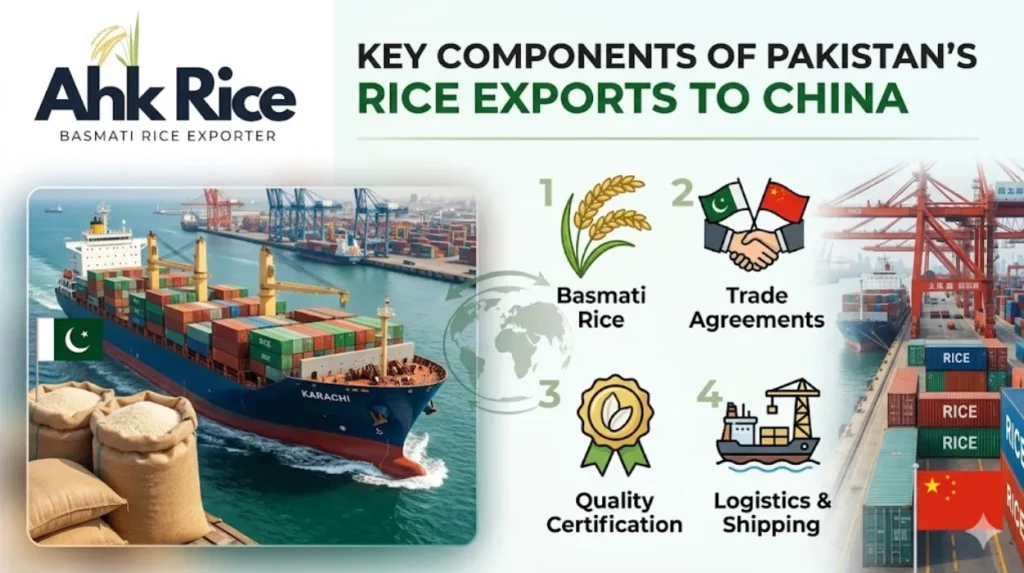
Rice varieties, processing grades, quality systems, certifications, logistics networks, and importer specifications form the core components supporting rice exports to China.
Several interconnected elements determine export success.
Rice Varieties
Pakistan exports multiple rice categories.
1121 Basmati Rice
1121 Basmati produces extra-long cooked grains.
The variety is known for strong aroma and grain elongation.
Super Kernel Basmati Rice
Super Kernel Basmati combines fragrance with traditional grain appearance.
The variety maintains strong demand across premium retail channels.
1509 Basmati Rice
1509 Basmati offers shorter crop cycles and high productivity.
The variety provides competitive pricing while retaining aromatic characteristics.
Non-Basmati Rice
Non-Basmati categories serve industrial and volume-focused buyers.
Examples include IRRI rice and long-grain white rice.
Processing Grades
Rice exports commonly include:
- White Rice
- Steam Rice
- Golden Sella Rice
- Creamy Sella Rice
- Brown Rice
- Parboiled Rice
- Organic Rice
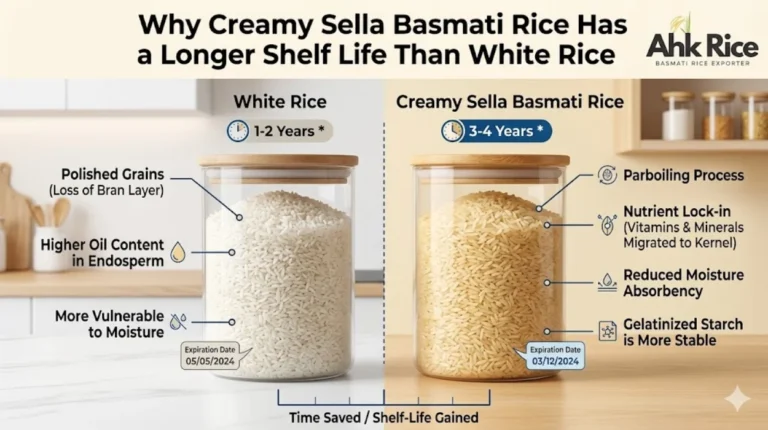
Golden Sella lasts longer than Steam rice. In hot warehouse environments, Golden Sella generally maintains colour stability more effectively. For importers managing extended storage cycles, Golden Sella offers operational advantages.
Quality Control Systems
Quality programs focus on:
- Moisture control
- Colour sorting
- Laboratory testing
- Traceability management
- Container inspection
These components support market access. The next section examines the specific benefits driving import demand.
What Benefits Drive Chinese Demand for Pakistani Rice?
Aroma, grain length, cooking performance, product diversity, competitive pricing, and international quality compliance drive demand for Pakistani rice in China.
Chinese consumers increasingly purchase differentiated food products.
Basmati rice offers characteristics that standard rice varieties do not provide.
Premium Aroma
Basmati rice contains natural aromatic compounds.
The fragrance remains one of the variety’s defining characteristics.
Grain Elongation
Long-grain Basmati expands significantly after cooking.
Consumers value visual presentation and texture consistency.
Product Diversity
Importers source multiple specifications.
Examples include retail packs, food service packs, organic products, and specialty premium grades.
Competitive Supply
Pakistan produces substantial rice volumes annually.
Large-scale cultivation supports consistent export availability.
International Compliance
Certified products simplify importer procurement processes.
Food safety documentation supports regulatory approval procedures.
Benefits explain demand growth. The next question focuses on the specific import applications supporting market expansion.
How Is Pakistani Rice Used in the Chinese Market?
Chinese importers use Pakistani rice for retail sales, restaurants, food manufacturing, hospitality operations, premium grocery distribution, and specialty ethnic food markets.
Rice serves multiple commercial functions.
Retail Distribution
Supermarkets sell packaged rice directly to consumers.
Premium Basmati products often occupy higher-value retail categories.
Restaurant Operations
Restaurants use aromatic rice for specialty dishes.
Examples include South Asian cuisine, Middle Eastern cuisine, fusion dining, and premium buffet concepts.
Hospitality Industry
Hotels purchase rice for large-scale food preparation.
Consistent cooking performance supports operational efficiency.
Food Manufacturing
Manufacturers incorporate rice into packaged food products.
Examples include ready meals, frozen foods, and rice-based preparations.
Premium Food Segments
Urban consumers increasingly seek imported food products.
Premium rice aligns with this consumption trend.
Market applications explain import demand. The next section addresses misconceptions surrounding Pakistan-China rice trade.
What Common Misconceptions Exist About Pakistani Rice Exports to China?
Many buyers assume China imports only low-cost rice, Basmati serves only niche markets, certifications are optional, and all rice grades perform identically. These assumptions are inaccurate.
Several misconceptions affect market understanding.
Misconception 1: China Imports Only Commodity Rice
China imports both commodity and premium rice categories.
Premium food segments continue expanding in major urban centers.
Misconception 2: All Basmati Grades Are Identical
Different varieties provide different performance characteristics.
1121 Basmati delivers greater grain elongation than many alternative varieties.
Super Kernel Basmati emphasizes traditional aromatic characteristics.
1509 Basmati provides efficiency-focused sourcing options.
Misconception 3: Certifications Have Limited Importance
Food certifications directly affect importer confidence.
Certified products simplify compliance procedures and quality verification.
Misconception 4: Processing Methods Do Not Matter
Processing methods significantly influence shelf life, colour, texture, and cooking performance.
Golden Sella differs from Steam rice. Golden Sella undergoes parboiling treatment. Steam rice follows a different processing pathway. These differences influence storage characteristics and final appearance.
Understanding misconceptions creates a clearer picture of future opportunities. The next section explores the emerging developments shaping 2026 imports.
What Emerging Import Opportunities Are Shaping 2026?
Premium Basmati demand, certified food imports, value-added packaging, organic rice, specialty retail products, and diversified sourcing strategies are creating new opportunities in 2026.
Several trends influence future growth.
Premium Consumer Demand
Urban consumers increasingly purchase differentiated imported foods.
Premium rice categories benefit from this shift.
Food Safety Prioritization
Importers emphasize verified quality systems.
Certification requirements continue strengthening.
Packaged Retail Growth
Retail-ready products support higher-value market positioning.
Examples include branded consumer packs and specialty gift packaging.
Organic Product Expansion
Organic food consumption continues expanding globally.
Certified organic rice attracts health-conscious consumers.
Product Segmentation
Chinese buyers increasingly source rice for specific applications.
Examples include restaurant use, retail use, premium gifting, and food manufacturing.
Readers seeking a deeper understanding of specific varieties imported by Chinese buyers can explore our guide covering the rice categories most frequently sourced by Chinese importers: Most In-Demand Pakistani Basmati Rice Types Among Chinese Buyers in 2026.
Pakistan-China rice trade growth in 2026 is driven by rising demand for premium aromatic rice, stronger quality requirements, diversified import applications, and expanding consumer interest in differentiated food products.
Pakistan supplies multiple rice varieties, including 1121 Basmati, Super Kernel Basmati, 1509 Basmati, and non-Basmati categories. Each variety serves different market requirements.
The trade process combines cultivation, milling, grading, certification, logistics, and regulatory compliance. These components create a structured export ecosystem capable of supporting increasing Chinese demand.
Future opportunities center on premium products, certified food categories, retail packaging, organic rice, and specialized import segments. These developments continue strengthening Pakistan’s position within China’s evolving rice market.
Frequently Asked Questions
What rice varieties does China import from Pakistan?
China imports 1121 Basmati, Super Kernel Basmati, 1509 Basmati, and selected non-Basmati rice varieties depending on market requirements.
Why is Pakistani Basmati rice popular in China?
Pakistani Basmati rice offers aroma, long grain length, strong cooking performance, and premium presentation characteristics.
Which province produces most Pakistani Basmati rice?
Punjab produces the majority of Pakistan’s Basmati rice and serves as the country’s primary aromatic rice cultivation region.
What certifications are important for rice exports to China?
Common certifications include phytosanitary certification, food safety compliance documentation, quality inspection reports, and product testing certificates.
What is the difference between Steam and Golden Sella rice?
Steam rice undergoes steam treatment during processing. Golden Sella rice undergoes parboiling, creating a golden colour and improving storage stability.
Which industries in China use imported Pakistani rice?
Retail chains, restaurants, hotels, food manufacturers, specialty grocery stores, and premium food distributors use imported Pakistani rice.