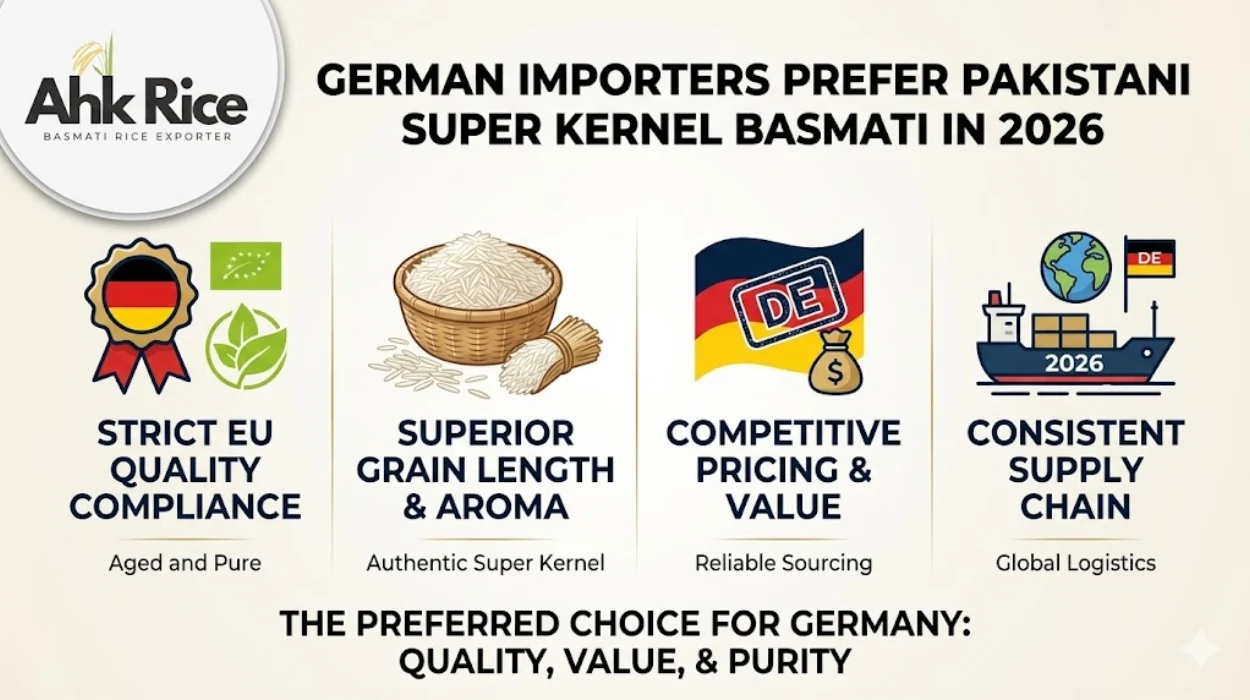
Why German Importers Prefer Pakistani Super Kernel Basmati Rice in 2026
German importers prefer Pakistani Super Kernel Basmati Rice in 2026 because it delivers consistent grain length, natural aroma, reliable supply volumes, and compliance with European quality standards. Here is why: Pakistan remains one of the world’s leading Basmati-producing countries, and Super Kernel Basmati continues to meet importer requirements for retail, foodservice, and ethnic food markets.
German demand for premium aromatic rice continues to increase as consumers seek authentic South Asian and Middle Eastern food products. Super Kernel Basmati Rice occupies an important position because it combines traditional fragrance with long-grain appearance and strong cooking performance.
Importers evaluate rice based on origin, processing quality, certification status, grain uniformity, and supply chain reliability. Pakistani Super Kernel Basmati Rice satisfies these requirements through established cultivation practices and export-oriented processing systems.
What Is Pakistani Super Kernel Basmati Rice?
Pakistani Super Kernel Basmati Rice is a traditional aromatic long-grain rice variety cultivated in Punjab. It features natural fragrance, elongated grains, fluffy cooking characteristics, and strong acceptance across European, Middle Eastern, and North American import markets.
Super Kernel Basmati Rice is a premium rice variety grown primarily in Pakistan’s Basmati belt. The variety belongs to the aromatic rice family and is known for its distinct fragrance and cooking expansion.
Punjab produces most of Pakistan’s Super Kernel Basmati crop. The region provides fertile soil, irrigation infrastructure, and climatic conditions that support grain development.
Super Kernel Basmati Rice typically measures between 7.0 mm and 7.4 mm before cooking. The grain expands significantly after cooking while maintaining separation.
German importers often select this variety for ethnic supermarkets, specialty food distributors, restaurants, and private-label packaging programs.
With the definition of Super Kernel Basmati established, the next question is where and how this rice is cultivated.
Where Is Pakistani Super Kernel Basmati Rice Grown?
Punjab produces the majority of Pakistan’s Super Kernel Basmati Rice. The districts provide fertile alluvial soil, controlled irrigation systems, seasonal rainfall, and temperatures suitable for premium aromatic rice cultivation.
Which Growing Regions Produce Super Kernel Basmati Rice?
Punjab contains several important rice-growing districts.
Key cultivation regions include:
- Gujranwala
- Hafizabad
- Sheikhupura
- Narowal
- Sialkot
- Nankana Sahib
Farmers cultivate rice during the Kharif season. Planting generally begins between May and July. Harvesting occurs between October and November.
Why Does Punjab Produce Premium Basmati Rice?
Punjab combines Himalayan water sources with nutrient-rich soils. These factors support grain development and aroma formation.
Temperature variation during grain maturation contributes to fragrance retention. Irrigation systems also provide stable water supply throughout the growing cycle.
German importers often request origin verification because geographical origin directly influences grain quality and aroma characteristics.
Understanding cultivation regions helps explain quality outcomes, which leads to the next question about processing.
How Does Super Kernel Basmati Rice Processing Work?
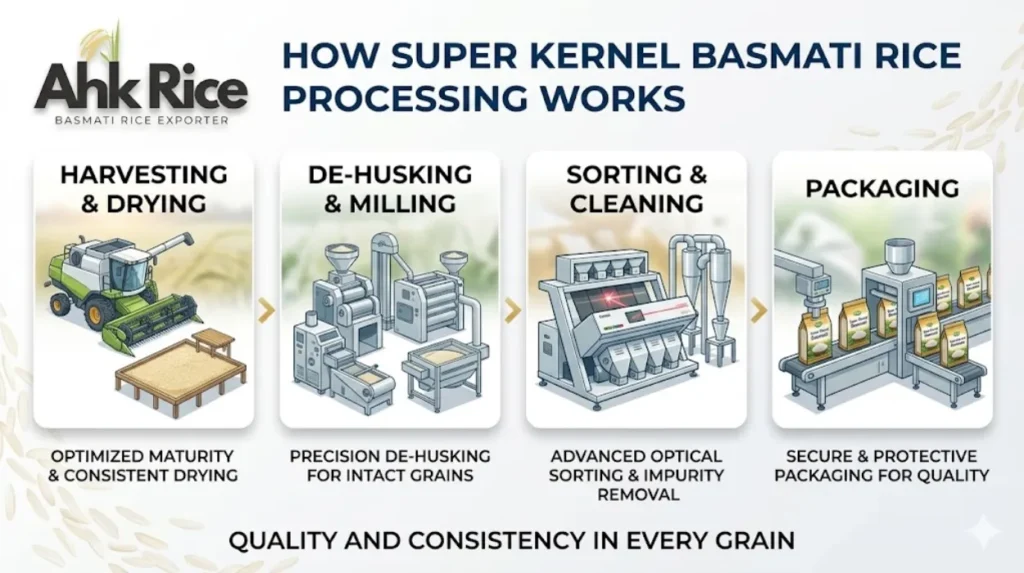
Processing transforms harvested paddy into export-quality rice through cleaning, dehusking, polishing, grading, sorting, testing, packaging, and shipment preparation. Each step improves consistency, safety, and market compliance.
What Are the Main Processing Steps?
Export-quality rice follows a structured processing sequence.
- Clean the paddy to remove dust and foreign matter.
- Dry the grain to achieve target moisture levels.
- Dehusk the rice to remove outer husks.
- Polish the kernels to improve appearance.
- Grade the rice by size and quality.
- Sort the grains using optical technology.
- Inspect the rice for defects.
- Test the rice for quality parameters.
- Package the rice for export shipment.
Each step improves uniformity and reduces contamination risk.
Why Is Optical Sorting Important?
Optical sorting systems identify discolored grains, foreign particles, and damaged kernels.
Modern rice mills use camera-based systems to improve consistency. German importers prioritize uniform grain appearance because retail consumers evaluate rice visually before purchase.
Processing quality explains market acceptance, which leads directly to the specifications importers evaluate.
What Key Components Do German Importers Evaluate?
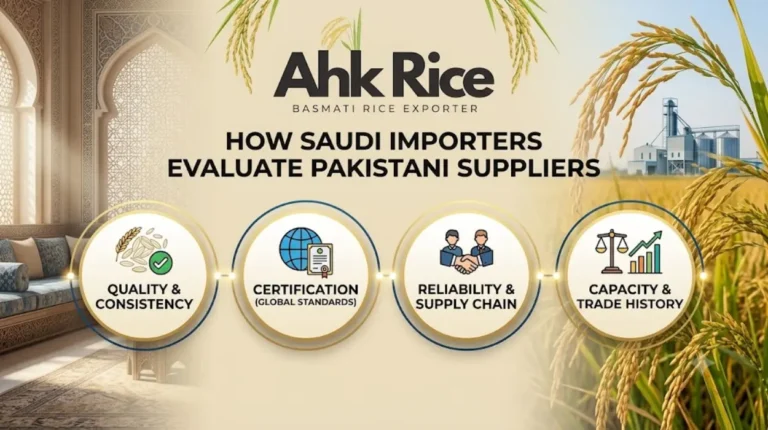
German importers evaluate grain length, aroma, purity, moisture, broken percentage, color uniformity, cooking performance, and food safety compliance before approving suppliers and shipments.
What Specifications Matter Most?
| Specification | Typical Requirement |
|---|---|
| Grain Length | 7.0–7.4 mm |
| Moisture | 12–14% |
| Purity | 95–100% |
| Broken Rice | 0–5% |
| Damage | Minimal |
| Aroma | Natural Basmati fragrance |
| Color | Uniform creamy white |
These specifications help importers maintain product consistency.
Why Does Grain Length Matter?
Long grains create premium visual appeal.
German consumers associate elongated grains with authentic Basmati rice. Restaurants also prefer longer grains because cooked presentation affects customer perception.
These specifications influence purchasing decisions, which leads to understanding the benefits importers receive.
What Benefits Make Super Kernel Basmati Rice Attractive to German Importers?
Consistent quality, natural aroma, strong cooking expansion, established export infrastructure, and broad consumer acceptance make Pakistani Super Kernel Basmati Rice attractive for German distribution channels.
How Does Aroma Create Market Value?
Natural fragrance differentiates Basmati rice from standard long-grain rice.
Consumers recognize aromatic rice as a premium product category. This distinction supports higher retail positioning.
How Does Cooking Performance Benefit Buyers?
Super Kernel Basmati grains elongate during cooking.
The rice remains separate and fluffy after preparation. Restaurants and catering businesses value this characteristic because presentation quality remains consistent.
How Does Supply Reliability Support Importers?
Pakistan exports significant rice volumes annually. Large-scale production helps distributors secure regular shipments throughout the year. The benefits explain growing demand, which raises the question of where this rice is used.
What Are the Main Use Cases for Pakistani Super Kernel Basmati Rice?
German distributors use Super Kernel Basmati Rice for retail packaging, ethnic grocery distribution, restaurant supply, catering operations, food manufacturing, and private-label food programs.
Which Retail Segments Use This Rice?
Retail demand comes from multiple channels.
Examples include:
- Ethnic supermarkets
- International food stores
- Premium grocery chains
- Online food retailers
Consumers purchase Basmati rice for home cooking applications.
Which Foodservice Segments Use This Rice?
Foodservice buyers require consistency and volume.
Examples include:
- Indian restaurants
- Pakistani restaurants
- Middle Eastern restaurants
- Hotel kitchens
- Catering companies
These businesses prioritize aroma, grain length, and cooking yield.
Use cases demonstrate market demand, leading to misconceptions that often influence buyer decisions.
What Common Misconceptions Exist About Pakistani Super Kernel Basmati Rice?
Many buyers incorrectly assume all Basmati rice varieties are identical. Grain genetics, cultivation regions, processing methods, and certification standards create significant differences between products.
Is All Basmati Rice the Same?
No.
Different varieties possess different grain lengths, aromas, and cooking characteristics.
Examples include:
- Super Kernel Basmati
- 1121 Basmati
- 1509 Basmati
Each variety serves different market requirements.
Does Longer Grain Always Mean Better Quality?
No.
Grain length represents only one quality factor.
Importers also inspect aroma, purity, moisture, cooking performance, and food safety compliance before purchasing.
Does Processing Replace Natural Aroma?
No.
Processing preserves grain quality. Aroma develops during cultivation and maturation.
Understanding these misconceptions helps importers make informed sourcing decisions. The final consideration involves certifications and compliance standards.
What Certifications Apply to Pakistani Super Kernel Basmati Rice Exports?
European importers require food safety compliance, quality testing, traceability documentation, and internationally recognized certifications before approving rice shipments for distribution.
Which Certifications Are Commonly Required?
Exporters frequently maintain certifications such as:
- ISO 22000
- HACCP
- GMP
- BRCGS
- Halal Certification
These standards support food safety management systems.
Which Export Documents Support Compliance?
Export shipments typically include:
- Phytosanitary Certificate
- Certificate of Origin
- Commercial Invoice
- Packing List
- Bill of Lading
- Quality Inspection Report
Documentation supports customs clearance and import verification.
Why Are Certifications Important for Germany?
Germany operates under strict European Union food safety regulations.
Importers verify supplier compliance before approving shipments. Documentation provides traceability and supports consumer protection requirements.
Certification requirements complete the evaluation process and explain why Pakistani Super Kernel Basmati Rice remains a preferred import category in Germany.
Pakistani Super Kernel Basmati Rice remains a preferred choice for German importers in 2026 because it combines traditional aroma, premium grain appearance, reliable cultivation regions, advanced processing systems, and internationally recognized quality standards. Punjab’s rice-growing regions produce the raw material, while modern milling and inspection systems create export-ready products that satisfy European market requirements. These characteristics support demand across retail, foodservice, catering, and private-label sectors throughout Germany.
Frequently Asked Questions
Why do German importers buy Pakistani Super Kernel Basmati Rice?
German importers purchase Super Kernel Basmati Rice because of its natural aroma, long grains, cooking performance, and compliance with European quality standards.
What is the average grain length of Super Kernel Basmati Rice?
Super Kernel Basmati Rice generally measures between 7.0 mm and 7.4 mm before cooking.
Which region produces most Pakistani Super Kernel Basmati Rice?
Punjab produces the majority of Pakistan’s Super Kernel Basmati Rice, particularly Gujranwala, Hafizabad, Sheikhupura, Narowal, and Sialkot districts.
What certifications do German importers look for?
German importers commonly require ISO 22000, HACCP, GMP, BRCGS, Halal certification, and supporting export documentation.
What industries use Super Kernel Basmati Rice in Germany?
Retail grocery chains, ethnic supermarkets, restaurants, catering companies, hotels, and food manufacturers commonly use Super Kernel Basmati Rice.