Which Pakistani Basmati Rice Grades Sell Best in Iraq in 2026
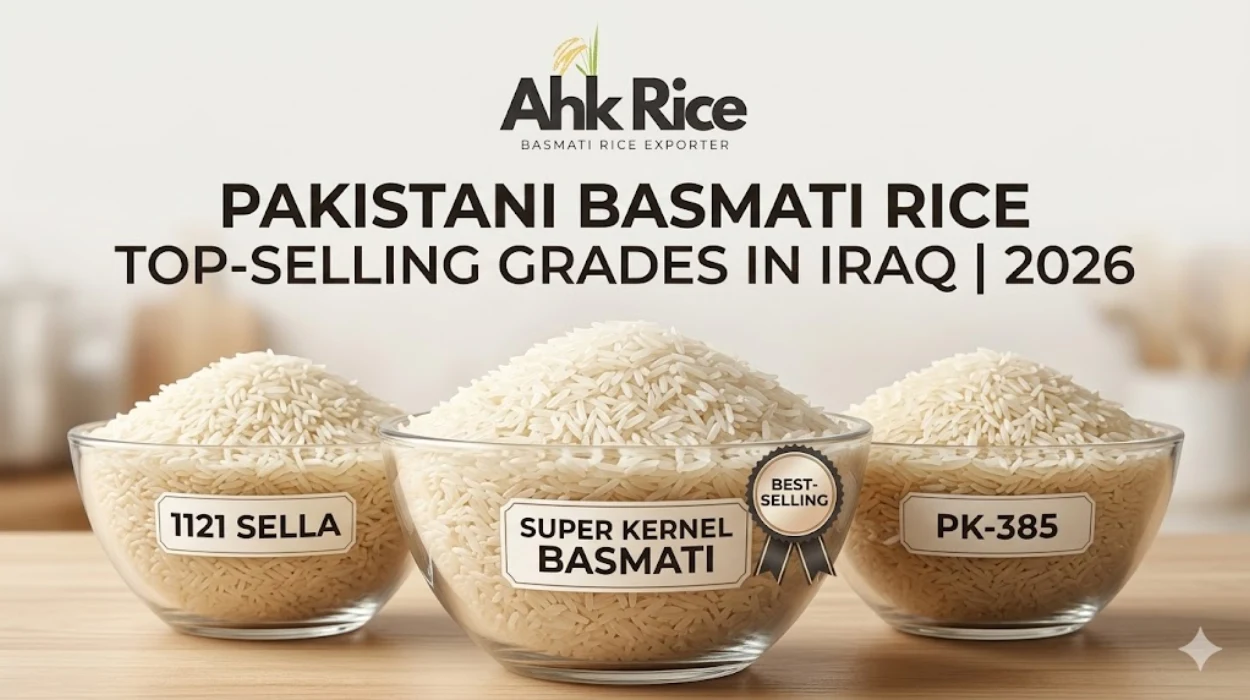
Iraq imports 1121 Golden Sella, 1121 Steam, Super Kernel Basmati, and 1121 White Rice more than any other Pakistani Basmati grades in 2026. These grades match Iraqi consumer preferences for long grain length, strong aroma, high cooked elongation, and stable performance in retail, catering, and food service channels. Here is why: Iraqi buyers prioritize grain appearance, cooking consistency, and storage durability, while Pakistani exporters supply multiple processing grades that meet these requirements (source: REAP export data, December 2025).
What Are the Best-Selling Pakistani Basmati Rice Grades in Iraq in 2026?
1121 Golden Sella, 1121 Steam, Super Kernel Basmati, and 1121 White Rice account for the largest share of Pakistani Basmati rice imports into Iraq in 2026.
Pakistani Basmati rice grades represent different processing methods and quality specifications. Iraqi importers source multiple grades because retail consumers, restaurants, wholesalers, and institutional buyers require different cooking characteristics.
1121 Golden Sella Basmati Rice
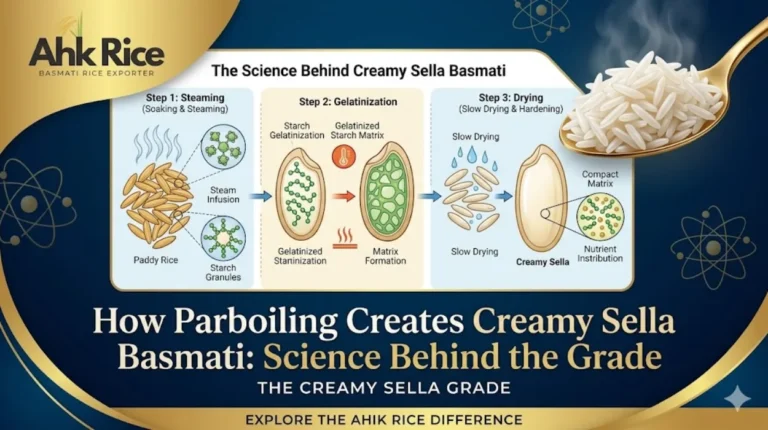
1121 Golden Sella Basmati undergoes parboiling before milling. The process creates a golden-colored grain with excellent storage stability and high cooked grain elongation.
1121 Golden Sella remains popular in Iraq because wholesalers distribute it across multiple provinces. The grade performs consistently in large-scale food preparation and maintains quality during extended storage periods.
1121 Steam Basmati Rice
1121 Steam Basmati undergoes steam treatment without full parboiling. The process preserves the natural white appearance while improving grain strength.
1121 Steam Basmati serves supermarkets, retail chains, and premium food outlets. Iraqi consumers prefer the grade because it combines strong aroma with a bright appearance after cooking.
Super Kernel Basmati Rice
Super Kernel Basmati originated in Punjab’s Basmati-growing region. The variety offers traditional aroma and excellent taste characteristics.
Super Kernel Basmati attracts buyers who prioritize heritage Basmati characteristics. The grain length remains shorter than 1121 varieties but delivers stronger traditional fragrance.
1121 White Basmati Rice
1121 White Basmati receives standard milling and polishing without parboiling or steaming.
1121 White Basmati appeals to premium retail buyers. The bright white appearance and extra-long grain length support demand in urban Iraqi markets.
The leading grades establish which products dominate imports. The next question is why Iraqi buyers consistently choose these specifications.
Why Do Iraqi Importers Prefer These Basmati Rice Grades?
Long grain length, high elongation ratio, strong aroma, and storage durability drive Iraqi demand for specific Pakistani Basmati grades.
Iraq imports significant volumes of rice every year because rice remains a staple food across households, restaurants, and catering operations. Pakistani Basmati varieties satisfy several purchasing requirements simultaneously.
Grain Length Preference
Iraqi buyers prefer extra-long grain rice. Premium grades typically measure 8.20–8.50 mm before cooking.
Long grains create stronger shelf appeal. Retail consumers associate longer grains with higher quality and premium positioning.
Cooked Elongation Performance
Basmati rice expands significantly during cooking. Premium 1121 grades often reach nearly double their original length after preparation.
High elongation improves plate presentation. Restaurants and catering businesses value this characteristic because fewer broken grains appear in finished dishes.
Aroma Requirements
Natural aroma remains a defining characteristic of authentic Basmati rice. The fragrance develops during cultivation, harvesting, and storage.
Iraqi consumers recognize Basmati aroma as a quality indicator. Importers therefore prioritize varieties with verified aromatic characteristics.
Storage Stability
Storage performance affects profitability. Golden Sella rice retains quality during long transportation and warehouse storage cycles.
Golden Sella lasts longer than Steam rice. In hot warehouse conditions exceeding 40°C, Golden Sella maintains grain integrity for approximately 18 months. Steam rice performs best within 12 months. Iraqi distributors operating large inventory networks often prefer Golden Sella for this reason.
These buyer preferences explain demand patterns. The next question is how each rice grade reaches export quality.
How Are Pakistani Basmati Rice Grades Processed Before Export?
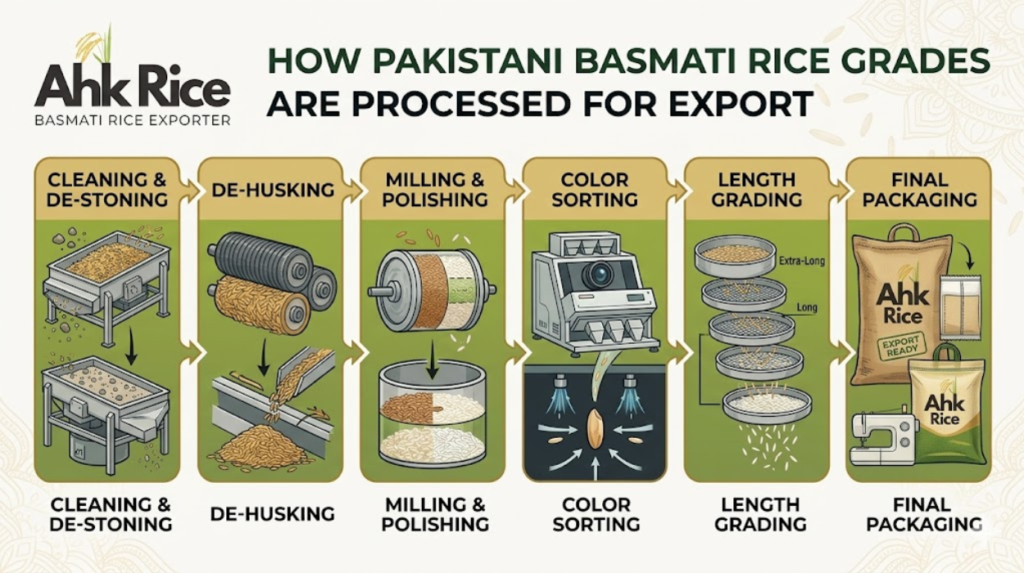
Pakistani Basmati rice passes through 9 processing stages before export shipment.
Rice processing transforms harvested paddy into export-ready rice. Every stage influences grain appearance, cooking performance, and export compliance.
The 9-Step Processing Process
- Clean the harvested paddy.
- Dry the paddy to target moisture levels.
- De-husk the grain.
- Separate immature kernels.
- Mill the rice.
- Polish the grains.
- Sort by size and quality.
- Inspect through color sorting systems.
- Pack and load for export.
Each step removes defects and improves consistency.
How Golden Sella Processing Differs
Golden Sella processing includes parboiling before milling. The paddy absorbs nutrients and strengthens internally.
Parboiling increases grain durability. The process reduces breakage during transportation and bulk handling.
How Steam Rice Processing Differs
Steam processing applies controlled steam treatment without full parboiling.
Steam treatment preserves grain appearance while strengthening the kernel. The result combines premium visual quality with improved handling performance.
Processing creates distinct commercial grades. The next question is how buyers differentiate these grades through specifications.
What Specifications Differentiate Iraqi Import Grades?
Grain length, broken percentage, moisture level, purity, and processing method determine grade classification.
Rice grades follow measurable specifications. Importers compare these metrics before placing orders.
Specification Comparison Table
| Attribute | 1121 Golden Sella | 1121 Steam | 1121 White | Super Kernel |
|---|---|---|---|---|
| Grain Length | 8.20–8.50 mm | 8.20–8.50 mm | 8.20–8.50 mm | 7.00–7.60 mm |
| Aroma | Strong | Strong | Strong | Very Strong |
| Processing | Parboiled | Steamed | White Milled | White Milled |
| Color | Golden | Cream White | Bright White | White |
| Elongation | High | High | High | Moderate |
| Storage Life | 18–24 months | 12–18 months | 12–18 months | 12–18 months |
| Common Market | Wholesale | Retail | Premium Retail | Traditional Retail |
Importers evaluate these specifications because they directly affect consumer acceptance and profit margins.
Specification analysis explains buyer decisions. The next question examines where these grades are used throughout Iraq.
Where Are Different Basmati Rice Grades Used in Iraq?
Golden Sella dominates wholesale distribution, while Steam and White grades serve premium retail and food service sectors.
Different buyer groups require different rice characteristics. Market segmentation influences import decisions.
Retail Markets
Retail stores prioritize visual appearance and aroma.
1121 White Basmati and 1121 Steam Basmati perform well in packaged consumer products because consumers can easily evaluate grain quality before purchase.
Restaurants
Restaurants prioritize cooking consistency.
1121 Steam Basmati provides reliable cooking performance and attractive presentation for plated meals.
Catering Companies
Catering operations prioritize yield and storage durability.
1121 Golden Sella supports large-volume preparation because grains remain separate after cooking.
Traditional Food Markets
Traditional food markets often sell Super Kernel Basmati.
Super Kernel appeals to consumers seeking classic Basmati aroma and heritage rice varieties.
Market applications explain consumption patterns. The next question addresses common misconceptions about Iraqi rice imports.
What Misconceptions Exist About Basmati Rice Grades in Iraq?
The most common misconception is that all Basmati rice grades deliver identical cooking performance and market value.
Many buyers focus only on grain length. Quality evaluation requires additional specifications.
Misconception 1: Longer Grain Always Means Better Rice
Grain length represents only one quality factor.
Aroma, purity, moisture control, and processing quality influence overall performance equally.
Misconception 2: Golden Sella and Steam Rice Are the Same
Golden Sella and Steam rice follow different processing methods.
Golden Sella undergoes parboiling. Steam rice undergoes controlled steaming. Each method produces distinct cooking characteristics.
Misconception 3: White Rice Is Always Premium
White rice attracts premium buyers because of appearance.
Golden Sella often achieves stronger performance in bulk catering operations because the grains withstand extended storage and transportation.
Misconception 4: Super Kernel Is Obsolete
Super Kernel continues to maintain demand in traditional markets.
Consumers seeking classic Basmati fragrance often select Super Kernel instead of newer varieties.
Correcting misconceptions helps buyers compare grades accurately. The next question focuses on certifications and compliance requirements.
What Certifications Apply to Pakistani Basmati Rice Exports to Iraq?
Phytosanitary certification, quality inspection, food safety compliance, and origin documentation support exports to Iraq.
Export shipments require documented compliance before customs clearance.
Common Export Documents
- Phytosanitary Certificate
- Certificate of Origin
- Commercial Invoice
- Packing List
- Bill of Lading
- Quality Inspection Certificate
- Fumigation Certificate
Common Quality Requirements
- Moisture testing
- Purity verification
- Broken grain analysis
- Length grading
- Residue testing
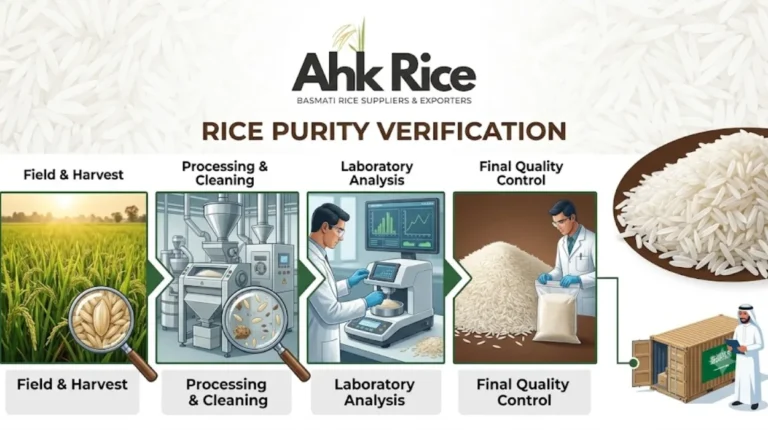
Exporters inspect, test, certify, and verify these requirements before shipment. Iraqi importers use these documents to confirm quality and regulatory compliance.
Certification requirements complete the picture of how rice reaches Iraq. Understanding sourcing practices becomes the logical next step for importers evaluating suppliers.
Pakistani Basmati rice exports to Iraq in 2026 center on 1121 Golden Sella, 1121 Steam, 1121 White Rice, and Super Kernel Basmati. Each grade serves a distinct market segment. Golden Sella supports wholesale and catering channels. Steam and White grades target premium retail shelves. Super Kernel maintains demand among consumers seeking traditional Basmati aroma.
Grain length, aroma, elongation ratio, storage stability, and processing method determine which grade succeeds in each Iraqi market segment. Importers evaluate these specifications alongside certification requirements and processing standards before sourcing export shipments.
Frequently Asked Questions
Which Pakistani Basmati rice grade sells the most in Iraq?
1121 Golden Sella Basmati ranks among the highest-volume imported grades because of its durability, storage stability, and suitability for wholesale distribution networks.
Why is 1121 Basmati rice popular in Iraq?
1121 Basmati offers extra-long grains, strong aroma, high cooked elongation, and attractive presentation after cooking.
What is the difference between Golden Sella and Steam Basmati rice?
Golden Sella undergoes parboiling before milling. Steam Basmati undergoes steam treatment without full parboiling. Golden Sella provides longer storage stability, while Steam offers a lighter appearance.
Does Iraq import Super Kernel Basmati rice?
Yes. Super Kernel Basmati remains popular among consumers who prefer traditional Basmati fragrance and taste characteristics.
What certifications are required for exporting Basmati rice to Iraq?
Common requirements include a Phytosanitary Certificate, Certificate of Origin, Quality Inspection Certificate, Commercial Invoice, Packing List, and Bill of Lading.