Best 1121 Basmati Rice Grade for Gulf and European Buyers
1121 Golden Sella Basmati Rice is the most stable export-grade choice for Gulf buyers, while 1121 Steam Basmati Rice dominates European demand due to aroma retention and cooking expansion consistency under controlled retail packaging systems. Here is why: Gulf importers prioritize shelf stability and bulk catering performance, while European buyers prioritize aroma integrity, grain elongation, and consumer-grade packaging compliance under strict food safety systems and retail segmentation.
The selection of 1121 Basmati Rice grades depends on processing method, storage conditions, and market compliance requirements. Gulf buyers operate in high-temperature logistics environments, while Europe maintains controlled humidity warehouses and retail distribution networks.
For a foundational understanding of the grain structure and processing flow, review this detailed overview of 1121 Basmati rice cultivation and milling fundamentals. This provides baseline context before evaluating export-grade differences.
1121 Basmati Rice grades originate from Punjab cultivation zones where farmers cultivate, irrigate, and harvest long-grain basmati under controlled irrigation cycles. The grain is then milled, dehusked, polished, and graded into export categories based on moisture, length, and aroma retention.
What are the available solutions for 1121 Basmati Rice grades in export markets?
Export buyers choose between three primary 1121 Basmati Rice processing solutions: Golden Sella (parboiled), Steam (mild parboiled under pressure), and Raw White (non-parboiled). Golden Sella maximizes shelf life, Steam maximizes aroma retention, and Raw White maximizes cooking softness, making each solution suitable for distinct logistics and consumption environments across global trade markets.
1121 Basmati Rice processing begins after harvesting when paddy is cleaned, soaked, steamed or parboiled, dried, and milled. Each method alters starch composition, grain strength, and elongation behavior during cooking.
Golden Sella Processing System
Golden Sella Basmati Rice undergoes parboiling under high temperature before milling. The process strengthens grain structure and locks nutrients inside the kernel.
- Parboiling stabilizes grain integrity
- Drying reduces moisture to export-safe levels
- Polishing enhances uniform golden color
- Sorting removes broken kernels
Golden Sella performs best in bulk catering systems where consistency matters more than aroma intensity.
Steam Processing System
Steam Basmati Rice uses controlled steaming instead of full parboiling. This preserves aroma compounds while improving grain strength.
- Steaming preserves aromatic compounds
- Drying stabilizes kernel moisture
- Polishing maintains white translucency
- Grading ensures uniform grain length
Steam grade dominates premium retail shelves in Europe due to sensory appeal.
Raw White Processing System
Raw White 1121 Basmati Rice is milled without parboiling or steaming. It delivers softness and faster cooking time.
- Cleaning removes field impurities
- Dehusking separates husk layers
- Polishing enhances whiteness
- Grading ensures size uniformity
Raw White performs best in domestic retail and short-storage environments.
With processing solutions defined, the next step is to compare how these approaches differ in measurable export performance.
How do different 1121 Basmati Rice processing approaches compare in export performance?
Golden Sella delivers highest shelf stability at up to 18 months in hot climates, Steam provides balanced aroma retention for 12–15 months, and Raw White offers best cooking softness but only 6–9 months stability in uncontrolled storage environments across export corridors.
Each processing method directly affects grain strength, aroma retention, and logistics performance during shipment and warehousing.
Specification Comparison Table (7 Attributes)
| Attribute | Golden Sella | Steam | Raw White |
|---|---|---|---|
| Grain Strength | Very High | High | Medium |
| Aroma Retention | Medium | Very High | High |
| Shelf Life | 18 months | 15 months | 9 months |
| Moisture Level | 12–13% | 12–13% | 13–14% |
| Breakage Ratio | Low (2–3%) | Medium (3–5%) | Higher (5–7%) |
| Cooking Expansion | High elongation | Very high elongation | Moderate elongation |
| Export Stability | Excellent in heat | Good in controlled storage | Limited in heat exposure |
Golden Sella performs better in heat-prone logistics routes. Steam performs better in retail branding environments. Raw White performs better in short-cycle consumption markets.
With technical comparison established, the next section evaluates which method fits Gulf and European buyers.
Which 1121 Basmati Rice method works best for Gulf and European buyers?
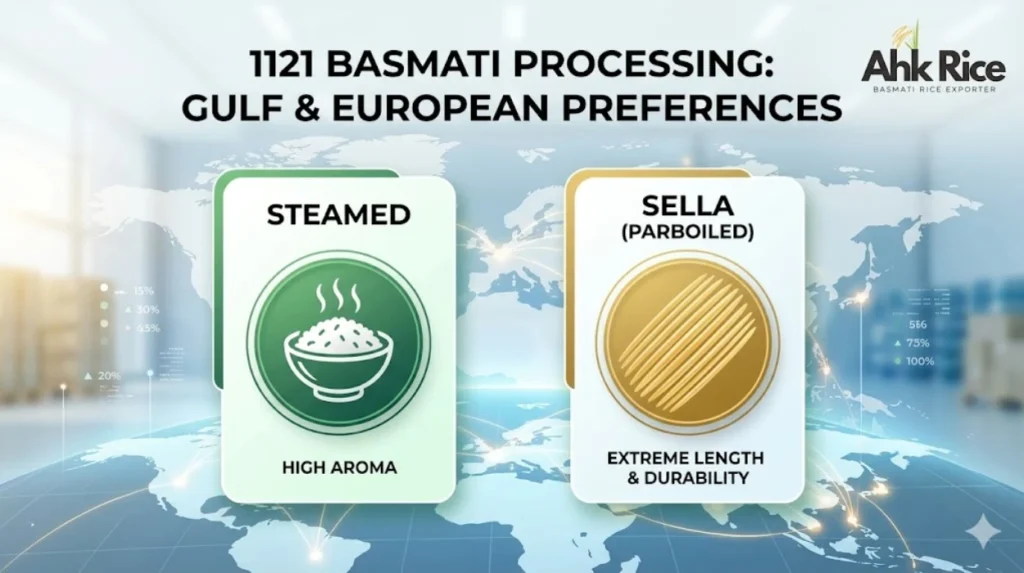
Golden Sella dominates Gulf markets due to high-temperature storage resilience, while Steam Basmati Rice dominates European markets due to aroma retention, retail packaging compatibility, and compliance with consumer sensory expectations across premium grocery chains and ethnic food distributors.
Market selection depends on climate exposure, consumer expectations, and packaging strategy.
Gulf Market Requirements
Gulf countries such as UAE, Saudi Arabia, and Qatar operate in high-temperature logistics chains.
- Golden Sella preferred for catering supply chains
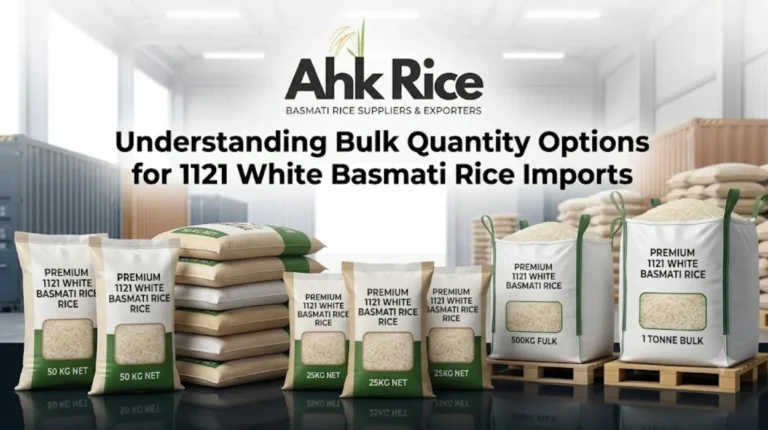
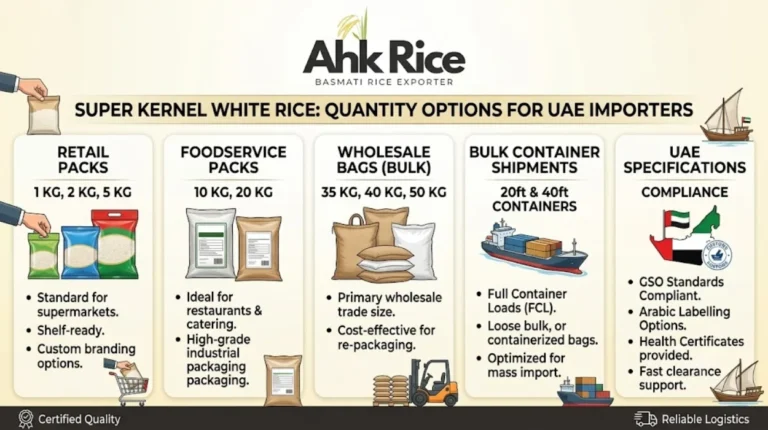
- Bulk packaging dominates 25–50 kg PP bags
- High shelf stability required for warehouse storage
- Cooking consistency prioritized over aroma intensity
Golden Sella reduces spoilage risk in non-refrigerated storage systems.
European Market Requirements
European markets such as UK, Germany, and Netherlands focus on retail compliance and aroma-driven consumption.
- Steam preferred for premium retail shelves
- Smaller packaging dominates 1–5 kg packs
- Food safety certification is mandatory
- Aroma retention drives purchase decisions
Steam retains sensory quality under controlled logistics systems.
Price Per MT Comparison
Market pricing varies based on processing cost and demand structure.
- Golden Sella: $850–$1,050 per MT
- Steam: $950–$1,200 per MT
- Raw White: $780–$950 per MT
Gulf buyers optimize cost per ton. European buyers optimize brand premium per unit.
Shelf Life Comparison by Region
Shelf life changes depending on warehouse conditions.
Golden Sella lasts longer than Steam in Gulf climates. In 40°C UAE warehouses, Golden Sella maintains stability for 18 months, while Steam reduces quality after 12–15 months. European controlled storage allows Steam to maintain aroma integrity longer under sealed retail packaging systems.
With market-specific behavior clarified, the next step evaluates advantages and limitations of each grade.
What are the pros and cons of each 1121 Basmati Rice grade?
Golden Sella offers maximum durability and export safety, Steam offers premium aroma and retail positioning, and Raw White offers affordability and cooking flexibility, making each grade strategically suitable for different buyer categories across global rice trade channels and food distribution systems.
Each grade delivers unique advantages and trade-offs depending on application.
Golden Sella Advantages and Limitations
Golden Sella performs strongly in logistics-heavy supply chains.
- Advantages: high shelf stability
- Advantages: low breakage ratio
- Advantages: heat resistance in transit
- Limitations: reduced aroma intensity
- Limitations: slightly firmer texture
Golden Sella is ideal for institutional buyers and catering exporters.
Steam Advantages and Limitations
Steam grade focuses on sensory performance.
- Advantages: strong aroma retention
- Advantages: premium retail appeal
- Advantages: excellent elongation
- Limitations: moderate shelf life
- Limitations: higher cost per MT
Steam is preferred for branded retail rice packs.
Raw White Advantages and Limitations
Raw White targets affordability-driven markets.
- Advantages: low production cost
- Advantages: fast cooking time
- Advantages: soft texture
- Limitations: higher breakage risk
- Limitations: shorter shelf life
Raw White works best for domestic and short-distance trade.
With pros and cons defined, the next section evaluates decision-making factors for buyers.
What factors should buyers consider when selecting 1121 Basmati Rice grades?
Buyers should evaluate storage temperature, target market, packaging format, cooking expectations, and regulatory compliance, because each factor directly influences grain performance, export success rate, and end-user satisfaction across Gulf and European distribution channels.
Decision-making depends on operational constraints and consumer expectations.
Storage Environment Factor
Storage conditions determine grade suitability.
- High heat environments favor Golden Sella
- Controlled warehouses favor Steam
- Short storage cycles favor Raw White
Temperature exposure directly impacts shelf stability.
Market Demand Factor
Consumer expectations shape grade selection.
- Bulk catering demand favors Golden Sella
- Retail branding demand favors Steam
- Price-sensitive markets favor Raw White
Demand structure defines export strategy.
Packaging Requirement Factor
Packaging formats affect grade viability.
- Large sacks support Golden Sella
- Small retail packs support Steam
- Loose distribution supports Raw White
Packaging design influences logistics efficiency.
Compliance Factor
Food regulations differ by region.
- EU requires strict certification for Steam
- Gulf requires moisture control standards
- Domestic markets require minimal certification
Compliance ensures export clearance success.
Cost Optimization Factor
Cost structure affects procurement decisions.
- Golden Sella reduces wastage cost
- Steam increases brand value
- Raw White reduces entry cost
Cost optimization depends on buyer positioning.
With decision factors established, the final framework consolidates selection logic.
Decision framework for selecting 1121 Basmati Rice grades
The decision framework prioritizes storage conditions, market type, packaging scale, aroma expectation, and cost sensitivity, enabling buyers to systematically select Golden Sella, Steam, or Raw White based on operational efficiency and end-market performance requirements.
5-Row Decision Framework Table
| Decision Factor | Golden Sella | Steam | Raw White |
|---|---|---|---|
| Storage Heat Tolerance | High | Medium | Low |
| Retail Demand Fit | Medium | High | Low |
| Bulk Catering Fit | High | Medium | Medium |
| Aroma Priority | Medium | High | Medium |
| Cost Sensitivity | High efficiency | Medium | High |
Golden Sella leads in logistics resilience. Steam leads in retail positioning. Raw White leads in price accessibility.
Frequently Asked Questions
What is the best 1121 Basmati Rice for hot climates?
Golden Sella performs best in hot climates because parboiling strengthens grain structure and improves shelf stability under high temperatures.
Which 1121 Basmati Rice grade is most aromatic?
Steam Basmati Rice retains the highest aroma because controlled steaming preserves volatile aromatic compounds during processing.
Why is Golden Sella preferred in Gulf countries?
Golden Sella is preferred in Gulf countries because it withstands long storage, high temperatures, and bulk catering distribution systems.
Is Raw White 1121 suitable for export?
Raw White is suitable for short-distance export because it has lower shelf life but faster cooking performance and lower cost.
Which grade is most expensive?
Steam is typically the most expensive due to additional processing steps and premium retail positioning in European markets.