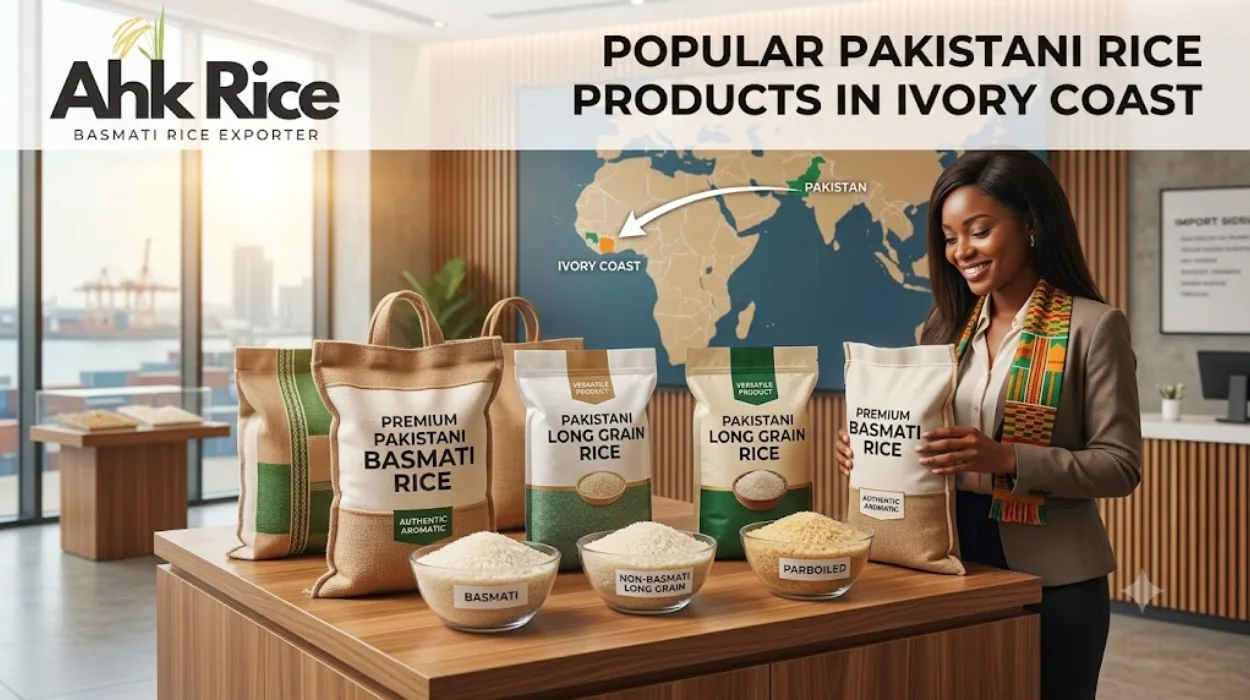
Pakistani Rice Products Most Frequently Imported by Ivory Coast Distributors
Pakistani rice products imported by Ivory Coast distributors include Basmati rice, long grain white rice, IRRI rice, parboiled rice, and broken rice. These products satisfy retail, wholesale, foodservice, and industrial food requirements across Ivory Coast. Here is why: Pakistan produces multiple export-grade rice varieties, operates modern milling infrastructure, and supplies rice specifications demanded by West African importers.
Rice remains a staple food across Ivory Coast. Importers source rice from several countries, including Pakistan, India, Thailand, and Vietnam. Pakistani rice products hold a significant position because distributors procure different grades for different consumer segments. Understanding these products helps buyers, traders, and food businesses evaluate supply options and market requirements.
Rice imports also connect to broader procurement decisions. Readers seeking to understand the actual purchasing and logistics process can explore a detailed guide about sourcing rice from Pakistan through distributors and import channels in Ivory Coast through the companion article, how distributors manage rice procurement and supply chains from Pakistan.
What are the Pakistani rice products most frequently imported by Ivory Coast distributors?
Basmati rice, IRRI rice, parboiled rice, white rice, and broken rice represent the most frequently imported Pakistani rice products because they serve premium, mid-market, and value-oriented consumer segments simultaneously.
Ivory Coast distributors import rice products according to consumer preferences, retail price targets, and foodservice requirements. Different rice categories satisfy different demand profiles.
Basmati Rice
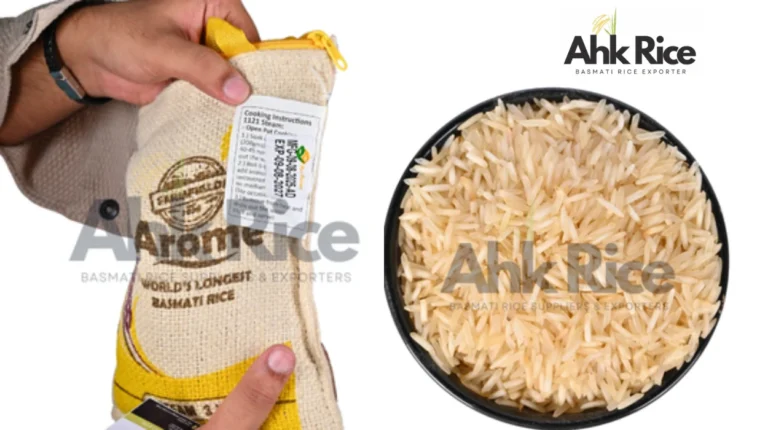
Basmati rice is an aromatic long-grain rice cultivated primarily in Punjab. Basmati grains elongate significantly during cooking and maintain separate grain structure.
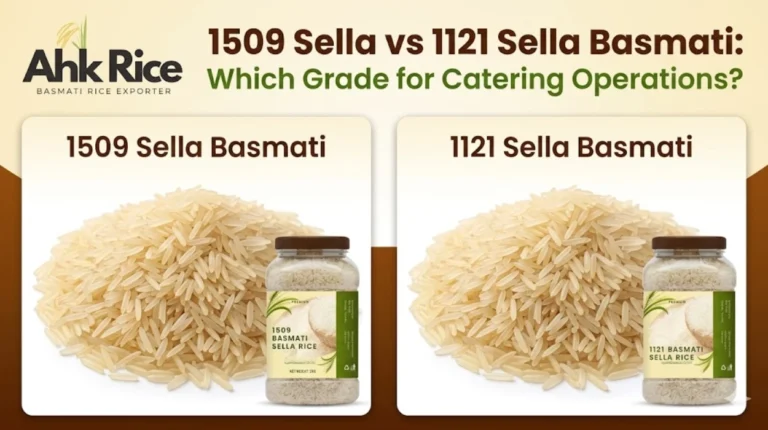
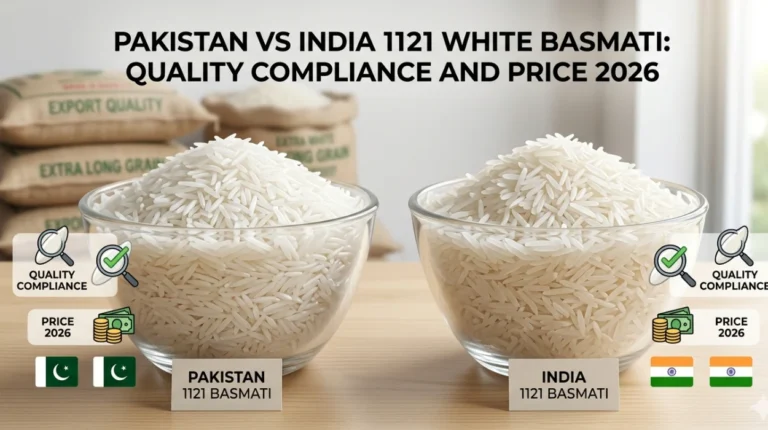
Pakistani exporters supply several Basmati varieties. Examples include 1121 Basmati, Super Kernel Basmati, and 1509 Basmati. These varieties serve premium retail and hospitality sectors.
IRRI Rice
IRRI rice refers to high-yield non-Basmati rice varieties developed for large-scale consumption markets.
IRRI-6 and IRRI-9 remain common export varieties. These products support price-sensitive markets because they provide consistent quality and competitive pricing.
Parboiled Rice
Parboiled rice undergoes a controlled soaking, steaming, and drying process before milling.
Parboiling strengthens grain structure and improves storage stability. West African distributors frequently source parboiled rice because consumers prefer firm grains and extended shelf life.
Broken Rice
Broken rice consists of grain fragments generated during milling.
Broken rice serves industrial food processing, institutional catering, and value-focused consumer markets. Examples include 5%, 10%, 25%, and 100% broken grades.
With the main product categories established, the next question is how these rice products move from cultivation to export-ready cargo.
How are Pakistani rice products processed for export?
Cultivation, harvesting, drying, milling, grading, testing, packaging, certification, and container loading form the standard export processing sequence for Pakistani rice products.
Rice quality depends on controlled processing. Each stage influences grain appearance, cooking performance, and export compliance.
Cultivation and Harvesting
Farmers cultivate rice across Punjab’s rice-growing regions using irrigation systems connected to river networks.
Farmers harvest mature paddy during the appropriate harvest season. Timely harvesting reduces grain damage and preserves milling quality.
Drying and Storage
Dry paddy to export-grade moisture levels.
Store paddy in controlled facilities.
Moisture management protects grain integrity and reduces spoilage risk during long-distance shipping.
Milling Operations
Clean the paddy.
De-husk the grain.
Separate husk from rice.
Polish the kernels.
Sort by grain length.
Millers remove outer layers while preserving grain quality. Modern mills use automated systems to improve consistency.
Grading and Sorting
Grade rice according to grain length, purity, moisture content, and defect levels.
Sort rice using optical color sorters and mechanical grading equipment. These systems remove damaged kernels and foreign material.
Quality Verification
Inspect the rice.
Test moisture levels.
Verify purity standards.
Certify export specifications.
Quality inspections ensure compliance with buyer requirements and destination-country regulations.
Packaging and Loading
Pack rice into retail or bulk formats.
Load containers.
Dispatch shipments through export terminals.
Common packaging formats include 1 kg, 5 kg, 10 kg, 25 kg, and 50 kg bags.
With the processing workflow explained, the next question concerns the key product specifications distributors evaluate before importing.
What key components define export-grade Pakistani rice products?
Grain length, purity, moisture content, broken percentage, aroma, color consistency, and milling quality define export-grade Pakistani rice products.
Distributors evaluate measurable specifications before finalizing procurement contracts.
Grain Length
Longer grains typically command premium market positioning.
1121 Basmati commonly exceeds 8.0 mm before cooking. Super Kernel Basmati generally ranges between 7.0 mm and 7.5 mm.
Purity Levels
Purity measures the percentage of the intended rice variety within a shipment.
Higher purity specifications improve consistency and buyer confidence.
Moisture Content
Moisture content directly affects storage stability.
Export-grade rice generally maintains moisture levels within internationally accepted trade specifications.
Broken Percentage
Broken percentage indicates the proportion of fractured grains.
Lower broken percentages support premium retail positioning. Higher broken percentages support industrial applications.
Aroma Characteristics
Basmati rice contains natural aromatic compounds that create its distinctive fragrance.
Aroma contributes significantly to premium market demand.
Color Consistency
Color sorting systems improve visual uniformity.
Uniform appearance supports retail shelf presentation and consumer acceptance.
The specification framework explains how products are evaluated. The next section examines why these rice products remain popular among Ivory Coast distributors.
What benefits do Pakistani rice products provide to Ivory Coast distributors?

Product diversity, scalable supply, multiple grade options, long storage capability, and broad consumer acceptance make Pakistani rice products attractive to Ivory Coast distributors.
Rice distributors manage diverse customer requirements. Product variety supports broader market coverage.
Multiple Market Segments
Premium consumers purchase aromatic Basmati rice.
Mass-market consumers purchase non-Basmati and parboiled rice.
Industrial users purchase broken rice.
This segmentation allows distributors to serve multiple revenue streams.
Flexible Packaging
Exporters provide different packaging formats.
Examples include retail packs, wholesale bags, and private-label packaging.
Flexible packaging supports supermarkets, wholesalers, and foodservice operators.
Consistent Availability
Pakistan ranks among the world’s major rice-exporting countries.
Large production volumes support continuous export programs and recurring supply schedules.
Storage Advantages
Parboiled rice maintains structural integrity during storage.
In tropical climates, distributors benefit from products designed for extended distribution cycles.
With the benefits established, the next question concerns where these products are actually used within the Ivory Coast market.
How do Ivory Coast distributors use imported Pakistani rice products?
Retail distribution, foodservice supply, institutional procurement, food manufacturing, and wholesale trading represent the primary use cases for imported Pakistani rice products.
Rice moves through several commercial channels before reaching consumers.
Retail Distribution
Supermarkets and neighborhood retailers sell packaged rice directly to households.
Premium Basmati products target consumers seeking aroma and grain elongation.
Foodservice Operations
Restaurants require consistent cooking performance.
Hotels often prefer aromatic rice varieties because presentation and flavor influence customer experience.
Institutional Procurement
Schools, hospitals, and public food programs purchase rice in large volumes.
These buyers prioritize consistency and cost control.
Food Manufacturing
Food manufacturers use rice as a processing ingredient.
Examples include packaged meal production, rice flour processing, and prepared food manufacturing.
Wholesale Trading
Wholesalers distribute rice to regional retailers.
Bulk procurement supports efficient inventory management and supply chain operations.
These use cases explain market demand patterns. The next section addresses misconceptions that influence purchasing decisions.
What common misconceptions exist about Pakistani rice products?
Many buyers incorrectly assume all Pakistani rice is Basmati, all parboiled rice is identical, and lower-priced grades indicate poor quality.
Rice categories differ substantially in specifications and intended applications.
Misconception: All Pakistani Rice Is Basmati
Pakistan exports both Basmati and non-Basmati rice.
Basmati represents one category within a broader export portfolio.
Examples include 1121 Basmati, Super Kernel Basmati, 1509 Basmati, IRRI-6, and IRRI-9.
Misconception: All Parboiled Rice Has the Same Quality
Parboiled rice varies by grain type, milling quality, purity, and broken percentage.
Premium parboiled products command different market positioning than commodity grades.
Misconception: Broken Rice Is Inferior Rice
Broken rice serves specific commercial purposes.
Food processors, institutional buyers, and value-oriented consumers purchase broken rice because functionality matters more than grain appearance.
Misconception: Longer Grain Alone Determines Quality
Quality evaluation includes multiple variables.
Grain length, purity, moisture control, milling quality, and consistency all influence final product performance.
These misconceptions clarify how distributors assess products beyond simple marketing claims. The final question concerns certifications and compliance standards.
What certifications apply to Pakistani rice exports destined for Ivory Coast?
Phytosanitary certification, quality inspection documentation, fumigation compliance, food safety systems, and export documentation support Pakistani rice exports to Ivory Coast.
International trade requires documented compliance with regulatory requirements.
Export Documentation
Commercial Invoice
Packing List
Certificate of Origin
Bill of Lading
These documents support customs clearance and trade verification.
Quality Assurance Systems
Quality testing verifies compliance with buyer specifications.
Laboratories inspect moisture levels, purity, grain length, and defect percentages.
Food Safety Certifications
Food safety programs support international export requirements.
Examples include HACCP implementation and ISO-based quality management systems.
Phytosanitary Compliance
Phytosanitary certificates confirm agricultural inspection requirements.
These certificates help importing authorities verify compliance with plant health regulations.
Pakistani rice exports continue to serve Ivory Coast distributors because the product portfolio covers premium, mainstream, and value-focused market segments while meeting international trade requirements.
Frequently Asked Questions
Which Pakistani rice variety is most popular among premium buyers in Ivory Coast?
1121 Basmati rice remains one of the most recognized premium varieties because of its aroma, grain length, and cooking elongation.
Why do Ivory Coast distributors import parboiled rice?
Parboiled rice offers strong grain structure, storage stability, and consumer acceptance across many West African markets.
What is the difference between Basmati and IRRI rice?
Basmati rice is aromatic and long-grained. IRRI rice is non-aromatic and primarily purchased for large-scale consumption markets.
Does Pakistan export broken rice to Ivory Coast?
Yes. Pakistani exporters supply several broken rice grades for food processing, institutional procurement, and value-oriented retail markets.
What certifications are required for rice exports?
Common requirements include phytosanitary certificates, certificates of origin, commercial invoices, packing lists, and shipping documents.