What Is the Ideal Grain Length for Saudi Arabian Rice Importers: 1121, 1509, or Super Kernel?
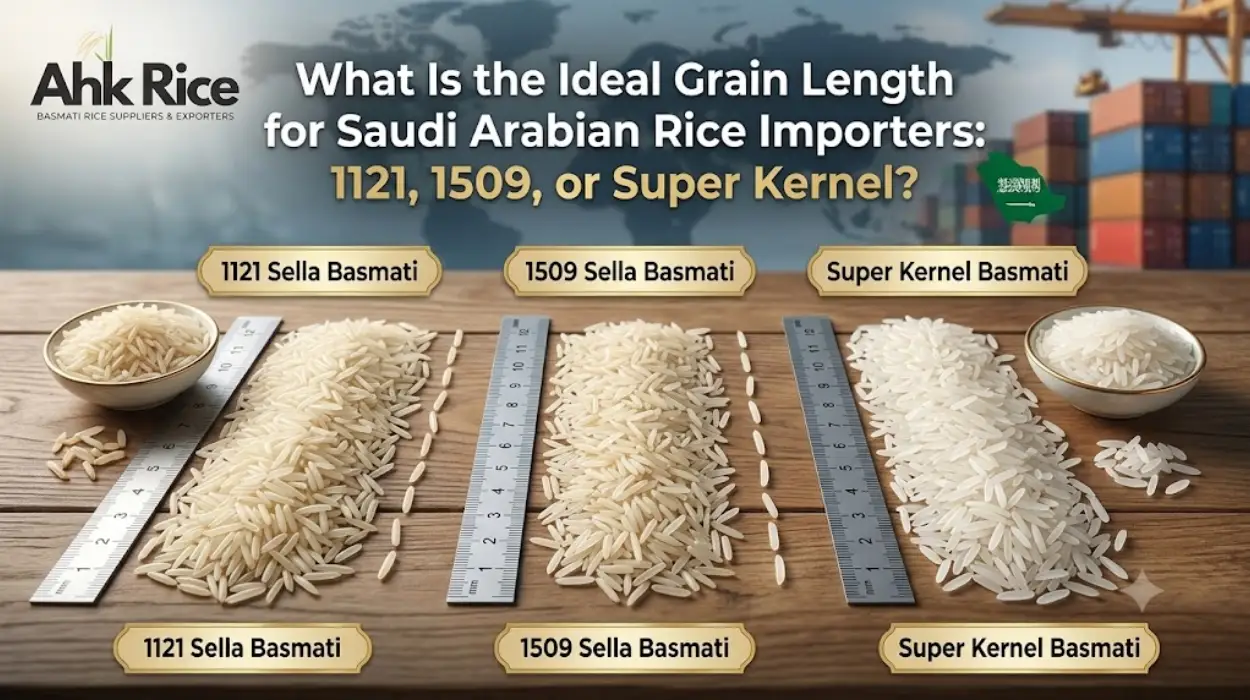
The ideal grain length for Saudi Arabian rice importers is 1121 Basmati in most premium retail and foodservice segments, while 1509 offers a cost-efficient long-grain alternative and Super Kernel remains preferred for traditional markets seeking classic Basmati characteristics and stable cooking performance.
Saudi Arabia remains one of the largest import destinations for Pakistani Basmati rice in 2026. Importers, distributors, wholesalers, catering companies, and private-label brands evaluate rice based on several technical specifications. Grain length consistently ranks among the most important purchasing factors because it directly influences visual appeal, cooking performance, consumer perception, and retail positioning.
Buyers that want to understand the evaluation process often begin by studying how Saudi importers assess grain appearance, elongation ratio, and market acceptance before comparing varieties. This topic is explored in detail in the article discussing Saudi buyers’ rice quality assessment criteria and grain selection practices.
For exporters such as Choose a Pakistan Basmati Rice Exporter That Meets Saudi Arabian Grain Length Requirements, understanding grain length preferences helps align production, grading, packaging, and shipment specifications with market demand. AHK Rice, a Pakistani Basmati rice exporter based in Punjab, supplies 1121, 1509, and Super Kernel varieties to multiple Middle Eastern markets, including Saudi Arabia, where grain appearance significantly influences purchasing decisions.
What does grain length mean for Saudi Arabian rice importers?
Grain length determines the visual quality, perceived value, cooking expansion, and retail positioning of Basmati rice. Saudi Arabian importers use grain length as a primary grading factor because consumers associate longer grains with premium quality, better presentation, and stronger authenticity across retail and foodservice segments.
Grain length refers to the physical measurement of rice kernels before cooking. In international rice trade, length is generally measured in millimeters. Longer grains typically command higher market value because they produce an attractive appearance both before and after cooking.
Saudi consumers have developed a strong preference for extra-long grain Basmati rice. Popular dishes such as Kabsa, Mandi, Bukhari Rice, Madghout, and festive rice platters require grains that remain separate after cooking and demonstrate significant elongation.
Importers evaluate grain length alongside several related characteristics. These include grain uniformity, percentage of broken kernels, chalkiness, moisture level, purity, aroma, and cooking expansion ratio. Among these factors, grain length often creates the first impression for wholesalers and retail buyers.
In 2026, premium Saudi retail brands continue prioritizing extra-long grain rice because consumers increasingly compare product appearance before making purchasing decisions. This trend has strengthened demand for 1121 Basmati in modern retail channels.
How do 1121, 1509, and Super Kernel compare in grain length specifications?
1121 offers the longest grain profile, 1509 provides competitive length with lower production costs, and Super Kernel delivers traditional Basmati characteristics. Saudi importers compare these varieties based on grain length, elongation performance, aroma, market positioning, shelf life, and overall commercial suitability.
Specification Comparison Table
| Attribute | 1121 Basmati | 1509 Basmati | Super Kernel Basmati |
|---|---|---|---|
| Average Grain Length | 8.30–8.50 mm | 8.10–8.35 mm | 7.20–7.60 mm |
| Cooked Grain Length | Up to 21–24 mm | Up to 18–22 mm | Up to 16–19 mm |
| Elongation Ratio | Very High | High | Medium-High |
| Aroma Intensity | Strong | Moderate | Traditional Strong |
| Market Position | Premium | Mid-Premium | Traditional Premium |
| Yield Potential | High | Very High | Moderate |
| Saudi Market Demand 2026 | Very High | High | Stable |
The table highlights why 1121 remains the benchmark for premium Saudi imports. Its exceptional grain length and elongation ratio provide a visual advantage in retail packaging and hospitality applications.
1509 has gained market share because it offers long grain characteristics while allowing importers to optimize procurement costs. Many distributors targeting value-conscious segments select 1509 as a practical alternative.
Super Kernel continues to maintain relevance because of its traditional Basmati identity. Some buyers prioritize heritage characteristics over maximum grain length, making Super Kernel suitable for established consumer groups.
What are the available grain-length solutions for Saudi rice buyers?
Saudi importers can choose among ultra-long grain, long grain, and traditional premium Basmati solutions. Each option addresses different consumer expectations, pricing strategies, retail categories, and foodservice applications, allowing buyers to match grain specifications with commercial objectives and target demographics.
The first solution is 1121 Basmati. This variety targets premium retail brands, luxury hospitality suppliers, upscale catering operations, and private-label importers seeking maximum visual appeal.
The second solution is 1509 Basmati. This variety balances long grain appearance with efficient production economics. Importers serving supermarkets, wholesale channels, and large-volume distributors frequently consider 1509 because it offers competitive pricing without sacrificing long-grain characteristics.
The third solution is Super Kernel Basmati. This traditional variety remains popular among consumers familiar with classic Pakistani Basmati. Its grain length is shorter than 1121 and 1509, but its aroma and cooking profile continue attracting loyal customer segments.
Each solution addresses a different combination of price, appearance, consumer expectation, and market positioning.
How do Saudi Arabian market regions differ in grain-length preferences?
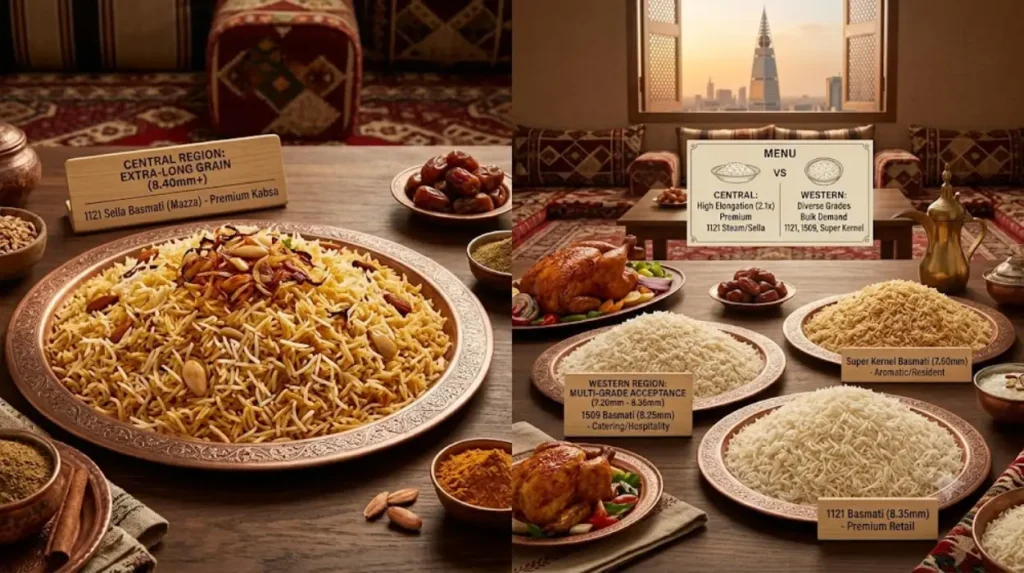
Central Saudi Arabia strongly favors extra-long grain rice for premium consumption, while Western Saudi Arabia shows broader acceptance across multiple Basmati grades. Regional food traditions, purchasing power, hospitality demand, and retail positioning influence grain-length preferences throughout the Kingdom.
Central Region Preference
Cities such as Riyadh and surrounding commercial hubs demonstrate the strongest demand for extra-long grain rice.
Importers serving these markets typically prioritize:
- 1121 Steam Basmati
- 1121 Sella Basmati
- Premium private-label products
- High elongation rice
Consumers often associate longer grains with luxury and higher quality. This preference supports consistent demand for 1121 varieties.
Western Region Preference
Cities such as Jeddah, Makkah, and Madinah exhibit diverse purchasing patterns.
Importers commonly purchase:
- 1121 Basmati
- 1509 Basmati
- Super Kernel Basmati
The region serves retail consumers, hospitality businesses, catering providers, and international visitors. This diversity creates demand across several rice grades and specifications.
As a result, Western Saudi markets often present opportunities for both premium and value-oriented rice import programs.
How do 1121, 1509, and Super Kernel compare on price per metric ton?
Price differences reflect grain length, demand, processing requirements, and export positioning. Saudi importers compare varieties by balancing procurement costs against retail margins, brand positioning, and consumer expectations rather than focusing solely on the lowest available purchase price.
Indicative Export Price Comparison 2026
| Variety | Average Export Range (USD/MT) |
|---|---|
| 1121 Steam Basmati | $1,050–1,350 |
| 1121 Sella Basmati | $1,100–1,450 |
| 1509 Steam Basmati | $900–1,150 |
| 1509 Sella Basmati | $950–1,200 |
| Super Kernel Basmati | $850–1,100 |
Prices vary according to crop conditions, milling quality, packaging specifications, freight rates, and contract volume.
1121 commands the highest value because of its superior grain length and strong international demand.
1509 provides a favorable balance between cost and appearance, making it attractive for competitive retail segments.
Super Kernel generally occupies a lower pricing band while maintaining traditional Basmati characteristics valued by specific buyer groups.
Which rice variety offers the best shelf life for Saudi importers?
All three varieties offer excellent storage stability when processed correctly, but shelf-life performance depends more on moisture control, packaging quality, and storage conditions than grain length. Properly packed Basmati rice can maintain commercial quality for extended periods.
Shelf Life Comparison
| Variety | Typical Commercial Shelf Life |
|---|---|
| 1121 Basmati | 18–24 Months |
| 1509 Basmati | 18–24 Months |
| Super Kernel Basmati | 18–24 Months |
Saudi importers usually prioritize moisture levels below accepted export standards and select packaging that protects against humidity exposure during transportation and storage.
Vacuum packaging, laminated bags, woven PP bags with liners, and retail-ready packs contribute significantly to preserving rice quality.
The variety itself plays a smaller role in shelf life than processing standards and supply chain management.
What are the advantages and disadvantages of each option?
Every variety delivers specific commercial benefits and trade-offs. Saudi importers achieve better purchasing decisions when evaluating grain length, price competitiveness, consumer expectations, cooking performance, and retail positioning together rather than assessing a single characteristic in isolation.
1121 Basmati
Advantages
- Longest grain profile available
- Highest elongation after cooking
- Premium consumer perception
- Strong retail presentation
- Excellent hospitality suitability
Disadvantages
- Higher procurement cost
- Greater competition among suppliers
- Premium positioning may limit value-market opportunities
1509 Basmati
Advantages
- Competitive grain length
- Lower procurement cost
- High agricultural productivity
- Strong value proposition
- Suitable for large-volume programs
Disadvantages
- Slightly lower prestige than 1121
- Less elongation compared with premium 1121 grades
Super Kernel Basmati
Advantages
- Traditional Basmati identity
- Established market recognition
- Strong aroma profile
- Attractive pricing
Disadvantages
- Shorter grain length
- Lower visual impact after cooking
- Reduced appeal in ultra-premium segments
Which grain-length option works best for different Saudi buying scenarios?
The best variety depends on market objectives. Premium brands benefit most from 1121, cost-sensitive distributors often choose 1509, and traditional Basmati-focused businesses frequently prefer Super Kernel due to its established identity and reliable consumer acceptance across selected market segments.
Decision Framework Table
| Buyer Situation | Recommended Variety | Primary Reason |
|---|---|---|
| Premium Retail Brand | 1121 | Maximum grain length |
| Luxury Hotel Supply | 1121 | Superior presentation |
| Large Distributor | 1509 | Cost-performance balance |
| Wholesale Value Segment | 1509 | Competitive pricing |
| Traditional Basmati Market | Super Kernel | Heritage preference |
This framework simplifies variety selection by aligning technical specifications with commercial goals.
Importers focused on premium branding typically gain the greatest advantage from 1121.
Companies targeting price-sensitive distribution channels often benefit from the economics of 1509.
Businesses serving traditional Basmati consumers may find Super Kernel provides the best fit.
What decision factors should Saudi Arabian importers prioritize?
Importers achieve stronger purchasing outcomes when grain length is evaluated alongside consumer demand, pricing strategy, cooking performance, packaging requirements, retail positioning, and supply reliability. Successful procurement decisions balance technical specifications with long-term commercial objectives and market expectations.
Several factors should guide the final purchasing decision.
Consumer expectations remain the most important consideration. The selected variety must align with the preferences of the target customer segment.
Brand positioning also influences variety selection. Premium brands generally benefit from the visual superiority of 1121.
Procurement budgets affect the choice between premium and value-oriented options. Importers must evaluate expected margins relative to acquisition costs.
Distribution channels create additional requirements. Retail brands, wholesalers, foodservice operators, and catering companies often prioritize different specifications.
Supply consistency remains critical. Reliable exporters capable of maintaining uniform grain length, quality standards, and shipment schedules support stronger long-term market performance.
Conclusion
1121 remains the leading choice for Saudi Arabian importers seeking maximum grain length, premium positioning, and superior cooking elongation. 1509 offers the strongest balance between cost and appearance, while Super Kernel serves traditional Basmati segments that prioritize heritage characteristics over ultra-long grain specifications.
As Saudi consumer expectations continue evolving in 2026, grain length remains one of the most influential purchasing criteria in the Basmati rice trade. Importers that align variety selection with regional demand, pricing objectives, and retail positioning can build stronger product portfolios and achieve better market outcomes.
Frequently Asked Questions
What is the best Basmati rice variety for Saudi Arabian importers?
1121 Basmati is the preferred choice for Saudi importers seeking premium quality because it offers the longest grain length, excellent cooking elongation, and strong consumer appeal. 1509 and Super Kernel are suitable alternatives for different pricing and market segments.
Is 1121 Basmati more expensive than 1509 and Super Kernel?
Yes, 1121 Basmati generally has a higher price per metric ton because of its extra-long grain length, premium market demand, and superior visual appearance after cooking. 1509 provides a more cost-effective option with similar long-grain characteristics.
How long can Pakistani Basmati rice be stored after import?
Pakistani Basmati rice can typically maintain commercial quality for 18 to 24 months when properly processed, packed, and stored. Moisture control, packaging quality, and warehouse conditions have the biggest impact on shelf life.
Do Saudi consumers prefer longer rice grains?
Yes, many Saudi consumers associate longer grains with premium Basmati quality. Extra-long varieties such as 1121 are especially popular for traditional dishes, hospitality use, and premium retail products because they create an attractive cooked appearance.
How should Saudi importers choose between 1121, 1509, and Super Kernel?
Saudi importers should select based on their target market, pricing strategy, and customer expectations. 1121 suits premium segments, 1509 works well for value-focused distribution, and Super Kernel fits buyers seeking traditional Basmati characteristics.